Biscayne Bay gets a $20 million cash injection to help clean up polluted water
South Florida cities are getting $20 million in upgrades to clean their water, convert leaking septic tanks to sewer and slow down street flooding. Plus, groups helping the region’s embattled coral reef took home another $9.5 million.
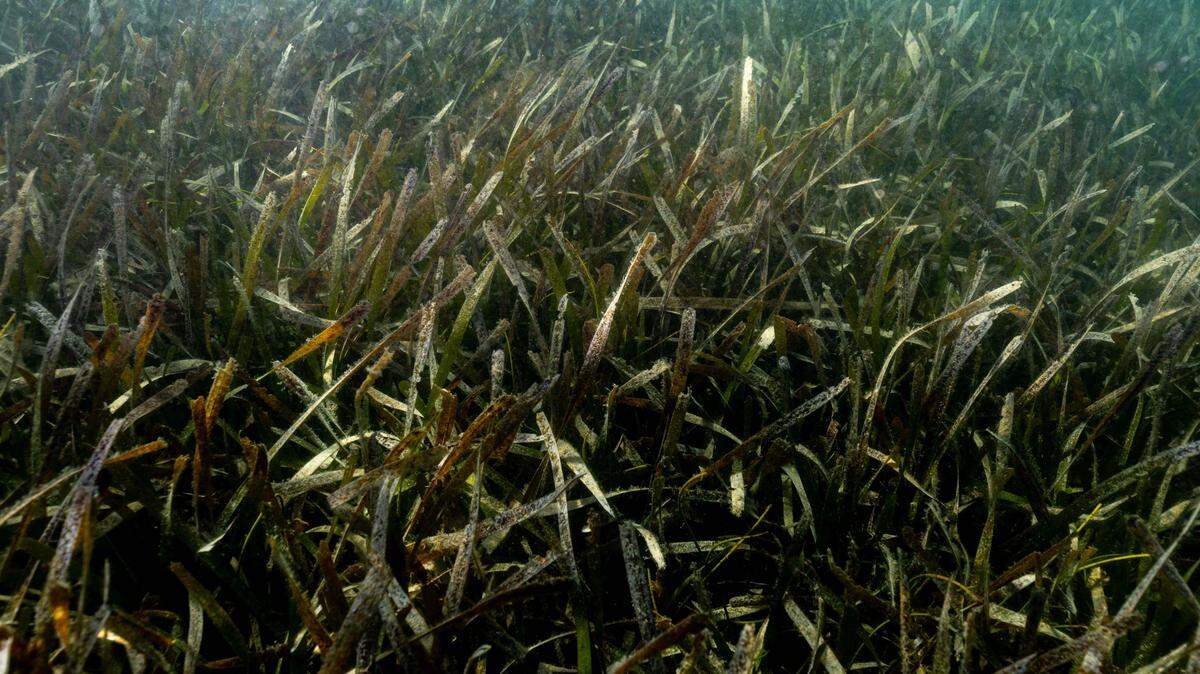
It’s all part of the state’s program to clean up Biscayne Bay, the environmental jewel and economic powerhouse of Miami-Dade County that has struggled under decades of pollution and mismanagement. Stinky and unsightly fish kills have become a nearly annual occurrence, and the emerald sea grass that used to carpet much of the bay is vanishing at an alarming rate.
On Tuesday, Gov. Ron DeSantis appeared at Florida International University to tout the grants for seven South Florida municipalities designed to help slow the flow of dirty water into the bay.
“We launched this project in 2021, and after today’s grant awards we will have reached $100 million in support for Biscayne Bay restoration,” he said.
READ MORE: Biscayne Bay is polluted. Miami-Dade hopes this new technology will help clean it up
The biggest grant — $4.2 million — went to Miami-Dade County to help install new technology to catch pollution as it runs off of roads and canals and clean water before it filters into the bay. South Miami and Miami Shores each got around $3 million to help convert aging and leaky septic tanks to sewer pipes and pumps, a growing issue in the region as rising sea levels render thousands of the lingering tanks less useful every year.
Homestead took home $4 million to improve its wastewater system; North Miami Beach won $1.1 million to address its wastewater pump issues and Cutler Bay was awarded nearly $4 million for two projects addressing the perennially flooding Bel Aire neighborhood and clean the water flowing from the Lakes by the Bay neighborhood.
Miami Beach got over $420,000 to address one of the dirtiest waterways in the region — Park View Island.
READ MORE: Miami Beach canal’s poop pollution is off the charts. It’s been that way for years
The other half of Tuesday’s news was cash for Florida’s coral reef. The state announced another $9.5 million in funding to a bevy of academic and nonprofit groups that are trying to revive the ailing reef tract.
Among the recent blows to the iconic natural feature: an ongoing outbreak of a disastrous disease called Stony Coral Tissue Loss Disease that decimated some reefs and a historically intense marine heatwave in 2023 that helped drive two more species of Florida coral to functional extinction.
READ MORE: Two more Florida corals are ‘functionally extinct’ after 2023 heatwave
Department of Environmental Protection Secretary Alexis Lambert said the state’s goal is to restore 25 percent of the state’s reef by 2050. These grants, she said, help the state produce tens of thousands of baby coral every year to replant on the reef.
The nearly $10 million in state funding will help nonprofits and universities across the state scale up their restoration efforts — both onshore and offshore. Some of the funded groups include The Florida Aquarium, Mote Marine Laboratory, Nova Southeastern University, the University of Miami Plant a Million Corals Foundation and Florida Atlantic University.
“We will keep making real, measured progress for Florida’s coastal waters,” Lambert said.