
‘A python in the water’: South Florida researchers sound alarm on invasive species
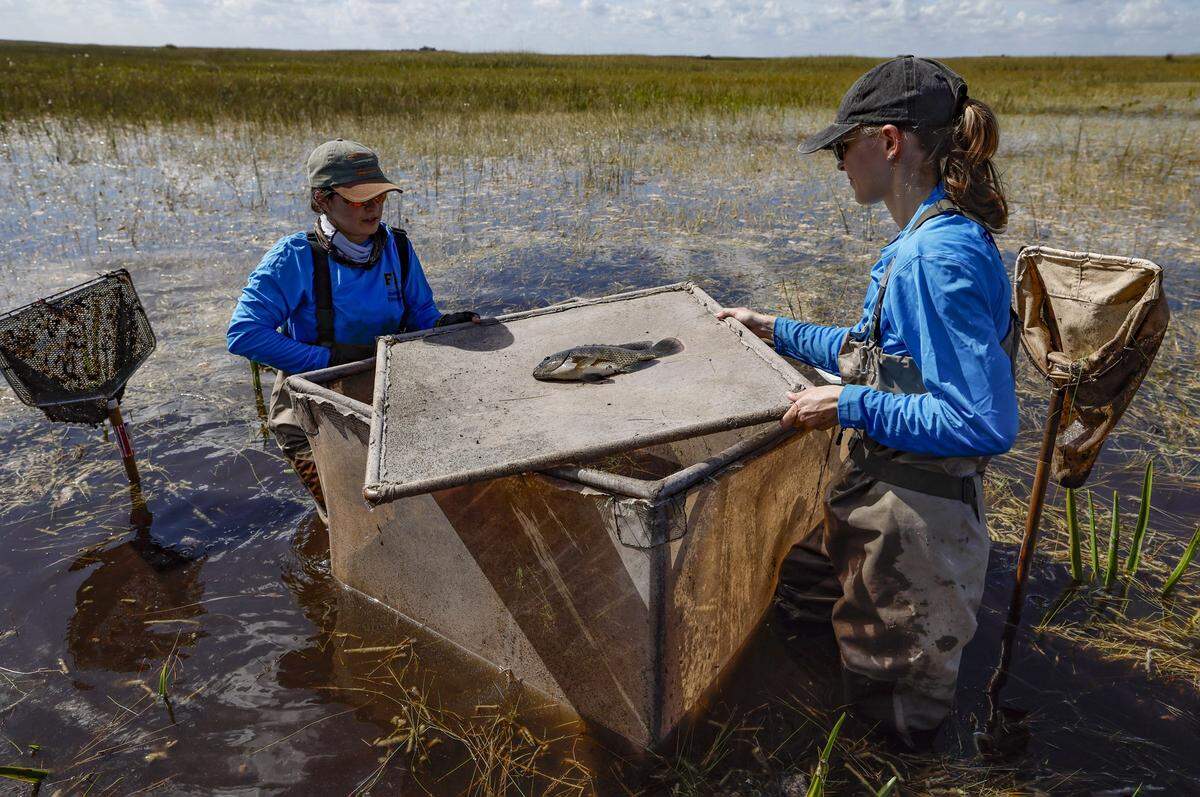
The airboat engine with long metal rods at the front sputtered to a stop as researchers stood ready with long nets off Tamiami Trail. In the afternoon sun, electrodes dipped into the shallow, coffee-colored water and released a mild current, a process called electrofishing, which temporarily stuns aquatic life so scientists can study what’s hidden below.
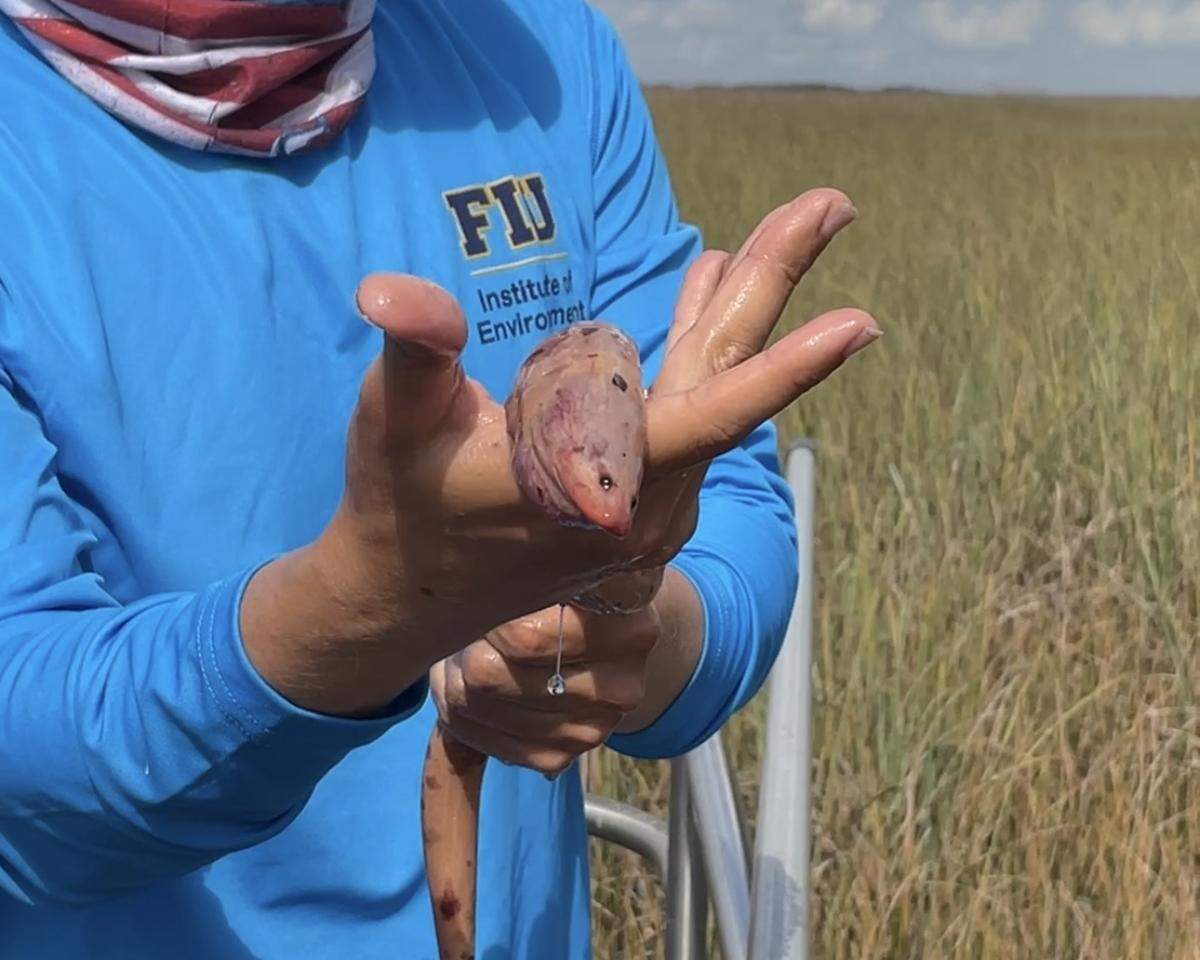
Moments later, a researcher scooped up a dark, ribbon-shaped fish that floated to the surface – not a native species, but an invasive Asian swamp eel. Though not yet a household name, researchers say it’s quickly become the worst enemy of the Everglades’ food web, and that it could be more destructive than the Burmese python.
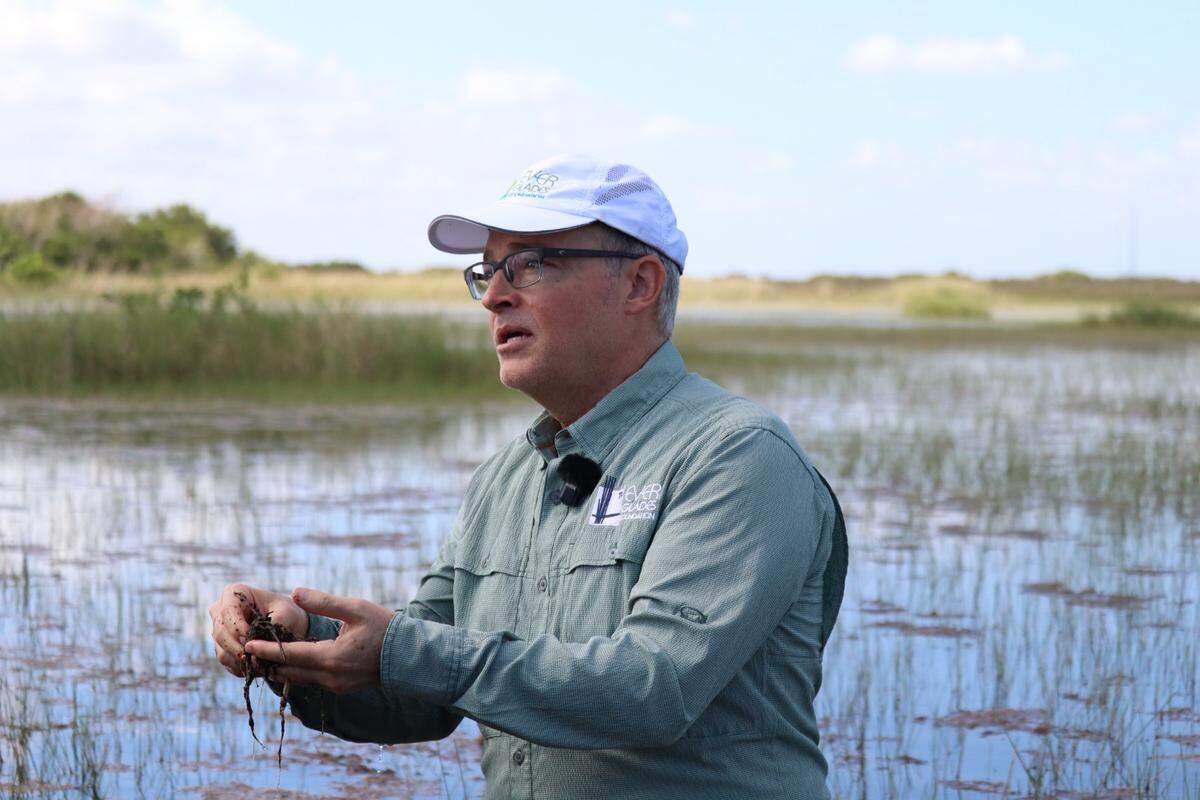
“Obviously, it’s not as scary because it won’t eat you or me, right?” said Nathan Dorn, aquatic ecologist and researcher at Florida International University, “But I would say, for the wetlands, this is probably the worst invasive species that we’ve seen.”
The Everglades span across 1.5 million acres of Florida, bringing $31.5 billion into the economy, and supplying over 8 million South Floridians with fresh water. With property development, the wetland has significantly shrunk over time, leaving its native animal population to decline and incoming invasives an easier time to take over — like the Asian swamp eel.
Drought-resistant, able to survive on land, hop from puddle to puddle, and with no natural predator in the area, the eel has no bad seasons, and is able to take advantage of all that do. It starts at the bottom of the chain, damaging the ecosystem from the marsh up.
A growing threat
The population size and reproduction rates of the swamp eel are unknown for the Everglades, but the increasingly frequent sightings of the eel as they continue spreading north suggest they are becoming a large threat to the native species that have always called the wetland home.
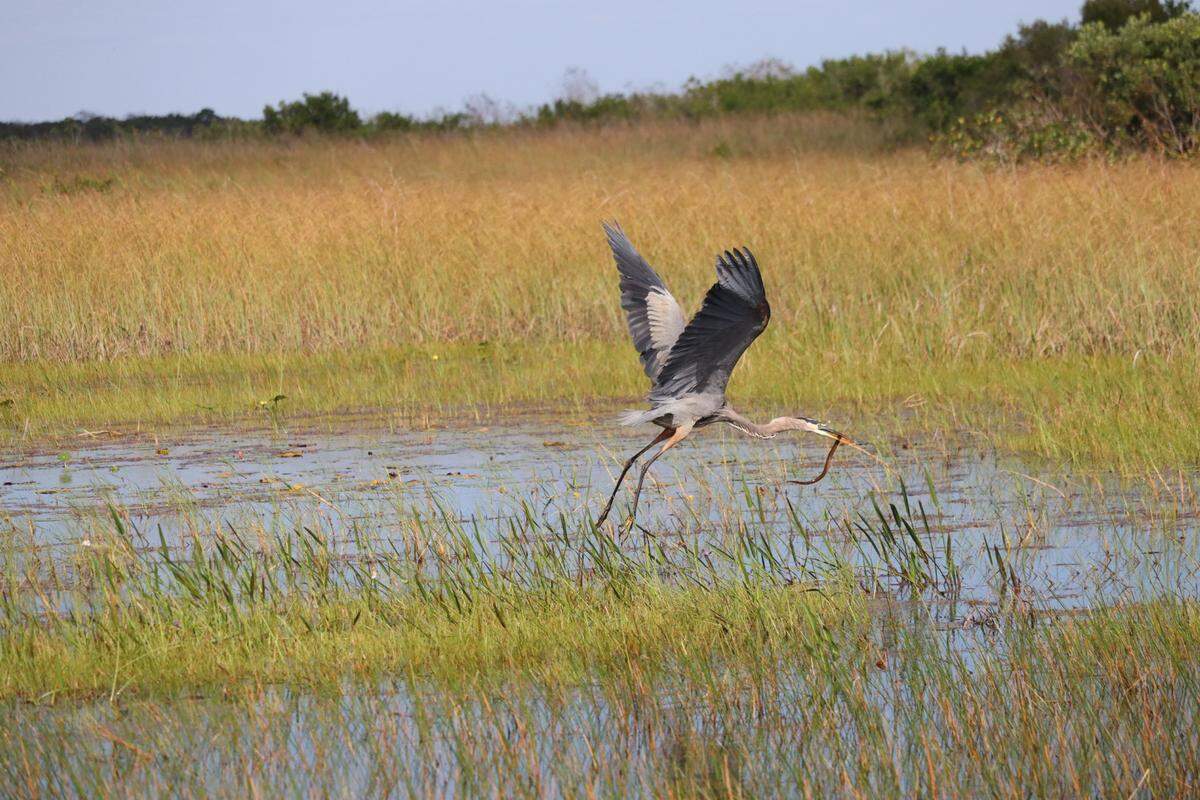
“Welcome to Miami,” Steve Davis, the Chief Science Officer of the Everglades Foundation, joked as he gestured to the city’s westernmost boundary. Davis had just spotted what appeared to be the invasive Asian swamp eel in the beak of a great blue heron minutes prior, his first sighting of the eel in that area.
As an aquatic creature, the eel has the unique opportunity to destroy what the Everglades is truly known for. Not its rabbits or bobcats or any land creature the python may threaten, but the entire wetland ecosystem.
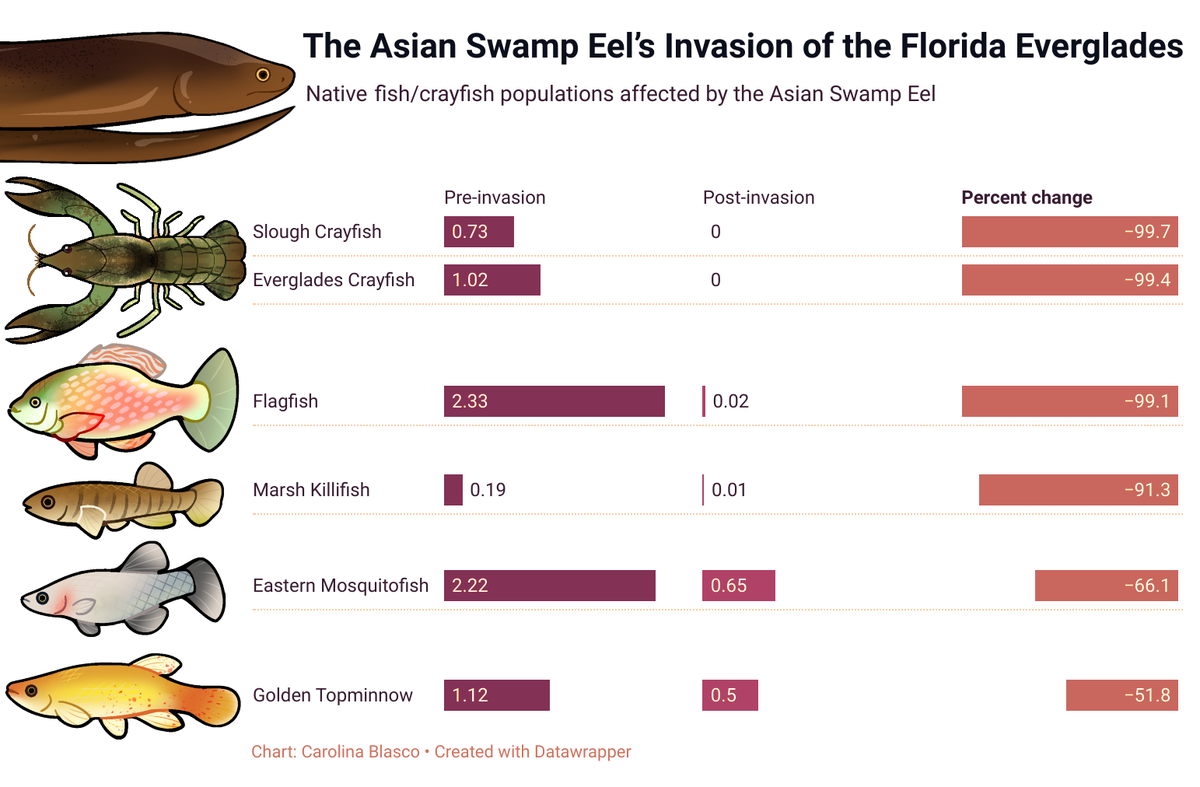
The FIU lab’s work showed a large depletion of small critters that make up the base of the food web in Taylor Slough, the southeastern corner of the Everglades that has been overrun by Asian swamp eels, highlighting how the eel’s eating habits harm South Florida’s critical native species.
The most prominent example is wading birds, which Dorn says have been starved of the species they depend on for food in the region.
Dorn reported a 68% reduction in total biomass, including an 80% loss of bird prey, in Taylor Slough.
For FIU doctoral researcher Ariana Jonas, the rise of the eel population has become impossible to ignore. Her observations mirror growing concerns among scientists studying the Everglades’ fragile ecosystem.
The slimy fish that South Floridians can see wrapped in a sushi roll comes in a variety of colors, mainly dark brown with yellow stomachs. It usually only grows to about two or three feet.
It may not look as intimidating as a python — whose average size is 16 feet — but the eel inflicts damage through its unique characteristics.
It not only differs from native predators because of its unique drought resistance that allows it to attack species when they are at their most vulnerable during the dry season, because it is able to thrive not only in water but also on land. The eel’s versatility allows it to travel from pond to pond to catch more prey that other animals cannot get to whilst also being able to get prey in the water.
With its ability to breathe air and travel short, dry distances, the eel is able to survive shrinking water levels during dry season, burrowing into mud or damp sediment and moving between bodies as the water recedes.
Dorn adds that his lab has discovered that some species don’t even recognize it as a predator when it prepares to ambush them at night.
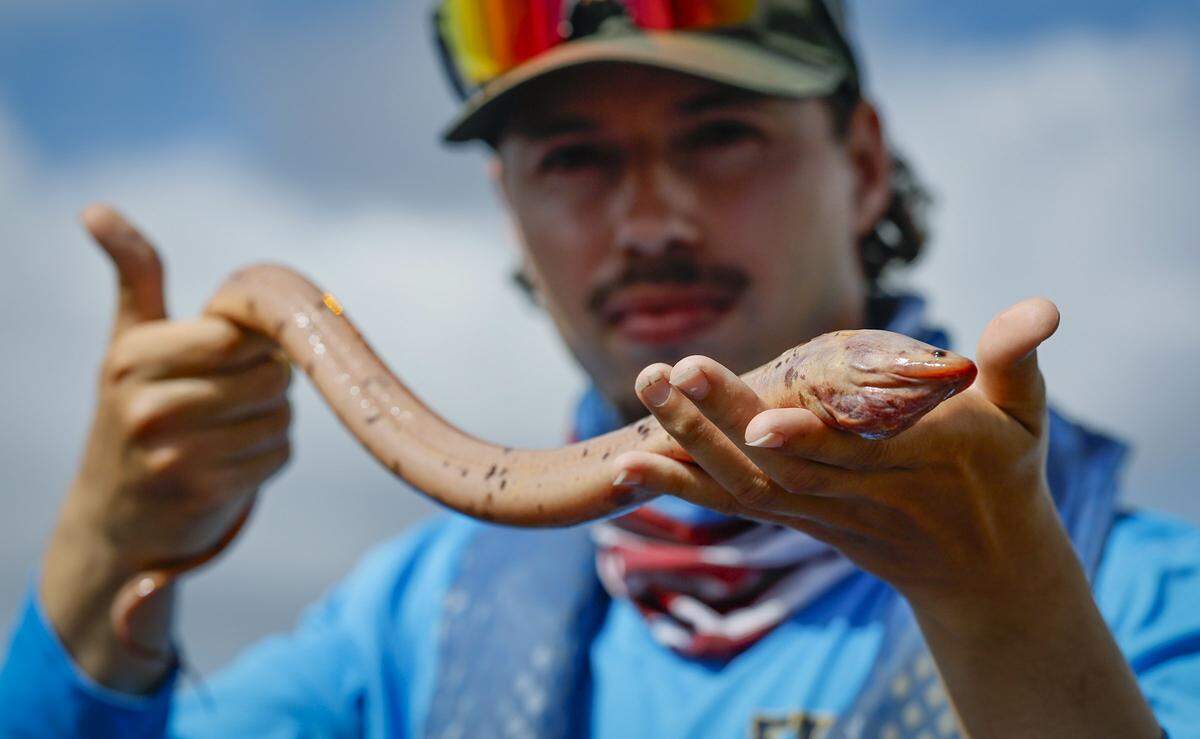
“[The crayfish] doesn’t seem to show that it can perceive that this is at all dangerous,” Dorn said. “It’ll even cross the body of this animal… completely unaware that this is a predator.”
Other researchers say that the eel’s consumption pattern may instead pair with the python’s in a way that depletes different parts of its food web.
“So that we have now this potential squeeze between the Asian swamp eel and the impact it’s having on the bottom and the Burmese python, the impact that it’s having on top, we don’t know what the outcomes of that will be,” said Steve Davis of the Everglades Foundation.
An origin story
The Asian swamp eel was first spotted in canals near Tampa and Miami in 1997. It is still unclear how the invasive species made its way into Florida canals, but the U.S. Fish and Wildlife Services suggest the possibility of a nearby fish farm escape.
Christopher Searcy, who studies the eel at the University of Miami, says their presence began near urban areas in the mid 1990s — the entry point for many exotic species.
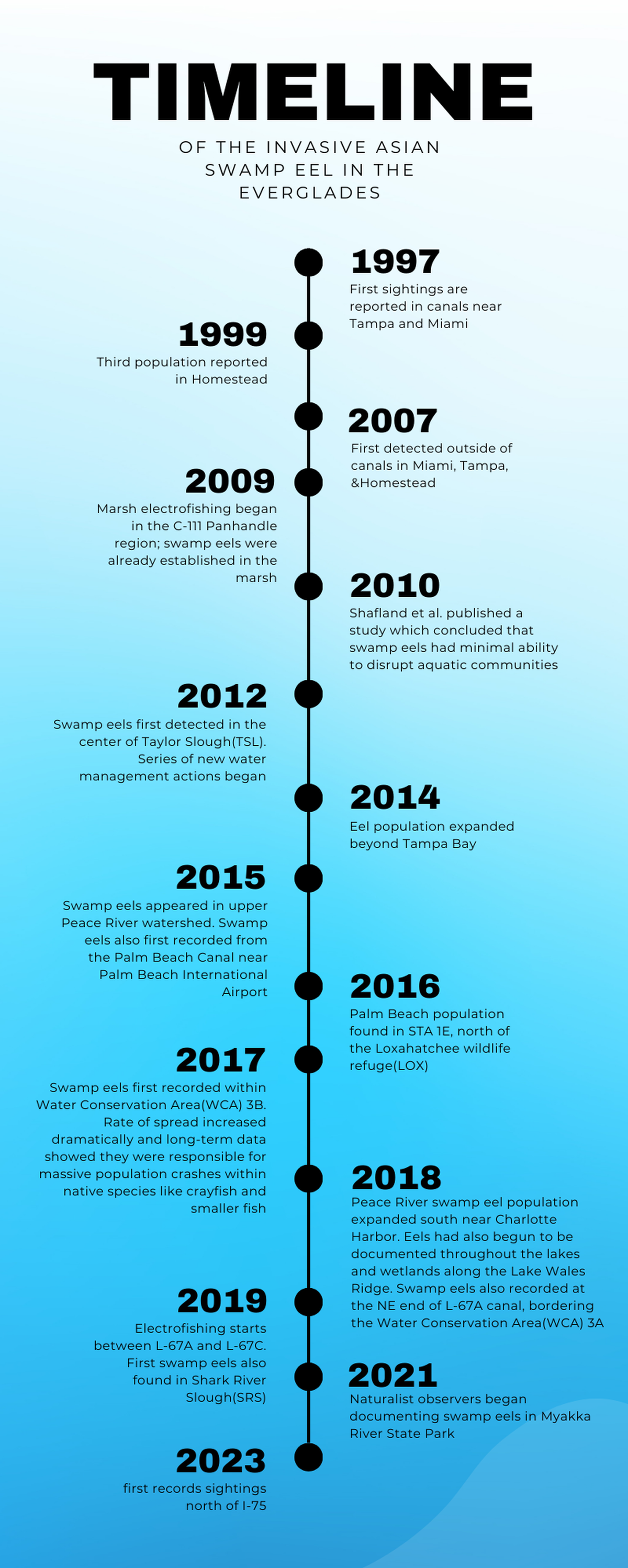
Searcy added that the eel arrived in South Florida through the food industry. They eventually reached the Everglades National Park around 2009 after invading the region’s canal system.
The ecosystem’s altered canal system, “historically… the factor that humans disturbed the most,” according to Searcy, allowed invasive species in them to flow into the park.
For years, they spread, and so did scientists’ concern. In 2006, the eel’s presence drew enough attention for limited initiatives to remove it from the canals surrounding the Everglades, but the population was only growing slowly then. In fact, a 2010 study claimed that the Asian swamp eel had minimal ability to disrupt the aquatic communities.
Before anyone knew it, the eels were everywhere, and there was no way to get them out.
Now, Dorn fears that there could be a future that sees the entire Everglades overrun by the Asian swamp eel due to its supreme ability to survive in all of the area’s conditions, as well as the impact on animals in the Everglades.
The wading bird is able to help scientists understand the overall health of the Everglades. The better the wading birds are doing, the better the area is doing, and vice versa. If the wading bird isn’t able to get the food it needs, the wetland wouldn’t only lose a major factor of biodiversity, but an indicator of the progression of restoration efforts as well.
Scientists have already seen flocks of wading birds leave the Everglades in the past, according to Davis. He said that the species has declined by 90% from the 1940’s to the 1980’s when the Everglades was 50% bigger.
There aren’t enough small fish to go around for both the eel and the thousands of pairs of nesting birds, Dorn said. Only one of the two groups can properly hunt in the wet season — when the smaller fish spread out with more room to roam, and aren’t so easy to catch from above with the water’s new depth — so one will reign victorious.

The invasion of the slimy, 3-foot creature is advancing, and it’s causing more harm to this protected area that is home to some of Florida’s critical native animals that make the ecosystem thrive. Dorn worries over how this creature can leave a lasting impact on this once thriving ecosystem, stating, “This is a predator like the system’s never, never seen.”
This article included additional research by Michelle Yi.
This story was produced as part of a partnership between the Florida International University Lee Caplin School of Journalism & Media and the Miami Herald.