A $10,000 prize awaits the hunter that catches the most pythons in Florida
Ronald Kiger spent 10 days in one of the most inhospitable areas of South Florida last summer, searching for a massive predator among dense bushes, mangroves, and flooded areas. During that time, he endured the blistering temperatures and swarm of insects.
His stay in the Everglades swamps paid off: he managed to capture 20 giant Burmese pythons, considered an invasive species, and took home the grand prize of $10,000 awarded each year during the “Florida Python Challenge.”
When he received the award in 2024, he thanked his family for joining him on the adventure: “Thanks for putting up with the heat and the bugs. We enjoyed getting out and helping the state.”

Hundreds of hunters, both professional and amateur, will attempt to repeat this feat from July 11-20, in an event that combines extreme adventure and the fight against a silent threat in the Everglades: the pythons that are devouring the native fauna of this fragile ecosystem.
The Florida Fish and Wildlife Conservation Commission (FWC) told el Nuevo Herald that registration will be open until the last day of the contest.
“The 2024 Florida Python Challenge resulted in the removal of 195 Burmese pythons from the Everglades ecosystem. Last year, 857 people from 33 states and Canada participated in the effort to eliminate invasive constrictors,” he said.
Because registration remains open throughout the event, the FWC will not release the final number of participants or countries represented until the event closes on July 20.
“Every python removed helps protect the Everglades and our native wildlife. The annual contest raises awareness about invasive species in Florida, how individuals can help, and encourages the public to become directly involved in Everglades conservation by removing invasive species,” the FWC said.

The Florida Python Challenge 2025 will award $25,000 in prizes, with the top prize being $10,000.
The competition is being organized in conjunction with the South Florida Water Management District, and interested parties can register at FLPythonChallenge.org.
Aggressive predators
Since 2000, more than 23,000 Burmese pythons have been removed from Florida’s natural habitat.
Pythons are aggressive predators that affect native birds, mammals, and reptiles, disrupting the food chain. A single female can lay more than 100 eggs at a time, which accelerates their spread.
The event offers a $10,000 Grand Prize for the registered participant who removes the most pitons. The categories are professional, beginner, and military.
“An exciting new feature this year is the inclusion of Everglades National Park as one of the eight official Florida Python Challenge venues,” the FWC reported.
In addition to the event, pythons can be killed on 32 public lands year-round or on private lands with the landowner’s permission, without a hunting license.
The competition is one of the methods implemented to locate and remove these giant snakes that have invaded the Everglades swamps and that, according to scientists, represent a long-term challenge.
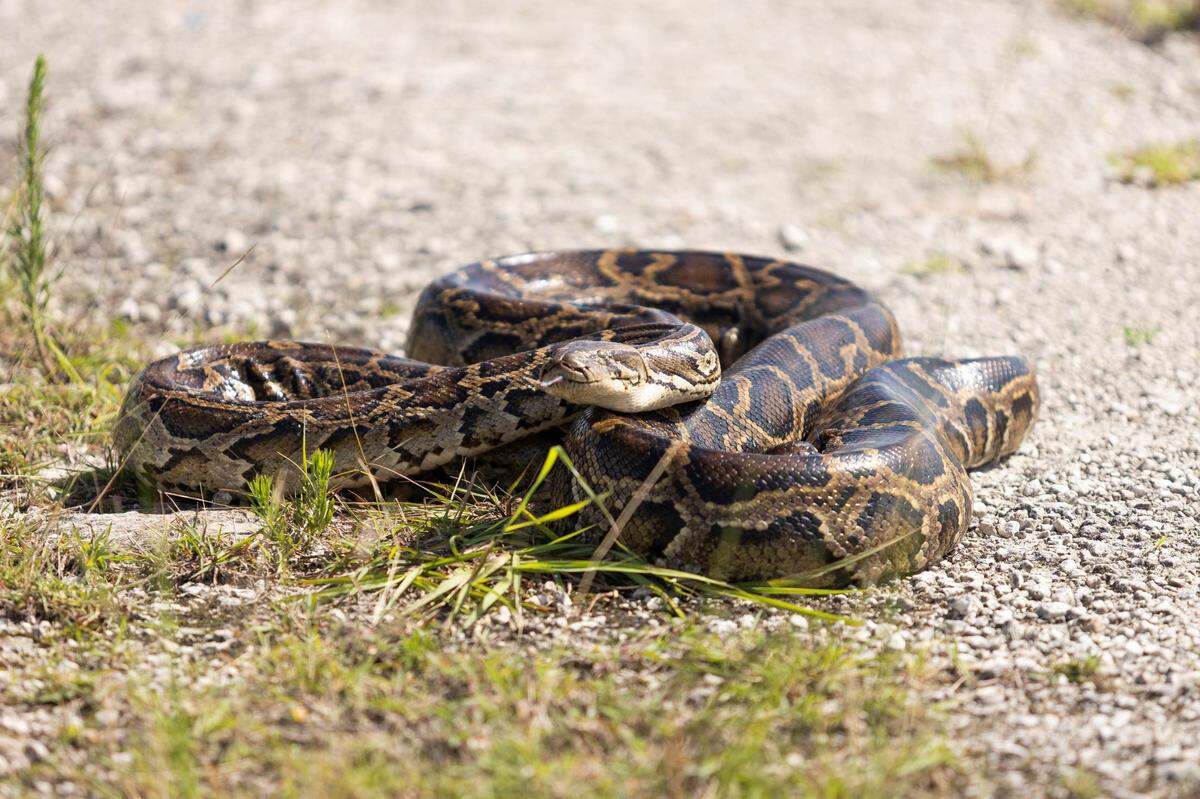
The U.S. Geological Survey (USGS) warned in 2023 that eradication of Burmese pythons “is probably impossible” and the problem of invasion of this species represents “one of the most difficult” to solve in the world.
Giant pythons are responsible for an 85 to 100 percent decline in the population of some South Florida swamp mammals, including raccoons, opossums, bobcats, rabbits, gray foxes, and white-tailed deer, according to the USGS.
Burmese pythons were found in the Everglades swamps in 1979 in Miami-Dade County. They are believed to have been released or escaped from private homes. A breeding population was confirmed in the early 2000s, and they were recognized as an established invasive species. They are currently found in Broward, Palm Beach, and Monroe counties, and along the southwest coast of Florida.
This story was originally published July 11, 2025 at 7:35 PM with the headline "A $10,000 prize awaits the hunter that catches the most pythons in Florida."