Millions in South Florida flood-control projects on hold after Trump FEMA cuts
The Trump administration slashed funding for tens of millions of dollars of projects designed to keep South Florida homes and businesses safe from current-day flooding, leaving cities and government agencies scrambling for money to keep the projects on track.
On the chopping block: Money to build a safe room for first responders during a hurricane in Key West, new drainage for a soggy section of 8th Street in Miami’s Little Havana and a flood-prone neighborhood in North Miami, plus crucial generators in Miramar and Homestead.
But perhaps the most important project now facing funding issues and delays is a $150 million fix for chronic flooding along three waterways in north Miami-Dade and south Broward that would protect about a million people from flooding happening now, as well as future flooding brought on by climate change.
Helmed by the South Florida Water Management District, that last project is set to finish the design phase in June. Construction was set to begin later this year, but the money was clawed back by the federal government.
In a Wednesday meeting in El Portal, Carolina Maran, chief of resilience for the district, alluded to a few “bumps” in the project but said the district was searching for other sources of funding, including state and federal grants, to fill the sudden hole in the budget.
“We are really committed to ensuring flood protection for this region,” she said. “We will not lose the momentum.”
Trump ends FEMA program he created
The decision to end the FEMA grant program, called Building Resilient Infrastructure and Communities, came down last week, but the effects were still unclear even late this week.
Florida’s Department of Emergency Management, which collected millions from the program to help staff its department, encouraged cities to apply to other FEMA grants in a memo to affected municipalities on Wednesday.
“The Florida Division of Emergency Management remains committed to fiscal responsibility and accountability. FDEM will continue working closely with federal and local partners, leveraging available resources strategically to strengthen Florida’s resilience,” the memo read.
President Donald Trump’s administration created the program in 2020, and it sent more than $13 million to Florida in the last five years to address flooding and add generators to critical buildings, including a Jacksonville animal shelter and a senior center in Pasco County.
And yet, a FEMA spokesperson told Grist, which initially broke the news, that BRIC was getting cut because it was “yet another example of a wasteful and ineffective FEMA program.”
“It was more concerned with climate change than helping Americans affected by natural disasters,” the spokesperson said.
At a Florida congressional delegation meeting on Wednesday, Tampa Democratic Rep. Kathy Castor said she was deeply concerned about the cuts to the program. Wesley Brooks, Florida’s chief resilience officer, said the program was targeted toward larger cities and suggested that smaller, rural communities have not have the same opportunities to win the grants.
“You’re looking at the South Florida community largely taking advantage of those funds,” he said.
The good news, he told legislators, is that there are other FEMA grant programs the state can use. He noted that Florida expects around $900 million in federal funding in the next few years to fix up the damage caused by Hurricanes Helene and Milton.
“That dwarfs any impact of BRIC in the state of Florida right now,” he said. “We’re actually at a really good place with resilience funding at the moment.”
Neither of those storms had significant impacts in South Florida, so it is unlikely that many of the municipalities that won BRIC grants could qualify for post-hurricane FEMA grants for those same projects.
South Florida’s cuts
Key West is in a similar situation to the water management district, with the design underway and fully funded, but no more cash lined up to actually stick shovels in the ground. The city was working on building a new safe room for first responders to hunker down in during hurricanes.
“We’ll be looking for further grant funding for Fire station #3,” Key West Spokeswoman Alyson Crean wrote in an email.
North Miami lost $3.8 million in funding to fix the flood-prone Arch Creek neighborhood, a community plagued with regular, deep flooding after heavy rainstorms and high tides, confirmed city spokeswoman Eunicia Baker. Archived versions of a since-deleted page on FEMA’s website said the project will “protect neighborhoods from repetitive flooding and the growing impacts of climate change.”
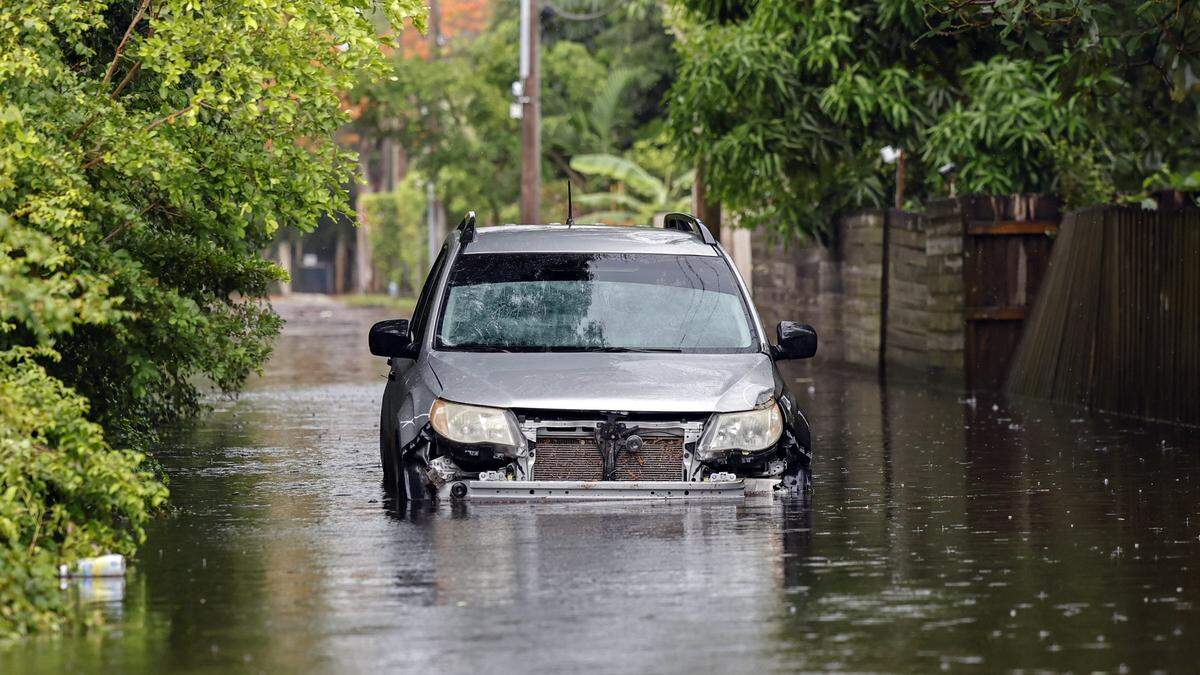
Miami lost a $7.3 million grant to add drainage to the 8th street neighborhoods, where homes and businesses frequently flood.
The city did not answer questions about the loss of the grant, but a city website explained that the project was designed to provide flood relief for 650 properties and protect $400 million of real estate. Construction was set to begin in 2027.
Miramar appears to have lost about $200,000 in funding to add two generators to its flood pumping stations to make sure the city can keep streets and buildings dry under a deluge of heavy rain.
Homestead lost funding for its project to keep its stormwater pump stations functioning in floods or power outages, said city manager Zerry Ihekwaba. Instead, the city is working to secure a funding appropriation by Congressman Carlos Gimenez to fill the gap.
“The overall impact to cities like Homestead poses a challenge to programmed resilience and mitigation projects,” he said. “This action impacts some of our infrastructure improvement and hardening project applications actively in progress, such as the electric infrastructure undergrounding projects that we submitted for [fiscal year] 2024.”
This story was originally published April 11, 2025 at 3:00 PM.