Rare for the region, Pygmy killer whale found stranded on Florida Keys beach. Take a look
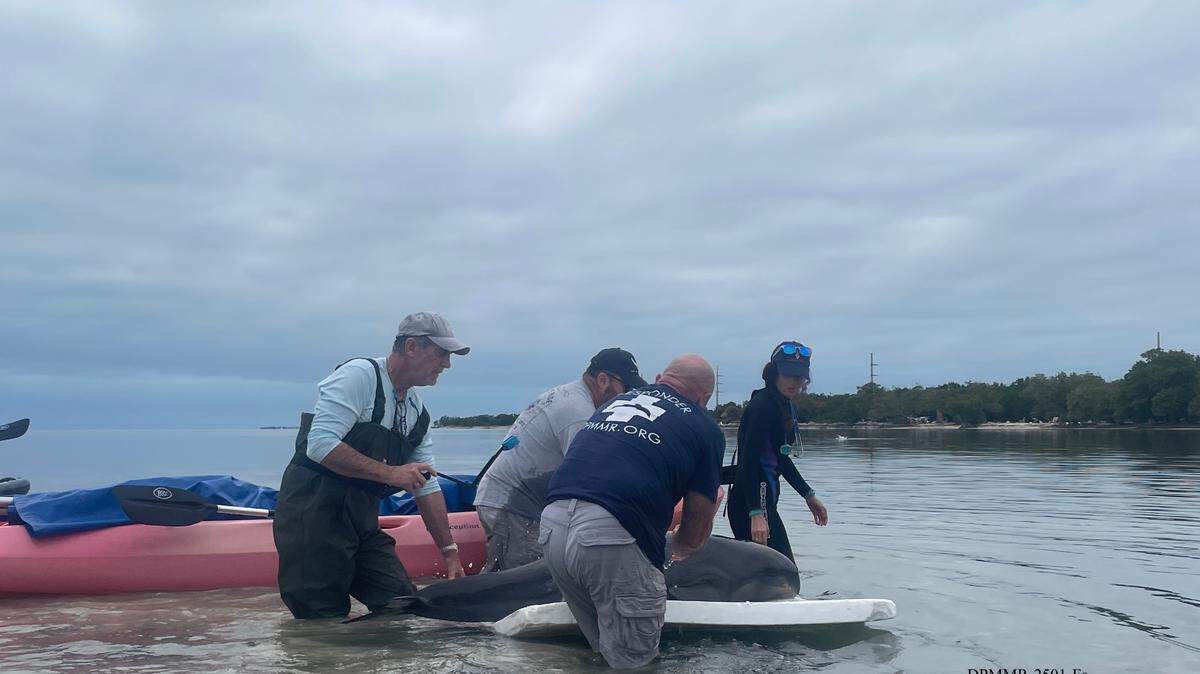
A Pygmy killer whale — rarely seen in the shallow waters that surround the Florida Keys — was found injured, sick and stranded just off a beach in the island chain on Sunday, a local marine mammal rescue group said.
While found in tropical and subtropical waters, the small gray and black whales typically live in much deeper waters between 1,600 and 6,500 feet, according to Dolphins Plus Marine Mammal Responder, the federally-authorized whale rescue group that tried to save the animal.
Around noon, members of the group responded to Long Key State Park in the Middle Keys after receiving reports of a stranded dolphin that was between 4 and 5 feet long. But when scentists arrived, they found it was a 5 and a half-foot long Pygmy killer whale (Feresa attenuata), per a Dolphins Plus Marine Mammal Responder press release.
According to the group, he was a male “sub-adult,” meaning he didn’t yet reach full adulthood.
“The last time this species was seen in the Florida Keys was in the early 1990s, when we successfully rescued, rehabilitated and released a pair of these animals in Key Largo,” said Art Cooper, director of Stranding Operations for the group. “This is definitely not a common occurrence.”
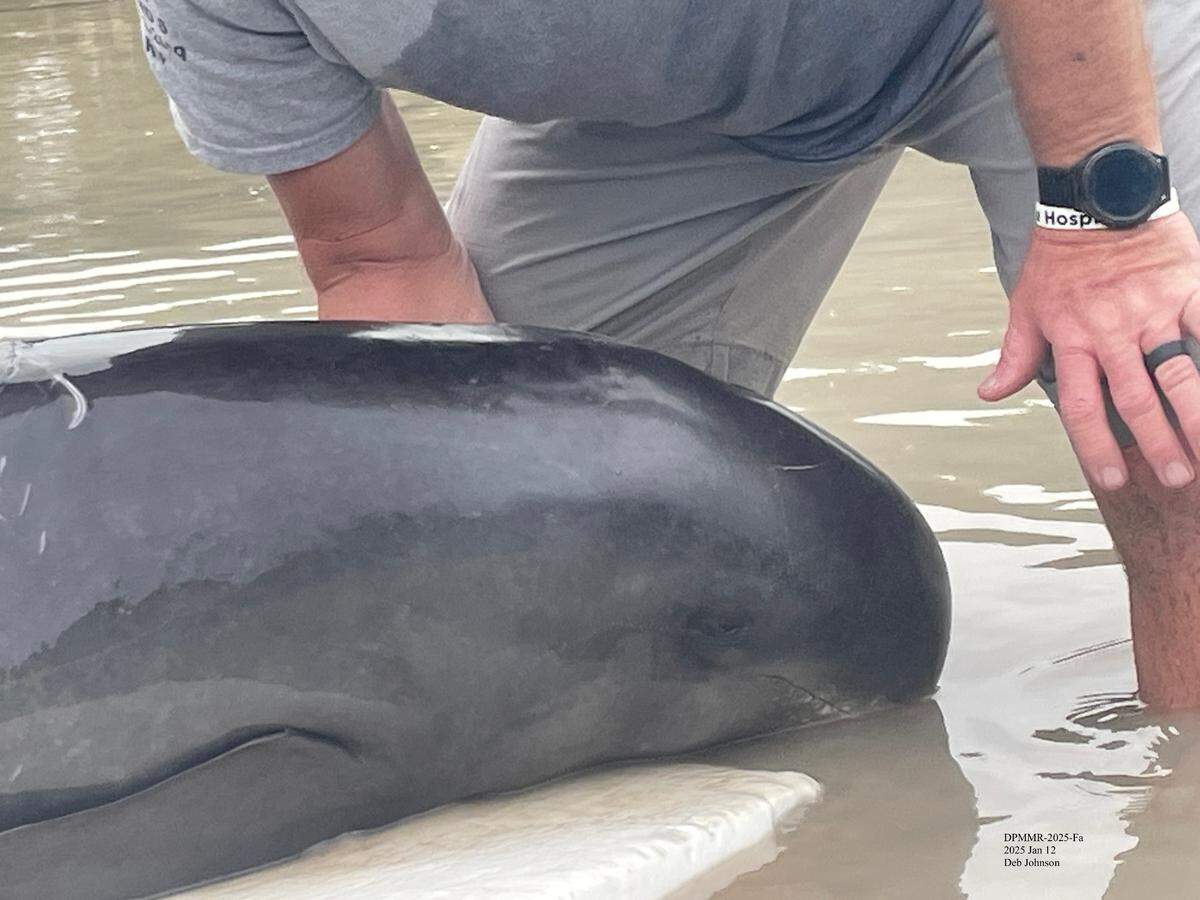
Unfortunately, the whale was struggling in shallow mud flats when scientists reached him and he exhibited signs of poor health, including malnourishment, difficulty breathing and recovering from recent shark bites, said Dr. Juli Goldstein, the group’s veterinarian.
After consulting with the National Oceanic and Atmospheric Administration’s National Fisheries Service, Dolphins Plus decided the most humane course of action was to euthanize the whale.
“The decision to euthanize any animal is never easy, but after a thorough clinical evaluation, it became clear that ending this whale’s suffering was the only humane option available.” Goldstein said.
The National Oceanic and Atmospheric Administration said the reproductive biology of Pygmy killer whales is poorly known, and therefore, so is the species’ estimated lifespan. The whales reach an average length of 6.5 feet at adulthood and can grow to up to 8.5 feet, according to NOAA.
NOAA Fisheries is conducting an autopsy of the whale at its pathology laboratory in Key Biscayne to try to determine the cause of death and the conditions that led to his stranding, added Steve McCulloch, director of Dolphins Plus’ Stranding Investigations.
“Ultimately, as sentinels of ocean and human health, marine mammals reflect the condition of our shared ocean environments,” McCulloch said in a statement. “We swim in the same water and in some cases, we eat the same fish.”
Dolphins Plus is in the process of raising funds and obtaining the proper licensing to open a marine mammal rehabilitation hospital in the Keys to deal with future strandings. The group secured a location in Islamorada in the Upper Keys that has a pool it says is large enough to rehab marine mammals, but says it still has bureaucratic and financial obstacles to surmount before it can open.
The group is holding a fundraising brunch at the Oasis, located at 82703 Old Highway, Sunday, Feb. 2 from 11 a.m. to 3 p.m. for the project.
The last time the Keys had a whale and dolphin rehabilitation facility was in the 2010s. It was operated by a group called the Marine Mammal Conservancy. However, mounting building code violations and fines from Monroe County proved too much for the Key Largo-based group to maintain operations, and the last time a marine mammal rehabilitation happened at the mile marker 102.4 facility was in 2011.
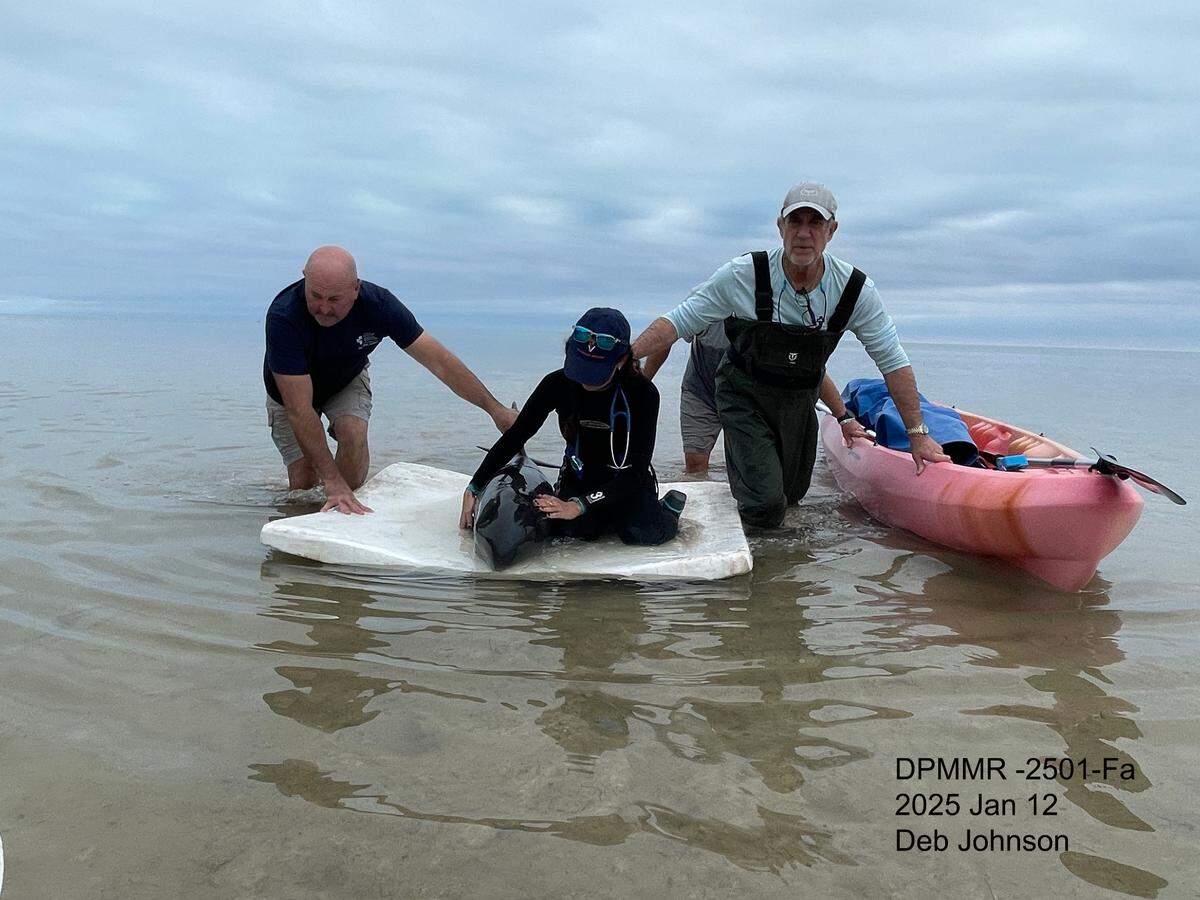
Cooper, one of the founders of Dolphins Plus’ marine mammal rescue group, said even if a rehabilitation facility in the Keys existed, the Pygmy killer whale in this case would not likely have been able to have been saved.
“The worst part of our job is having to euthanize an animal, especially if it is an animal that could have been rehabilitated and released back to the wild,” Cooper said in a statement. “Due to its young age and reliance on a mother for food, this animal would most likely not have made a good candidate for rehabilitation.”