
‘We need water.’ How South Florida groups are helping those hardest hit by extreme heat
The first day that Denny Baldonado went out on heat patrol for the Miami-Dade County Homeless Trust this past summer, it was so hot steam was coming off the sidewalks and people were lined up on both sides of the street near the Second Avenue bridge to catch a sliver of shade.
He wore a bright red shirt emblazoned with a thermometer and the words, “Excessive Heat Alert,” that makes Homeless Trust outreach workers like Baldonado easy to spot as they fan out offering water, cooling towels and electrolytes to those living on the streets during especially scorching days.
“It’s like a red target on our backs. They knew who we were and when they saw us, they began calling out, ‘Water. We need water,’” said Baldonado, who works for New Hope, a Miami-Dade nonprofit that provides outreach services for the Homeless Trust.
.jpg "denny (1).jpg")
Whether it’s providing immediate relief when temperatures soar, educating the community on the dangers of excessive heat and climate change, advocating on behalf of outdoor workers, educating students and involving them in climate change issues, or working to increase the local tree canopy, South Florida nonprofits are playing an increasingly important role in making life in the sun safer, cooler and more sustainable.
In recent years, the discussion about extreme heat has evolved.
The community has become accustomed to stepping up to help with weather emergencies such as hurricanes and flooding or cold snaps, said Ron Book, chairman of the Homeless Trust, but extreme heat has added a new dimension.
“Extreme heat should rise to the same level of disaster planning as flooding and hurricanes,” said Nikisha Williams, the Miami Foundation’s vice president of collective impact.
Extreme heat doesn’t just make people miserable; it can also be deadly, lead to hospitalizations and exacerbate pre-existing conditions. The Centers for Disease Control estimates that 1,220 people are killed by extreme heat every year in the United States.
“Heat stress caused by excessive heat is a major challenge to global health,” said Rajiv Chowdhury, professor and chairman of Florida International University’s Department of Global Health.
“It remains the leading cause of weather-related deaths and can exacerbate underlying illnesses including cardiovascular disease, diabetes, mental health, asthma and can increase the risk of accidents and transmissions of some infectious diseases.”
Last year was the warmest year on record in Miami-Dade County and the second warmest year in Broward County. So far, 2024 has been a scorcher too.
“We started [efforts to counter the effects of extreme heat] in 2023 when things got to what I thought was the most excessive heat I’ve ever seen, and this year has just reinforced that,” said Book.
Through the end of September, Homeless Trust outreach workers were mobilized for dozens of heat advisory days — generally when the heat index, a combination of heat and relative humidity, is expected to be 105 degrees or higher for two consecutive hours.
However, the community as a whole, Book said, doesn’t automatically think of the “silent faces” of the homeless when the temperature soars.
This summer, for example, while Baldonado was distributing water at the Greyhound bus station at the Miami Intermodal Center by Miami International Airport, he came across a homeless man who was laid out on the floor. People were passing him by, assuming he was sleeping.
He wasn’t. “He was extremely dehydrated; he was too weak to stand,” said Baldonado. After offering him water, Baldonado called emergency services, and the man was later admitted to the hospital. After he was released, the Homeless Trust was able to reunite him with a sister in Key Largo.
That’s the outcome the Homeless Trust is hoping for, said Book. This summer, 30,583 bottles of water, more than 2,000 packets of electrolytes, more than 1,000 cooling towels, 1,400 neck gaiters and hats, and 307 containers of sunscreen were distributed in Miami-Dade County. The Trust also took or directed people to cooling stations such as the downtown library.
While that met a critical need, “my job isn’t supposed to be sustaining people on the street,” said Book, who walked with outreach workers and distributed supplies several times this past summer.
At the end of August, there were just over 1,000 unhoused people living outside, in their cars or in abandoned buildings and another 2,674 in shelters, Book said.
Finding housing for the unhoused
The goal is to find them more permanent housing solutions. “We want them to go from the street to housing but we have one of the toughest housing markets in the country — both in terms of lack of availability and affordability,” he said.
The Trust is working with landlords, offering to guarantee rents and return units in as good or better condition than when they were rented. But eventually, Book said, the Trust hopes to own 1,500 to 2,000 units of its own. By the end of the year, Book said, the Trust will own or be in the processing of closing on about 585 units. And all of them will be air-conditioned, he said.
The homeless aren’t the only population that suffers during periods of excessive heat.
Death of Homestead farm worker
Among others who are particularly vulnerable to high temperatures are the elderly, the very young, pregnant women, and those with preexisting medical conditions, said FIU’s Chowdhury.
Residents of so-called urban heat islands who lack adequate tree canopy and air conditioning, people with disabilities or who have limited or poor access to healthcare, and outdoor workers who labor in sweltering conditions are also among the most vulnerable.
There are nearly 2 million outdoor workers in Florida — more than 327,000 in Miami-Dade – who are working in dangerous temperatures without local, state, or federal heat standards to protect them, according to WeCount!, a Homestead-based nonprofit that works with immigrant families and farmworkers.
In 2021, WeCount! launched its ¡Qué Calor! campaign to help farmworkers, plant nursery, landscaping and construction workers win enforceable heat protections and to help save lives.
“Heatstroke is a medical emergency with a high-case fatality rate,” pointed out Chowdhury.
A study released by the Florida Policy Institute in July found that Florida leads the nation in the number of hospitalizations and emergency room visits for heat-related illnesses.
Outdoor workers seemed to have scored a win in their fight for Agua, Sombra and Descanso (Water, Shade and Rest) when the Miami-Dade Commission considered a proposal requiring companies employing such workers to give them 10-minute breaks in the shade every two hours when the heat index is at least 95 degrees, to provide them access to water and to make sure they are not working alone on days of extreme heat.
The proposed Miami-Dade ordinance came in the wake of the death of 29-year-old farmworker Efraín López García who became ill while picking fruit on a Homestead farm on a day of record-breaking heat and died in July 2023.
New state law prevents local heat protections
But the Florida Legislature preempted such local protections this year when it passed HB433, a bill that prevents local governments from instituting their own heat protection requirements. Gov. Ron DeSantis signed the bill in April, and it went into effect July 1.
READ MORE: DeSantis signs bill ending push in Miami-Dade to pass worker heat protections
“Politicians won’t save us, so we need to save ourselves,” says WeCount! The organization is asking for donations to provide outdoor workers with education on heat illness, heat safety kits and to help them file labor complaints.
“This summer we filed multiple labor complaints from multiple locations” dealing with lack of rest, water and shade,” said Oscar Londoño, the co-executive director of the organization.
Despite the legislative setback, WeCount! is continuing its advocacy work and its ¡Que Calor! campaign. “The most important piece of this is civic engagement,” said Londoño.
WeCount! distributes educational materials, cooling towels, sunscreen – whatever has been donated – at labor corners where workers congregate hoping to get day jobs and near worker housing and commercial strips where they hang out.
During its workshops, outdoor workers learn what heat illness is and its symptoms as well as how to help co-workers suffering from extreme heat.
WeCount! also airs public service announcements on its community radio station, Radio Poder, in English, Spanish and Haitian Creole as well as the indigenous languages spoken by many farmworkers from southern Mexico and Central America.
“This is a grassroots campaign of hundreds of workers who are working in 100+ degree temperatures and they still continue to be active” in trying to get better working conditions, Londoño said.
“We’re also continuing to lead on national advocacy,” he said. In September, WeCount! was invited to participate in the first ever White House Summit on Extreme Heat, and the group is supporting a new rule announced by the Biden administration to protect workers from extreme heat. It is currently in the public comment phase and wouldn’t take effect until at least 2026.
“What we heard at the summit was what we were able to do in Florida contributed to the proposed OSHA rule,” said Londoño.
Meanwhile, other South Florida nonprofits are engaged in efforts to educate and raise awareness of climate change challenges and the dangers of excessive heat. Other efforts focus on getting residents engaged in solutions.
Boosting tree canopy
Charitable and faith-based groups for example, have partnered with Miami-Dade County and Miami-Dade County Public Schools in tree-planting and education campaigns aimed at increasing the tree canopy in the county to 30 percent, thus lowering surface temperatures and mitigating urban heat islands.
Climate change, resiliency and combating extreme heat have become a cornerstone of the Miami Foundation’s grants and activities in recent years.
Thanks to a grant from the Rockefeller Foundation, the Resilient305 initiative was launched in the fall of 2016 as a collaboration of Miami-Dade County, Miami, and Miami Beach to improve citizens’ lives through more sustainable environmental and economic practices. The Miami Foundation was the main support agency for the effort.
The grant allowed all three communities to hire chief resilience officers and begin work on a five-year community-wide strategy was unveiled in May 2019.
The Foundation and its partners are currently formulating the next five-year plan, said Williams, the leader of the Foundation’s climate and disaster portfolio.
“For us, climate and disaster preparedness are inter-related,” said Williams. To make sure the community is better prepared, the Foundation funds nonprofit disaster relief efforts at the beginning of the hurricane season.
Through its Disaster Resilience Fund, The Foundation is concentrating on funding that builds nonprofits’ capacity so they can jump into action to help after disasters, which includes periods of extreme heat, and support the community’s climate change initiatives, Williams said.
Arsht Center, Miami Foundation involved
In 2021, the Adrienne Arsht-Rockefeller Foundation Resilience Center offered Miami-Dade a challenge grant to fast start an extreme heat initiative. That led not only to the creation of the world’s first chief heat officer position, a post occupied by Jane Gilbert, but the launch of a Climate and Heat Health Task Force in partnership with The Miami Foundation.
The task force held six workshops on heat issues ranging from tree canopy to workers exposed to heat from December 2021 to March 2022 to get input from the community to improve the county’s response to extreme heat.
The Foundation also is making sure the nonprofits it funds are aware of the dangers and challenges of extreme heat.
It’s a complicated problem, Williams said, that includes everything from increasing the tree canopy to weatherizing more homes. “There’s still a lot of work to be done in this area,” she said. “If you live in affordable housing, for example, there’s no requirement that the home has cooling, but it is required to have heat. We would benefit as a community to see that our older homes are weatherized.”
Getting students involved
Increasing awareness of climate change and extreme heat is also the mission of the CLEO Institute, a Miami nonprofit dedicated to climate education, advocacy and engagement. It offers climate presenters to Miami-Dade public school middle and high school classes, who outline the basics of climate science and how teens can get involved in climate-resiliency projects such as tree planting.
The CLEO Institute frequently holds community workshops where topics such as sea level rise, public transit and preparing to handle extreme heat and hurricane preparedness are discussed and distributes hurricane preparedness and extreme heat kits, which contain essentials such as powdered electrolytes, fans, and ice packs.
“We encourage people to get involved in issues that affect their lives,” said Bereatha Howard, CLEO’s climate equity program coordinator.
Communities with tree-lined streets might be 10 degrees cooler than those where a tree canopy doesn’t exist, she said. In some urban heat islands, people are also more dependent on public transportation and may have to wait long periods in the blazing sun at bus stops.
“To me that’s why it’s so important that they realize that extreme heat is a different type of heat, and they need to take measures to protect themselves,” said Howard. “People don’t realize it is an issue until it is almost too late.”
Empowering women
Among CLEO’s initiatives is the Empowering Resilient Woman program that equips women in communities such as Overtown, Liberty City, Little Haiti, Little Havana and Allapattah with the information they need to handle critical issues such as extreme heat and climate change, hurricane preparedness and food sustainability.
“They are the frontline. If families are prepared, the community is prepared,” said Howard. As the women, who are sometimes already leaders in their own communities, became more engaged, they begin speaking to politicians and advocating policies that will make their neighborhoods more resilient, she said.
“It’s a ripple effect,” said Howard. “They are putting two and two together and beginning to understand they can be part of the solution. I tell people, ‘Mother Earth isn’t going to change for you; we have to learn to adapt to her.’”
Environmental sustainability and climate change also are priorities for the Community Foundation of Broward. Funding devoted to these issues has ranged from $300,00 to $500,000 in recent years, said Jennifer O’Flannery Anderson, the Foundation’s chief executive.
Because South Floridians live so much of their lives outdoors, there is an awareness of the environment, said O’Flannery Anderson. But what is new, she said, is “connecting education, the economy, and the environment and how it impacts our own individual lives. I see people connecting the dots now.”
Broward Eco-Hub
In April 2022, with the help of a $300,000 three-year grant from the Community Foundation of Broward, an Eco Hub was established at the Museum of Discovery and Science in Fort Lauderdale.
Under the Eco Hub umbrella, the Foundation has brought together more than 30 nonprofits, universities, and national and international corporations focused on environmental sustainability, sea level rise, and resiliency in Broward County.
Among the projects the Foundation is helping support are new exhibits at the museum, Birch State Park and Flamingo Gardens as well as an outdoor classroom at the museum.
The exhibits will highlight the importance of wildlife corridors in species preservation, the ecosystem of the Everglades, and coastal habitats and ongoing habitat restoration projects.
They help visitors understand the implications of climate change and extreme heat not only on people but on animals on the ground and in the water, said O’Flannery Anderson.
Foundation grants also support the Eco-Teers, a youth volunteer program at Flamingo Gardens that focuses on educating the community about climate change and engaging in environmental projects, EcoExplorer internships at the museum, and a project with the National Wildlife Federation to plant new habitats and give away trees in low-income areas of the county.
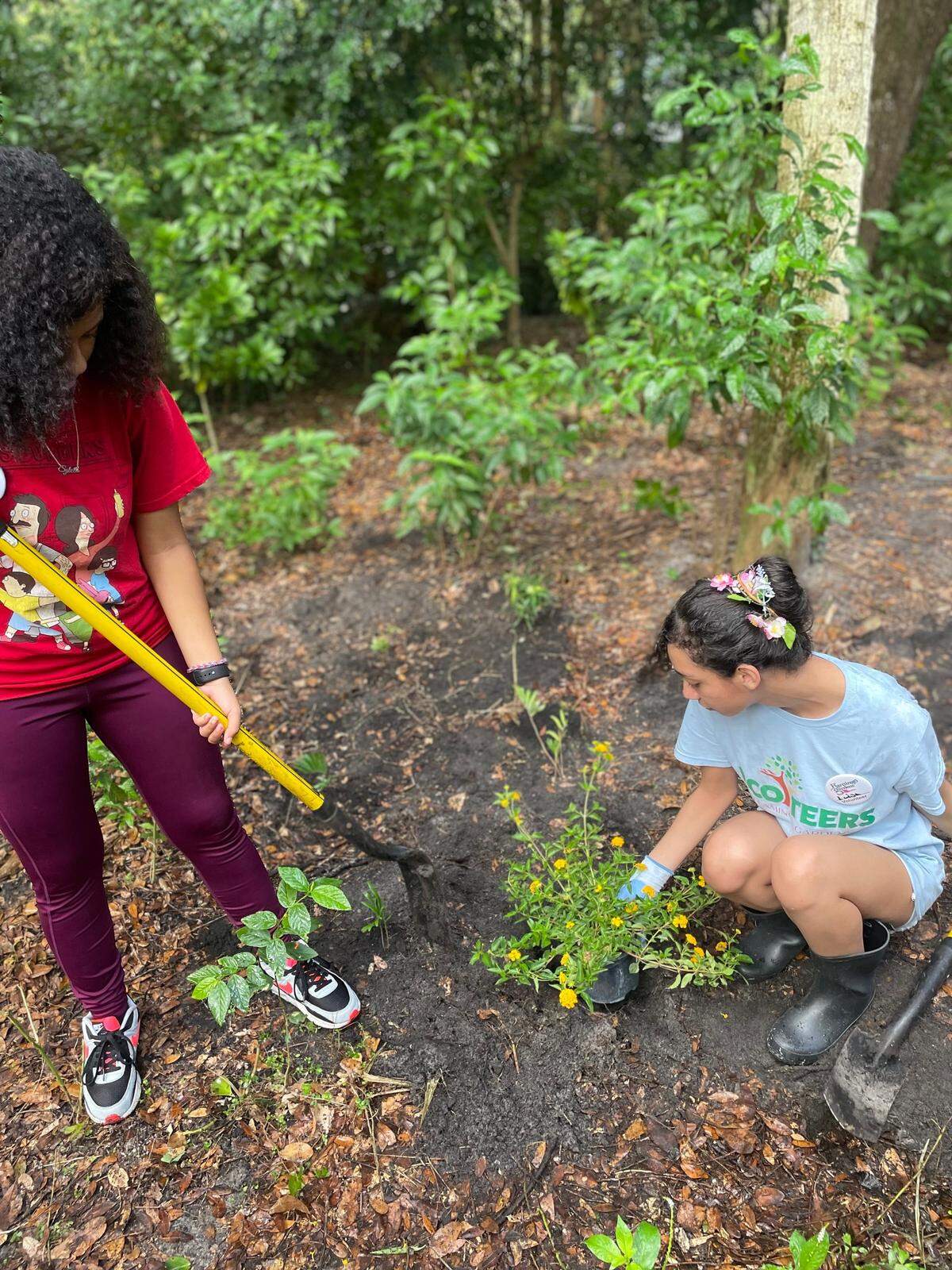
“We’ve got to start with the youth to educate them as much as possible so they can be better stewards of our environment in the future,” said O’Flannery Anderson.
This story was originally published October 30, 2024 at 5:00 AM.