As they wait and work for Everglades restoration, the swamp keeps dying
By Jenny Staletovich and
Patrick FarrellWLRN News
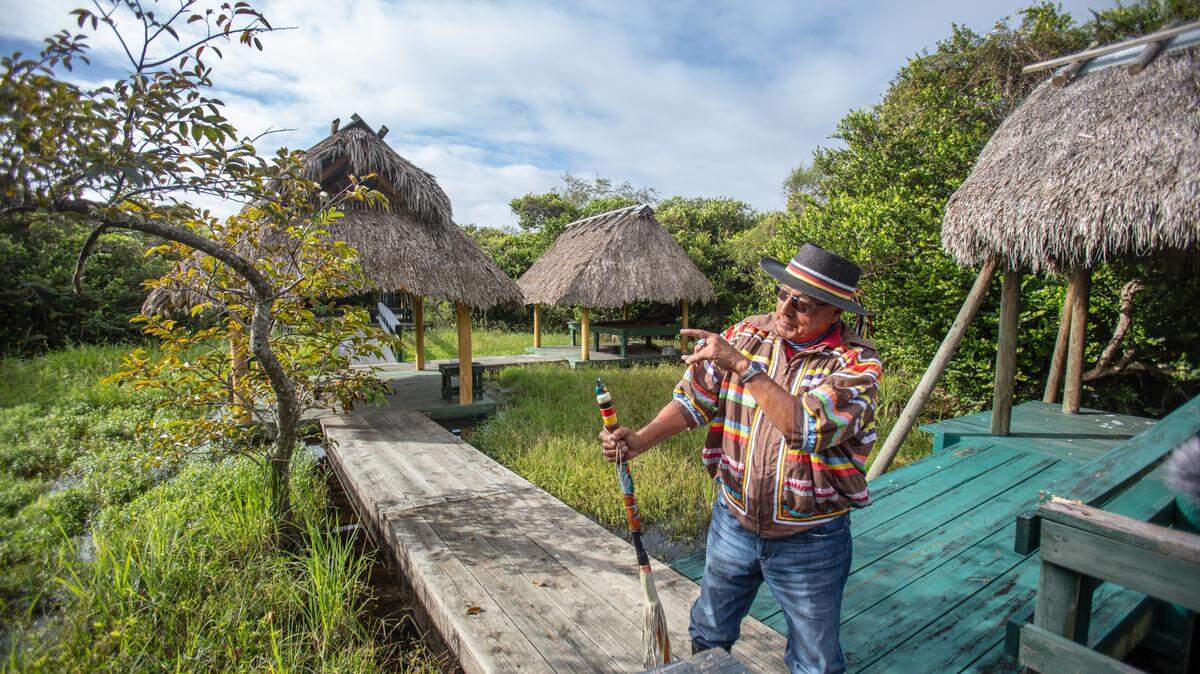
Miccosukee Elder Michael Frank visits his family’s tree island where he spent part of his youth.
Patrick Farrell for WLRN
Deep in the Everglades, in remote sawgrass marshes few people ever see, Michael Frank points to a faded white, red black and gold Miccosukee flag that flies above the dock at his family tree island.
“We were told to never, ever leave the Everglades. You leave the Everglades, you lose your culture, you lose your language, you lose your identity,” Frank said. “You become just like the outside people.”
Today, unnaturally high water flows under the boardwalks that connect the island’s thatch-roofed chickees. Native plants fight for space with weedy elephant grass, Brazilian pepper and other invasive species.
The flag stays up, Frank said, because it represents the Miccosukee Tribe’s willingness to talk with those outside people to help save the marshes that hold his ancestral tree islands.
The WLRN podcast Bright Lit Place examines what happened to Florida’s promise to undo the damage killing the islands and restore the Everglades with a massive plan approved in 2000. Work was originally expected to cost just under $8 billion and take about 20 years. The price has now soared to $23 billion and fallen decades behind schedule. Meanwhile, the swamp keeps dying.
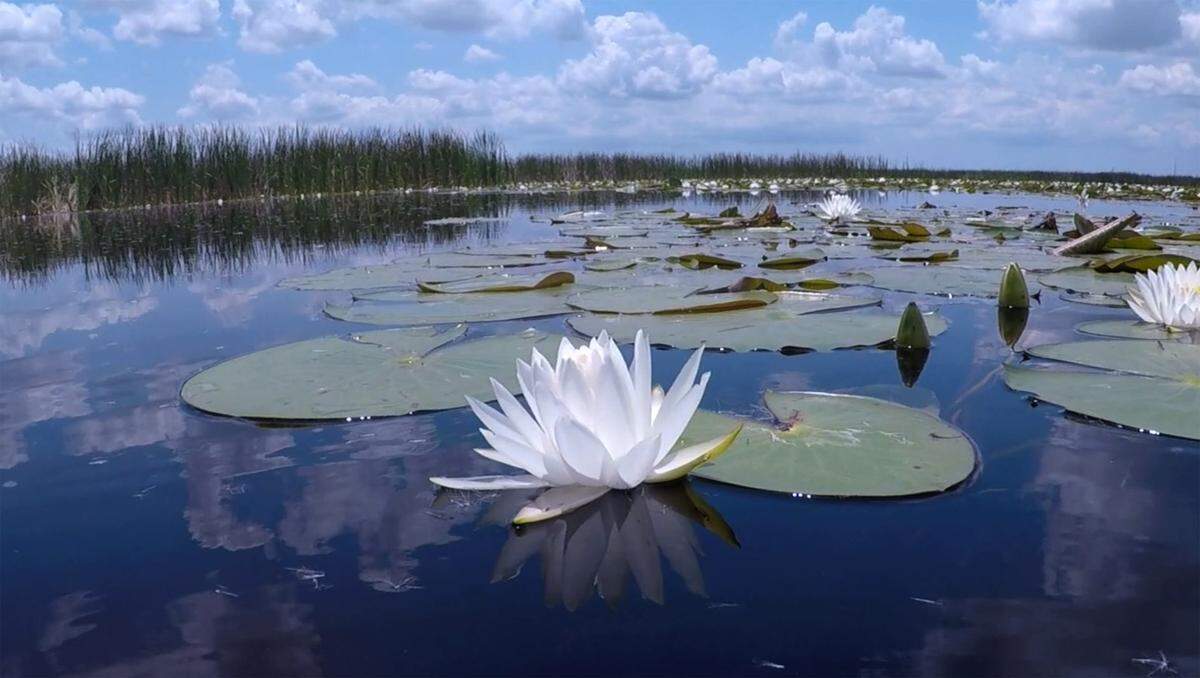
South Bay, Florida: Water lotus on a manmade stormwater treatment marsh at Stormwater Treatment Area 1 West. Patrick Farrell for WLRN
Half the Everglades’ tree islands in Frank’s homeland are now gone, washed away by high water stored in the marshes after the Everglades was dredged and drained to make way for development. Pig Jaw, Smallpox Tommy, Stinking Hammock and other islands where Frank lived and played as a child remain, but they’re chronically threatened by water.
Without freshwater from the Everglades, mangrove forests that protect the shoreline struggle to keep up with sea rise. Spongy peat soils and sawgrass marshes that help collect South Florida’s drinking water continue to collapse. And a menagerie of wildlife, from scarlet-colored roseate spoonbills to marsh rabbits, disappear.
These are some of the people appearing in Bright Lit Place, who’ve spent decades waiting for progress. Those hit hardest measure losses in their checkbooks and family businesses, or even their homelands. Others are scientists who’ve spent those same decades fighting to revive the struggling system, undaunted by some of the harshest working conditions on the planet.
Miccosukee Elder Michael Frank visits his family’s Tree Island where he spent part of his youth. Patrick Farrell WLRN
Miccosukee tribal elder Michael Frank
Growing up, Frank, 66, lived on tree islands, moving within the swampy patches of high ground shared by the tribe. Even before he was born, the islands were starting to disappear, as the Central and South Florida flood system took shape in the 1940s. The tribe often gathered for celebrations and meetings on a large island called New Town. When the Army Corps dredged a canal to drain farm fields to the north, it split the island in two.
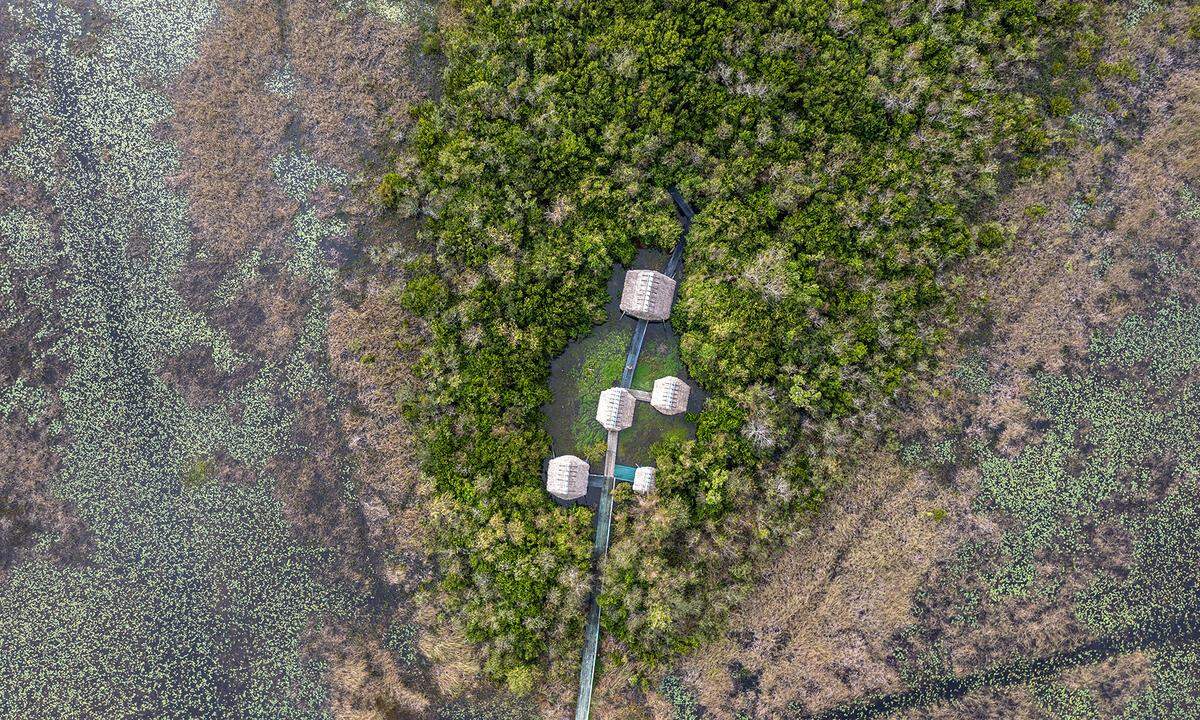
Tree islands in the Everglades make up the Miccosukee tribe’s ancestral homeland but are disappearing because flood control keeps water in the wetlands too high. Water management also interrupted the historic flow of water to southern marshes that helped create the islands. Patrick Farrell WLRN
As flood control pushed more water into the vast conservation area west of Miami, Frank was forced to move more frequently. His family finally fled the islands, he said, when the Army Corps dredged a levee near the Tamiami Trail.
“Back in 1949 or ‘48, when my grandpa and grandma moved in, that’s when they started working on the levees,” he said. “And when they were working on that, they told my grandfather and grandmother, if that day ever comes when your island goes underwater, we’ll come and build up your camp, which they never did. It went three, four feet under water, but they never came and built the camps up.”
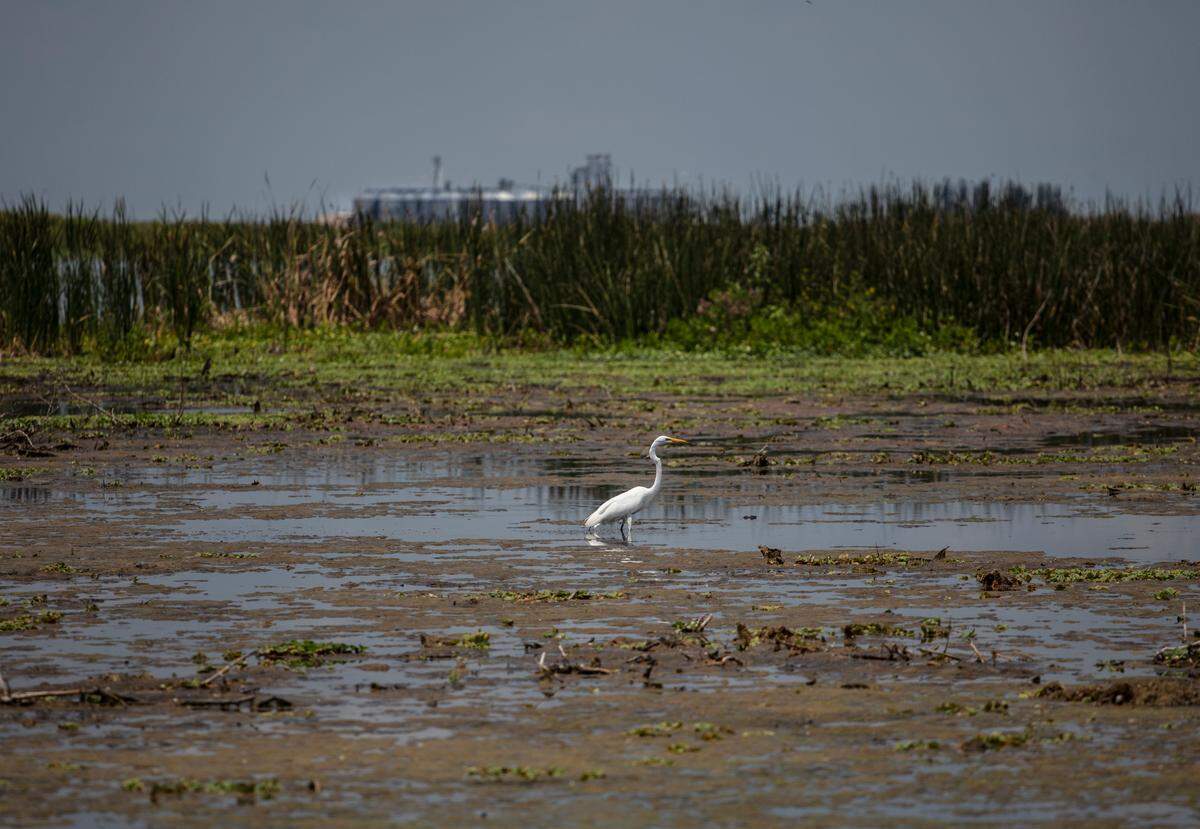
South Bay, Florida: A Great White Heron wades in Stormwater Treatment Area 1 West with a sugar mill off in the distance. Patrick Farrell for WLRN
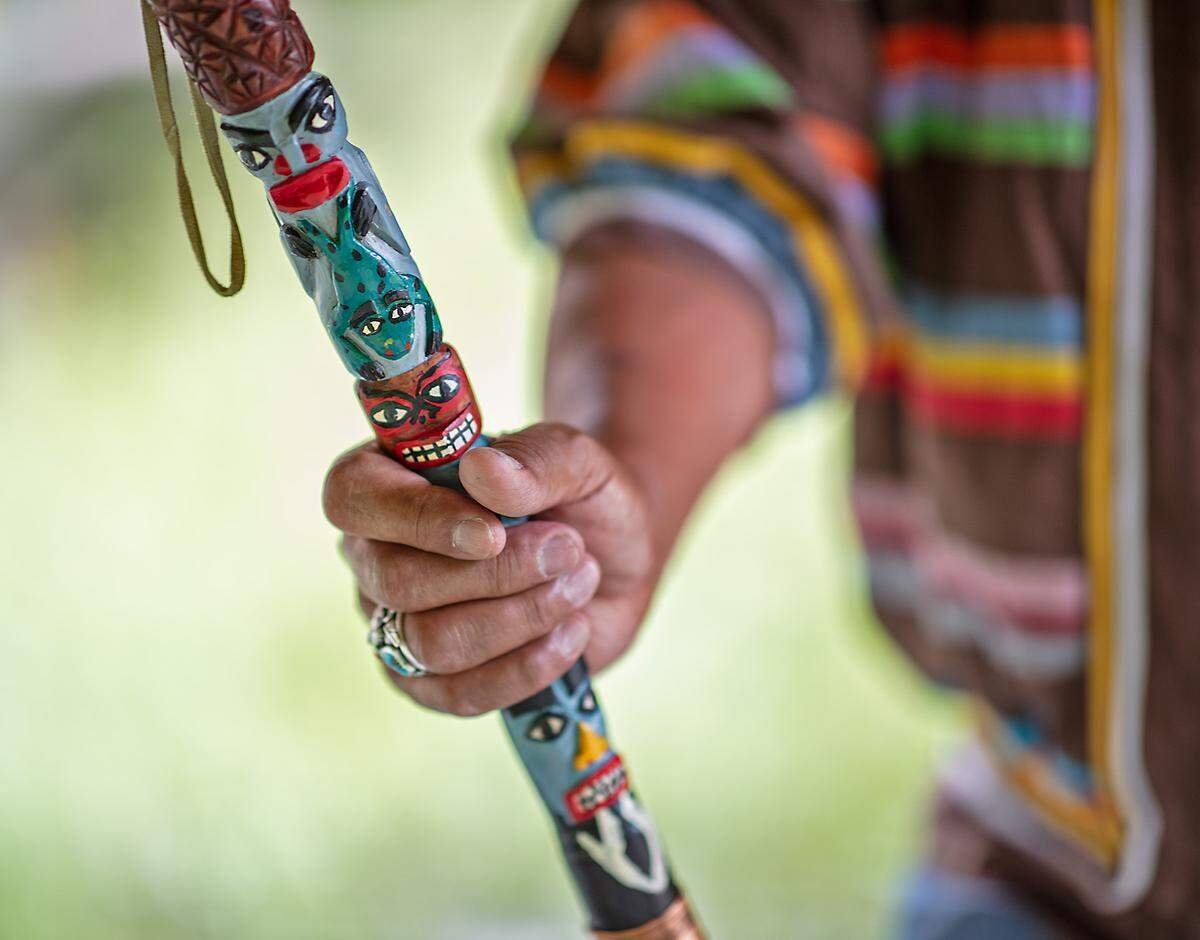
Today, Frank and his uncle still camp on Rice Island, about seven miles north of the Tamiami Trail. He gets around the boardwalks with a walking stick now. Age has left his hands crimped and knotted. He’s had to rebuild his dock as water rises. But he keeps his flags flying.
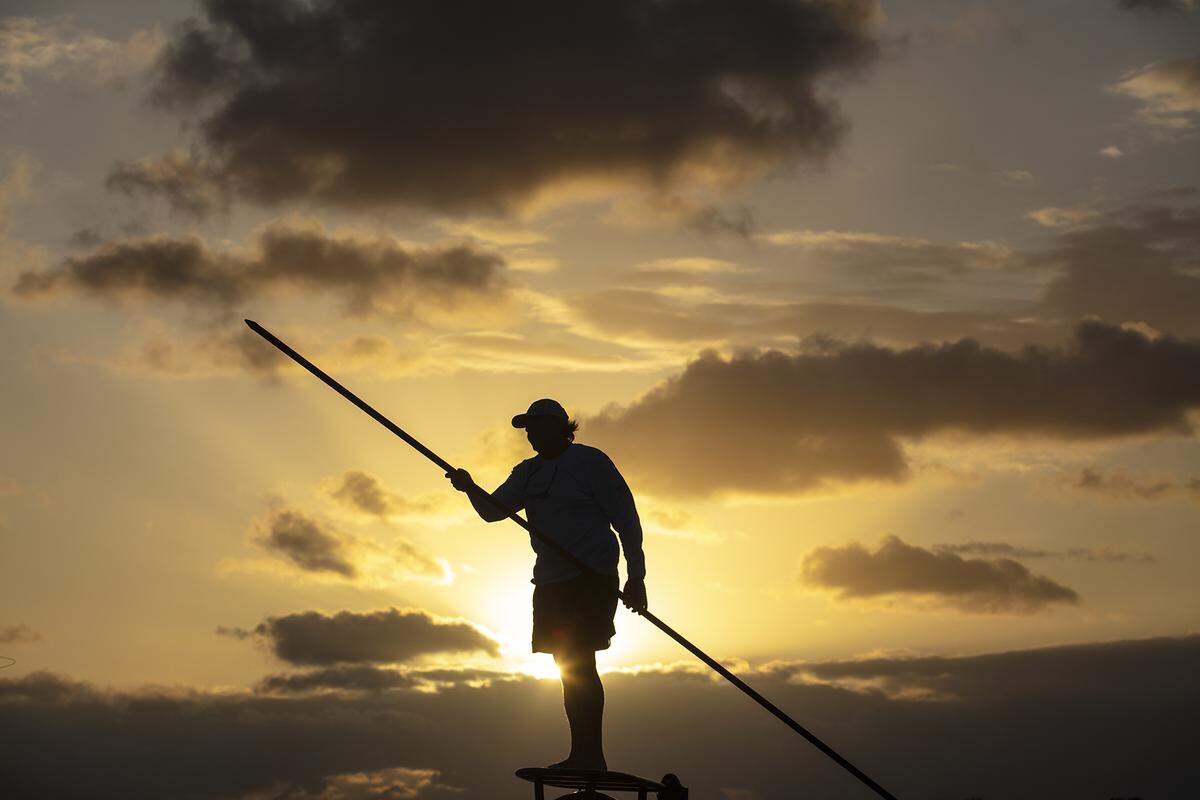
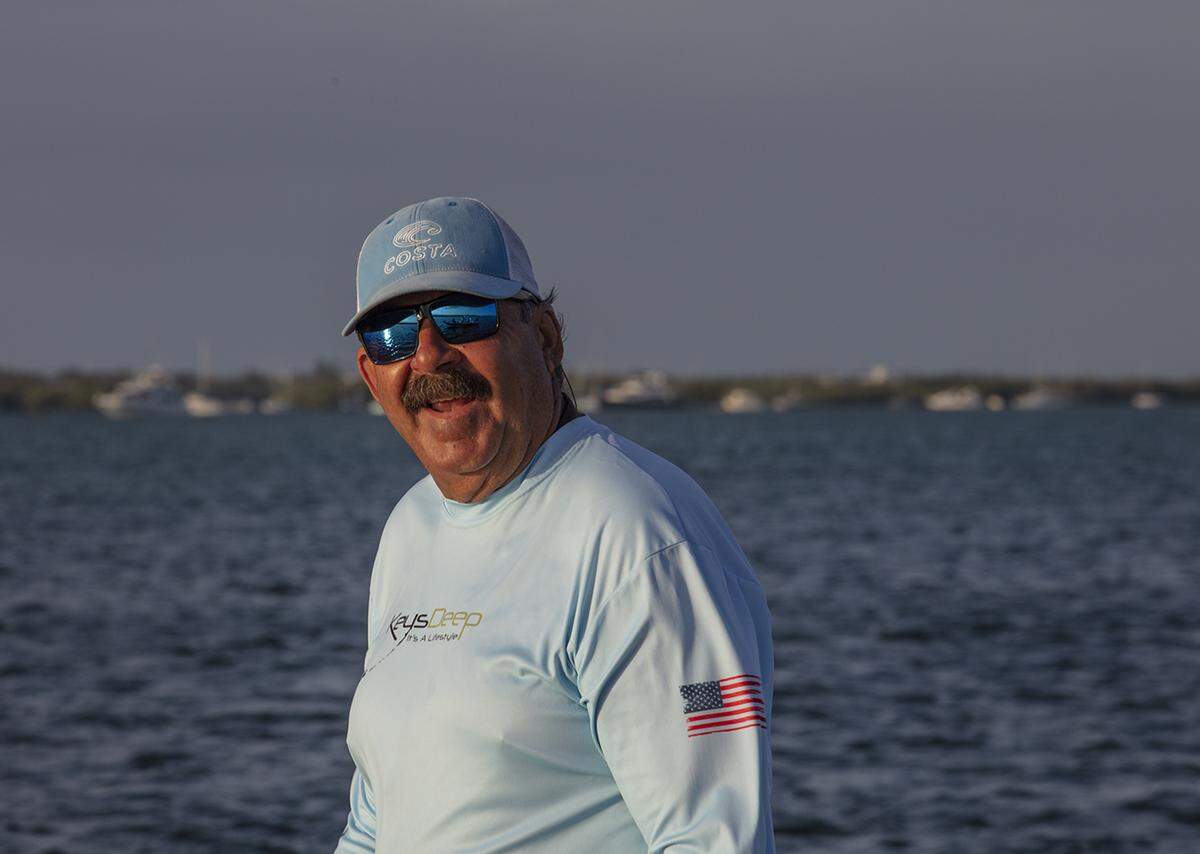
Islamorada, Florida: Florida Keys Fishing Captain Tim Klein directs a fly fishing client to fish off of Islamorada as the sun rises over Florida Bay. Patrick Farrell WLRN
Fishing guide Tim Klein
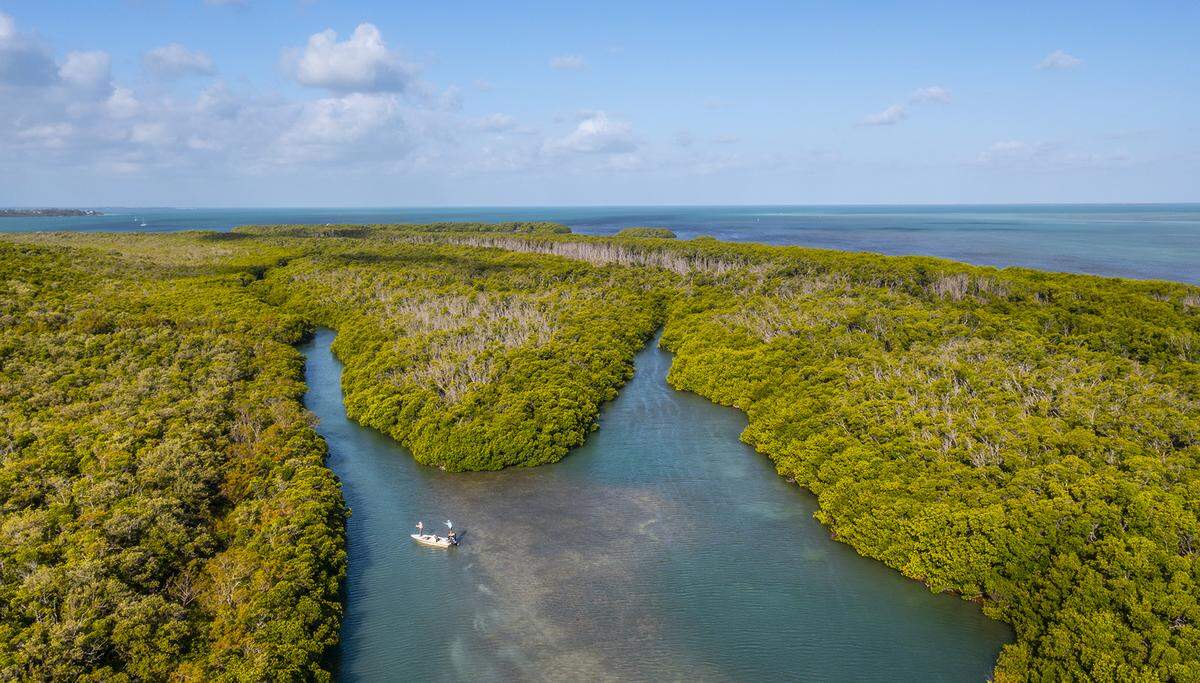
On a postcard perfect day in Florida Bay, fishing guide Tim Klein and his son James steer their boats around a small, horseshoe-shaped key crowded with squawking sea birds.
The water ripples with nervous mullet as a small pod of bottlenose dolphins swim nearby. Suddenly, a dolphin breaks the surface, belly up, with a mullet in its mouth.
“That was epic! Did you see that?” an astonished Klein shouted. “See, I give good eco tour.”
Islamorada, Florida: Florida Keys Fishing Captain Tim Klein directs a fly fishing client to find fish off of Islamorada in Florida Bay. Patrick Farrell WLRN
Klein, 62, is a champion flats guide with a long list of tournament victories. Years of poling clients to victory in his skiff kept his schedule booked nearly every day with anglers wanting to catch one of the Keys’ cherished sportfish - bonefish, permit or tarpon. Fewer days get booked now. When they are, Klein usually suggests a day looking for sawfish or sightseeing around the emerald mangrove islands.
“I got all new clientele,” he said. “I’ve been doing this for 38 years now, and the people I’ve fished in the past are just not here anymore.”
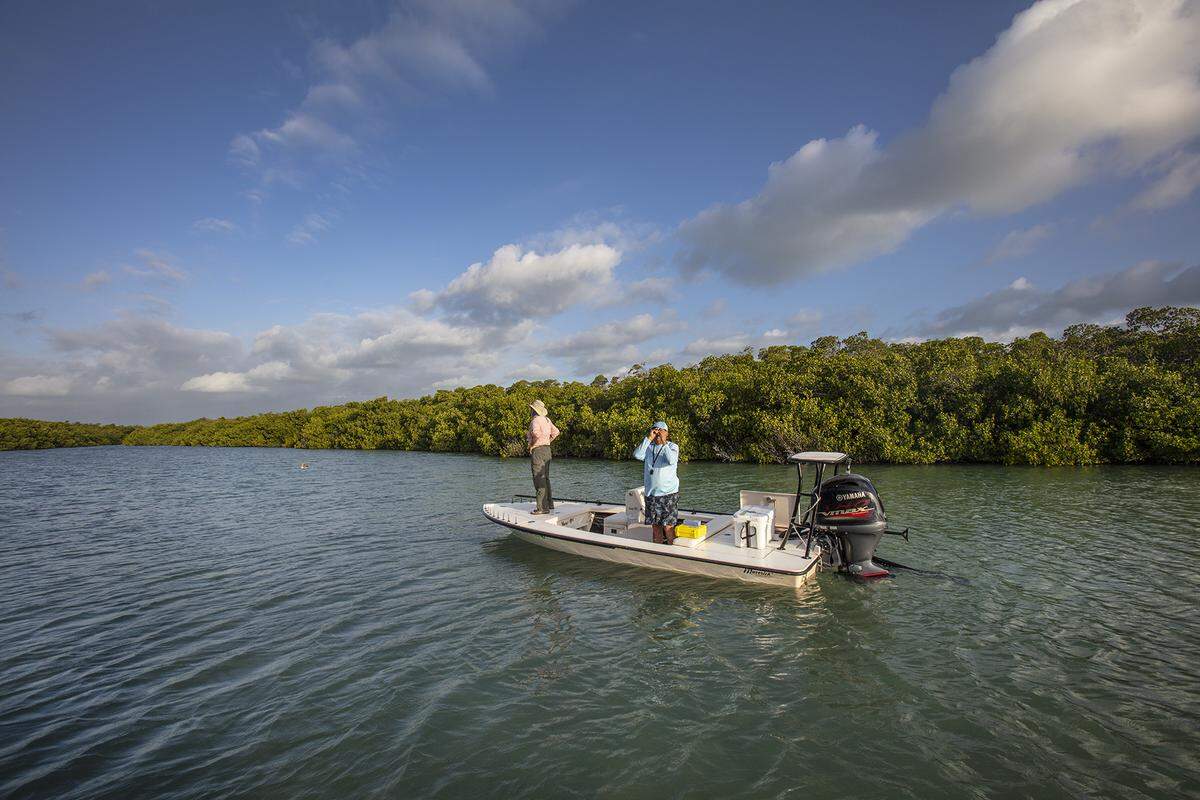
Islamorada, Florida: Florida Keys Fishing Captain Tim Klein uses a small device to check water salinity while looking for fish with a fly fishing client off of Islamorada in Florida Bay. Patrick Farrell WLRN
That’s because it’s getting harder to find those champion sportfish in Florida Bay, where flood control has cut off freshwater and left water chronically salty. High salinity can damage seagrass meadows that harbor shrimp, crab and other prey for the fish.
The bay now gets about half of the freshwater it received a century ago.
“It’s never going to be like it used to be back in the days when my dad was guiding, especially with all the big bonefish and scores of red fish,” said James Klein, 23, the third generation of Kleins to captain a boat. He does most of his guiding offshore, not the flats that brought his dad so much success. “We used to drive around on my little Hell’s Bay (skiff) and just find schools of hundreds of them.”
Islamorada, Florida: Florida Keys fishing captain Tim Klein. Patrick Farrell WLRN
That rarely happens now, he said. And Tim Klein is getting tired of waiting.
“We need to change,” he said. “We keep doing the same thing, year after year after year. It’s always waiting for this project and that project and nothing happens. We just need water some way or another. We need water in our bay before it dies again.”
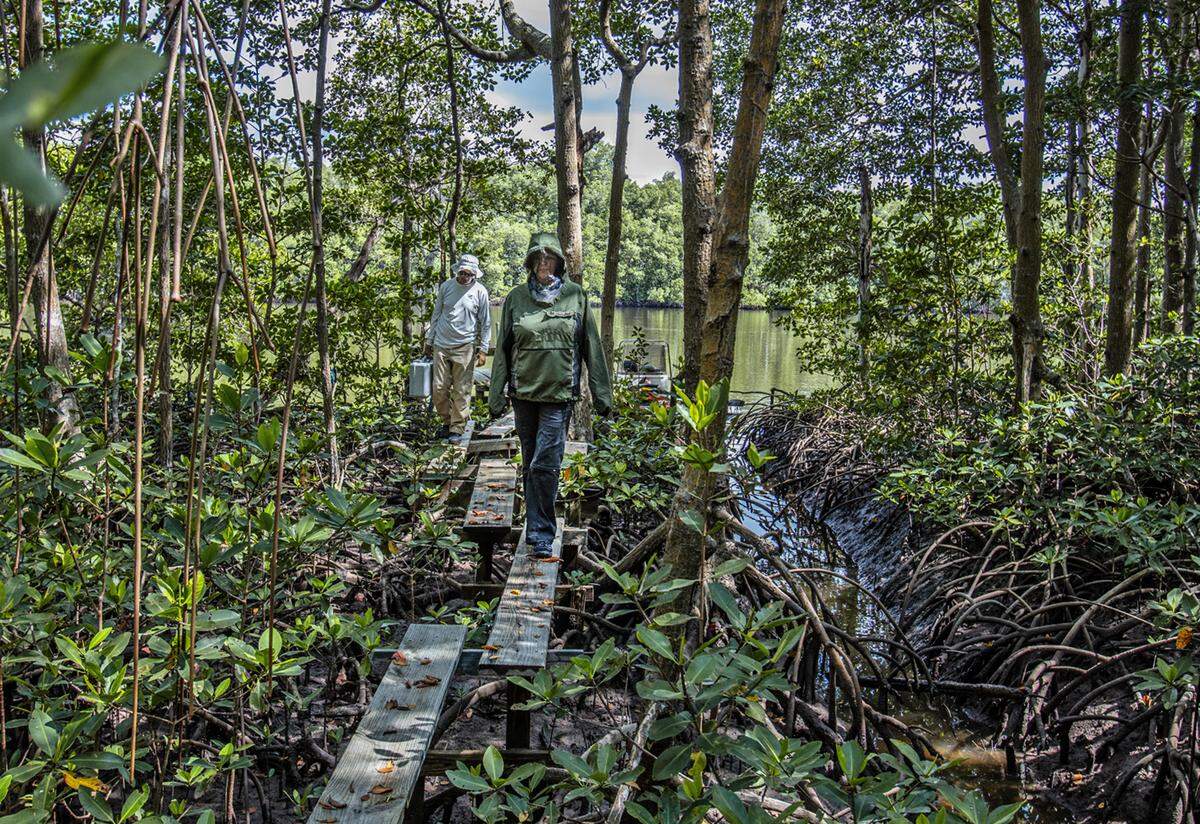
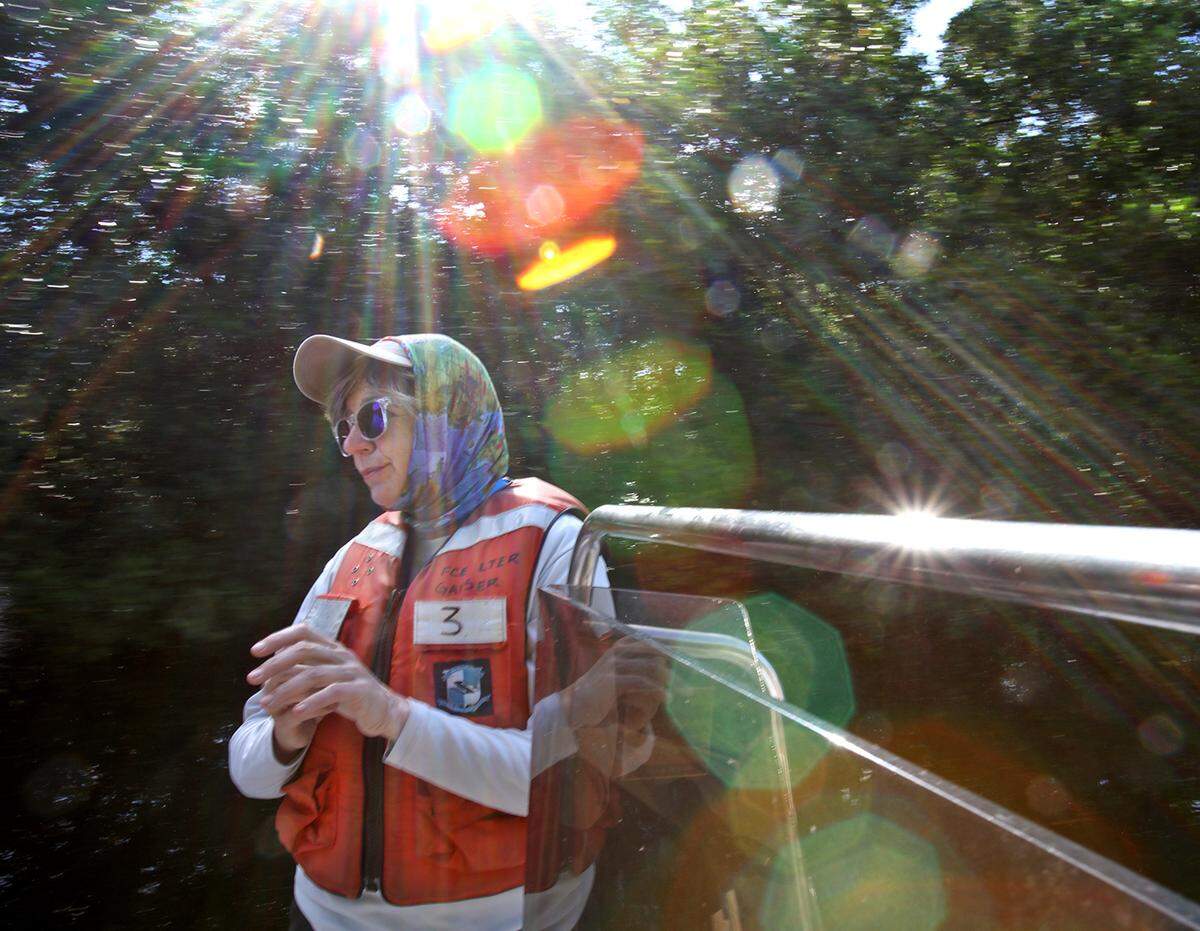
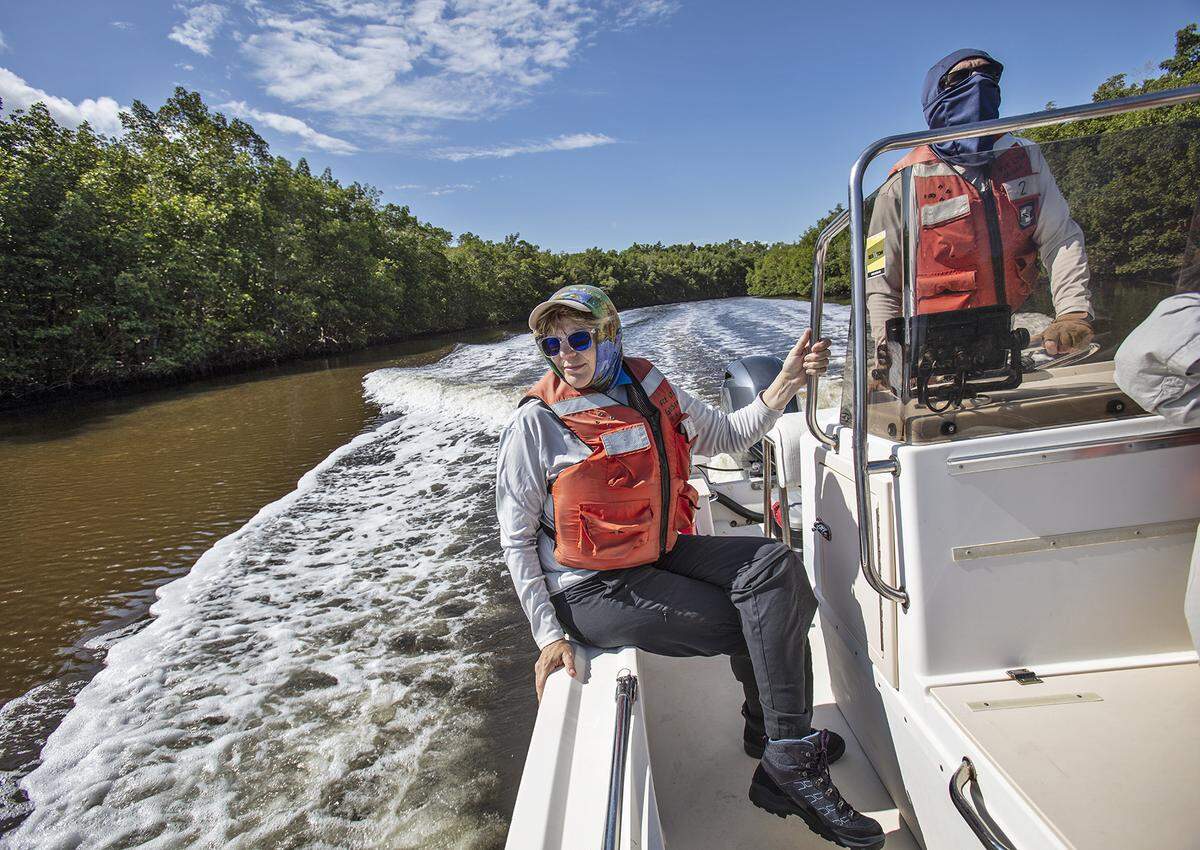
Everglades National Park: Dr. Evelyn Gaiser the George M. Barley, Jr. Endowed Scholars Chair at Florida International University, is prepared for the summer bugs as she visits a research area in a mangrove forest off Shark River in Everglades National Park with Lab Manager Rafael Traveiso. Patrick Farrell WLRN
Wetlands ecologist Evelyn Gaiser
Evelyn Gaiser grew up exploring frigid wetlands in Ohio, camping along the shores of Lake Huron. South Florida lured her to its buggy marshes in the late 1990s with a chance to work in one of the world’s largest wetlands. At the time, some of the most exciting new science was unfolding in the Everglades.
“I came in at the time when we were writing the Yellow Book, the plan for fixing everything,” she said. “All these different contingencies were planned, all these complicated trade-offs were understood. People were really careful in trying to get that plan right.”
Gaiser, 56, was part of the team working with biologist Ron Jones to establish limits for phosphorus, the nutrient from fertilizer choking the marshes by fueling thick stands of cattails and killing the floating mats of periphyton that feed wildlife.
“You could fly into Miami on a plane and notice from the air these expansive areas of cattail,” Gaiser said. “Just as far as you can look, you see cattails.”
Everglades National Park: Dr. Evelyn Gaiser the George M. Barley, Jr. Endowed Scholars Chair at Florida International University talks about her research as she heads out to a research area in a mangrove forest off of Shark River in Everglades National Park. Patrick Farrell WLRN
But Jones had a plan: build vast treatment marshes south of sprawling sugarcane fields where plants could soak up the nutrient pollution.
Gaiser spent the next five years studying the effects of phosphorus in a remote part of the park untouched by pollution in experimental plots as long as a football field.
“What we discovered was that that very, very low, barely measurable level of enrichment above that extremely low background level was enough to catalyze a full cascade of changes resulting ultimately in a cattail invasion into this very pristine part of the Everglades,” she said.
Evidence that even small increases in phosphorus triggered catastrophic changes confirmed the need for Jones’ costly clean-up plan. That drew fire from both the state and sugar growers.
“It was very controversial because we were going up against the interests of the agricultural industry that drives a lot of the economy in Florida,” she said.
Everglades National Park: Dr. Evelyn Gaiser the George M. Barley, Jr. Endowed Scholars Chair at Florida International University (at left) and Lab Manager Rafael Traveiso Patrick Farrell WLRN
The scientists prevailed and the limit remains in place. A court-ordered deadline for the state to begin showing it will meet the limit for phosphorus pollution is set for 2025. All these years later, Gaiser is dismayed that work to reconnect the river of grass and repair the Everglades has gone so slowly.
“It’s happening in small areas, but it needs to be that on a massive scale, on the scale that, that created the problem in the first place,” she said.
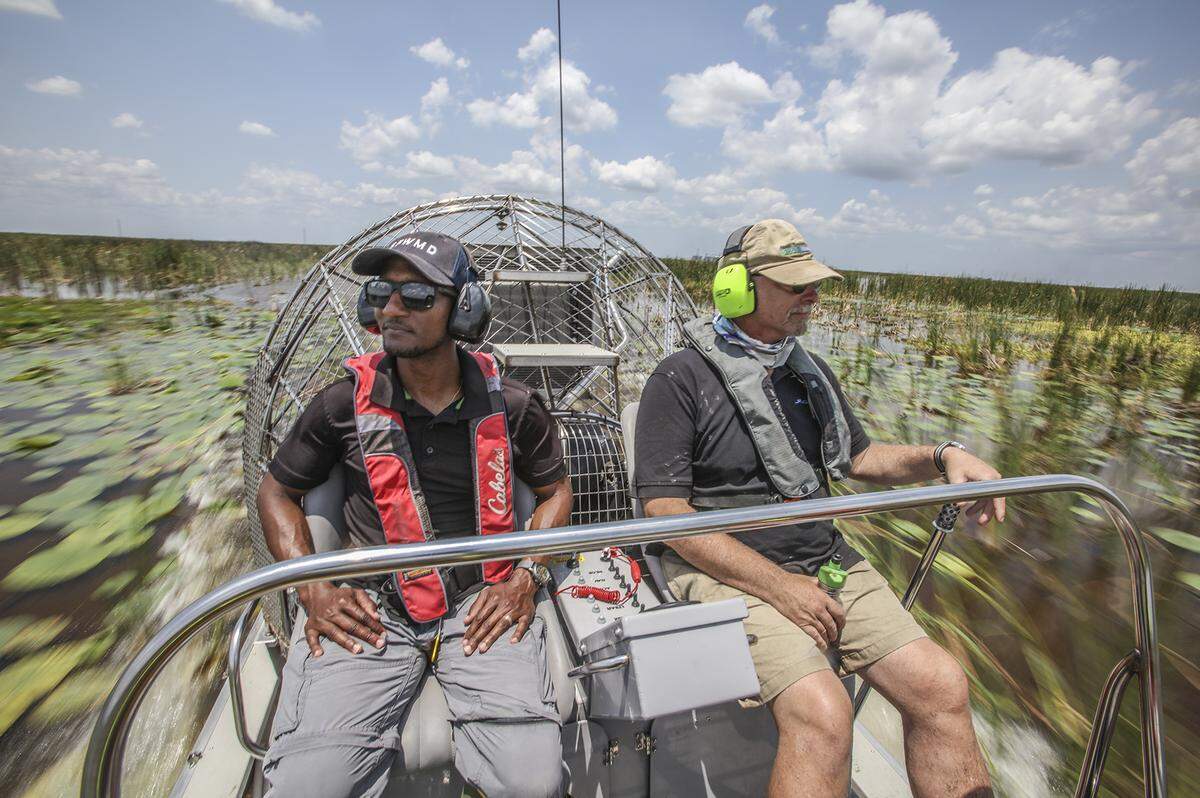
South Bay: South Florida Water Management District Senior Scientists Tadese Adeagbo and Eric Crawford head out in their airboat into the Stormwater Treatment Area 1 West to check out their work in vegetation management. Patrick Farrell WLRN
The gardeners: Eric Crawford and Tadese Adeagbo
Eric Crawford and Tadese Adeagbo work for the South Florida Water Management District tending to bullrush, lacy hydrilla and other plants that fill 57,000 acres of man-made wetlands where polluted water is cleaned before it flows into the Everglades.
“You didn’t think you’d enjoy sitting in the middle of an industrial wastewater treatment facility. But, that’s where we are,” Crawford said as he throttled down on his airboat.
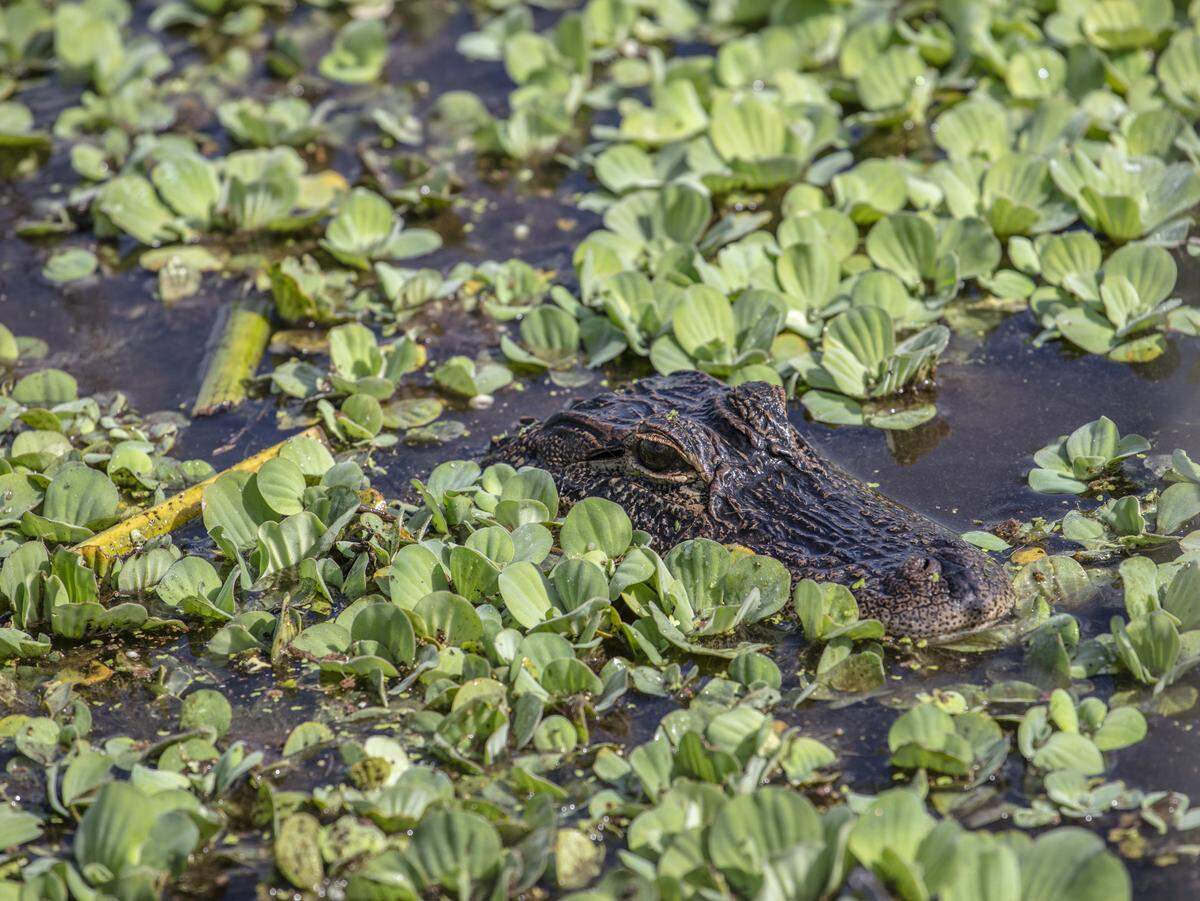
Under an early morning sun, the treatment marshes fill with birds as the brightening air wakes up bugs and ripples with a soft breeze. Alligators slink through the coffee-colored water.
“We are a farm, but we don’t have a crop. We’re the reverse of normal farming,” he said.
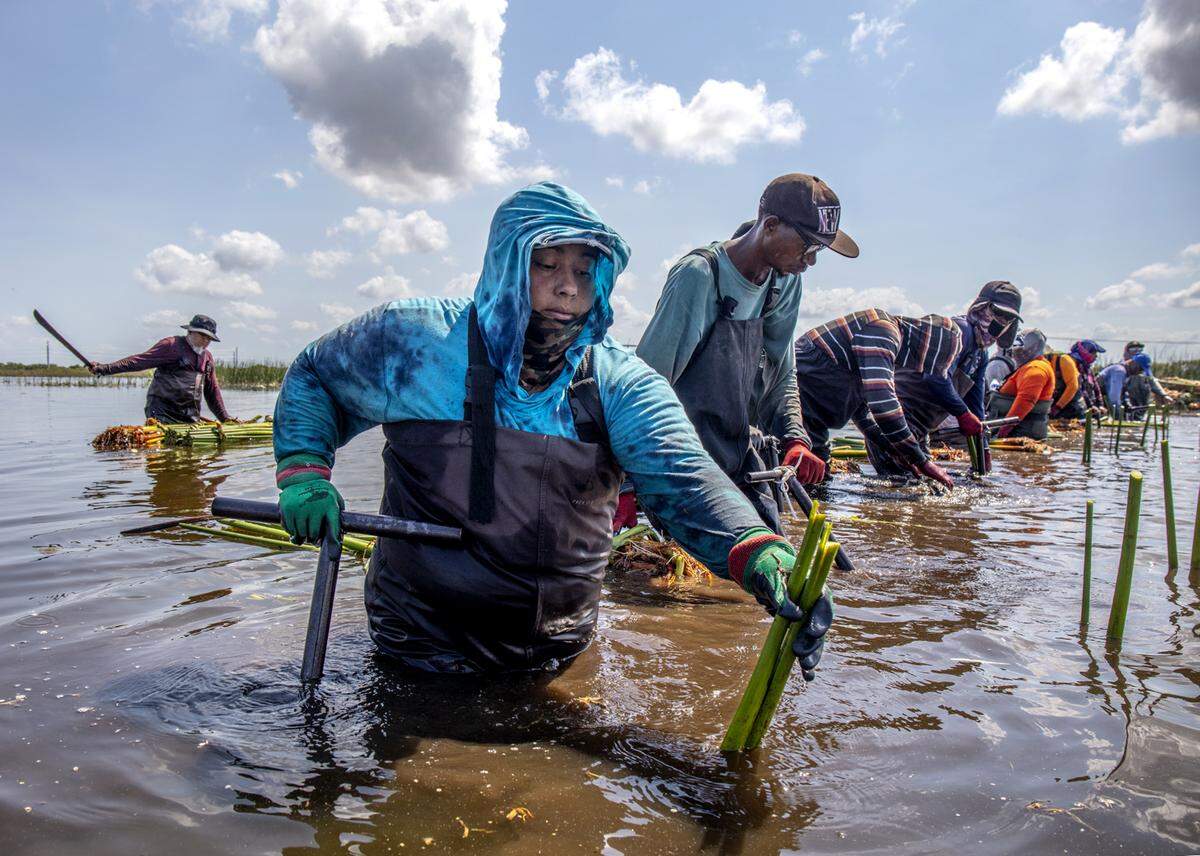
South Bay, Florida: Worker Ingrio Lopez (foreground) wades in the water while planting Bulrush for the South Florida Water Management District (SFWMD) in Stormwater Treatment Area 1 West as part of a vegetation management program. Patrick Farrell WLRN
.Instead of adding nutrients to help grow plants, they use plants to suck up and trap nutrient pollution in the water.
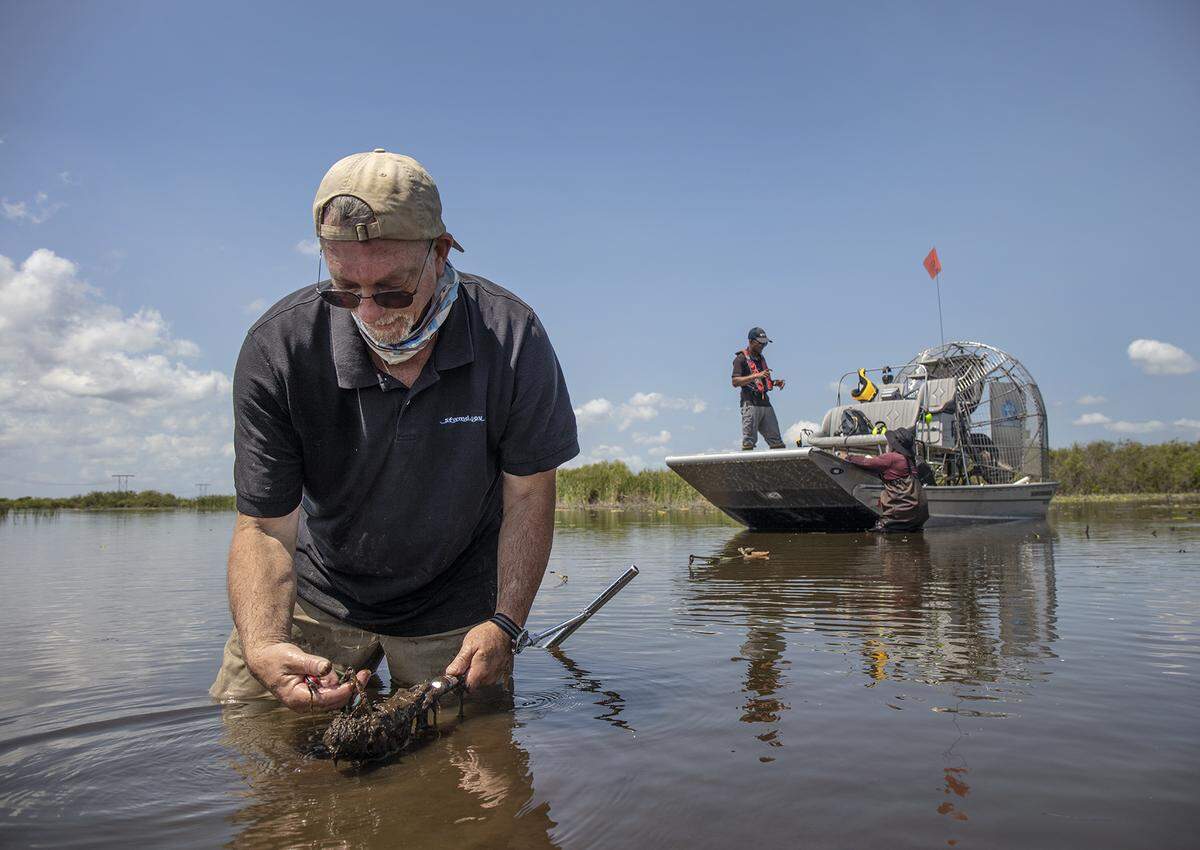
Crawford, 57, and Adeagbo, 35, spend their days on airboats skirting around the marshes. That often means wading into the water where crews hand plant the bullrush to inspect the work.
While the workers toil in water up to waist-deep, Ismael Gerena, the crew chief, keeps watch for gators from the controls of his airboat.
“You don’t know where they’re at because they stay underwater. So you got to constantly watch out for them,” he said.
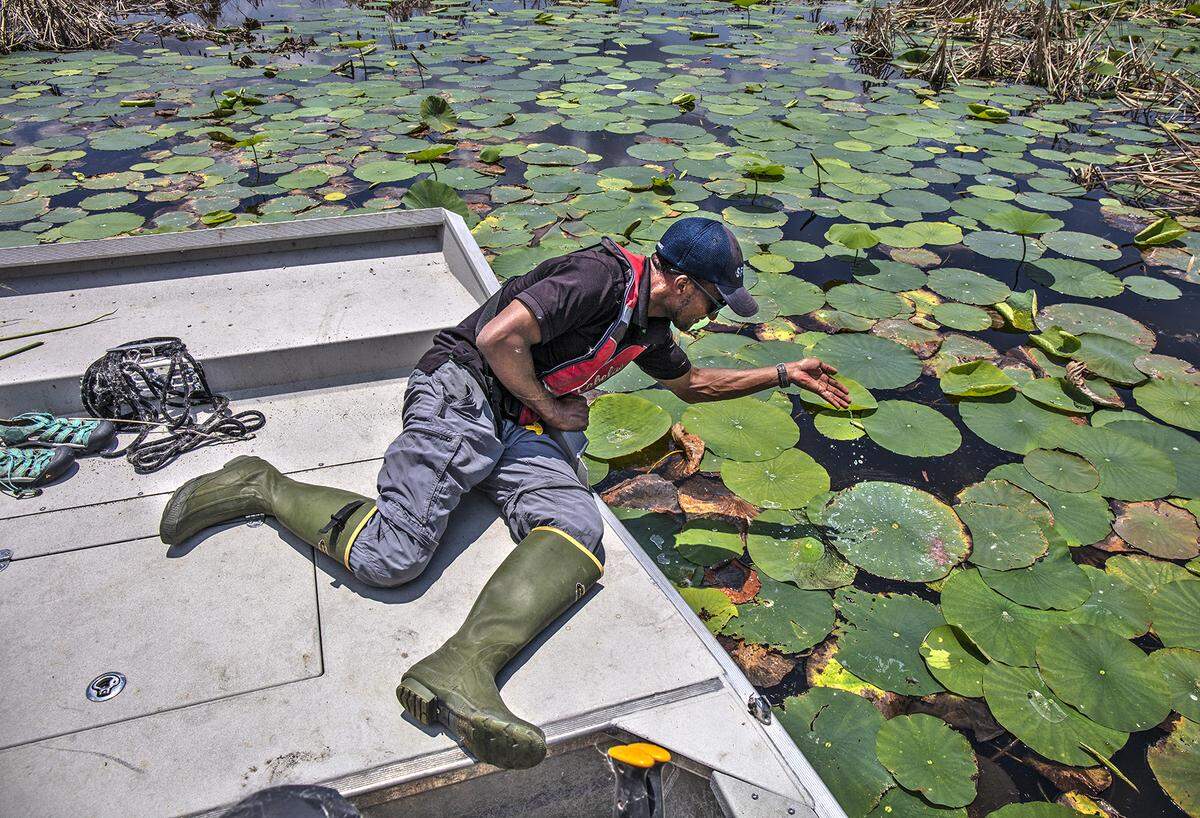
South Bay, Florida: South Florida Water Management District (SFWMD) Senior Scientist Tadese Adeagbo leans down out of the airboat to illustrate some of the water-resistant vegetation characteristics in Stormwater Treatment Area 1 West. Patrick Farrell WLRN
There are also snakes, said Juan Hernandez, 60, who started working in the treatment marshes more than a decade ago.
“Some people quit,” he said. “They try it and [don’t] like it because [there are] snakes, alligators. And it’s hard to walk in here.”
Over the years, the hardworking stormwater treatment marshes have removed millions of tons of phosphorus, dramatically reducing what flows south. But they still consistently fail to reach the limit required under a court-ordered clean-up plan.
South Bay, Florida: South Florida Water Management District (SFWMD) Senior Scientist Eric Crawford does some soil sampling as workers wade in the water planting Bulrush for the South Florida Water Management District (SFWMD) in Stormwater Treatment Area 1 West as part of a vegetation management program. Patrick Farrell WLRN
And managing them has been no easy task. During storms, they switch to flood control to store high water. That means the careful work Crawford and Adeagbo do on clean-up can get wiped out by a tropical storm.
“You don’t get two different teams,” Crawford said. “You get one piece of land to do both.”
Bright Lit Place was produced by WLRN News and distributed by the NPR network, with support from the Pulitzer Center’s Connected Coastlines initiative.
South Bay, Florida: An alligator swims in Stormwater Treatment Area 1 West. Scientists from South Florida Water Management District (SFWMD) were checking out their work on vegetation management in the area. Patrick Farrell WLRN