
DeSantis OKs ‘radioactive roads’ bill, clears way to study use of toxic fertilizer waste
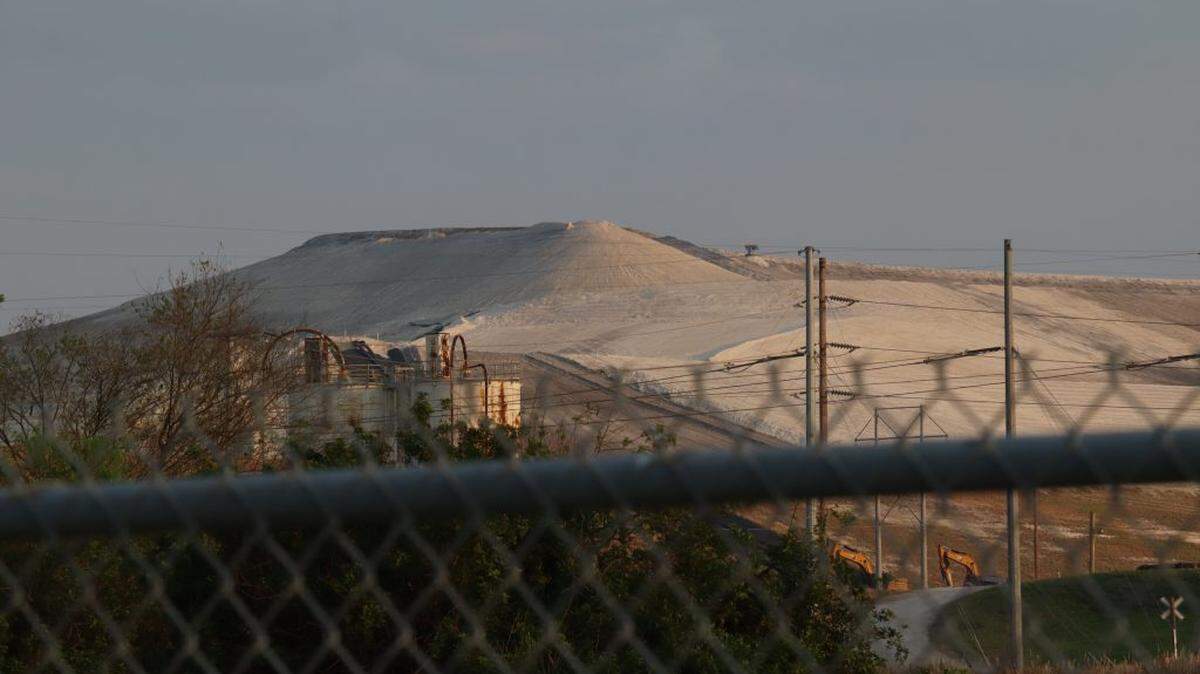
Millions of gallons of toxic phosphogypsum slurry are currently stored in 25 mountainous stacks near communities in Central and North Florida.
But after Gov. Ron DeSantis’ signed a hotly debated bill Thursday, the state will pilot a study paving the way for one potential solution: Could the fertilizer industry’s toxic waste be built into Florida’s roads instead?
Phosphogypsum is a byproduct of fertilizer production that contains uranium, thorium and radium and can emit radon, which can cause cancer, according to the U.S. Environmental Protection Agency.
Though current regulations require waste to be stored in stacks, those structures have a long history of spills and environmental destruction across the American southeast, most notably with the Piney Point spill, which sent more than 200 million gallons of polluted water into Port Manatee and Tampa Bay.
The fertilizer industry — namely the Fortune 500 company The Mosaic Co. that dominates Florida phosphate mining — has long advocated exploring potential uses for the waste, often pointing to countries across the world that use it in road construction.
This hasn’t ever been put into practice in the U.S., though — for decades, the Environmental Protection Agency has prohibited use in roads. That changed in 2020 under the Trump administration, though approval was quickly in 2021 following outcry.
The governor’s office didn’t respond to a request seeking comment as of Friday morning.
Environmentalists have opposed the proposal, which was dubbed the “radioactive road” bill during the session. They fear using the waste in road construction could exacerbate water quality issues with potential runoff into the Floridan aquifer, the state’s primary source of drinking water. Some are concerned for the health of construction workers, too.
“We’re disappointed Gov. DeSantis put industry profits ahead of our environment and potentially the health of Floridians,” said Ryan Smart, the executive director of the Florida Springs Council. “This was a terrible legislative session for our environment and growth management. And this is the cherry on top.”
A nine-month study with a 2024 promise
With this bill, the Department of Transportation will be able to move forward with a study to evaluate how suitable phosphogypsum is as a road material with a deadline of April 1, 2024. That’s only nine months.
Mosaic, which manages most of Florida’s phosphogypsum stacks, touts the study as a win for both the company and the future of toxic waste management. The company, as first reported by the Tampa Bay Times, lobbied for the bill, even throwing its sponsor a fundraiser earlier this month. It continues to try and overturn the EPA rule, according to public records.
Jackie Barron, Mosaic’s spokesperson, lauded the study as a warranted step forward in a statement.
“This allows the state to move forward with fact-finding and research,” Barron said. “No one wants Florida to fall behind the rest of the world when it comes to potential uses for phosphogypsum.”
But not everyone is convinced about the necessity or intention of the study.
Elise Bennett, Florida director of the Center for Biological Diversity, said any study first and foremost should evaluate the impacts to human and environmental health. A lack of emphasis on those topics in the bill are telling, Bennett said.
“It’s just outrageous to think that even if they were to try to look at environmental and health effects that they could do that in less than a year,” she said.
Florida has enough water issues with sea-level rise, increasing storms, algal blooms, which are all issues the government should be focusing on rather than potentially tainting the state’s water and its aquifer down the road, Bennett said.
Bennett hopes the EPA will continue to prohibit phosphogypsum as a road material — a move needed to keep the Florida Legislature and DeSantis in check. In a statement, an EPA spokesperson confirmed the legislation doesn’t impact its regulation, adding that “EPA’s approval is legally required before the material can be used in road construction.”
“There’s no new data showing this has become any safer magically overnight,” Bennett said. “There’s no reason we should remove those precautions of keeping this waste away from people and start scattering it throughout our communities and roads.”
This story was originally published June 30, 2023 at 11:25 AM.