A cottonmouth ate a Burmese python in Florida, Zoo Miami says. See X-ray of the meal
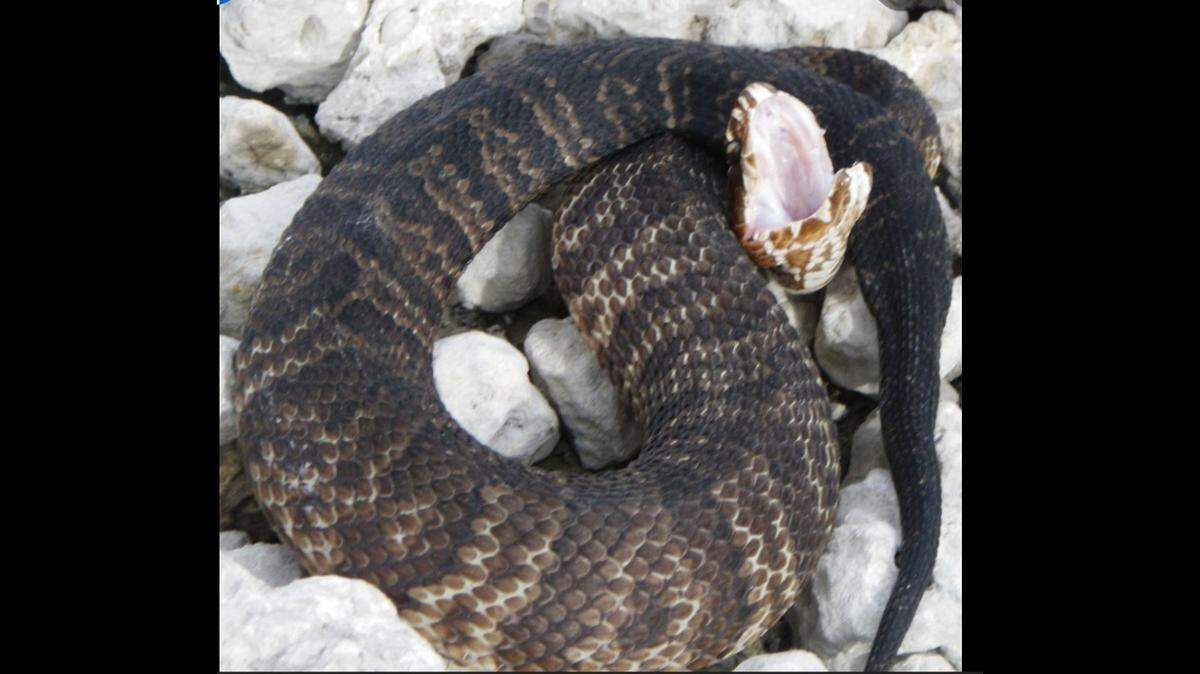
You’ve heard of the expression, “It’s a dog eat dog world.”
This being Florida, the saying may have to be tinkered with a bit.
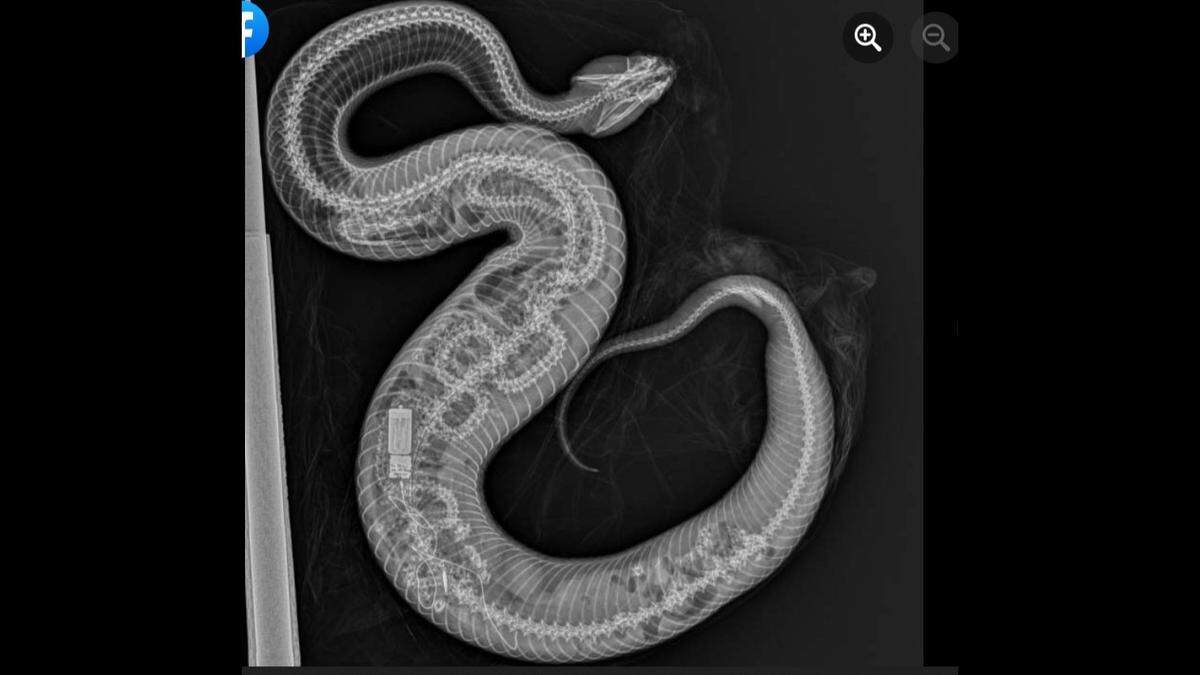
A python became another snake’s meal, according to Zoo Miami, which has the receipts to prove it.
According to a Thursday Facebook post, the zoo explains that a python it was tracking was found in the digestive tract of a native cottonmouth, also known as an often deadly water moccasin.
READ MORE: A snake ate a centipede in Florida, then something went wrong
Telltale sign: The python’s transmitter that had been implanted by Zoo Miami surgeons lit up like a Christmas tree on the cottonmouth’s X-ray.
In the image, taken at the South Miami facility’s animal hospital, you can clearly also see the spine of the python, which was a juvenile.
READ MORE: Florida college student finds a ‘monster’ python on the road
Zoo spokesman Ron Magill sheds light on how experts learned of the feast.
“This snake was captured in the Picayune Strand State Forest in Southwest Florida in May of 2021,” the local animal expert wrote in an email.
He says the reptile was located as part of an overall study being done by the U.S. Fish and Wildlife Service and the U.S. Geological Survey. Invasive Burmese pythons are surgically implanted with transmitters so their movements can be tracked in hopes of better understanding their behaviors and, in turn, developing better ways to control their population.
“When tracking this particular young python, they were led to the adult cottonmouth and assumed that it had eaten the python, which was later confirmed by the X-ray,” wrote Magill.
“That isn’t the only native species that is fighting back!” says the FB post, which references a different Florida wildlife story about a bobcat that was caught cadging eggs from an invasive Burmese python in the Everglades back in March.
The release also includes background material about pythons from folks from the Conservancy of Southwest Florida, among others. Despite the pythons’ relatively large size, findings indicate they are “vulnerable to predation,” they say, but further research is needed.
The comments section did not disappoint:
“Florida native species built different.”
“It had a tummy ache.”
“Look at this craziness!”
Someone from the zoo answered many social media users’ burning questions such as whether the cottonmouth pooped out the transmitter, (It did.) They also wondered if the cottonmouth was released. (It was and is fine.)
This story was originally published August 19, 2022 at 3:46 PM.