
Flood of troubles: Why Miami-Dade’s drainage problems won’t be fixed anytime soon
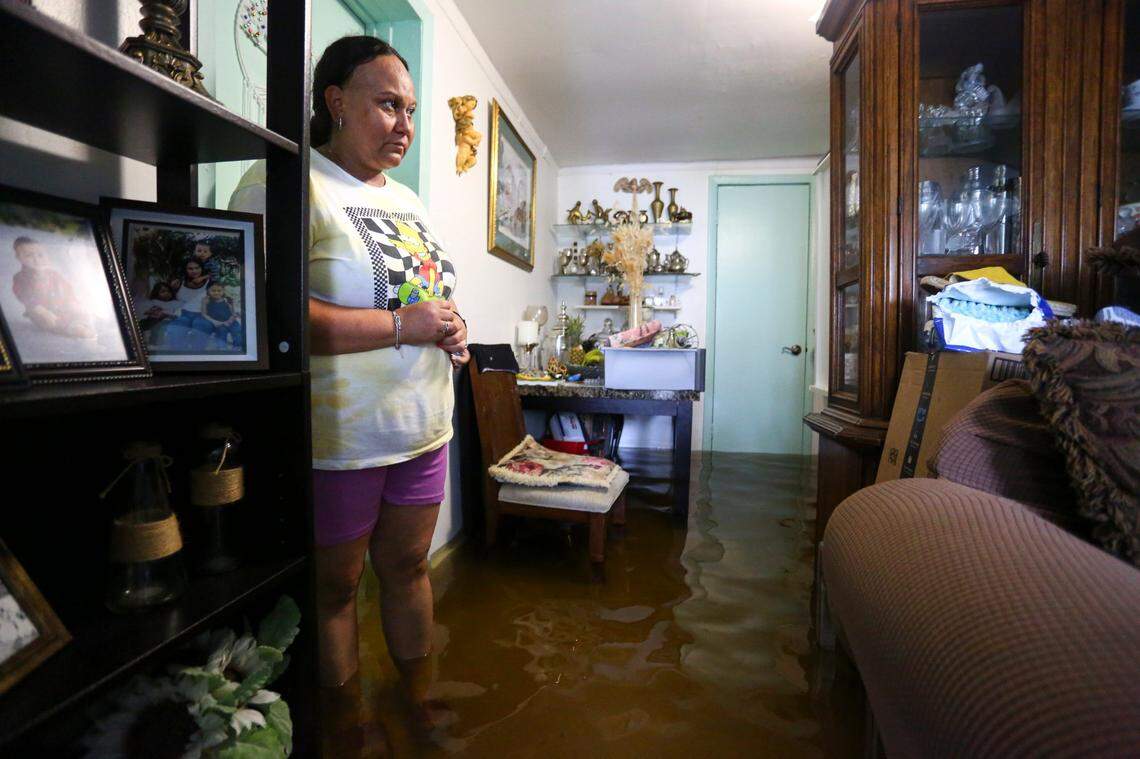
In Little Havana, a woman scrambled to store her medicine in a foam cooler after a foot and a half of water in her home zapped her fridge. Her neighbor’s landlord waded through floodwater — but only to collect the rent, offering no promise to help repair damage from the dirty water she spent the day mopping up.
In Allapattah, a mother carried her son and his wheelchair through flooding to get to the emergency room. Days after the storm, her street was lined with soggy carpet and furniture, mold already taking hold
In Cutler Bay, residents missed work and school after an “unprecedented” 15 inches of rain left them stranded in their homes. Tow trucks yanked out hundreds of inundated or stalled cars.
More than a hundred people called Miami-Dade’s 311 line with flooding complaints during South Florida’s first brush with tropical weather this year — some from spots that flood over and over.
When are the county’s persistent flooding problems getting fixed? Not anytime soon. The major components of South Florida’s drainage systems are decades old, initially built to protect far fewer people and handle less rain than many tropical systems typically dump in flood-prone areas. And with climate change, scientists warn that even the many new projects planned or in the works are unlikely to keep it from getting worse.
Despite the fact that the city of Miami, the poster child for the modern-day impacts of sea level rise, has hundreds of millions of dollars lined up to address some of the worst flooding hot spots, relief is likely years away for residents and may be temporary.
Even when the city installs all the pumps and bigger pipes and injection wells it plans to, they might not be enough to keep the city dry from a storm like the one that swept across South Florida earlier this month — a disorganized but exceedingly soggy system that would form into Tropical Storm Alex once it exited the coast. Scientists say such super wet systems will become more likely as climate change cooks the planet and raises sea levels, another major challenge for flood control in low-lying South Florida.
It’s a similar story for the rest of the county. There are projects lined up, and sometimes even money on the table, but years to go before the new pumps and pipes will be in place. In the meantime, the rain will keep coming.
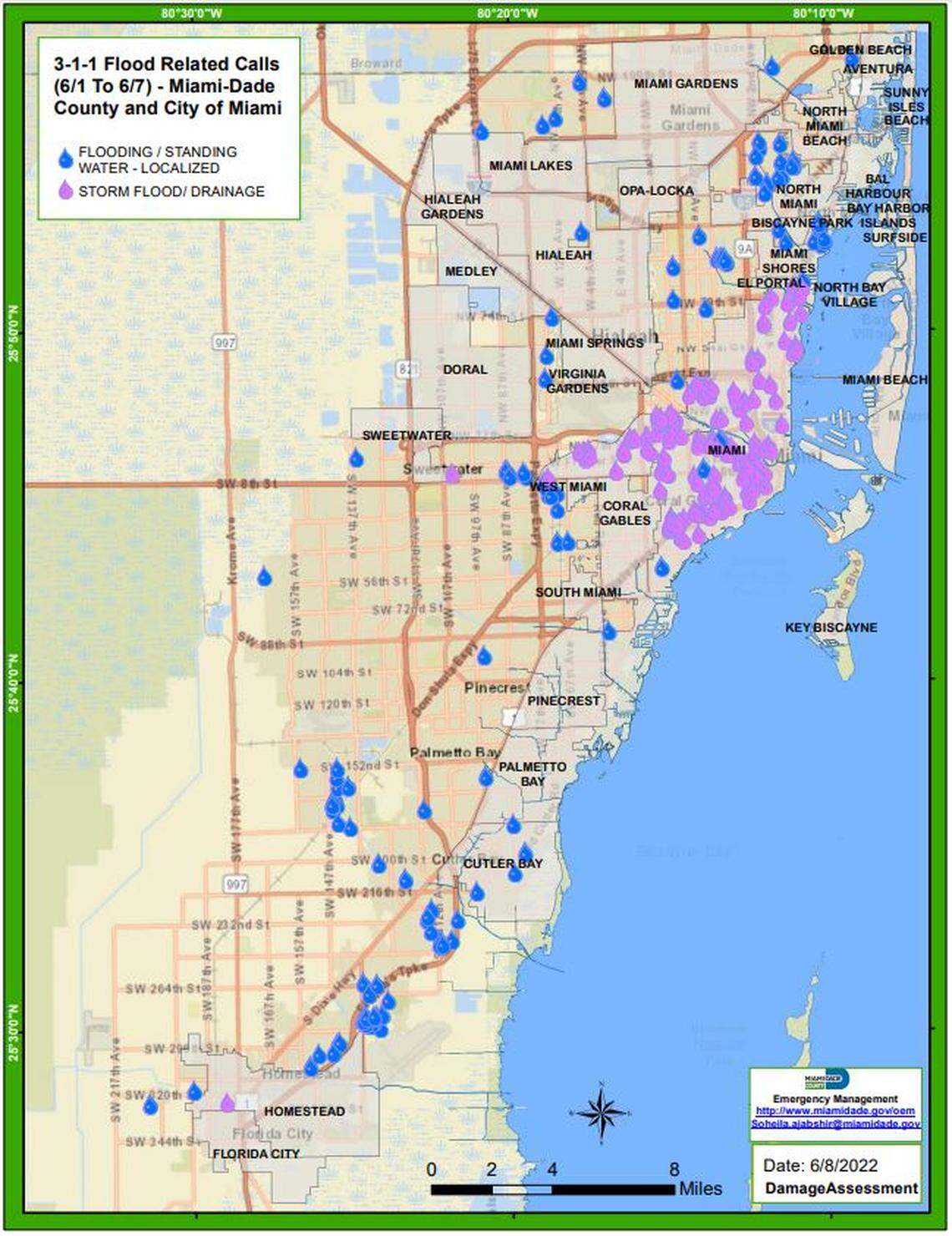
A wait for relief in Miami
It was the sound of a floating trash can banging against her window that first awoke Gabriela Murillo, a 25-year-old resident of Little Havana. She and her father scrambled to save what they could as the water seeped in.
“The water reached halfway to the table and we couldn’t do anything,” she said. “The water ruined the car, the beds, the dining room, everything.”
Days later, the turquoise paint on their walls was bubbling up, and family portraits fell with a crash from the waterlogged walls.
“We did not imagine that it would reach that level, of entering the house and flooding that way. But we couldn’t avoid it,” she said. “We saved what we could, and the rest, we’re trying to figure out how to get back.”
The city of Miami knows exactly what it has to do to dry out Murillo’s neighborhood. The $113 million project is at the top of a list of stormwater projects, and there’s even an $18 million grant from the state on the way to help pay for it.
But it will likely be years before the neighborhood can safely withstand a rainstorm like this one. The storm had no name but dropped as much rain as many tropical storms or hurricanes — a volume that even upgraded drainage systems aren’t built to handle.
“This was a sheet of water over the entire city in a short period of time. You do not design for that. Way too expensive,” said Juvenal Santana, Miami’s director of public works.
Downtown Miami got about 8 inches of rain over the two days the storm passed, according to preliminary rainfall totals from the National Weather Service. Sammy Hadi, a meteorologist from the weather service’s Miami office, said he watched on radar as about 4 to 5 inches of rain fell on downtown Miami in a single hour.
That’s slightly more rain than Tropical Storm Eta dropped in 2020 — about 5 to 7 inches. That much water during a long, wet rainy season turned downtown Brickell into a car-swallowing lake. It won’t be the last time it happens either.
Miami’s stormwater master plan — a battle map for where and when to upgrade the city’s drainage to combat climate-change-driven sea rise — calls for at least $3.8 billion over the next 40 years to keep the city dry.
If the city does spend all that cash and builds everything right, it would protect most (but not all) of the city from a storm that drops about 7 inches of rain in a day. The plan also offered another option, protection from a storm that dropped about 11 inches of rain across three days. But defending against that would up the price to $5.1 billion.
So far, the city said it plans to use the higher standard where it can afford to — and where it’s possible. The report, however, also pointed out that even hundreds of millions of dollars of engineering can’t save every neighborhood.
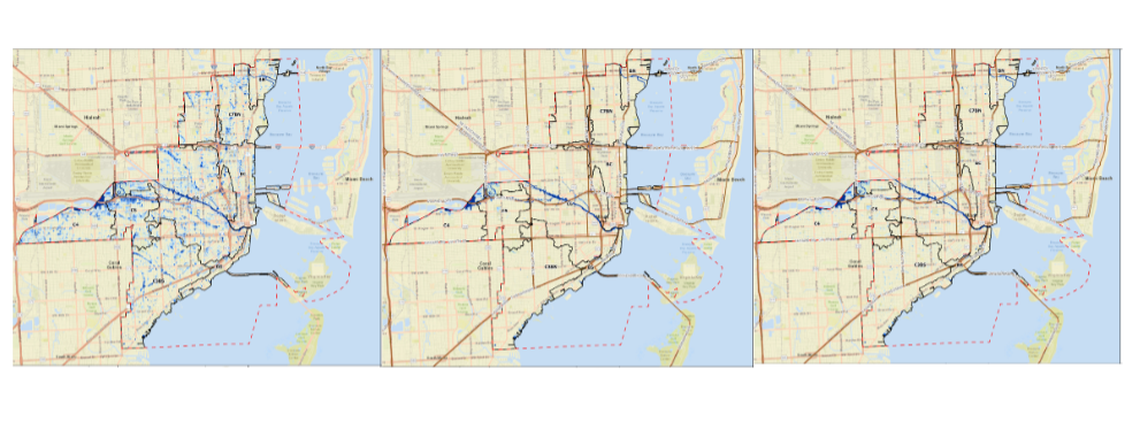
Armed with a list of dozens of projects to address flooding across the city, Miami set a goal to tackle 11 initial projects and spend $545 million in the first five to ten years to reach that lower level of flood protection.
It’s well on its way to meeting that goal. Thanks to a flush of federal money and the state’s new Resilient Florida program, Miami won more than $100 million in grants to address those projects in the last year. Combined with the city’s Miami Forever Bond, which set aside $192 million for flooding and resilience projects, Miami has more than $220 million to address six projects.
But it will be years before flood-prone neighborhoods like Allapattah, Little Havana and Flagami see the results of all that cash.
Hector Badia, assistant director of capital improvements for the city, said it will take about three years to finalize grant agreements with the state and federal government, design the projects and hire the contractors to do the work.
“We’re looking at ways we can streamline, bundle them together, get your consultants on board and how we can streamline construction of these projects,” he said.
In the meantime, public works director Santana said the department is making smaller fixes to help, like adding trash-catching screens to its stormwater pumps so they don’t get clogged and shut down like the one near SW 8th Avenue did during the storm.
Santana also ordered two new trucks designed to vacuum up debris from drains after a storm and four new temporary stormwater pumps. The city used nearly all the pumps it owned for the storm, 12 out of 14.
“We are constantly trying to upgrade and improve our stormwater system,” he said.
Miami’s city commission has yet to approve the latest suite of bond projects aimed at flooding, which would unlock about $110 million of the remaining $177 million left for resilience projects. Santana said the administration plans to bring the projects to the commission “as soon as possible.”
In response to questions, Miami Mayor Francis Suarez said in a statement that city commissioners decided the best way forward was to divide project money equally between commissioners and allow them to “prioritize projects district by district.”
Why it flooded
Perhaps the most worrisome aspect of the latest floods for South Florida was that it was “just” rain.
The flooding was a result of a weather system that didn’t even become an official tropical storm until it was well past Florida, an important distinction for unlocking federal cash for cleanup and repairs.
The winds also blew in a favorable direction and didn’t push much extra water onshore. King tides, the highest tides of the year, are still months away. It also hit early in the year, when groundwater levels are lower and the soils have a little more room to absorb rain.
“If you want to have a big storm, this is the time to have it,” said Jayantha Obeysekara, head of Florida International University’s Sea Level Solutions Center. “If this was later in the season when you have the higher high tides, it would be a lot worse.”
But even with other flood factors not contributing, city and county drainage systems couldn’t keep up in spots scattered around the county. And the rain didn’t stop after the storm.
Down in Cutler Bay, rain gauges showed about 12 inches of rain between June 2 and 4 as the storm passed overhead. But by June 10, that total had climbed to about 20 inches of rain. That’s twice as much rain as the area normally sees in an entire month, all in one week.
“It basically doubled what it was from the initial storm,” said Mike Sukop, a hydrologist at Florida International University.
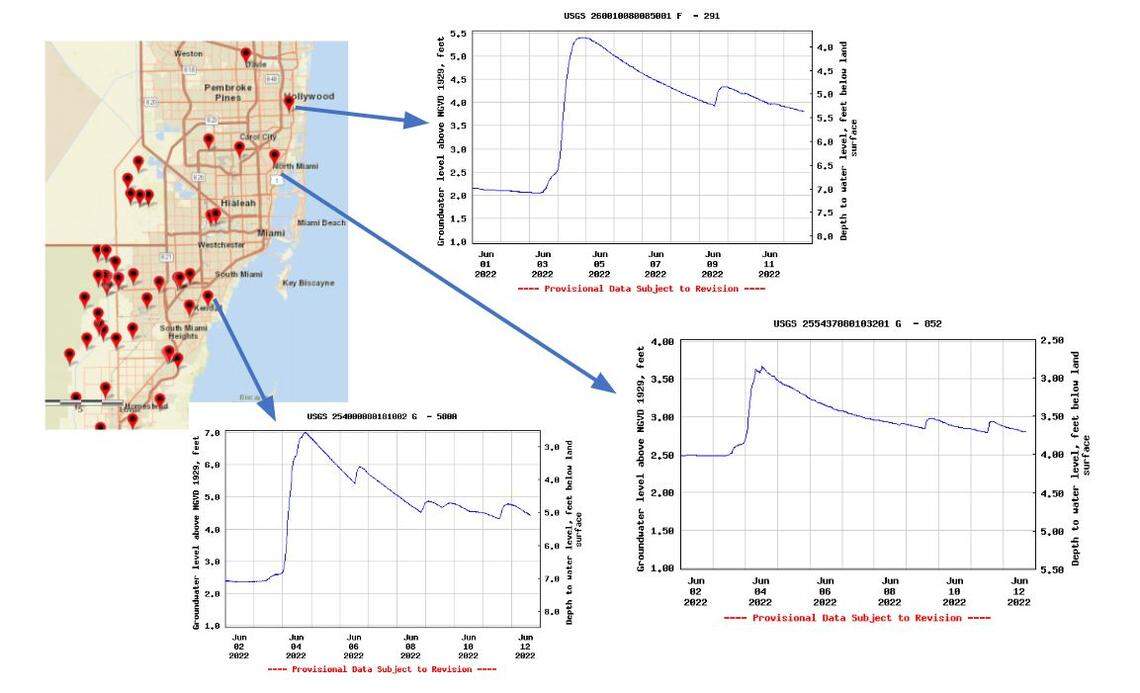
Groundwater levels rose as much as five feet in places like Kendall, and in spots like Miami Gardens, Homestead and North Miami, it rose almost to the surface. That means the ground has no room to absorb any rain, so it sits on the surface and causes flooding.
Even weeks later, readings from the South Florida Water Management District show that the wells still have several feet more water than they usually do this time of year, which is pushing canal levels higher as the district drains it all back to sea. That leaves less room for drainage should another storm roll through anytime soon.
“If you had back-to-back storms, this is important,” Obeysekara said.
SFWMD reports no issues
The good news: While the rain exposed the failures of antiquated drainage systems in some spots across Miami-Dade, regionally, most areas stayed dry. Or at least dry enough to avoid serious property damage.
The double-digit rain wasn’t enough to overwhelm the master drainage system that spans all of South Florida. But keeping this same level of flood control will become more difficult as seas rise, and has already forced the district to spend billions to deepen canals, install huge stormwater pumps and move its massive water gates further inland.
The South Florida Water Management District said its 70-year-old system is designed to handle 6 to 8 inches of rain a day, and across the 16-county region stretching from Orlando to Key West, the weekend’s totals averaged out below that number.
“I don’t think it surprised anyone because we did prepare seriously for this. I think we held up very well,” said district spokesman Randy Smith.
He said there have been no reports of canal banks overflowing, or mechanical failures in the gates and pumps that constantly move water before and during a storm. No trash clogged up any outfalls or the one-way valves designed to let flood water out but stop tidewater from coming in.
Unlike previous storms, Smith said, no cities called and asked for help with extra pumps or vacuum trucks to clean up the excess floodwaters.
The district did need to store excess water in a giant basin, called the C-4 impoundment area, that’s designed for situations like this.
“Overall it performed extremely well, and we believe that’s because there were some wise water management decisions being made as the storm was on top of us,” Smith said.
This story was originally published June 19, 2022 at 7:00 AM.
