A rare stork will be released from captivity in Hialeah. Here’s why it is so special
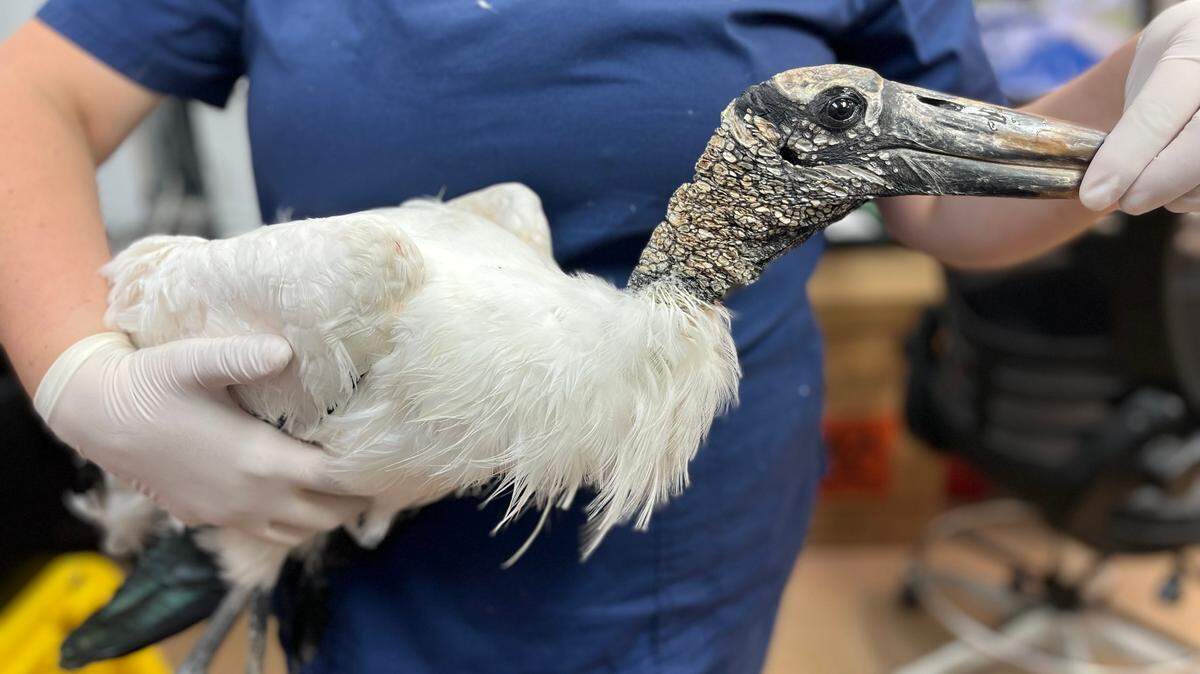
A rare stork will be released in Hialeah on Friday after spending nearly 40 days recuperating from one of the most potent toxins known to science, according to Pelican Harbor Seabird Station, Miami’s native wildlife hospital.
According to the nonprofit, it has only treated 11 of these birds in its 42-year history and this one will be the first to be successfully released.
A wood stork, the only stork species native to North America, was rescued in the city last month after someone reported that it had not moved for several hours. When it was admitted, the one-of-a-kind bird was found to be very thin and dehydrated, the hospital said in a news release.
“The bird was also unable to blink, which is a common sign of botulism poisoning, one of the most common reasons for patient admissions,” the hospital said.
Commonly found in the soil, the natural toxin binds to nerve endings and interferes with muscle movements. Typical clinical signs in birds with botulism include weakness, lethargy and inability to hold up the head or to fly, according to the U.S. Geological Survey’s website.
There are several types of botulism toxin, some of which can affect humans who eat improperly canned foods, but birds get their own kind of botulism, according to USGS. Very little is needed to kill, the federal agency warns.
The wood stork found in Hialeah was unable to stand or hold its head up for over two weeks. Slowly, the bird began to recover and was later moved to an outdoor enclosure, the last step before being released.
“Wood storks are considered an indicator species, meaning that the health of the population is an overall indicator of the health of the surrounding ecosystem,” said Hannah McDougall, a spokeswoman of the hospital. “These types of species are therefore quite sensitive, so we are overjoyed that this patient was able to recover after being found in such a debilitated state.”
The wood stork is protected as a “threatened” species by federal and state law. It was reclassified by the U.S. Fish and Wildlife Service from “endangered” to “threatened” in 2014, according to Florida Fish and Wildlife Conservation Commission’s website.
Peculiar facts about wood storks
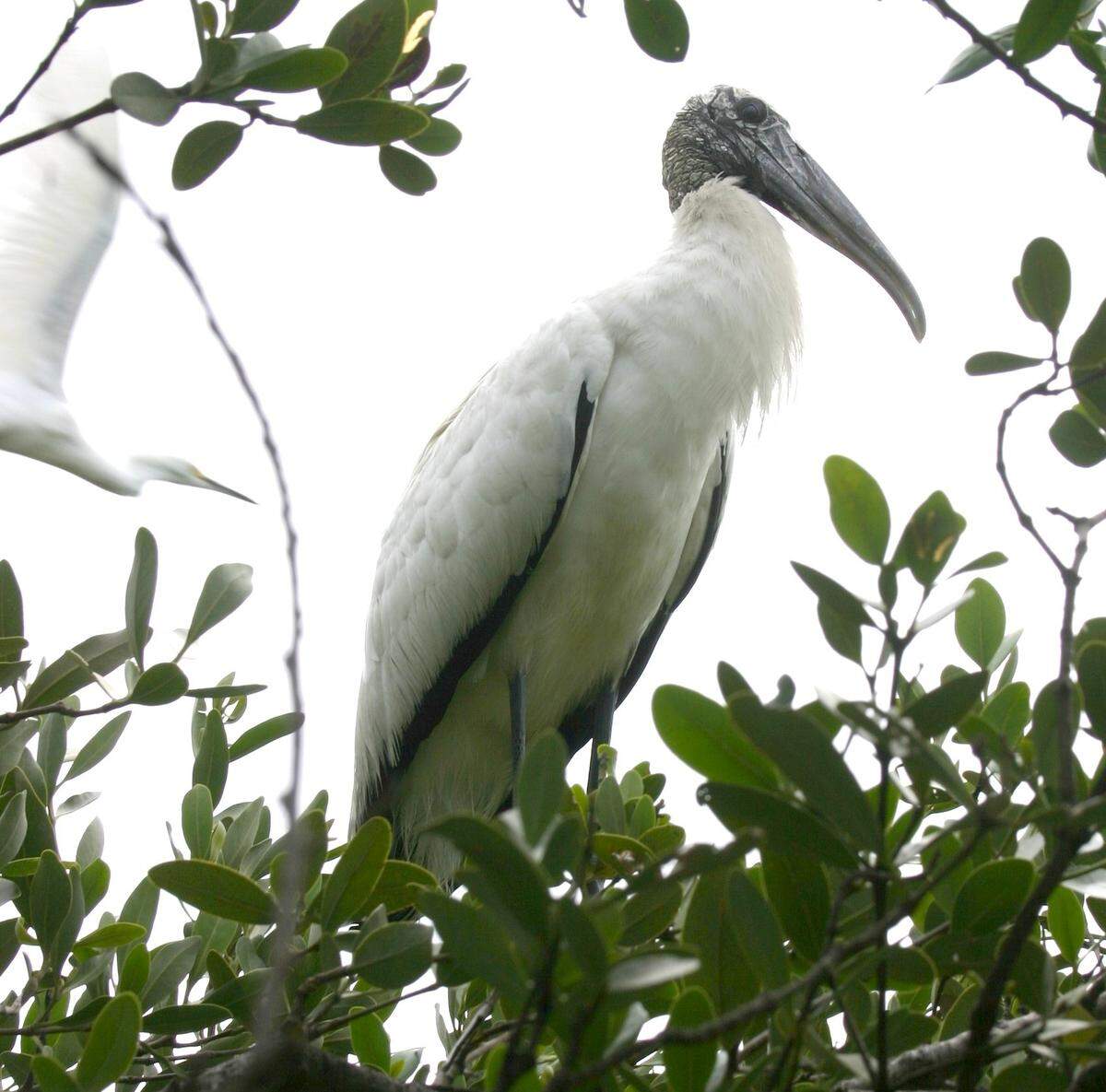
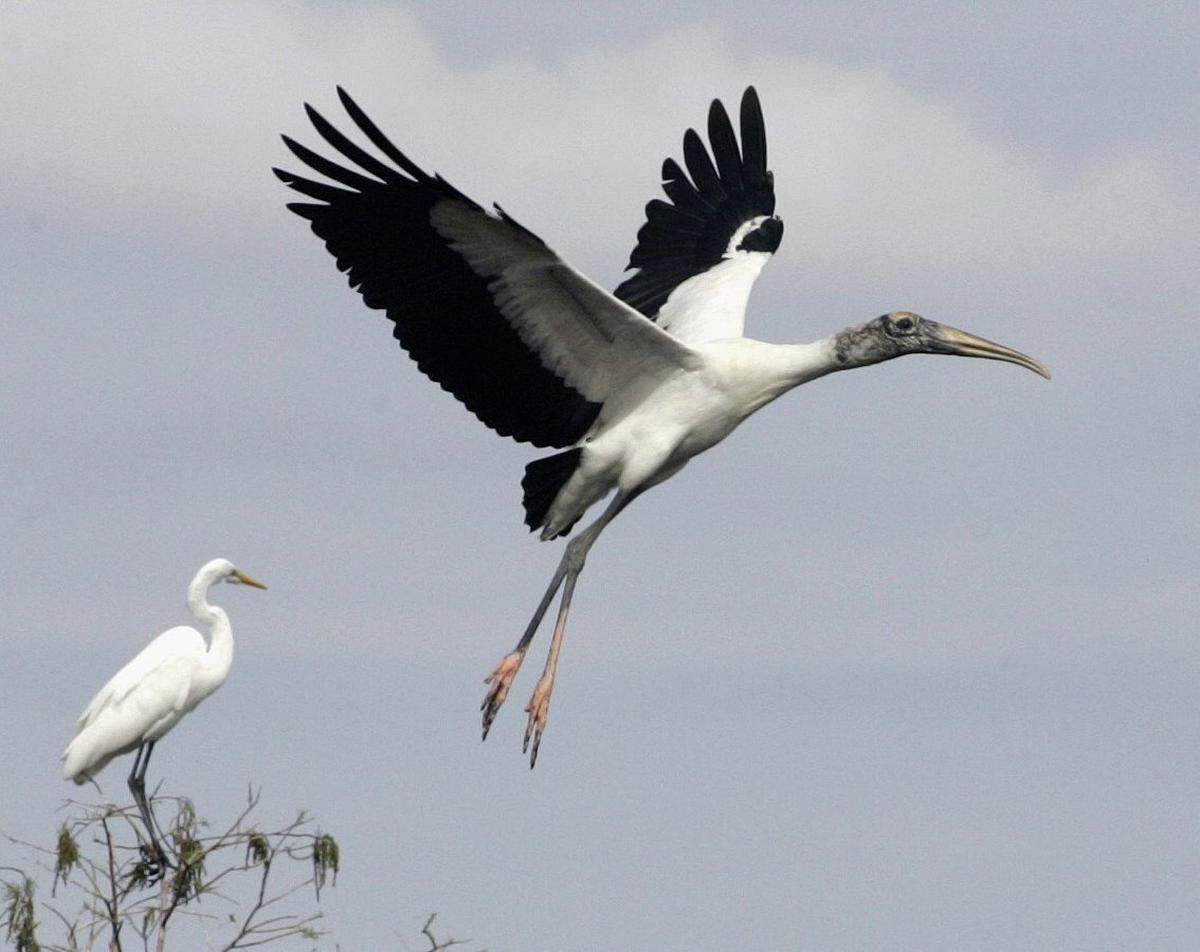
The wood stork is a large, long-legged wading bird that reaches a length of 35-45 inches with a wingspan of 60-65 inches, according to FWC.
The primary and tail feathers are black, but the head and upper neck of adult wood storks is featherless with a gray rough scaly skin. They also have a black bill and black legs with pink toes.
Perhaps one of the most peculiar characteristics of wood storks is that they are voiceless and are capable of only making hissing sounds, according to the FWC.
They feed on small to medium-sized fish, crayfish, amphibians and reptiles. “Their hunting technique is unique because they move their partially opened bill through water, snapping up prey when the prey comes in contact with the bill,” the FWC says.
Being the only species of stork that breeds in the U.S., wood storks are often seen nesting in large colonies of 100 to 500 nests. Colonies in South Florida form late November to early March, while the ones in the central and north area of the state form from February to March, according to the FWC.
Wood storks nest in mixed hardwood swamps, sloughs, mangroves and cypress domes/strands in Florida. According to FWC, the South Florida population “has collapsed due to agricultural expansions” and altered water cycles as they need normal flooding to increase their prey’s population.
Pelican Harbor Seabird Station’s hotline is open every day from 9 a.m. 5 p.m. for wildlife advice and guidance: 305-751-9840. For more information, go to pelicanharbor.org.
This story was originally published March 31, 2022 at 7:00 AM.