Her calf was struck and killed by a boat. Mother right whale also shows signs of a vessel strike
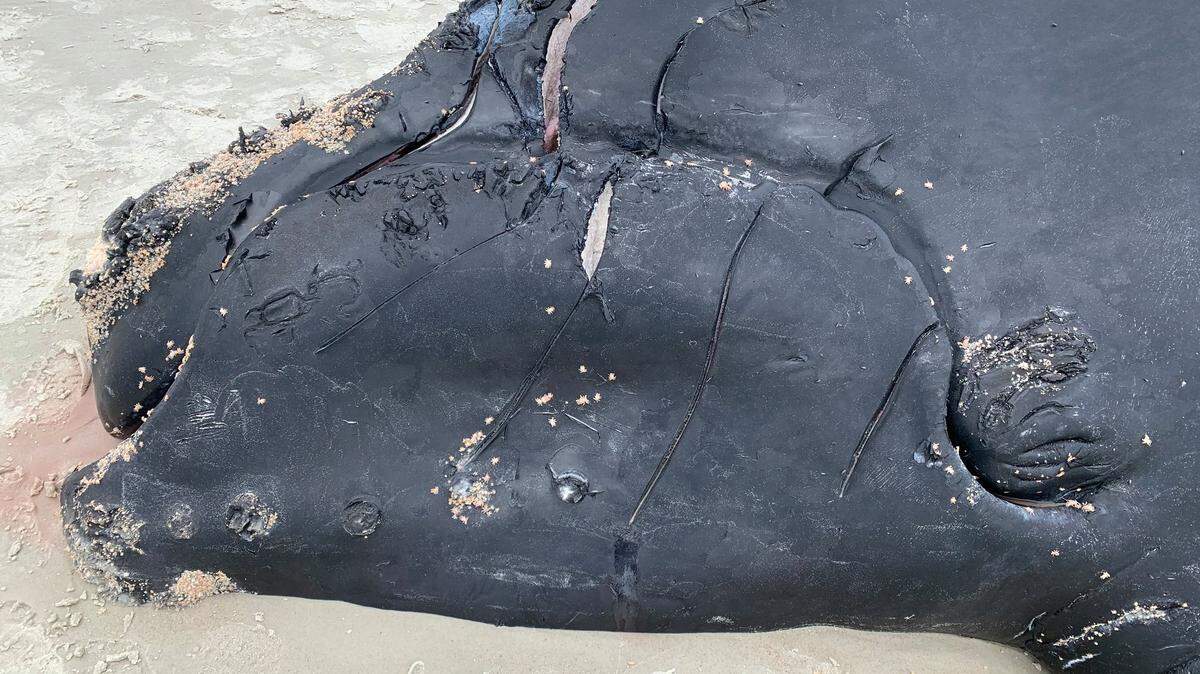
On Saturday, an endangered North Atlantic right whale calf was found on the beach in Anastasia State Park in St. Augustine in northern Florida.
The mammal, estimated to be a 1-month old male about 22 feet long, was hit by a 54-foot sportfishing boat near the entrance of the St. Augustine Inlet, according to the Florida Fish and Wildlife Conservation Commission Wildlife Research Institute.
The calf’s body had prop cuts on its head and back, injuries “consistent with impact trauma,” including broken ribs and bruising, the FWC said.
The boat’s captain, who immediately reported the strike, had to ground his vessel to stop it from sinking because the impact with the whale caused it to take on water, according to the FWC.
On Tuesday, researchers reported sighting the mother in the same area. She too had injuries consistent with a boat strike, “including a series of fresh propeller cuts,” the FWC said in a Facebook post Wednesday.
It was not immediately clear if both whales were hit by the same boat.
The nearshore waters of northeastern Florida, Georgia and South Carolina are common birthing grounds for North Atlantic right whales. From there, mother and calf pairs typically swim north to New England.
This calf that died was first spotted swimming off Amelia Island in early January. Scientists with the National Oceanic and Atmospheric Administration Marine Fisheries Service have named his mother, estimated to be 19 years old, Infinity.
They were one of three pairs seen swimming near the St. Augustine Inlet Friday, Feb. 12, according to the FWC.
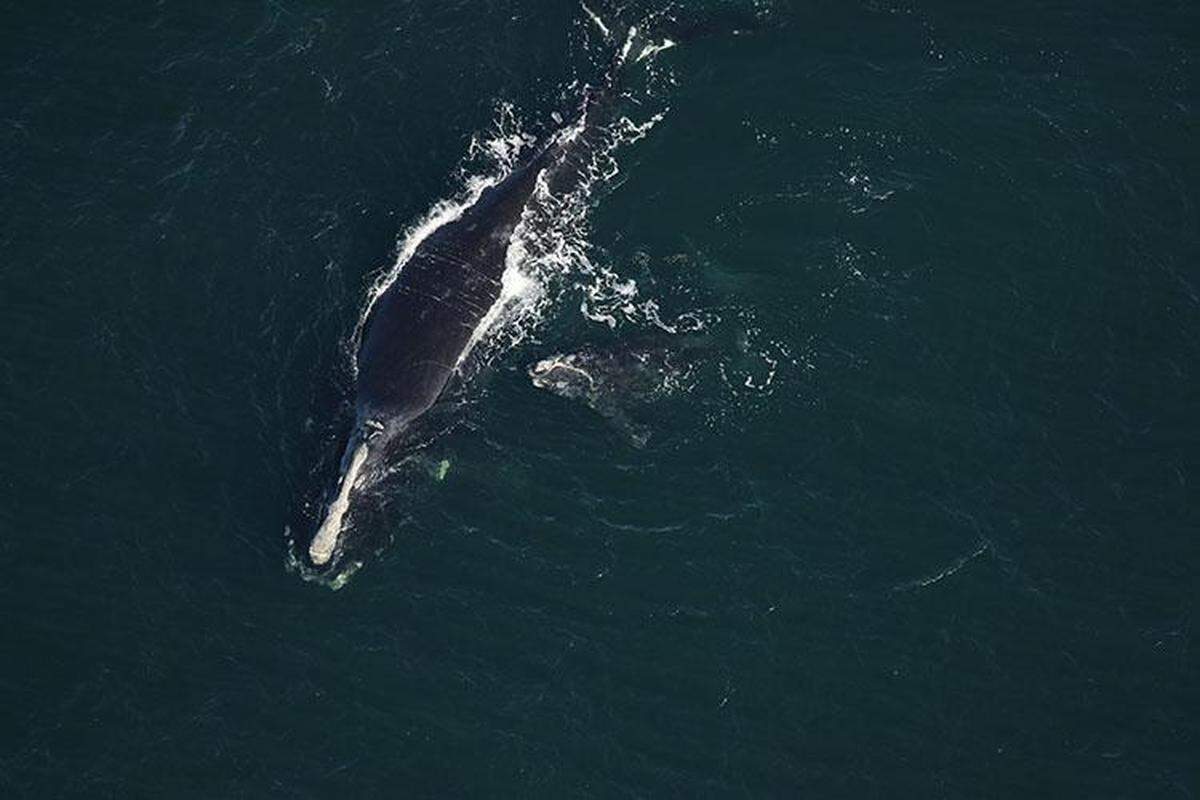
Scientists have reported seeing 15 mother/calf pairs in birthing grounds between Georgia and Florida this winter.
The FWC is urging boaters in the area, particularly those operating vessels over 33 feet long, to slow down while traveling near shore and near inlets. And, if boaters see right whales, they need to give them space. Federal law mandates a distance of 500 yards.
“Mother-calf pairs spend the majority of their time at, or a few feet below, the water’s surface,” the FWC wrote in its post. “They can by surprisingly difficult to see, especially in low light and poor weather.”
North Atlantic right whales are considered critically endangered. They are among the 14 confirmed species of baleen whales, which have ‘baleens” or filters in their mouths to strain food instead of teeth for eating. They can live up to 70 years, grow as long as 52 feet and weigh upwards of 140,000 pounds.
They were nearly wiped out in the beginning of the 20th Century before the U.S. government banned hunting them in 1935.
Since then, large vessel strikes are their biggest threat, seconded by entanglements in vertical ropes tied to crab and lobster traps. An emerging threat is seismic air gun blasts, used by energy companies to find natural gas and oil supplies beneath the ocean floor.
NOAA Fisheries estimates there are less than 400 right whales living.
The conservation group Oceana puts that number at less than 360, and has lobbied NOAA to strengthen its rules to protect them, including mandating that commercial fishermen use trap lines that break easier when impacted by whales, including calves.
“With only around 360 whales remaining, North Atlantic right whales are slipping closer to extinction every year due to human causes,” Catherine Uden, South Florida campaign organizer for Oceana, said in a statement Wednesday. “Collisions with ships and entanglements in fishing gear are decimating these whales. Even a single human-caused death a year threatens this species’ chance of survival.”
This story was originally published February 17, 2021 at 6:34 PM.