
Sharks killed more people in 2020, but attacks remained ‘extremely low,’ Florida study says
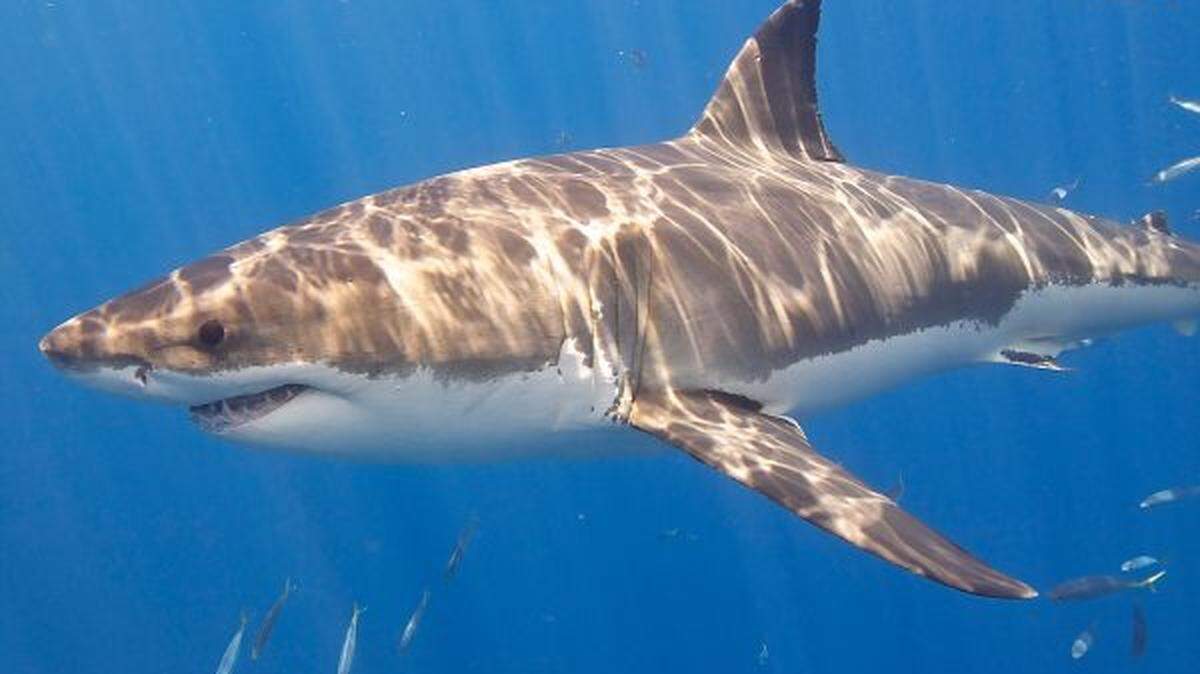
Shark attacks worldwide dropped to “extremely low” numbers in 2020 but fatal bites spiked to more than twice the recent five-year average in what researchers are calling an anomaly.
Deaths from unprovoked shark attacks jumped to 10 compared with an average of four in the 2015-2019 period, according to the annual survey in the University of Florida’s International Shark Attack File. Six of the fatal bites occurred in Australia, three in the U.S., including a rare occurrence in Maine, and one in the waters of St. Martin in the Caribbean. Great whites were involved in six of the 10 fatalities, the survey showed.
Attacks fell for the third consecutive year to 57 unprovoked bites worldwide in 2020, compared with 64 in 2019 and 66 in 2018. The five-year global average fell to 80 incidents annually.
The increase in fatalities does not indicate a trend, according to Gavin Naylor, director of the Florida Museum of Natural History’s shark research program.
“We expect some year-to-year variability in bite numbers and fatalities. One year does not make a trend,” he said in a statement. “2020’s total bite count is extremely low, and long-term data show the number of fatal bites is decreasing over time.”
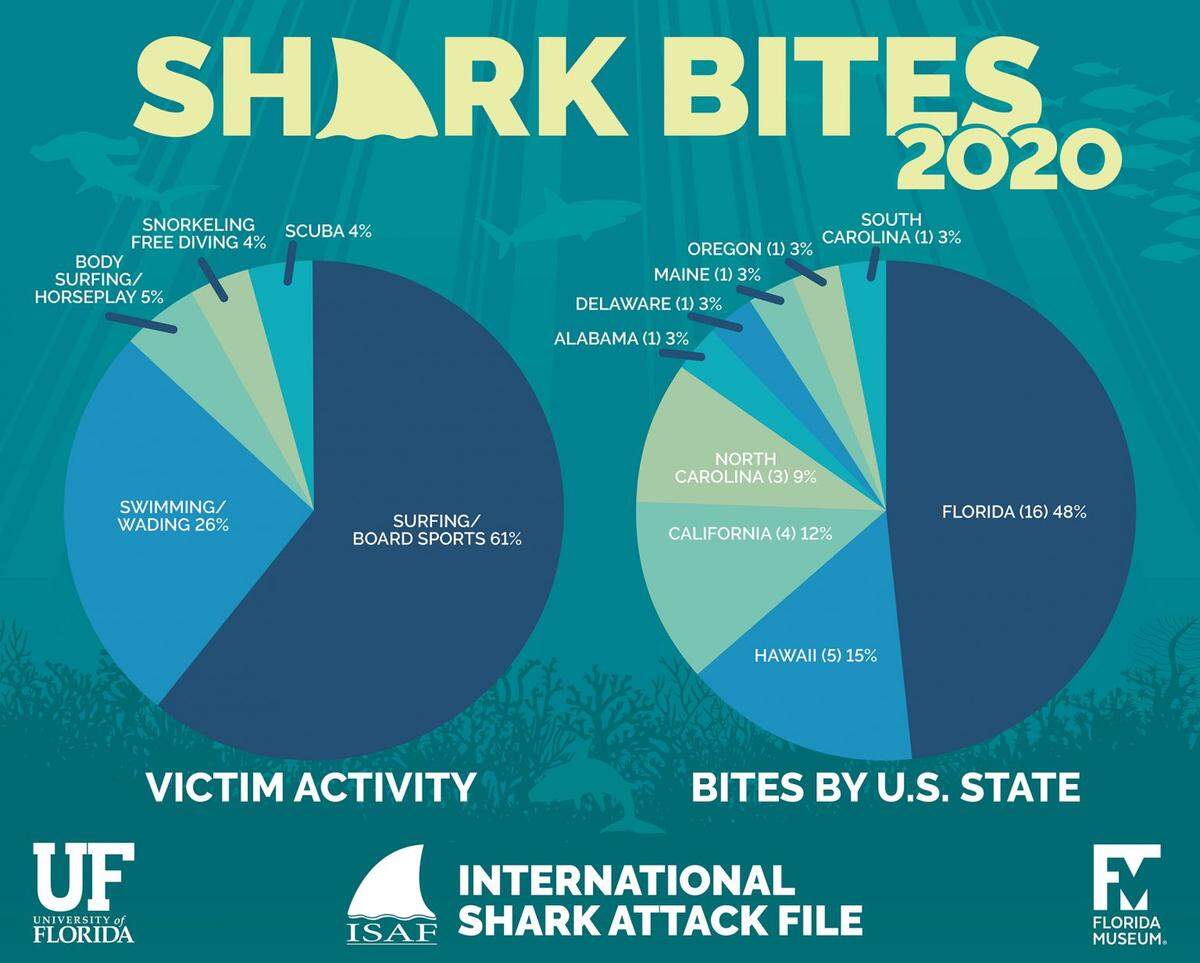
Florida, with 1,350 miles of coastline and a vibrant surfing community, continued to lead the number of unprovoked attacks, with 16 bites making up for 48% of the U.S. total and 28% of incidents worldwide, the survey showed. Still, unprovoked bites in Florida were nearly half of the state’s five-year annual average of 30, and less than the 21 attacks in 2019 and 31 in 2018.
Researchers say the COVID-19 pandemic may have influenced the number of bites considering lockdown measures and a sharp drop in tourism kept people away from beaches. The challenges of getting data during the pandemic may have also played a role in the drop in attacks.
“While a certain number of cases remain unconfirmed and unclassified each year, this situation was exacerbated in 2020,” said Tyler Bowling, the Shark Attack File manager.
As law enforcement, medical examiners and healthcare workers focused on responding to COVID-19 cases, some incidents may have not been fully investigated or determined to have been shark attacks.
Bowling is still working to confirm 16 reported bites and classify an additional six confirmed bites as unprovoked or provoked. In 2019, nine incidents weren’t confirmed.
This story was originally published January 25, 2021 at 3:39 PM.
.jpg)