
Biscayne Bay finally has a chief officer. The ‘water princess’ vows to clean up pollution
Irela Bagué calls herself a “water princess” but her new job is not a fairy tale set against a shimmering turquoise blue sea. Some of the water she is working with is brown and smelly. Sometimes it’s full of dead fish.
For the first time Miami-Dade County has created a government post devoted to answering two key questions: What’s polluting Biscayne Bay and how to fix it.
Bagué, who headed a task force that designed a plan last year to restore the health of the bay, was named Miami-Dade’s first “chief bay officer” under Mayor Daniella Levine Cava. She will spearhead cleanup efforts and help the county take on long-overdue projects like connecting thousands of homes from septic to sewer and speeding up work to replace failing stormwater and wastewater systems. She said the job is that of a coordinator, advisor and advocate for the bay, someone who will push the county to enact policies to protect it.
“Everything that happens on land, everything we do as residents and business has an impact on Biscayne Bay. The environment is the economy, and if the bay isn’t healthy, Miami-Dade won’t thrive,” said the Miami native, whose Twitter bio says “#HRHh2O.” She often wears a silver pin with rhinestones in the shape of a crown on her Chanel-inspired jackets.
Multiple committees have tried to address the bay’s woes over the past decades, but nothing comprehensive and truly transformative has happened. Reports were shelved, programs that were working expired, and political attention dwindled. Bagué says she will change that by harnessing the momentum created by a fish kill that left some parts of northern Biscayne Bay covered with fish carcasses, shocking residents. If there is someone in Miami-Dade who can get everyone together to come up with a plan, she believes it’s her.
Bagué led a communications business that focused on water quality issues. She served on the South Florida Water Management District Board in the early 2000s and participated in various commissions to address water quality in the bay. She helped launch the task force which County Commissioner Rebeca Sosa embraced, sponsoring legislation that created the Chief Bay Officer position and established water quality goals for the bay.
Environmentalists were happy to see real action coming from the task force.
“Having someone at the county who is working full time on finding solutions for the bay’s problems is real progress,” said Rachel Silverstein, executive director at Miami Waterkeeper.
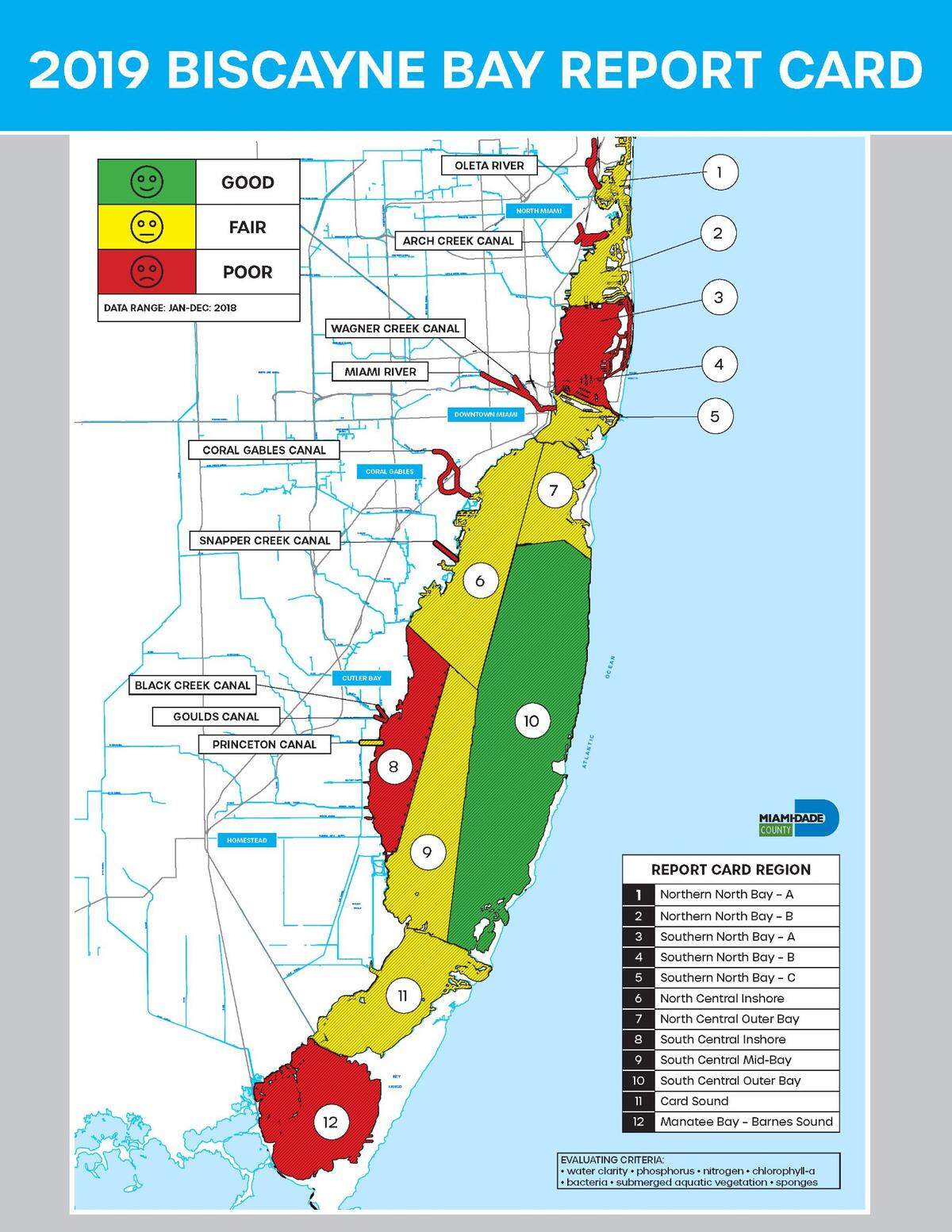
Long before the fish kill, scientists had been warning the county that water quality was declining, and that the bay could reach a tipping point if nothing was done to curb pollution. A seagrass die-off that started in 2013 in the central and northern parts of the bay heightened concerns about worsening water quality conditions and nutrient pollution. The task force reached the same conclusion last year after 18 months analyzing pollution and water quality, habitat and wildlife data.
A report by the National Oceanic and Atmospheric Administration in 2019 had already sounded the alarm on Biscayne Bay, saying it was undergoing a regime shift from clear waters that attract anglers and divers from all over the world to a more polluted ecosystem filled with algae and declining marine life.
The sudden drop in oxygen levels that killed thousands of fish in the northern part of the bay in August also attracted more funding for projects and Bagué hopes the dollars will keep on coming. She wants more public-private partnerships to benefit the bay, and is hoping her connections at the state level will lead to more funding.
Gov. Ron DeSantis last month announced $10 million in new funding for restoration projects for the bay’s water, seagrass and coral reefs. Miami-Dade County matched the cash infusion for a total of $20 million.
But fixing all the pollution sources affecting the bay will cost billions and involve multiple parties. Biscayne Bay is a vast watershed, covering a number of municipalities and coastal communities with widely different levels of infrastructure and governance; some places have better stormwater and sewage pipes than others, and some are more committed than others to keeping their waterways clean, Bagué said.
Before water gets to the bay, it travels through miles of canals that receive stormwater runoff, a major source of pollutants and nutrients that feed algae blooms. Sewage that leaks from septic tanks and broken pipes often ends up in those canals that flow to the bay. All that is getting worse as climate change is making storms more frequent and supercharging rainfall. Sea rise is increasing groundwater, causing septic tanks to overflow.
Prioritizing will be crucial, and Bagué wants to tackle septic tanks right away.
In a report released last month Miami-Dade unveiled its plan to address its 120,000 septic tanks, the aging concrete boxes that can leak human waste into groundwater and Biscayne Bay. In the report the county described guidelines for phasing out tens of thousands of problematic septic tanks and hooking those homes into the county sewage system.
It identified a starting place — about 1,900 septic tanks that are most vulnerable to compromise or failure and are next to sewage system pipes. They are “low-hanging fruit” and should be completed as soon as the county works out a solution for who pays what, Bagué said.
She recognizes that money is a stumbling block for many of those projects and that dealing with the pressures of development is a key challenge, especially in fast-growing South Florida.
“There are different interests and agendas, so my number one priority is to assemble a watershed management board, bringing in all the agencies, all the cities, all the stakeholder groups around the same table,” she said, hoping the group will help her steer restoration plans in a “coordinated, holistic way.”
Creating a database with research and indicators from sources that can paint a full picture of how the bay operates will also be crucial, said Todd Crowl, director of Florida International University’s Institute of the Environment. There are many agencies and academic institutions collecting data about the bay, but those numbers aren’t comparable, he said.
“That’s a much bigger challenge than people recognize,” he said. “We don’t even collect the same data using the same sensors or the same methodology.”
Bagué has the backing of Sosa, a sort of fairy godmother who vowed to prioritize the environment while also considering the goals of the business community to grow and create jobs. Sosa said Bagué can navigate Miami-Dade’s complex ecosystem of developers, politicians and environmentalists and deliver a coordinated plan that will balance conflicting interests.
“She has the experience and what’s really important is that she loves Biscayne Bay and wants everyone else to love it too,” Sosa said.
But just love won’t save the bay. The Miami area has grown faster than infrastructure can keep up with, and more development will only push stormwater drains, septic and sewage infrastructure to fail more often. Sea rise is accelerating this trend.
And the region will only keep on growing if local mayors get their wish and turn Miami into a tech hub. Miami Mayor Francis Suarez has mounted a campaign to attract tech companies. It caught the attention of Elon Musk, who said he wants to build underground tunnels to help ease transit woes. Levine Cava said she is on board, and recently Fort Lauderdale joined the conversation about tunnels there, too.
All that means more people, more condos and more poop the region will need to deal with.
Bagué wants to convince the business community to think more creatively about how and where they propose to build. And there may be a new era of more restrictions so that the bay can recover. Nobody wants to own a $20 million condo in front of a dirty bay, she said.
“When do we put the needs of the environment over the needs of development? Now the environment is saying ‘It’s my turn!’ ”
This story was originally published January 29, 2021 at 7:00 AM.
.jpg)