
Will it keep the bay clean? Miami to stop work at construction sites polluting the water
Construction companies that dump debris and wastewater into storm drains will be more severely punished in Miami as city leaders work to tighten enforcement on pollution that frequently ends up in Biscayne Bay.
New legislation now allows the city to impose stop-work orders on code offenders. Officials are stepping up the pressure on developers after a fish kill in August shocked residents and led to a widespread movement to address the causes of pollution chipping away at the health of Biscayne Bay.
Miami City Commissioner Ken Russell, who proposed the new rules after the fish kill, and Commissioner Joe Carollo said they hope stricter penalties will lead to a culture change among developers who are used to mild reprimands for environmental violations.
“The city and its residents are tired of penalties that have no effect. This can’t be simply the cost of business,” Russell said, adding that key trade groups such as the Builders Association of South Florida and Associated Builders and Contractors are supporting the legislation to hold polluters accountable.
“What I have now is the support of the entire building community in Miami because they, too, want to have bad actors eliminated from the system,” the commissioner said. “Their development loses value when the bay loses life.”
In early August, a combination of high pollution levels, above-average water temperatures, low tide, very little wind and strong runoff from Little River that was bloated from heavy rains the previous week created the perfect storm for the kill in Biscayne Bay.
Thousands of decaying fish carcasses covered the bay’s northern shores, triggering a wave of support for tougher policies and calls for more coordinated action to deal with pollution harming the waters. Environmentalists amplified warnings that the bay is at a tipping point as contamination from crumbling sewage pipes and failing septic tanks, stormwater runoff, overfishing, a warming ocean, marine debris and the ever-growing pressure of development threaten sea grass and marine life.
A county-ordered task force presented its final report with recommendations last month, including a new chief bay officer to lead a plan to restore the bay, drawing on data and reports produced over the past few years about its failing health. Promises were made to impose strict nutrient pollution limits and to get to work on urgent policies needed to address the bay’s woes.
Fish kills are not uncommon in the summer, when warmer water and higher salinity levels can lead to lower dissolved oxygen in the bay, especially in shallow areas. If algae blooms occur, there’s even more competition for oxygen. During the day, the algae produce oxygen through photosynthesis. But at night, when that process stops, algae and other organisms like sargassum and bacteria continue to use up oxygen.
That’s why nutrient pollution is the main target of ongoing efforts to stop the bay’s decline. However, nitrogen and phosphorus from sewage leaks and septic tanks aren’t the only culprits. Many other substances that may seem innocuous can also cause harm, including sediment from construction runoff. If a significant amount of silt enters a waterway, it can block the sun and smother aquatic plants and invertebrates, starving them of light and oxygen.
Dredging at PortMiami, for example, was blamed for a massive coral death between 2013 and 2015, when the port was widened. When sand was scooped up from the bottom of Biscayne Bay, it created sediment plumes that smothered entire coral colonies.
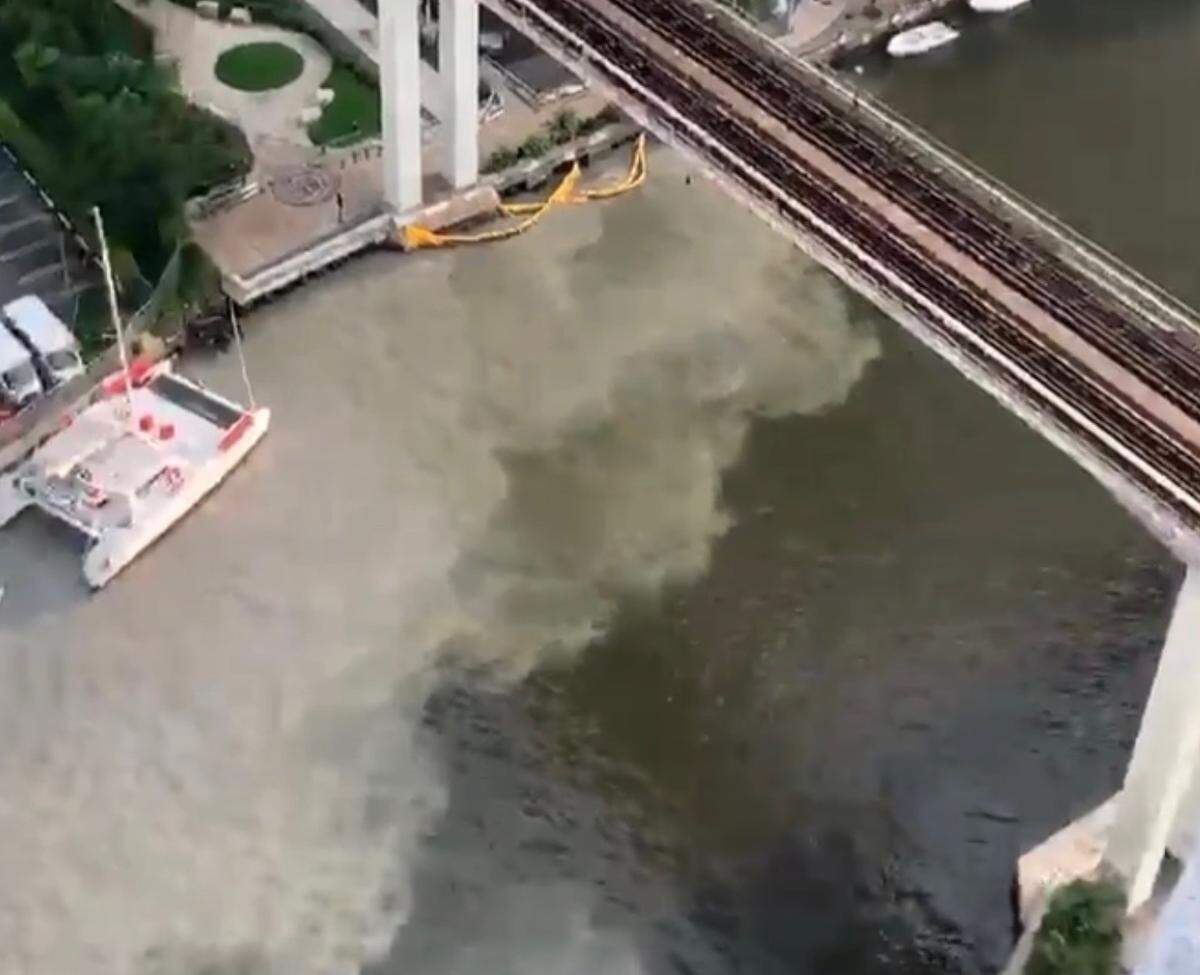
In construction, issues can happen when contractors fail to secure sites to prevent runoff, as they are required to do by law, and silt and other construction materials end up in the bay. Waterkeeper received a pollution report on Sept. 12 with a video showing a silt plume that was escaping from a large area that was partially protected by a curtain on the seawall, right by the Elysee Miami construction site on Northeast 23rd Street.
On Aug. 19, a large plume was seen in the Miami River near 690 SW First Ct. According to Miami-Dade County Environmental Resources Management, it looked like the contractor allowed sediment to enter into a storm drain which washed out into the river once the stormwater pump station kicked in. Because the turbidity curtain was not properly attached, the plume washed straight into the river.
While construction runoff may not be the top pollution input going into Biscayne Bay, it’s part of what Rachel Silverstein, executive director of Miami Waterkeeper, calls “death by a thousand cuts.”
“The leaky septic tanks and sewage spills get a lot of attention but there are many other factors affecting the bay — and even something apparently small like fertilizing lawns in the rainy season and blowing grass clippings into storm drains can have a significant impact,” she said.
How much is getting into the bay is hard to say. About 390 stormwater outfalls in the city go directly into the bay, Russell said. And whatever goes onto the streets will likely be washed into waterways and the bay, especially during the rainy season.
Among recent measures to address different pollution inputs, Miami passed an ordinance in April that sets restrictions on what kind of fertilizers can be applied on public and private properties as well as when and where fertilizers can be used. Using fertilizer during heavy rain increases the risk that algae-fueling nutrients will be washed into storm drains and make their way into Biscayne Bay.
Silverstein said that the fish kill ignited interest among residents to participate in efforts to monitor and report pollution in the bay. Waterkeeper runs a program called 1,000 Eyes on the Water that trains concerned citizens to identify possible signs and sources of pollution, and to contact the appropriate channels to report incidents. The nonprofit used to organize in-person workshops before the COVID-19 pandemic and now offers a virtual training course for anyone who’s interested in getting involved.
“Since the fish kill we’ve been getting flooded with reports of pollution and many of these cases are from construction sites,” she said. The city and Miami-Dade County have pollution hotlines to make it easier for citizens to report incidents.
This story was originally published October 28, 2020 at 5:25 PM.
.jpg)