Imagine finding a two-headed snake in your home. That’s what happened to one Florida family
Imagine finding a snake in your house. Not a stretch in Florida.
Now imagine said snake having two heads. You might react as this woman joked on a Florida Fish and Wildlife Research Institute posting on Facebook about just such a find.
“If the one I saw yesterday would have had two heads I probably would have run around acting like I had two heads!!”
The Florida Fish and Wildlife Conservation Commission reported Wednesday that it has taken custody and care of a rare two-headed snake that apparently got confused — is that surprising? — and found itself inside a family’s home in Palm Harbor in Florida’s Pinellas County.
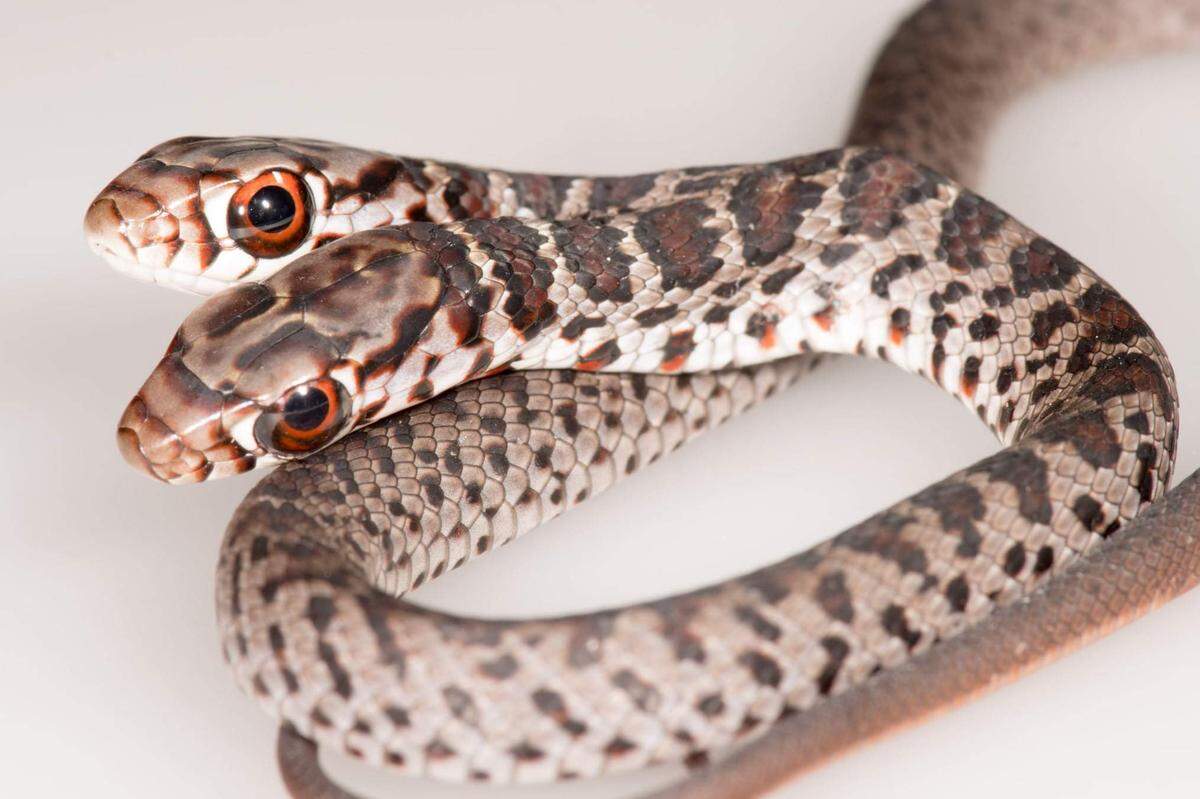
Southern black racer
The snake is a Southern Black Racer, a non-venomous variety that can grow to between almost two feet and just over four feet. The snake is also known as the Eastern Racer.
Southern Black Racers are common in Florida and can be found throughout the state’s mainland areas and in the Keys, according to the Florida Museum.
But the two-headed trait, which is called bicephaly, is uncommon, according to the FWC. Bicephaly happens during the development of the embryo when two monozygotic snake twins fail to separate. The heads are conjoined onto a single body.
A confused snake
Two heads, in this case, are not better than one. Imagine if your laptop had two central processing units that each fired commands to the computer but were not in sync.
That’s a bit what happens to the poor two-headed Southern Black Racer.
According to the FWC’s Research Institute, “both head’s tongues flick and react to movement, but often not in the same way.” These — sorry — scatterbrained Southern Black Racers aren’t likely to survive for long in the wild “because the two brains make different decisions that inhibit the snake’s ability to feed or escape from predators.”
This story was originally published October 21, 2020 at 12:32 PM.