
Miami has air quality problems. Study points to electric cars as healthier option
With its idyllic beaches, swaying palm trees and expansive urban bay, it sometimes seems Miami couldn’t possibly have an air pollution problem.
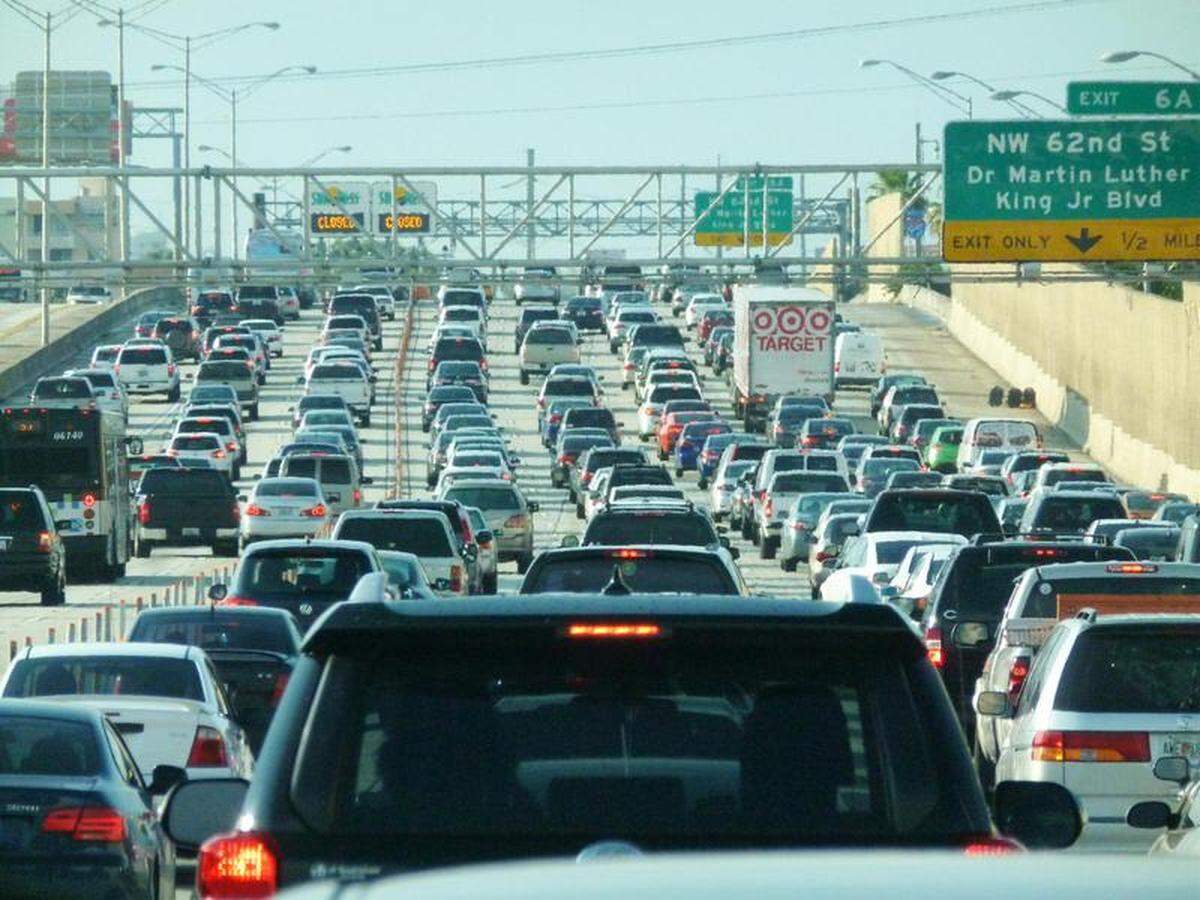
But the air is far from fresh. Too many cars, delivery trucks and buses produce a growing amount of particle pollution and ozone. It increasingly worsens asthma attacks, leading to more sick days and lost productivity, and premature deaths.
A shift to electric vehicles by 2050 could make significant improvements and save Miami billions of dollars through public health benefits of reduced exposure, the American Lung Association said in a report this week. In Florida, this transition could result in avoiding 323 premature deaths annually, and generate $3.7 billion in public health benefits. Miami could save $1.4 billion a year and halt 126 premature deaths, the report said.
“If you take into account the growth of the population, the development of the area as more people move to South Florida and the Miami region, pollution problems are likely to get worse,” said William Barrett, the report’s author and director of Advocacy for Clean Air at the nonprofit.
Even as the COVID-19 pandemic has ravaged the hospitality and tourism sector — crucial engines of growth in Miami-Dade — activity is expected to pick up later this year, according to the Greater Miami Convention and Visitors Bureau.
And people from high-tax states like New York are still moving to Miami during the pandemic: ISG’s Miami Report said there are still 950 people moving to Florida every day, and many are buying condos and planning to settle in the Miami area, according to the 2020 Miami Report, an annual analysis of the condo market.
As a consequence, Miami is among the top 10 metropolitan areas in the U.S. that stand to benefit the most from a transition to electric vehicles, given its air quality is deteriorating as development remains robust and more vehicles continue to hit the road every year, said the American Lung Association.
The nonprofit’s “The Road to Clean Air” report only looked at passenger vehicles, transit and school buses, delivery vans and the broad trucking sector to estimate the benefits for public health if the entire fleet were replaced by electric vehicles. Ship pollution, for example, probably makes things worse but wasn’t analyzed in this study, Barrett said.
Ozone pollution is a key issue in Miami, and it’s compounded by the increased days of above-average heat, Barrett said. Ozone is formed when pollutants emitted by vehicles, power plants, refineries and other sources react chemically to heat and sunlight, turning into a dangerous health risk.
South Florida shattered heat records this year. It experienced the hottest month of March on record, while on one day in mid-April temperatures in Miami never dropped below 80 degrees in an unprecedented mark for that month.
If emissions don’t start dropping soon to slow climate change, Florida could go from an average of 25 days a year where it feels like 100 degrees or higher to 105 days by mid-century, according to a study by the Union of Concerned Scientists. By the end of the century, the number of extreme hot days could climb to 141 days.
“Implementing policies that transition to electric (vehicles) can quickly produce health benefits and also help reduce the effects of climate change,” Barrett said, adding the transportation sector is the leading contributor to climate change in the U.S.
Already, Miami is experiencing an increasing number of days when ozone or particle pollution are at unhealthy levels, the Association said in its “State of the Air” 2020 report, published in April. Miami-Dade got a D for ozone pollution and ranked 81 for high ozone days out of 229 metropolitan areas surveyed.
The result raised concerns about how air quality could impact COVID-19 cases in the area. Ozone pollution increases health risks for people with respiratory conditions such as asthma and chronic obstructive pulmonary disease, or COPD. The Centers for Disease Control and Prevention say that those underlying conditions increase the risks of severe COVID-19 cases.
A Harvard T.H. Chan School of Public Health study in April said people with COVID-19 who live in U.S. regions with high levels of air pollution are more likely to die from the disease than people who live in less polluted areas. The research linked long-term exposure to fine particulate air pollution to the risk of death from COVID-19 in the U.S.
Right now, motor vehicles are a leading source of harmful air pollution threatening public health and worsening climate change, Barrett said — and the worst impacts are often to communities of color who live near major roadways. .
“The dual air pollution and climate change health crises facing America today must be addressed immediately, with electric vehicles and clean energy playing a leading role in the solution,” he said.
This story was originally published September 16, 2020 at 11:32 AM.
.jpg)