
Miami Wilds water park plan downsized but activists push for restoring rare forest instead
Environmentalists are protesting a planned water park slated to be built on Zoo Miami’s parking lot — next to a patch of rare forest that’s home to endangered species such as the Miami tiger beetle and the Florida bonneted bat. They say the area can be restored, and that the park should be built somewhere else.
A $120 million, 40-year lease agreement for the Miami Wilds project, which was approved by voters in 2006, will be considered by Miami-Dade’s Parks, Recreation, and Cultural Affairs Committee on Friday.
Supporters say the park, hotel and shops will create much-needed jobs, attract visitors to the zoo and boost development of surrounding areas. But conservationists say that is not enough to offset the value of preserving some of the last patches of an ecosystem that doesn’t exist anywhere else in the world, even if some of it has been previously paved over.
“If you want to keep the largest pine rocklands outside Everglades National Park from becoming part of a $100 million theme park, now is the time to do something about it,” Al Sunshine, founder of the Miami Pine Rocklands Coalition, said in a call to action on Facebook this week. “If it’s approved, it will clear the way for turning environmentally sensitive land, some designated critical habitat by the federal government, into a massive theme park, with little concern about environmental destruction, increased traffic and ultimate profitability.”
The project, which residents approved in a 2006 vote, has been scaled down over the years to consider environmental concerns such as endangered species that are known to use that habitat. In its latest iteration Miami Wilds is slated to include a water park, a hotel and a small number of retail shops and restaurants aimed at showcasing the surrounding area’s Everglades and pine rockland habitats. There won’t be any dry rides or Hollywood-themed attractions, as envisioned in the original plan.
“An exciting, eco-sensitive project at the front door of Zoo Miami,” says the development’s newly created Instagram account. Miami Wilds is slated to be built on 27.5 acres of county land located next to Zoo Miami.
The land lease would run for an initial term of 40 years, with two 20-year renewal terms. The county expects to receive about $120.7 million in rent and parking revenue during the first four decades, according to the lease proposal. The project is expected to create about 400 jobs and become “an economic catalyst for south Miami Dade County,” the proposal says.
Much of the pine rocklands that remain are located in Everglades National Park, and only 2 percent are left outside the park. The forest, which can only be found in South Florida and parts of Cuba and the Bahamas, once covered much of Miami-Dade County’s high ground between Florida City and the Miami River. Today, small pockets of pine rockland outside the park provide habitat for a growing list of endangered species including four butterflies, bonneted bats, the Miami tiger beetle and many species of plants.
One of the last remnants of the forest was lost to a Walmart-anchored mixed-use development spread across 140 acres just around the corner from the proposed water park. But in that case, environmentalists sued, challenging the zoning changes required to make the project possible. The 2017 lawsuit was dismissed in June last year and the Coral Reef Commons project is going ahead.
This time, activists are hoping to convince commissioners to do the right thing and put the land under conservation to protect “some of the best urban Florida bonneted bat habitat, and the last known habitat for the Miami tiger beetle,“ said Jacklyn Lopez, an attorney and Florida director at the Center for Biological Diversity.
The beetle’s incredible recovery from extinction was a key driver of change to the project’s scope. The tiny, iridescent insect was discovered in Miami-Dade and described in the 1930s, but wasn’t seen again for six decades until 2007 when a biologist found a small population in a sliver of pine rockland in the Richmond Heights area near the zoo.
Seeking greater protection to the beetle’s rare habitat, environmentalists petitioned the U.S. Fish and Wildlife Service in 2014 to consider the Miami tiger beetle as threatened or endangered under the federal Endangered Species Act. The insect was listed as endangered in 2016.
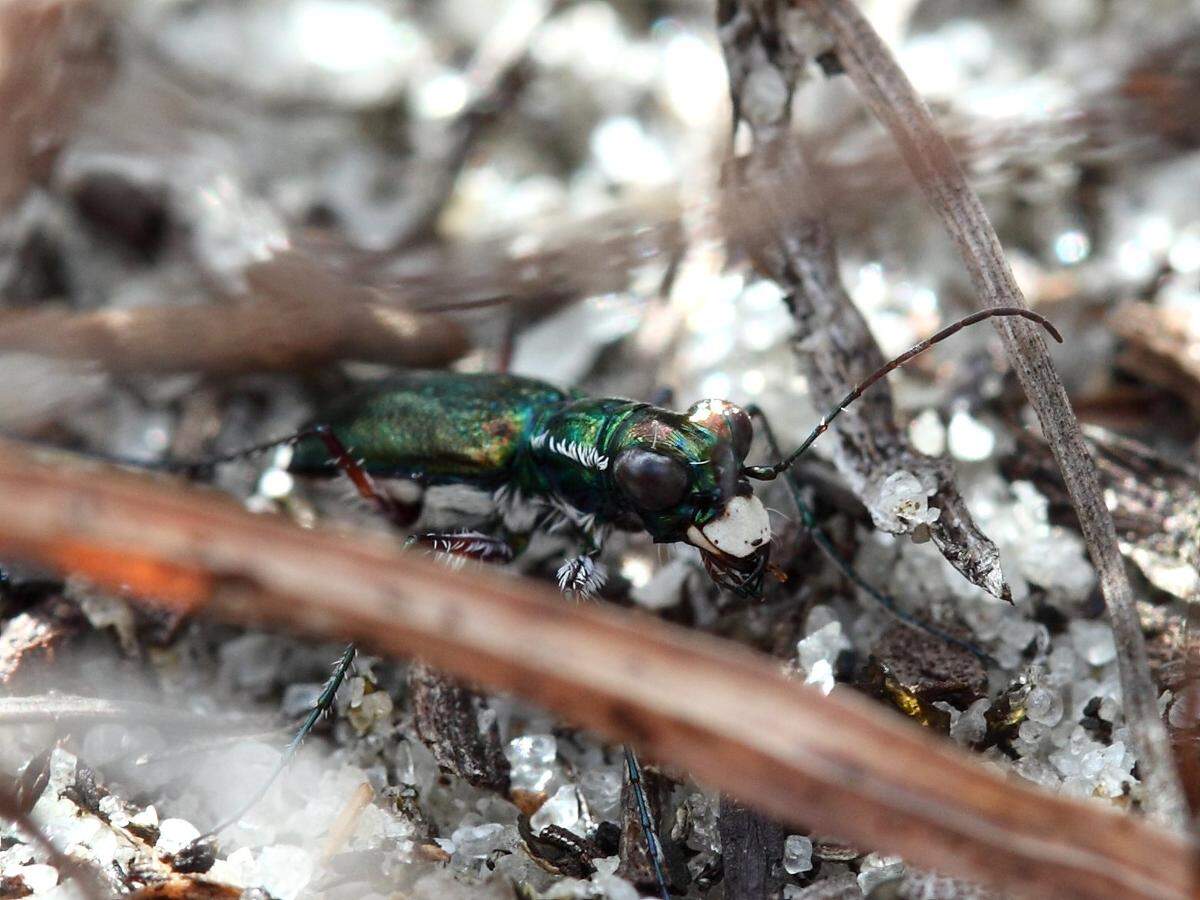
That forced developers to scale down the project which was originally designed as a massive theme park featuring rides based on 20th Century Fox movies such as Rio and Ice Age. Now the proposed water park would be confined to the zoo’s main parking lot, with additional parking to be built east of SW 124th Avenue. A controversial exit ramp from the Turnpike that would have cut across rockland was also dropped.
“We are ready to go, we are excited that we are finally at this point where we can take this hot nothingness of parking and convert it into something cool, refreshing and landscaped,” architect Bernard Zyscovich said in a YouTube video promoting the project. He said the area is “far from environmental zones,” and that the project includes a beach club “where we will literally be bringing the beach to south Dade.”
Yet even a smaller footprint is bad news for the pine rocklands and its inhabitants, conservation groups say. The more densely developed the area, the less welcoming it will be to the bat, beetle and other animals that need that habitat to survive. And even if the forest has been paved over, it’s still possible to restore it, according to conservation experts.
“We would like to see the water park located elsewhere, rather than in the middle of a potentially restorable pine rockland. It’s important to reclaim that site and restore integral habitat,” said Jose Francisco Barros, president of Tropical Audubon Society. He said the county should be thinking about connecting pine rockland fragments rather than developing them.
And native species can be replanted on original pine rockland sites, experts say. The paved area should not be developed because its restoration potential is significant.
“From a policy perspective, we cannot assume it’s ‘already gone’,” said Botanist George Gann, who has worked on projects to restore pine rockland habitats and serves as president and chair of the Board of The Institute for Regional Conservation. “I look at it as pine rockland with asphalt over it. It’s definitely restorable. Once scraped and prepared, native species can be repopulated.”
The Center for Biological Diversity said the beetle and the bonneted bat, among Florida’s most threatened species, are reason enough for county commissioners to reject the project.
“The area is a lifeboat for them in an already overdeveloped county with seemingly endless construction,” the activist group said on its website.
And Bat Conservation International called Miami Wilds a “bat-killing project.”
“We strongly object to this project’s poorly conceived proposed location and request the developers find another area that does not destroy rare habitats critical for species survival,“ said Mike Daulton, executive director at the organization. “The habitat in and around Zoo Miami supports the second-largest known population of the highly endangered Florida bonneted bat, and destruction of this vital habitat would be devastating.”
.jpg)