
Michele Oka Doner wants us all to be lovers of the bay
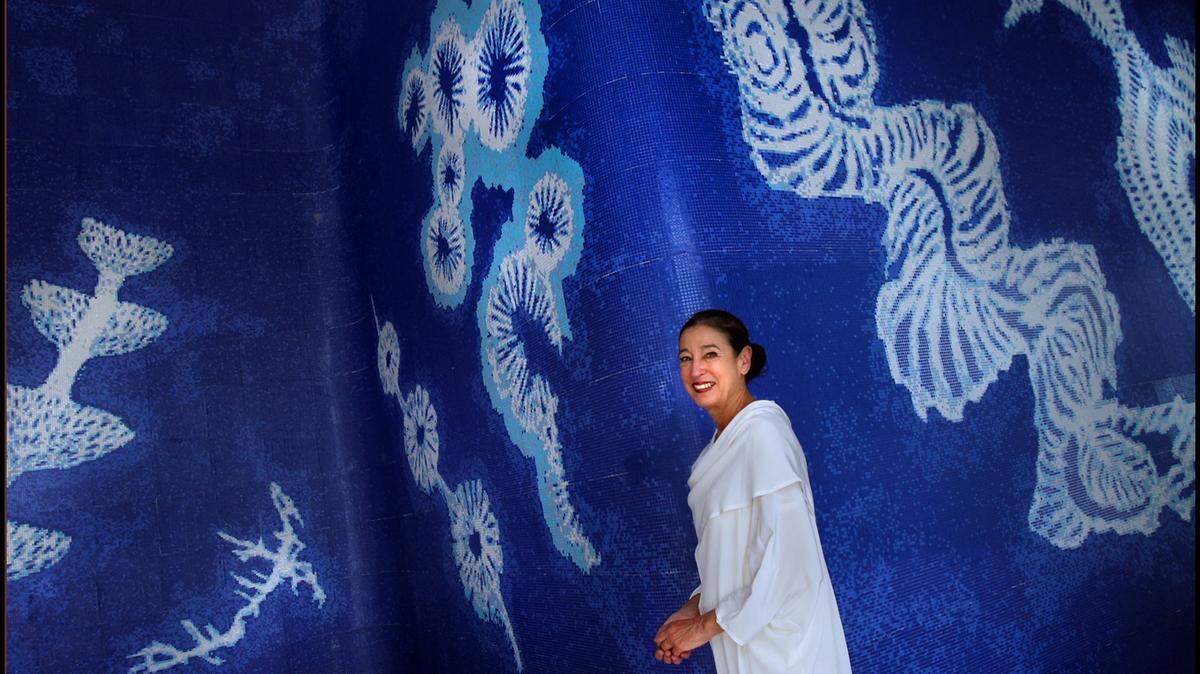
It was the water that helped raise Miami Beach-born artist Michele Oka Doner. The shells and knots of sargassum seaweed that she discovered as a kid walking along the shore have made their way into her artwork over a 52-year career. She never imagined that, one day last summer, when she tried to share her favorite place with her two grandchildren, she’d find herself feeling apologetic.
This was decidedly not the blue beach she remembered. The water was murky, unswimmable.
As fish kills become more commonplace in Miami’s waters, Oka Doner’s art continues to bring attention to the place she said “opened up her soul.” It’s not too late to save the bay and the beaches, she wants her work to tell viewers. But, we also can’t wait any longer.
“I think there’s a new understanding of the Earth itself as an integrated breathing organism,” Oka Doner said. “Miami can be a leader in this.”
The key is to create consciousness, she said. Since 2004, Oka Doner has been working on a series of books that pay homage to the natural world she grew up in.
“It’s not a book in the traditional sense with a beginning and end,” Oka Doner said. “It’s much more of a gathering of materials and ideas, thoughts, hopes and dreams pressed into the pages.”
Oka Doner makes the paper herself. The pages are imbued with banyan tree roots, banana leaves, seeds, bits of shell – all collected mostly from her walks in Miami.
She’s now revisited the pages, making notes based on newfound knowledge of the wounded habitat in her native city.
“Biscayne Bay between Miami and Miami Beach has lost over 25 miles of seagrass in the last decade,” Oka Doner wrote last August in “Thalassia,” her book dedicated to the plant commonly known as “turtle grass.”
When Kate Fleming, founder and director of the nonprofit Bridge Initiative, saw the books, she knew she had to work with the artist.
Bridge, a Miami-based organization, brings artists and scientists together to talk about climate change and habitat degradation.
“Art has the power of making people fall in love with something, and when people love something they want to protect it,” said Fleming.
Together with Bas Fisher International, an artist-run nonprofit, Fleming is bringing Oka Doner’s work to the public online. While the work was set to premiere next year, the most recent fish kill in Biscayne Bay brought renewed urgency to the project, Fleming said.
These words float on a page designed by Oka Doner. It’s a peek into her ode to seagrass in “Thalassia.” In the corner, a QR code will take readers to a website with actionable steps people can take to help save the bay.
“It’s a tipping point,” she said. “Miami can’t exist without Biscayne Bay. The two are the same. In order for Miami and Miami Beach to continue we need the bay to thrive and regenerate.”
Oka Doner’s work will be part of Waterproof Miami, a series of grant-funded public art projects Bridge and Bas Fisher are developing to bring awareness to environmental issues facing South Florida. A previous project, Coral City Camera, produced by the two groups in partnership with Coral Morphologic, and gives viewers an underwater livestream of a coral reef in Miami.
For Oka Doner, falling in love with the region’s waters is not a problem.
“I’ve had a lifetime affair with the bay,” she said. “The possibility of cleaning the bay and cleaning the water remains.”
Let’s all be lovers of this city, says Oka Doner.
“That would be my mantra for Miami: Let us be lovers of this city, not its masters.”