Here is the tale of a Florida lizard so constipated that it set a world poop record
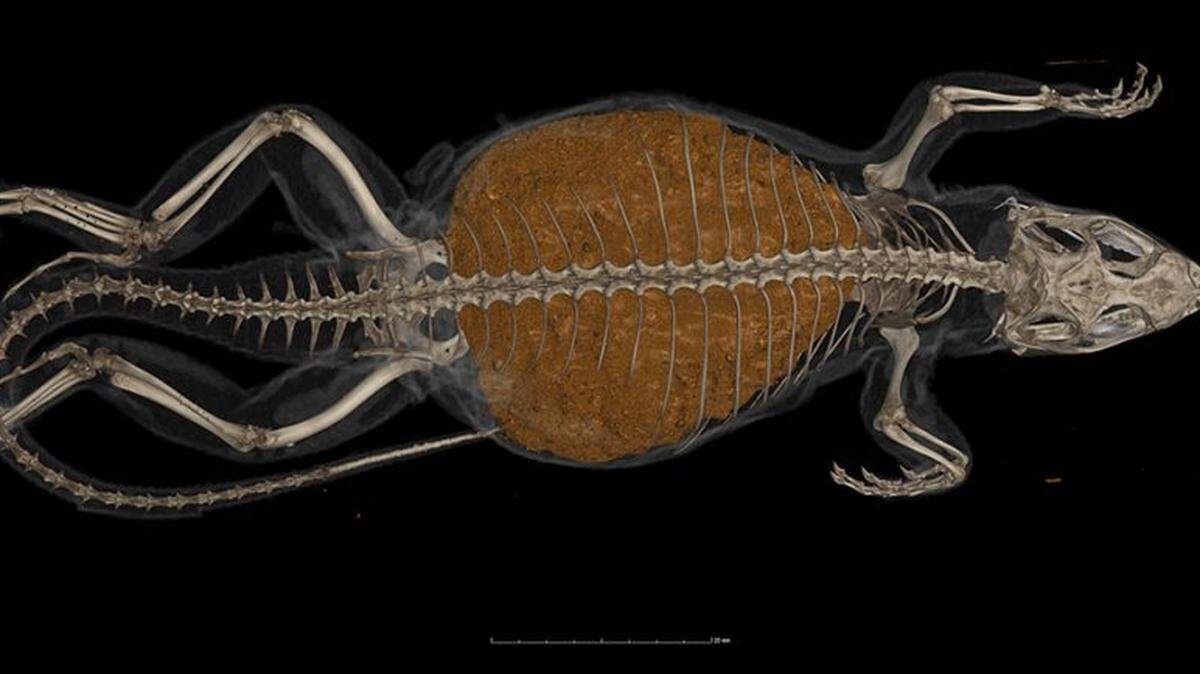
Be grateful Florida lizards don’t wipe after pooping, or we’d really have a toilet paper problem.
That’s because a team of University of Florida herpetologists found a bulbous Northern curly-tailed lizard outside a pizza restaurant in Cocoa Beach with quite a characteristic.
A “tremendous turd,” as Smithsonian Magazine scientifically put it.
The lizard had an unusually large fecal bolus in its two inch midsection that made up nearly 80% of its body mass, according to a report published as a note in Herpetological Review, UF’s Florida Museum reported.
The museum calls this a “record-breaking case of constipation.”
The lizard was lounging in a quiet spot in the parking lot at the pizza place, its belly full of insects, an anole and greasy sand. Alas, the contents congealed into an “unpassable glob of poop” – “the largest known feces-to-body-mass ratio recorded in a living animal,” according to the museum.
So big a ratio it bested a previous record set by a Burmese python — and who can forget the python that had a gator in its belly in the Florida Everglades years ago?
One of the researchers, Natalie Crunch, thought at first the bulge contained eggs but it felt like “Silly Putty.”
“We are unaware of any records from wild or captive animals that approach our finding,” Claunch told Inverse. “We hope for the sake of the individual animals that there are not any out there.”
And why is that?
The researchers had to euthanize the poor little beast because it would have soon passed from a painful death since it couldn’t pass its, well, you know, “tremendous turd.”
“I was blown away by how little room there was left for all the other organs ... it [had] only a tiny space left over in its rib cage for the heart, lungs and liver,” Edward Stanley, the museum’s director of the Digital Discovery and Dissemination 3D lab, said in a statement. “It must have been a very uncomfortable situation for the poor lizard.”