
In Miami, your Super Bowl beer is going to be different. It won’t come in a plastic cup
The Super Bowl is famous for excess and star-studded events: huge parties, expensive tickets, big superstars like Jennifer Lopez, Shakira and Pitbull. For any host city, it means lots of visitors, lots of traffic, lots of food served and delivered (think millions of pizzas), and lots and lots of beer.
But there is something Miami’s Super Bowl 54 won’t have much of: plastic. At least at Hard Rock Stadium.
The home of the Miami Dolphins is ditching most of the plastic stuff that’s ubiquitous at sports arenas: water bottles, beer cups, plastic utensils and food wrappings. They’ve all been replaced by recyclable items as Miami rushes to join the green bandwagon, under pressure from environmentally conscious sports fans and sponsors.
Enter reusable and recyclable aluminum containers, which the stadium has been testing since last month. Copious amounts of beer will be served in the lightweight cups, helping Hard Rock Stadium eliminate more than half a million plastic cups a year. Those water bottles that are clogging the world’s waterways and filling up the stomachs of marine animals? Gone. Metal cans are replacing about 600,000 water bottles a year at the venue, located just a few miles from Miami’s glorious beaches.
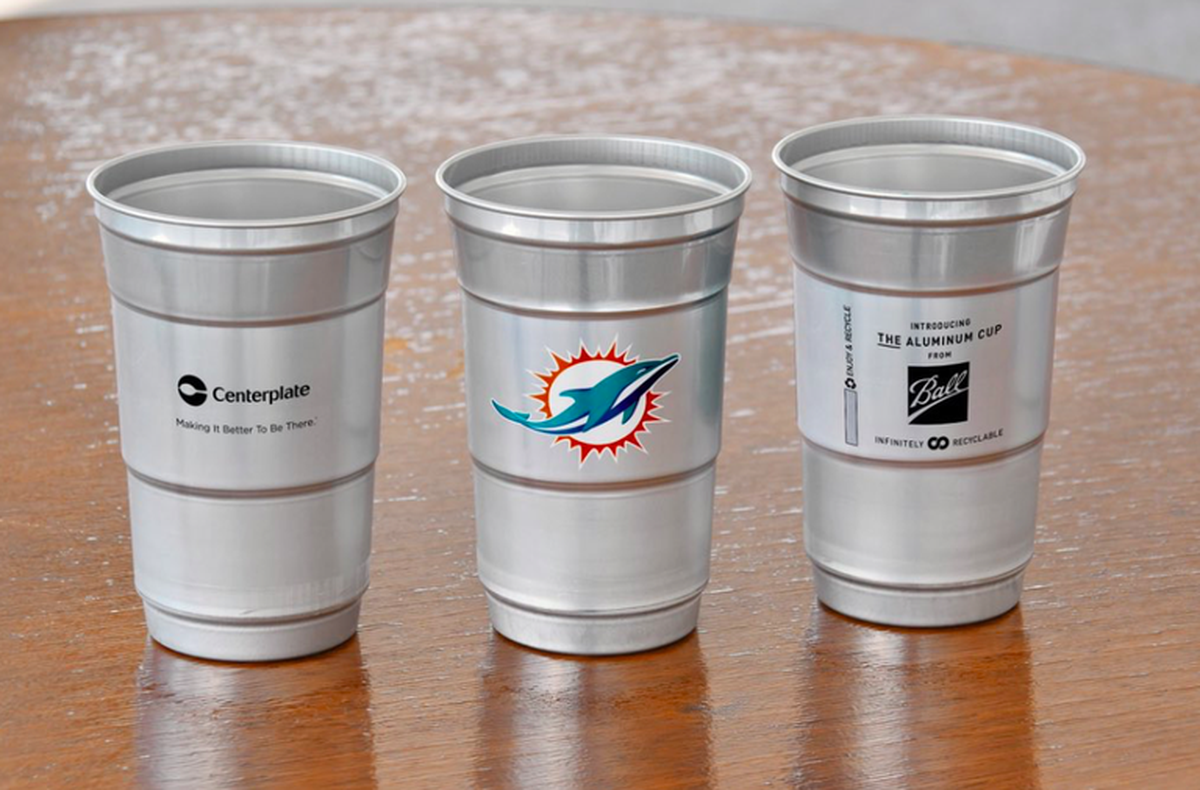
This is the first time an NFL venue will be almost plastic free — with a total reduction of 2.7 million plastic items — and event organizers are proud of their achievement. They are even trying to convince the NFL to encourage all its venues to get rid of plastics.
“If we can do it at Hard Rock Stadium, with all the events we have here including the Super Bowl, then there is no reason why others can’t do the same,” said Tom Garfinkel, vice chairman, president and CEO of the Miami Dolphins and Hard Rock Stadium.
Garfinkel said the spark to do something about the mountains of plastic produced at the stadium happened while he was watching a “60 Minutes” documentary about plastic pollution and the “Great Pacific Garbage Patch.” He got some people together last summer to figure out what it would take to eliminate all plastic from the stadium in time for the Super Bowl.
Vendors grumbled at first, saying they needed time to transition. But they got it done, and debuted the recyclable metal cups last month as the Dolphins hosted the Cincinnati Bengals in the final home game of the season.
“This is something that consumers are demanding, so we had to step up to the plate,” said Rodney Barreto, chairman of the Miami Super Bowl Host Committee.
The event partnered with the Ocean Conservancy to raise awareness about plastic pollution as a staggering eight million tons of plastic waste end up in the ocean each year, according to the United Nations. If this trend continues, there will be more plastic than fish in the seas by 2050.
And because of the eye-popping number of water bottles consumed at Hard Rock Stadium, Garfinkel said he definitely wanted to get rid of that for the big game.
Nearly one million single-use bottles are sold every minute around the world, while about five trillion single-use plastic bags are used every year. Half of all the plastic produced is designed to be used once. There’s so much plastic out there that scientists have proposed using it as a geological indicator of the current era.
So Super Bowl Miami wanted to try to move the needle, even if by a tiny amount.
Among the few plastic items that are staying is a cute little ice cream container in the shape of a mini football helmet. It’s a souvenir that people love.
This story was originally published January 23, 2020 at 2:41 PM.
.jpg)