
Fried doubles down on plan to replace 30-year energy savings program
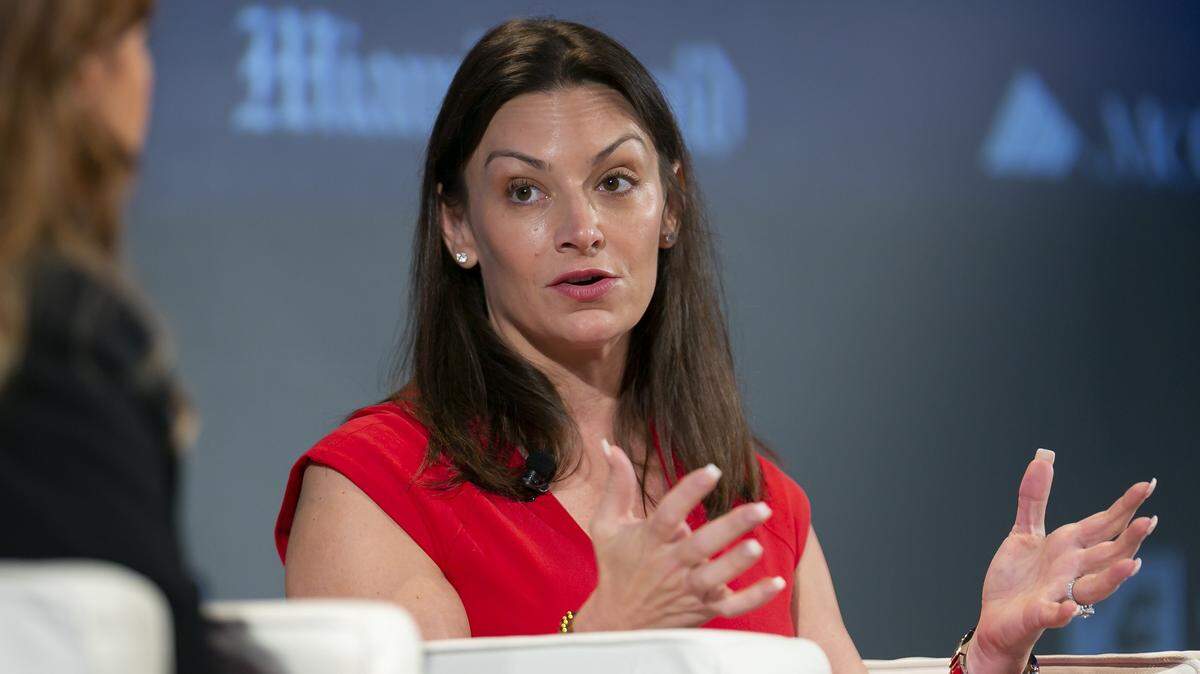
At a Climate Change conference Thursday, Agriculture Commissioner Nicole “Nikki” Fried announced that her newly created council to address climate and energy issues would not only consider how the state should adapt to climate change, but how to replace the state’s 30-year program that encourages utility customers to save energy.
“Now it’s actually time to be proactive and actually come up with solutions,” she said Thursday. “Obviously, FEECA is not working.”
Applications for the council are open now, and Fried said she expects to have utility representatives and environmentalists alike on the board.
The Florida Energy Efficiency Conservation Act — FEECA, for short — requires the Public Service Commission to set efficiency goals for utilities every five years and pays for conservation incentives. FEECA allows the utilities to offer programs like LED light bulbs, attic insulation and water heater wraps, and put the cost of the programs on customers’ bills.
In both previous interviews about replacing FEECA and during her speech at the conference, Fried offered no specifics for a replacement model but spoke of a need for “discussion and conversation.”
Earlier this year, the Public Service Commission voted 4-1 to reject a call by utilities to eliminate conservation goal standards under the FEECA program. The vote was celebrated by Democratic lawmakers and environmental advocacy groups who urged the public to pressure commissioners to reject the utilities’ position.
In a November brief Fried filed with the PSC, Fried sided with the utilities. She called the conservation goal standards “outdated” and suggested that they be scrapped.
Because FEECA is state law, only the Florida Legislature can amend or abolish it.
Fried, who oversees the state Office of Energy, recently hosted the state’s first climate summit since 2008 and has made clean energy part of her agenda. She also issued a slate of legislative proposals ranging from floating solar arrays to a $20 million clean energy research center.
Stephen Smith, executive director of the Southern Alliance for Clean Energy, said his organization welcomes the conversation and Fried’s interest in the topic. And while he shares Fried’s frustration that FEECA “isn’t living up to its potential,” he said it’s not productive to criticize it without having ideas of how to replace it.
“We welcome her engagement, but we also welcome more than just her critique,” Smith said.
He said his group will vie for a seat on the council to bring its experience to the debate, but that replacing FEECA may not be the solution to Fried’s concerns. There could be clearer direction to the PSC on how to implement FEECA, he said, and perhaps stronger guidelines.
“It’s what the commission allows the utilities to do is the problem,” he said. “While FEECA isn’t getting the result we all want, we don’t want to throw the baby out with the bathwater. You don’t want to take a frustrating and underperforming situation and turn it into a worse situation.”
State Sen. José Javier Rodríguez, a Miami Democrat, said while the state needs a better plan to incentivize renewable energy and efficiency goals, starting anew might not be the way to go. It’s dangerous to start from scratch, he said, and it’s better to have a plan to work with what Florida already has.
Rodríguez and Rep. Anna Eskamani, D-Orlando, led the pushback on the utilities’ proposal to get rid of FEECA earlier this year.
“With the existing system, there are a lot of things we can do to yield more efficiency than what [the PSC] has done,” said Rodríguez, who has already filed legislation to require both the PSC and Fried’s office to develop a unified plan for renewable energy. “We kind of already know what we need to do.”
Eskamani, who has filed legislation to require utilities to depend on 100% renewable energy by 2050, said the state doesn’t necessarily need “rhetoric for more rhetoric,” like Fried’s proposed energy council.
“There are so many easy changes we can do right now at the PSC level that doesn’t even require legislative action,” she said.
Certain things, like the cost-benefit test for efficiency programs, can change sooner than later, Eskamani said. The current model, known as the rate impact measure (RIM), is used to measure the impact of the conservation programs on customers based on costs, not on the net savings produced by lowering energy consumption.
Eskamani pointed out that the FEECA process, while troubled, also has important elements that would be lost if the program was dissolved. For example net metering — the system through which homeowners can sell solar energy they generate back to the utility grid — would be impacted.
“We have to be thoughtful,” she said. “We have to look at energy policy holistically.”
Alex Harris reported from Key West, and Samantha J. Gross reported from Doral.
This article was updated after it was originally published to clarify the utilities’ stance on energy conservation goal setting and to include the fact that only the Legislature can amend or abolish the Florida Energy Efficiency Conservation Act.
This story was originally published December 6, 2019 at 6:00 AM.