Climate change forcing Caribbean children from homes, splitting families, UNICEF says
Caribbean children are among the most vulnerable to climate change and are being driven from their homes by drought, flooding and hurricanes, a new study by UNICEF says.
Between 2014 and 2018, the hottest five-year period on record, 3.4 million people living in the Caribbean were displaced by storms and flooding. Of them, 741, 000 were children.
That number represents a six-fold increase, says the report’s author, Christopher Tidey, when compared to the previous five years when only 175,000 children out of 600,000 people were displaced by weather-related events.
“The primary cause of this dramatic increase in forced displacement was a series of catastrophic tropical cyclones or hurricanes that hit the region between 2016 and 2018 — including four Category 5 and two Category 4 storms.,” Tidey wrote in the report. “Some areas affected by Category 4 or 5 hurricanes have been left virtually uninhabitable.”
The report was released on Thursday as thousands of individuals, including scientists, government ministers and business leaders from more than 200 countries, continue to arrive in Madrid where the United Nations is holding its climate change conference, known as COP25.
United Nations Secretary-General António Guterres, who has made fighting climate change a top priority and traveled to St. Lucia to meet with Caribbean leaders on the matter, told reporters in Spain ahead of the conference that while the world has the scientific and technical know-how to stop global warming, it lacks the political will.
During the U.N. summit, UNICEF delegates will raise some of these issues and make the point that the climate change crisis globally is really a crisis of children’s rights. Among those who are expected to participate: 16-year-old Swedish activist Greta Thunberg, who has tried to give young people a voice in the debate..
“This is actually causing families to split, or to separate,” Tidey, the UNICEF report’s author, told the Miami Herald.
The Caribbean region, he said, “is almost uniquely vulnerable” to the effects of warming temperatures.
“It’s probably one of two regions in the world that is the most vulnerable to this type of climate-linked natural disaster. It’s very important that more attention is brought to the implications of climate change for the Caribbean sub-region specifically,” Tidey added. The other region is South Asia.
With nearly three-quarters of a million children being internally displaced over a five-year period, UNICEF is calling on governments to take a number of steps, including reducing carbon emissions and pollution, putting children at the heart of climate change strategies and response plans, and reducing inequities because children from poor communities are often hardest hit by extreme weather events.
“The international community must do a better job of mitigating the effects of climate change on children and vulnerable populations,” UNICEF Executive Director Henrietta Fore said in a statement.
“This means helping build up resiliency and adaptation strategies in at-risk communities so that they are better prepared to withstand and bounce back from severe weather events like hurricanes,” she said. “It also means putting systems in place to ensure that when children are forcibly displaced by disasters, they have access to protection and the services they need.”
In 2017, more than a dozen Caribbean countries were impacted by Hurricanes Maria and Irma. In Dominica and on the island of Barbuda, children were especially affected as parents were forced to uproot and move to other nearby islands because homes were inhabitable and schools were either damaged or destroyed.
“What we’re seeing, for example, in Antigua and Barbuda, two years after the storm that basically devastated all of Barbuda, and everyone was evacuated to Antigua, most kids are not moving back to Barbuda,” Tidey said. “The infrastructure has not been rehabilitated and the schools really aren’t opened there for them to go to. In some cases, families are deciding that the opportunities for education are better on Antigua so they’re deciding to stay there.”
In September, Hurricane Dorian, the most powerful storm to hit the Bahamas, also drove children from their homes on the islands of Abaco and Grand Bahama. The storm’s 185 mph sustained winds destroyed 45% of homes and left 69 persons confirmed dead, UNICEF said. The cost of the storm’s damage, meanwhile, is estimated at $3.4 billion, according to the Inter-American Development Bank.
After visiting Abaco in early September along with Bahamas Prime Minister Hubert Minnis and other Caribbean leaders, the chairman of the 15-member Caribbean Community, or Caricom, told the Herald that small island developing states of the region can’t afford to ignore the impact of warming temperatures and greenhouse emissions.
“We must take every single storm and expect the worse,” said Allen Chastanet, chairman of Caricom and prime minister of St. Lucia. “We as a government have forced ourselves to live in a constant state of readiness.”
Chastanet said Caribbean nations have to be able to take control of their destiny. However, international institutions are creating financial rules that prohibit them from accessing money to build the resilience they need from hurricanes and other weather-related events.
“We’re not the ones creating the problem. We cannot reduce our emissions by ourselves and cause the pattern of global warming to change,” he said.
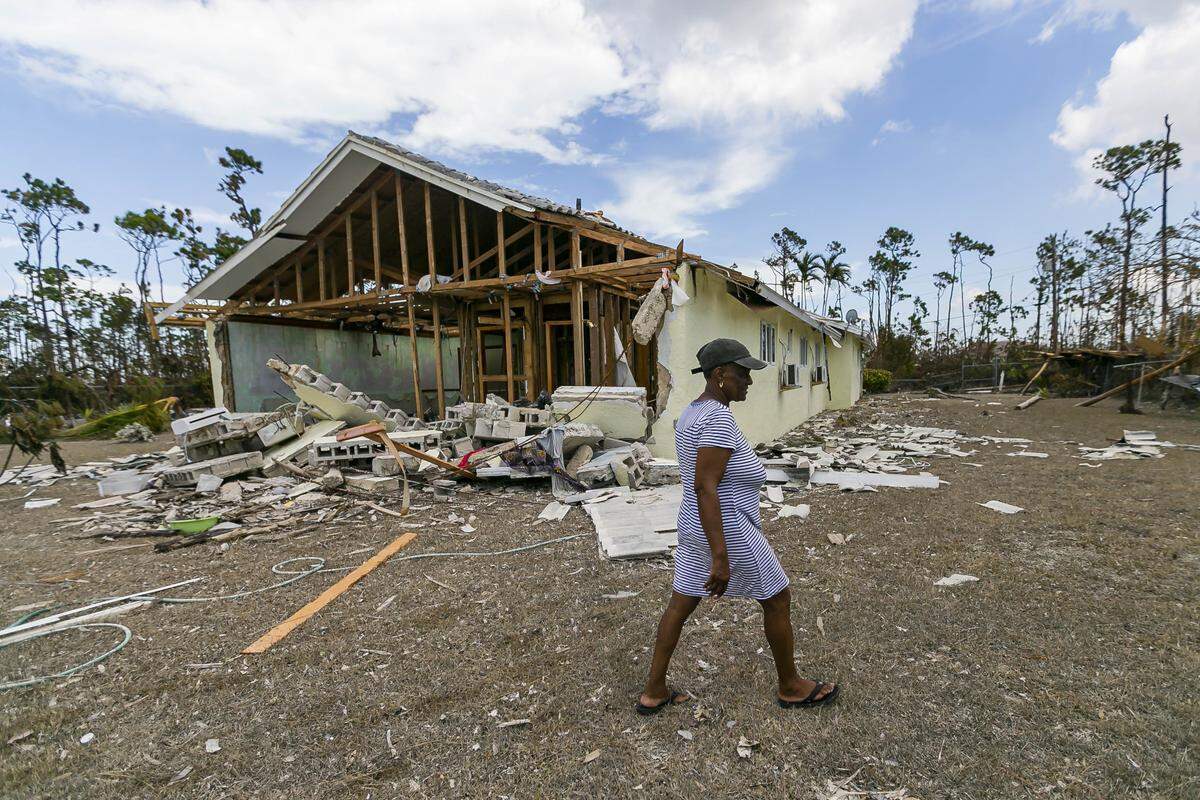
Hurricane Dorian, according to UNICEF, forced the evacuation of about 5,500 people, including more than 1,400 children, to Nassau. Many others fled to other islands or left the Bahamas. Many families have also split, UNICEF noted, as parents begin to return to some of the affected communities in Abaco and Grand Bahama to rebuild, leaving children in shelters or with relatives.
“Alone, children are at increased risk of violence, exploitation and trafficking. Displaced children are also at increased risk from opportunistic diseases such as measles and respiratory infections, which can thrive in overcrowded conditions in emergency shelters,” the UNICEF report said. “Displaced children are also at risk of having limited or no access to the essential services they need to thrive including education, protection and health care.”
There is also one other emerging concern: immigration.
“If the displacement trends stay the same or increase, then you could see a lot of cross-border displacements, and there are definitely challenges for children who go through that scenario,” Tidey said in the interview. “Oftentimes when children are forcefully displaced and have to seek refuge across borders, there are issues in terms of access to essential services like just being able to be enrolled in school, or access to healthcare.”
This story was originally published December 5, 2019 at 7:00 PM.