Forecaster wanted his ashes released into a hurricane. His family found the perfect storm.
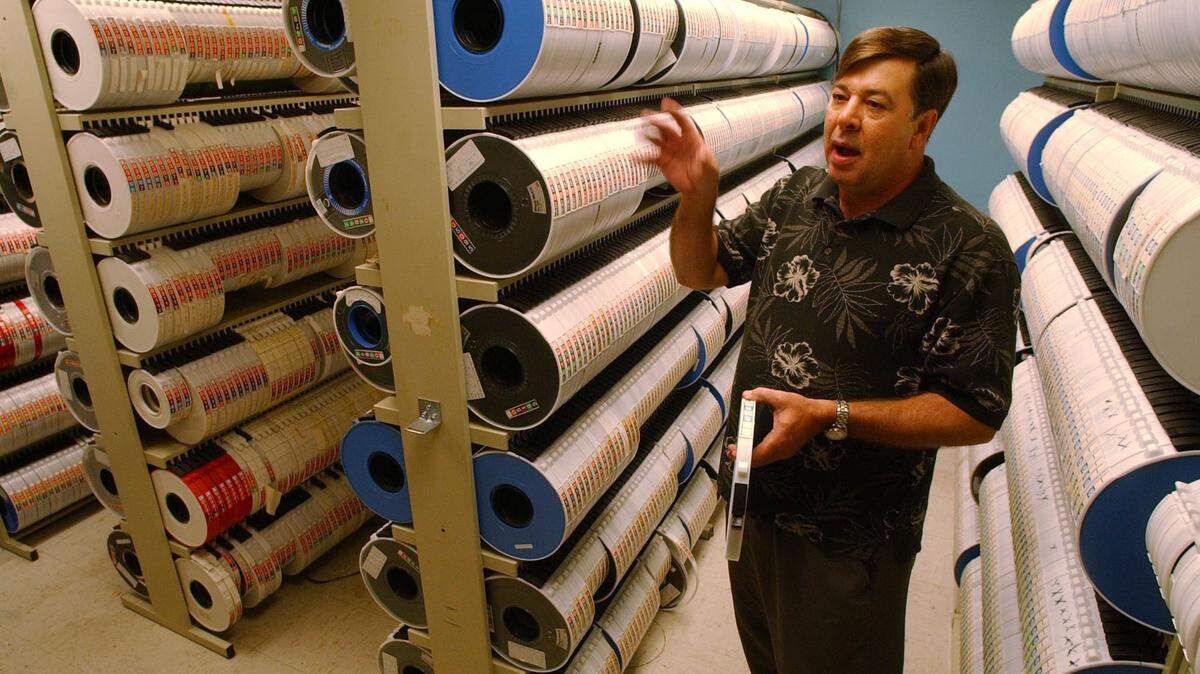
Michael Black, in his 32 years with the Hurricane Research Division of the National Weather Service, pioneered the use of airborne radar data and sensors to measure the strength of hurricanes.
These are the wind-, temperature-, and moisture-measuring devices, called GPS dropsondes, which are dropped from hurricane hunter planes to sample the eyewall of hurricanes. Black helped revolutionize how meteorologists estimate the intensity of tropical storms.
When Black died in July 2017 at 62, his family told the Miami Herald in his obituary that they’d like to scatter his ashes via a NOAA hurricane hunter plane into the eye of a hurricane.
That has happened, his colleague Stanley Goldenberg said. And with a bittersweet twist.
Black’s ashes were scattered into the eye wall of Hurricane Michael on Oct. 9, 2018, a day before the storm had a devastating impact in the Florida Panhandle when it made landfall on Mexico Beach.
Goldenberg wrote up an account of Black’s memorial service for the Atlantic Oceanographic and Meteorological Laboratory’s Keynotes magazine and the story was featured on NPR’s “All Things Considered” on Thursday.
For the memorial, Black’s daughter Brinn Black carried her father’s ashes, which were wrapped in the state flag of Virginia (his birthplace) onto a NOAA hurricane hunter aircraft. Also in the memorial package: Black’s Senior Master Eye Rover patch that commemorated his more than 400 hurricane eye penetrations, and his flight suit tag.
The mission into the heart of fearsome Michael took 10 hours. During the third pass into Hurricane Michael’s eye, the tightly bound ashes memorial package was placed in a dropsonde chute and released.
“It was such a special and very appropriate send-off to a dear friend and colleague,” Goldenberg told the Miami Herald.
This story was originally published February 21, 2019 at 7:00 PM.