
Miami-Dade Schools’ top teachers share inspirational learning tips for better students
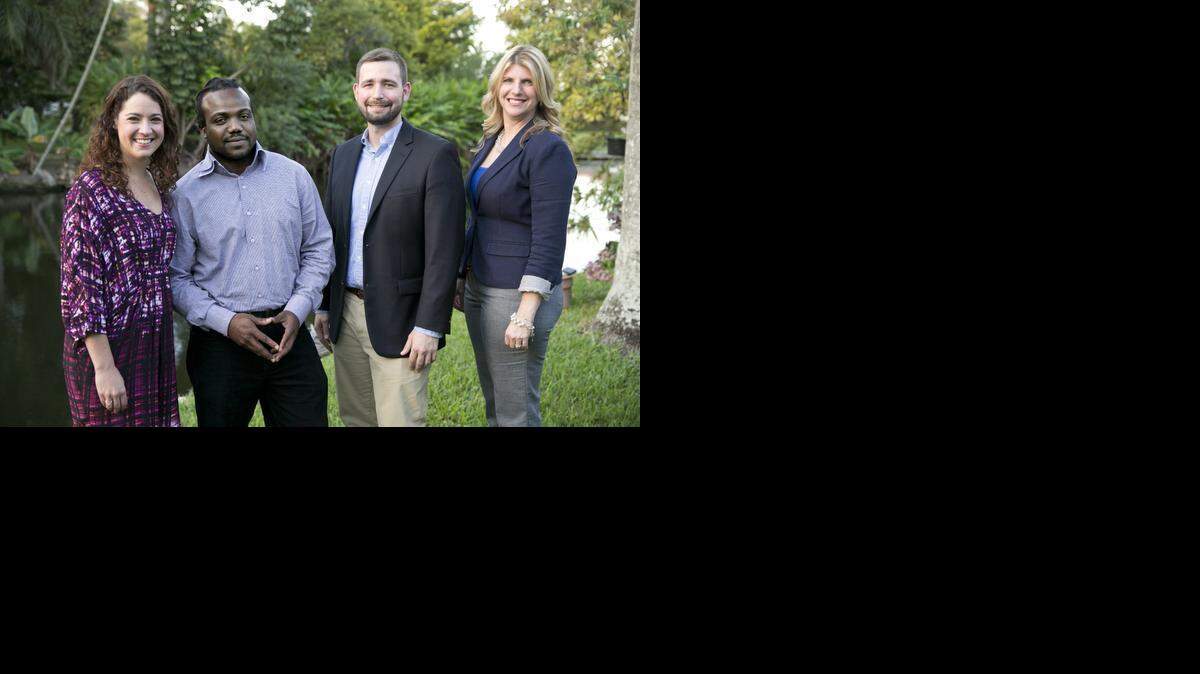
There are more than 20,000 teachers in Miami-Dade County Public Schools and every year, one is recognized for earning particularly high marks.
Miami-Dade’s Teacher of the Year will be named Thursday at a ceremony at the DoubleTree by Hilton Miami Airport and Convention Center. The winner will walk away with a new car, along with $4,500 and other prizes.
Five finalists for the prize recently celebrated with an annual tradition: an inspirational get-together with past prize winners. The Miami Herald sat down with this year’s candidates to ask how teachers, parents and students can help each other succeed in the classroom. Here are their answers, edited for clarity and length.
Educational Transformation Office nominee
Tawana Akins estimates she has 2,000 books in her third-grade classroom at Holmes Elementary School in Liberty City. Her emphasis on literacy has catapulted her kids — all of whom were retained last year — to become among the top readers in their school.
“You can’t tell them they are retainees. Their self-esteem is so high,” said Akins, a 12-year teaching veteran. “These kids need all the motivation they can get because they’ve been told for so long they can’t do stuff. And in reality, if you work with them, they can do whatever you need them to do.”
Akins has been nominated for teacher of the year four times. Here are her top tips for other teachers, parents and students to ensure success in the classroom:
▪ How can teachers help their students succeed in school? “You have to know your learners. You have to be very observant, and if one way of teaching is not working, you can also use other ways to teach — visual, auditory, kinesthetic and tactile learning — to address all learners in the classroom.
▪ What should parents do to keep their kids on track academically? They need to form a communication system with the teacher and monitor their kids’ grades, their reports … [and] they should be talking to their kids. … They need to know: What is your individual level, because the kids know. But the parents need to know that as well, so when they’re getting books for their kids, it can be on the independent reading level.
▪ How can students get the most out of their education and build healthy relationships with adults at school? They track themselves. They know. I have trackers in the classroom, so they know what they’re missing — like if they know they didn’t do well on chapter 6, they know they have to go back, see me or go to tutoring for that particular section.
South region nominee
Eighth-grade U.S. history teacher Geoffrey Aladro makes it a point to say hello to every parent who walks into the Frank C. Martin International K-8 Center in Richmond Heights.
“Because even if they’re not a parent of a kid I’m teaching currently, I’ll be teaching their student a year from now or six years from now,” he said. “Establishing contact with parents before, having that positive relationship, really helps.”
A seven-year teaching veteran, Aladro was named as his school’s Rookie of the Year in 2010.
Here are his top tips for other teachers, parents and students to ensure success in the classroom:
▪ How can teachers help their students succeed in school? I found with middle schoolers, the key thing is that, really, you have to have the lesson connect to them. You can be talking about the most incredible theory, you can show the most incredible art work, you can show the most incredible thing. But if it has no connection to them or to their life, or it kind of goes against their experiences, I think they’re at an age where they can very easily kind of dismiss what you’re saying.
▪ What should parents do to keep their kids on track academically? It just makes a big difference when a parent is [in school], when a kid sees a parent there, when teachers see a kid’s parent there, and calling teachers. … I think, unfortunately, the parent-teacher relationship, very often, you know, people wait until there’s an issue to establish contact. So that first contact is kind of in a negative context. … So I think a key tip would be to establish a positive relationship with a teacher.
▪ How can students get the most out of their education and build healthy relationships with adults at school? I think about my college experience, and, you know, there’s a fear of emailing college professors and going to office hours. And I think that is kind of the fault of teachers in high school and middle school and elementary school. We kind of establish this wall, and so we really need to encourage students that it’s important to talk to adults and get advice from adults.
Central region nominee
Lisa Hauser doesn’t do a lot of lecturing in her classroom at iPreparatory Academy in downtown Miami. But the high-school math teacher does plenty of talking.
“Most of my lectures are online. So I can spend some time working one-on-one with students and getting to know them,” said Hauser, a 14-year veteran. “It opens up a communication avenue so that we can, if they’re having a problem they’ll feel comfortable telling me and trust me to do the right thing.”
Here are her top tips for other teachers, parents and students to ensure success in the classroom:
▪ How can teachers help their students succeed in school? I think the first thing you need to do as a teacher is to get to know your students. The better you know your students, the more they are willing to do for you, the more you are willing to do for them. And the more connections you have, the better the experience is going to be. ... I talk a lot with them. ... What are their interests, and maybe then I can connect my subject to their interests … but it’s also, I can encourage them when they get discouraged. It’s easier for me to talk to them because I know something about them. I know how they react to setbacks.
▪ What should parents do to keep their kids on track academically? Stay involved. Stay involved. Even when they’re rolling their eyes, you stay there and you keep on asking questions and you keep on showing you care. Sometimes, especially teenagers, that’s who I deal with, they want control. They want to feel like they have control, and they want autonomy. And you need to give it to them. But you also need to let them know that you’re there, even when they don’t want you to be there.
▪ How can students get the most out of their education and build healthy relationships with adults at school? I think that students should be less afraid of failing and more interested in trying new things. Just be unafraid to try new things. ... Look at my class: You can redo assignments 20 times. I don’t care. It’s for mastery, right. So you’re going to continue working on it until you get it. ... It’s just encouraging kids to do it again, do it again.
Alternative/Vocational school nominee
Many see alternative education as a dumping grounds for kids who are too tough and too troubled to be taught. Not Charlemagne Olius, alternative education teacher at Here’s Help in Opa-locka. The 11-year teaching veteran sees alternative education as an opportunity.
“Those young people can go either way,” Olius said of his students. “We need somebody to save them, and when you’re in alternative education, this is the opportunity you have: to help somebody turn their lives around from something totally negative to something positive.”
Here are his top tips for other teachers, parents and students to ensure success in the classroom:
▪ How can teachers help their students succeed in school? I would say you have to do a lot of research. ... You can research what other teachers are doing, and you can borrow from what the teachers are doing and implement it in your classroom, or you can modify it to make it fit the population.
▪ What should parents do to keep their kids on track academically? A parent basically has to make education a priority to them in order for the student, for the child, to be inspired, to be wanting an education. For instance, if the parent doesn’t care about education, you don’t read, you cannot expect your student or your child to go out and read. But if you’re reading, you’re involved, you’re trying to better your situation, that can inspire a child.
▪ How can students get the most out of their education and build healthy relationships with adults at school? In order for them to be engaged they have to believe in the product. But if the student can see what they can use in the learning, they can be pragmatic, and I believe they will be more apt to get involved, to be engaged. But if they don’t see the relevance of it, many times this is what’s going on in the classroom, students don’t see how the can use that information. It’s not relevant. Therefore, what is the point of being excited about it.
North region nominee
As far as Hialeah Gardens High School language arts teacher Christine Rodriguez is concerned, teachers do not get the summer off.
“They may not be in school, but they’re at home investigating, researching, going to professional development. During Christmas break, they’re still communicating with students,” Rodriguez said.
Teachers also spend a lot of time outside of their classrooms worrying, the 20-year veteran said.
“Teachers struggle a lot more than people may think emotionally, because we see some of the pain that our kids go through socially and at home, and it pains us because we can’t fix everything,” Rodriguez said.
Here are her top tips for other teachers, parents and students to ensure success in the classroom:
▪ How can teachers help their students succeed in school? I think more so than anything, is to be relevant, to see what’s going on out in the world so that kids always can make a connection. And to basically plan your lessons around what’s going on in the world. ... And have fun. Laugh. Kids love laughter. ... You know, you can have rigor and you can be strict but you can also keep things light.
▪ What should parents do to keep their kids on track academically? They need to be involved, but not intrusive, because students need to learn to survive on their own. But you always want to have a gentle hand and a way to guide and a support system ... but also giving them the freedom to stumble every now and again because it’s in the stumbling that we learn.
▪ How can students get the most out of their education and build healthy relationships with adults at school? Go in there wanting to learn and saying, ‘I’m going to give me best effort today.’... I always tell my students all the time, I say, ‘Guys: I can’t care more about your education than you do. I will move heaven and earth to help you, but you gotta want to be helped, and you gotta help move it with me.’
Follow @Cveiga on Twitter.
This story was originally published January 29, 2015 at 5:02 PM with the headline "Miami-Dade Schools’ top teachers share inspirational learning tips for better students."