
‘Schools of Hope’ charter operator is moving into 5 Miami-Dade high schools
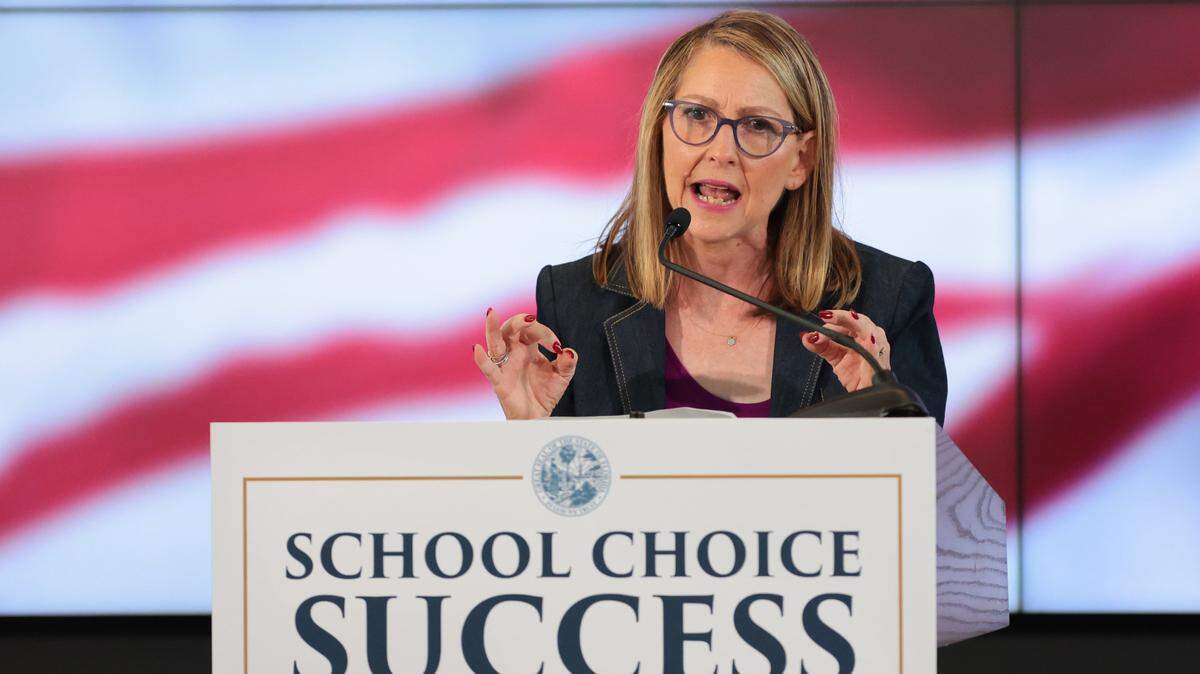
In a near-unanimous but uneasy vote Wednesday, Miami-Dade’s school board approved an agreement allowing the New York-based charter giant Success Academy — backed in part by the billionaire Miami transplant Ken Griffin — to operate classrooms in five district high schools.
The first-of-its-kind arrangement marks a tectonic shift for Florida’s largest school district, where charter schools have operated in their own facilities rather than district property. It also places Miami-Dade squarely in the middle of a broader and increasingly contentious debate over Florida’s “School of Hope” laws, which now require districts to make underused and ”persistently low-performing” schools available to be occupied by approved charter operators.
Supporters, largely Republicans, say the policy accelerates school improvement and expands options for families — especially those in districts with subpar schools. Critics argue it weakens local control, redirects public funding without voter input and forces districts to accommodate privately managed schools whether they want to or not.
“Elections have consequences,” said District 1 member Steve Gallon, a Democrat. “We may not like it, we may not agree with it, but we have to respect it.”
The agreement approved on Wednesday allows Success Academy to co-locate at Hialeah-Miami Lakes, Homestead, Miami Jackson, North Miami and Westland-Hialeah high schools. The operator will enroll an initial 1,400 students across the five campuses, tentatively beginning August 2027, according to meeting documents.
While charter schools are not new to Miami-Dade, the structure of the deal is. Instead of opening a standalone campus, Success Academy will operate inside existing district schools, sharing facilities such as classrooms, cafeterias and common areas.
The arrangement makes Success Academy the first state-authorized “Hope Operator” to reach a co-location agreement with Miami-Dade, an “A”-rated district that serves upwards of 300,000 students. It could also tease what’s to come; multiple charter groups have already expressed interest in accessing space at dozens of Miami-Dade schools.
As with all charter schools in Florida, funding follows the student. Each child who enrolls in Success Academy will draw in state per-pupil dollars with them, redirecting funding away from the district.
Success Academy will pay Miami-Dade $700 per student to cover shared costs like custodial services and cafeteria use, according to the agreement. District officials say that amount is unlikely to fully offset the financial and operational strain of sharing campuses, particularly as enrollment declines in traditional Miami-Dade public schools.
In a statement on Thursday, Success Academy CEO Eva Moskowitz said “we are honored to partner with Miami-Dade to ensure that every child — especially those from economically disadvantaged backgrounds — has access to an exceptional public education.”
Four of the five schools approved for Success Academy co-location — Hialeah-Miami Lakes, Homestead, Miami Jackson and North Miami — hold a “B” grade from the Florida Department of Education. Westland is an “A” school. Last summer, new guidelines from the state Department of Education redefined “persistently low performing” as a school that has earned three grades lower than a “C” in the past five years. None of these schools were on the Department of Education’s most recent list of “persistently low performing” schools.
Frustration boils over expedited review, ‘limited oversight’
Wednesday’s vote capped a tense public meeting in which several board members bristled that they had little time to review the nearly 200-page agreement, which they received on the eve of the vote after months of behind-the-scenes negotiations.
“We will not be treated as bobbleheads,” said District 3 member Joe Geller, a Democrat, referring to the short review window. “This is one big, fat contract that got dumped on us.”
Superintendent Jose Dotres defended the timeline, pointing to a 30-day deadline set by state law. He said further delays could have prompted legal action by Success Academy, potentially costing the district concessions it had already secured like a provision allowing the agreement to be reviewed annually.
Still, Dotres acknowledged the anxiety of the moment.
“We have never entered into this world,” the superintendent said. “It’s been a complex and difficult journey.”
Looming large over the meeting was a perceived erosion of local autonomy over public education. Parents, teachers and union representatives also voiced opposition, focusing on the lack of community input in deciding where charter schools are allowed to move in.
“This is not just a policy decision. It’s a shift in how decisions are being made,” said Mindy Grimes-Festge, secretary of United Teachers of Dade, the district’s largest union. “We are left in a position where the state makes a decision, the district absorbs the cost and the community — and even this board — has limited oversight.”
Vice Chair Monica Colucci, a Republican, countered that resistance to charter expansion ignores the role they already play in Florida’s public K-12 landscape.
“Charter schools are not an enemy in this state,” Colucci said. “They are competition. We have to work with them, and perhaps learn from their successes.”
This story was originally published April 23, 2026 at 4:37 PM.