
Meet the four finalists for Miami-Dade Teacher of the Year 2027
.jpg "Candidates for MDCPS “Teacher of the Year are Roberto Rabelo, left, Gary Spitnale, Julia Pennington-Gilchrist, and Dale Adamson, photographed on Wednesday, January 21, 2026, in North Miami, Florida.")
The four finalists vying to be named Miami-Dade County’s top teacher could have easily been mistaken for longtime friends rather than competitors. On a Tuesday evening, they sat together in the living room of Stephanie King—Miami-Dade’s 2000 Teacher of the Year—sharing stories and laughter.
The annual gathering at King’s North Miami home is now in its 24th year and was born out of her desire to change the culture surrounding the county’s Teacher of the Year prize.
While the tradition of honoring one of the county’s most passionate educators dates back to 1967, King began hosting the finalists at her home after winning the title. Her goal was to create a space where nominees could get to know one another and connect with winners from previous years.
Originally from New York and the eldest daughter of six children, King said she always knew she wanted to become a teacher. Her motivation was solidified through an experience involving a friend who struggled in school.
“I had a friend who was not very good at school, and I thought the teachers were mean to him,“ King said in her home. “And I just remember coming home one day and just being furious that it wasn’t fair. They made children go to this place, and then they were mean to them.”
When King won Florida Teacher of the Year while working as a history teacher at Design & Architecture Senior High School, she described the program as “difficult.”
“A lot of us [teachers] are used to working with kids and doing our work individually,” King said, adding that suddenly being thrown into the spotlight can bring out “so much competition and jealousy.”
Those experiences inspired King to begin hosting nominees in her home, giving them an opportunity to form relationships and move past a history of finalists being overly-critical of one another.
The gathering also allows nominees to meet former winners and finalists, who offer advice on everything from navigating the process to what to wear on the big day. The winner and runner-up will be announced Jan. 28 during an awards ceremony at the DoubleTree by Hilton Miami Airport and Convention Center.
The ceremony will also include the announcement of the Rookie Teacher of the Year winner and runner-up.
Every school in the district nominates a teacher, and a committee narrows the field to four finalists representing the North, Central, and South regions, as well as Adult/Technical Colleges and Educational Opportunity & Access.
This year’s Teacher of the Year finalists include a robotics and engineering teacher at a Kendale Lakes middle school, a culinary arts teacher at a Miami Lakes Technical College, a civics teacher at a South Miami middle school, and a language arts teacher at a Miami Gardens elementary school
The Teacher of the Year receives $5000, while the runner-up receives $3,500. All finalists receive $1,000. The winner also receives $1,500 gift basket. The biggest prize for the 2027 Teacher of the Year, however, is a brand-new car donated by Kendall Toyota.
Here are the four finalists for Miami-Dade’s Francisco R. Walker Teacher of the Year 2027.
Julia Pennington-Gilchrist (North region): The glass is half full
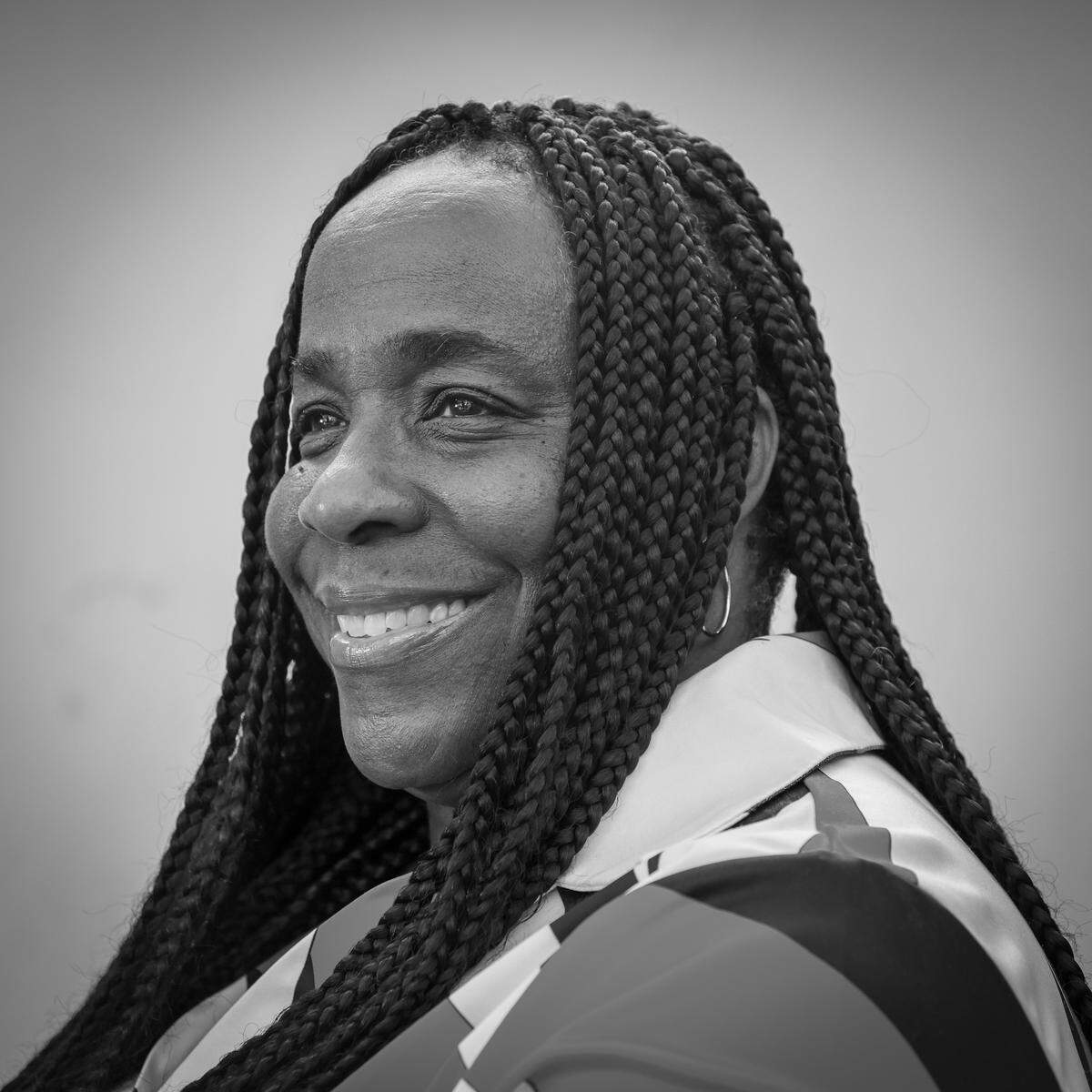
When Julia Pennington-Gilchrist lost her mother at age 16, she found herself without a stable home and spent time living on the streets. That’s when her teachers stepped in and took care of her, making sure she had food to eat and made it to school every day.
“I wanted to become an educator because of those teachers that stood in the gap for me when I didn’t have my family,” said Pennington-Gilchrist who is now a Language Arts teacher at Dr. Frederica S. Wilson/Skyway Elementary School.
The graduate of Miami Central Senior High went on to attend Florida Memorial College and the University of Miami and has since been teaching for more than 30 years. She’s been in her current school since 2000.
A foster care facility sits directly across the street from the school, and during her 25 years at Skyway, Gilchrist estimates she has taught between 150 and 200 foster children—sometimes as many as 10 to 20 in a single classroom.
“So it meant so much to me, because I knew I can relate to them a lot of times,” she said.
Gilchrist understands that without knowing a child’s background, behavior can be misinterpreted.
“If you don’t know the kid’s background, you may just think they’re just being rebellious on their own, or you just think they don’t want to learn or be there,” she said.
The memory of one student sticks out to Pennington-Gilchrist — a foster child struggling with anger issues who “cursed like a sailor.”
Through patience, consistency and a reward system coordinated with the foster home, Pennington-Gilchrist helped the student gradually replace anger with trust.
Pennington-Gilchrist said she watched the student go “from fighting anger and standing in the corner, ignoring me, cursing me, to [saying] Miss Gilchrist, I love you.”
Today, that same student is thriving—on the dance team, the chess team and actively engaged.
She carries that same philosophy into her literacy instruction. Gilchrist credits student growth to meeting children where they are and differentiating instruction.
Her classroom is rarely traditional.
“Sometimes I’m dancing it out, I’m singing it out, I’m talking it out, I’m walking it out — whatever I can to meet them where they are,” she said. “Every kid is not a visual learner, every kid’s not an auditory learner. So I have to bring in all the modes of learning.”
Her students have consistently shown growth and proficiency on state exams.
Pennington-Gilchrist has a favorite quote that she lives and teaches by.
“We can see a glass of water two ways. We either can see it half empty or half full.”
She chooses the latter.
“So I like to see my kids half full waiting for me to fill them up and give them the things that they need to make them become successful,” Pennington-Gilchrist said.
Her message to fellow educators is rooted in that same perspective: teach the whole child.
Robert Rabelo (Central region): A social, emotional and mental health guru
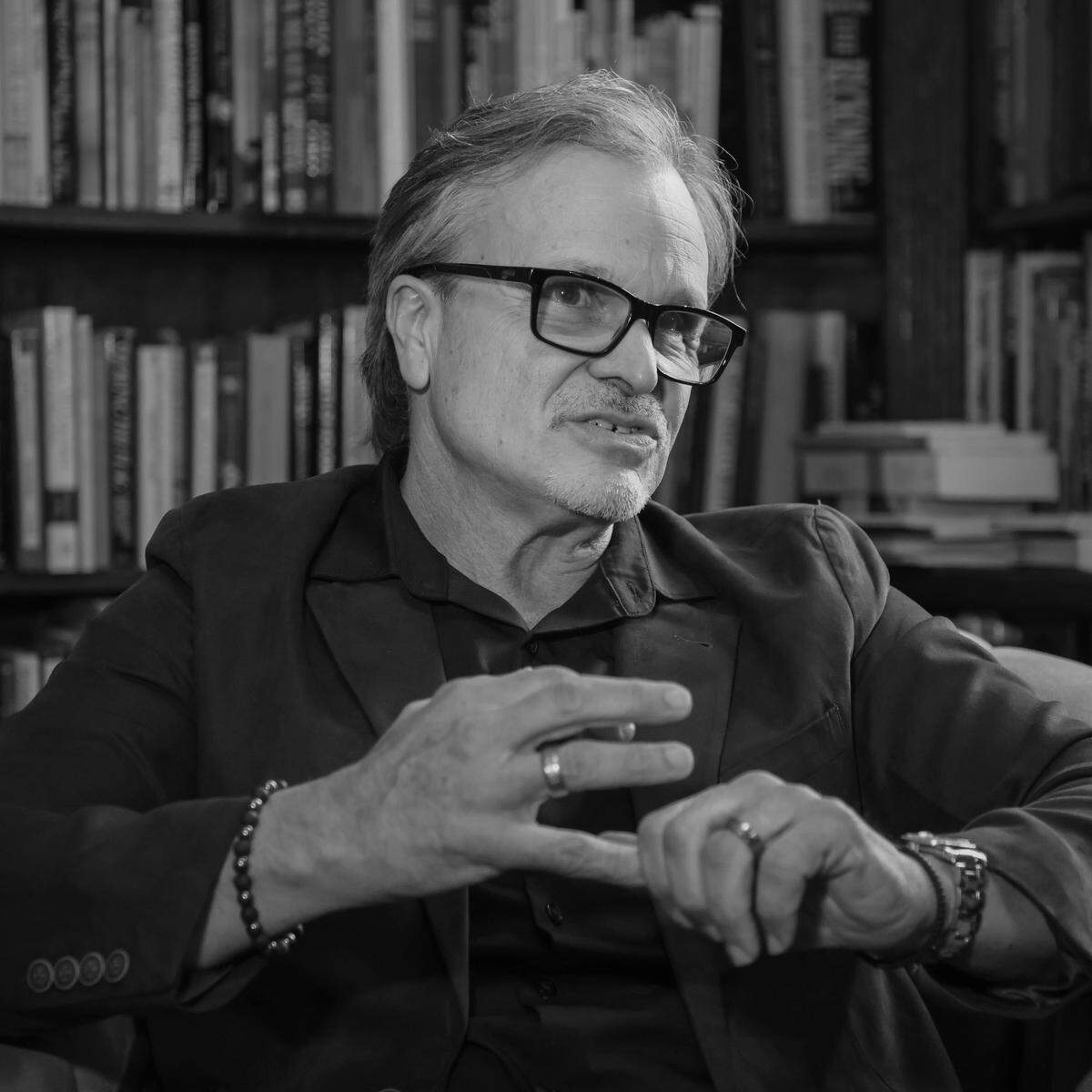
The first question South Miami Middle School social studies and civics teacher Robert Rabelo asks his students is simple: “Raise your hand if you’re blessed to have ADHD?”
The 57-year-old teacher, who was also diagnosed with attention deficit hyperactivity disorder, says he views the condition as “a blessing because it gives us more energy than the average human.” He adds that his goal is to teach students how to harness and control that energy in the classroom.
The most important lesson to teach students, he said, is to not make excuses. “I tell them successful people don’t make excuses,” he said.
That mindset aligns with his personal philosophy of “Do What Others Won’t,” which he credits to his mother.
Born and raised in Miami-Dade, Rabelo is a product of the public school system. He graduated from South Miami Senior High School and Florida International University in 1993—the same year he began teaching.
His parents are Cuban immigrants. His father’s first job in Miami was as a dishwasher at a restaurant he bought seven years later, an experience Rabelo says shaped his work ethic.
Rabelo has three brothers, but it was his youngest brother, Lazaro, who inspired him to become a teacher. Born healthy at 10 pounds and 21 inches, Lazaro later suffered a hematoma that led to cerebral palsy. Doctors told his parents he would never walk or talk.
“My mom looked [the doctor] straight in the eye. She said, ‘You’re not. God, I have other plans for my son,’” Rabelo said.
At his school, Rabelo has been dubbed the “social, emotional and mental health guru.”
He recalled a student who was struggling at home and frequently in and out of the hospital. At the principal’s request, the student was temporarily placed in his class.
“And to this day, whenever I see this young lady, she says, ‘Mr. Rabelo, you saved me,’” he said.
Rabelo’s impact was especially evident when he returned from a six-month leave and had just six weeks to prepare students for exams. Despite the challenge, his students achieved a 71 percent pass rate.
He often teaches students who are new to the country or learning English as a second language—groups that are frequently underestimated.
“Society says that you shouldn’t beat the advanced classes,” he said he tells students. “That society doesn’t know how hard you’re willing to work.”
For the past three years, Rabelo said, his students have exceeded district and state scores.
One of his most memorable experiences came in 2008 with a moment in class involving a quiet student.
“She goes, we do so well because we click with you,” he recalled. “And I go, Well, I click with you. You click, we click.”
From that exchange, “ICLK” became a guiding principle in his classroom—inspire compassion, love and kindness.
This extended in 2018, as part of a civics lesson, students exercised their First Amendment rights by assembling at City Hall and addressing the mayor and city council and petitioned for South Miami to become the nation’s first Compassionate City.
“The students and their families made posters,” he said. “There wasn’t a dry eye on that panel.”
Although the city did not formally adopt the designation, the impact on students was lasting.
“They said at that moment, you taught us to be leaders, and you taught us that we can make a difference in the life of someone else.”
Gary Spitnale (Adult/Technical): A hands-on approach for special needs students
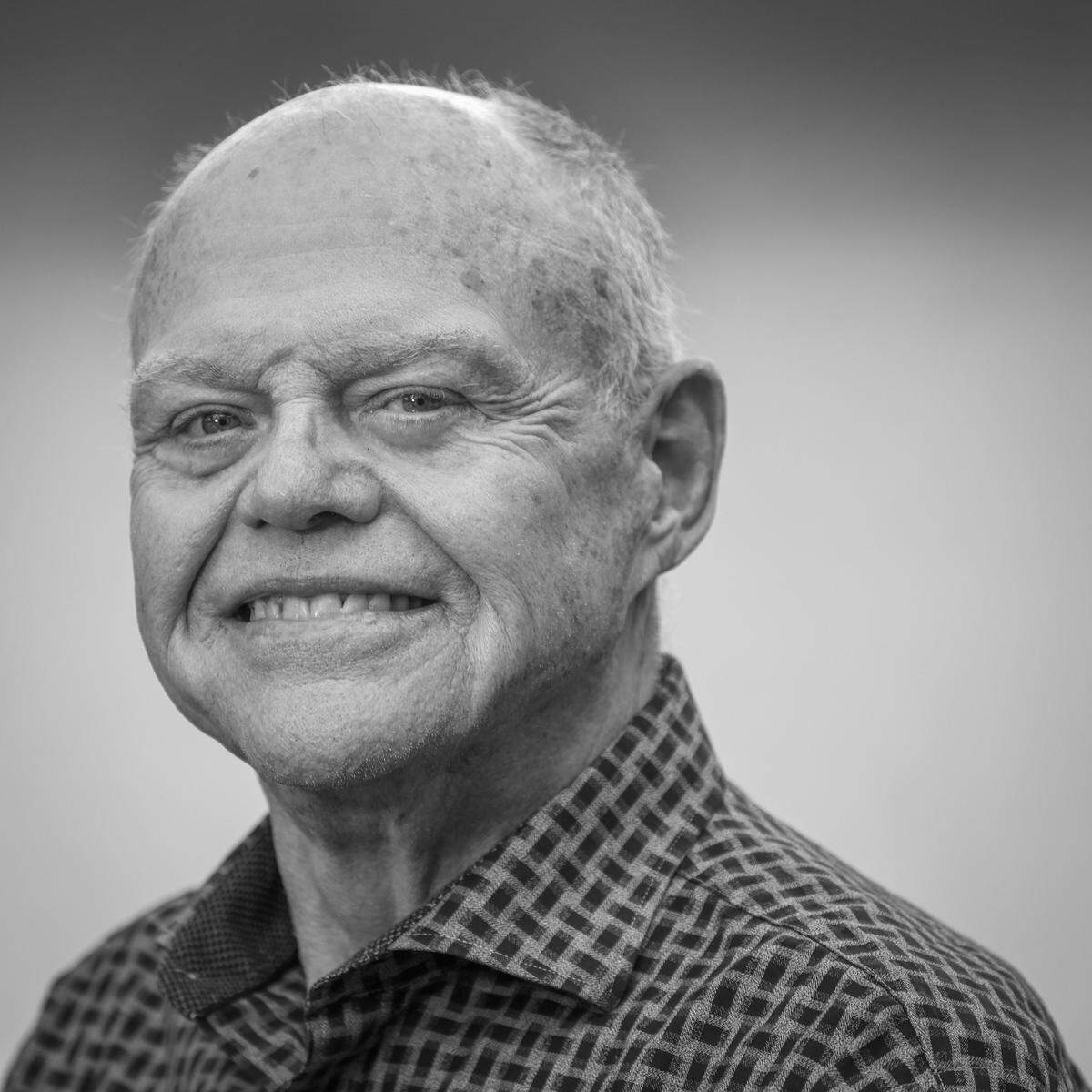
After 35-years as a corporate chef for Ritz Carlton, Gary Spitnale retired and moved to the Florida Keys where he was meant to live a quiet and relaxed life.
But then he got antsy.
After a year of retirement he wanted to get back into the kitchen.
Spitnale said he had been guided throughout his career by people who invested time, patience and passion into developing young chefs, which is an example he wanted to continue.
That eventually brought him to Miami Lakes Educational Center and Technical College, where he has been teaching Culinary Arts for over 18 years.
Spitnale grew up in Ohio in an Amish and Mennonite family, working on farms from a young age and later helping in his grandparents’ restaurant.
Working with special needs students has become the heart of Spitnale’s work. Through decades in the culinary industry, he has built extensive professional networks that now open doors for students who might not otherwise have the opportunity.
One of Spitnale’s student’s, a 27-year-old with special needs just landed his first job about three months ago.
“And he’s, like, delighted, because he’s never worked before,” Spitnale said.
When it comes to instruction, Spitnale believes inclusion is essential. Rather than separating students, he integrates special needs learners with mainstream peers to mirror real-world expectations.
That practice has led to unexpected success. One of his highest-performing students today is a special needs learner.
Spitnale credits hands-on learning for much of that growth.
“I think it’s all hands on,” he said. “I like them to come in there, cook with their hands.”
The overwhelming majority —90 percent— of his students have successfully earned ServSafe and ACF Secondary Level certifications, surpassing state and district averages.
Over the years, Spitnale has seen many students rise through the ranks. One former intern went on to become a corporate executive chef at the Four Seasons.
After nearly two decades in education, Spitnale says his pride comes from watching students overcome doubt.
Recognition has followed. Within weeks, Spitnale was named Teacher of the Year at his school, a regional winner, and American Culinary Federation Educator of the Year for the Miami chapter—along with a national nomination.
Still, his focus on his students remains unchanged.
“Their dream is my dream,” Spitnale said. “Get them a job and get them working in the kitchen.”
Dale J. Adamson (South region): Changing perceptions on STEM
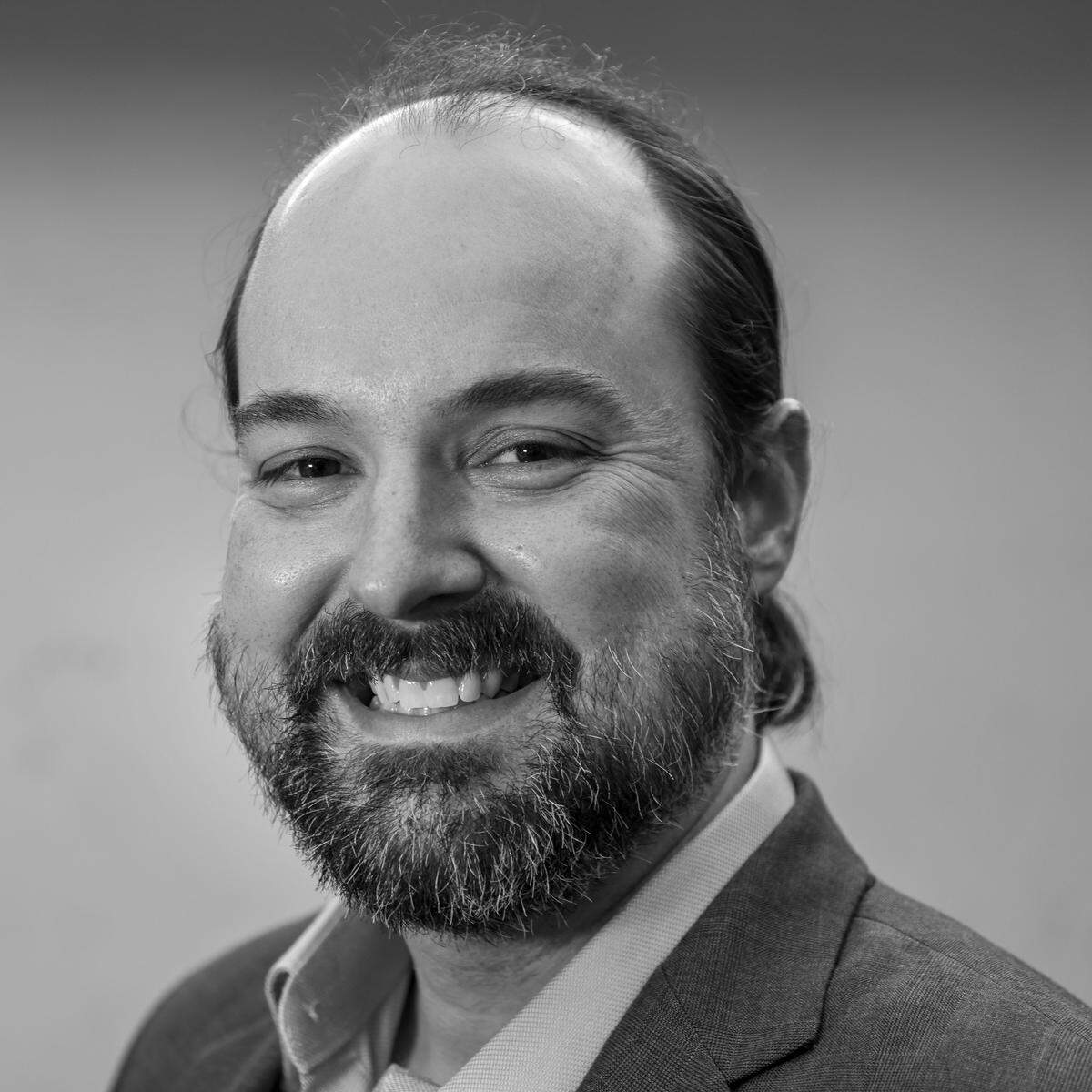
Dale J. Adamson’s gig as a substitute teacher was meant to be temporary.
After he graduated from Boston University with a degree in biology he returned to his hometown of Miami-Dade to begin his medical school applications and took the substituting job to pass the time.
But, then he fell in love with the job.
“I felt like, even as a substitute teacher, I could make an impact. And I was drawn towards that,” said Adamson, who has now been teaching math, robotics and engineering at Howard D. McMillan Middle School for 14 years.
Coming from a family of educators shaped his approach in the classroom. His mother, a veteran math teacher of nearly four decades, modeled what commitment to students looks like.
“She was someone who always went above and beyond,” he said. “She was the one staying late to run clubs and activities.”
That work ethic and sense of responsibility now define Adamson’s own teaching. As an Algebra I teacher, his students have maintained a 98 percent proficiency rate on the End-of-Course exam for more than a decade.
Adamson credits that consistency to a balance of strong relationships and high expectations.
“The job is getting to know these kids,” he said. “And then just always holding a high standard for them.”
He encourages students to aim high, even if they fall short.
Much of Adamson’s work focuses on dismantling fear—particularly around math and STEM.
“People say they’re genuinely bad at it,” Adamson said. But he does not believe this to be true.
He sees shifting that mindset as one of the most meaningful parts of his job. That mission plays out daily in his robotics classroom, where many students walk in unsure of themselves.
Adamson himself had no formal background in robotics when he began. In 2015, his principal asked him to attend a training for a small robotics program no one else wanted to take on.
“I saw a room full of adults that had apprehension about the concept of robotics, grab robotics kits and start building,” he said.
That moment sparked something. Adamson brought a single robotics kit back to campus and started an after-school club with eight students. Interest quickly grew.
Within a few years, the club evolved into a full course. Adamson learned alongside his students at first, gradually expanding the program from a handful of participants to more than 200 students this year.
“I was learning right alongside them to begin with,” he said.
Today, the robotics program has earned numerous awards and championships, but Adamson insists the trophies are secondary.
“Winning is the result but what I will always focus on with my students is the process,” Adamson said.
Looking ahead, Adamson hopes to see robotics and STEM expand throughout Miami-Dade County, especially among girls.
He and his students actively work to change that perception, hosting workshops and mentoring younger students.
Adamson spends weekends hosting competitions, refereeing events and helping build a broader robotics community across South Florida. For him, the goal is bigger than any single program.
Whether students pursue STEM careers or not, Adamson believes the skills they gain—collaboration, persistence, confidence—will follow them anywhere.
Rookie Teacher of the Year nominees
North Region - Katherine Ocejo - Ernest R. Graham K-8 Academy
Central Region - Tyone Haynes - Booker T. Washington Senior High School
South Region - Jose Luciano - Homestead Middle School
Alternative/ Adult Ed Region - Pedro Perez - Miami Lakes Educational Center and Technical College
This story was originally published January 23, 2026 at 4:30 AM.