
Need a doctor? Miami-Dade students to get free health services at their schools

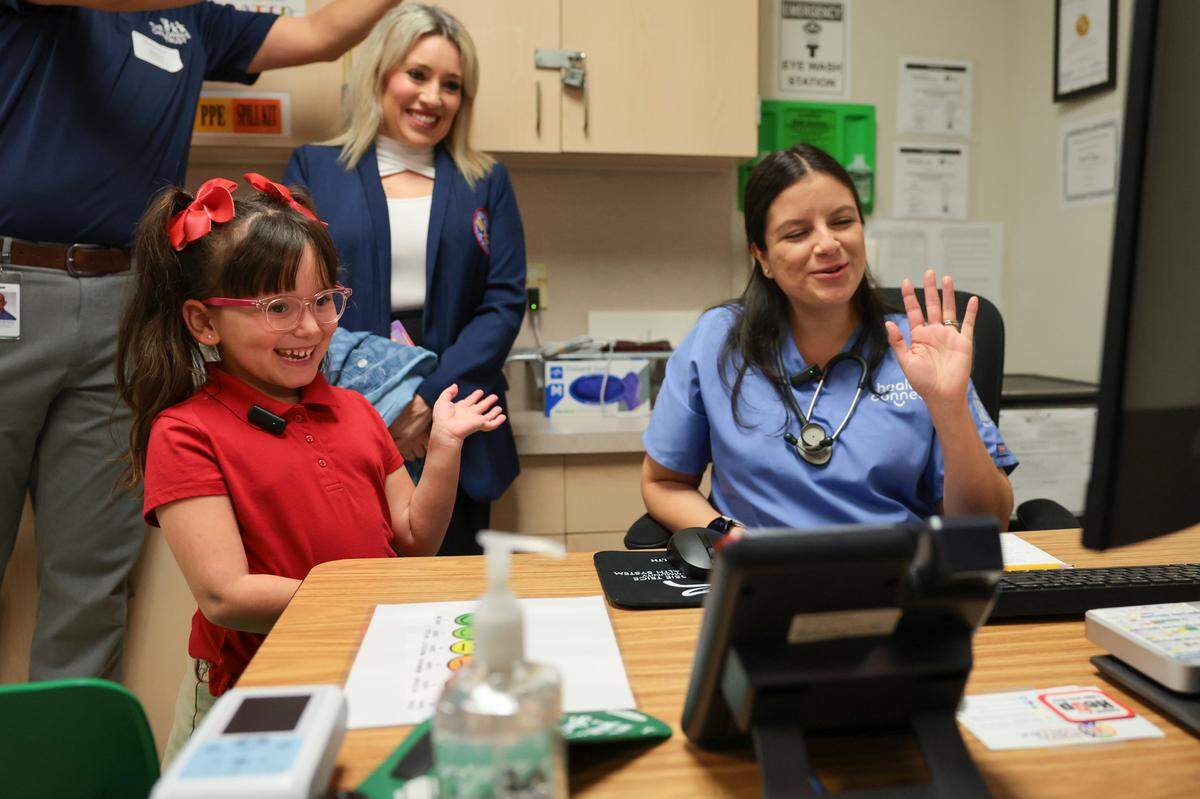
Six-year-old Evangelina Gonzalez read each letter perfectly aloud covering one eye with her hand as school nurse Ruby Ramirez pointed to the chart, the kindergartner smiling behind her new pink glasses.
Dressed in a khaki skirt and red shirt, her hair pulled into pigtails topped with matching red bows, Evangelina recently learned she needed glasses after a vision screening at Spanish Lake Elementary School in Hialeah, where she attends school.
Her mother, Jennifer Meneses, said neither she nor her daughter realized Evangelina had vision problems until the school screening.
Evangelina is one of thousands of Miami-Dade County Public Schools students who will now have access to free health services -- including vision, dental, and medical -- offered directly on campus. On Tuesday, The Children’s Trust said it was expanding its “comprehensive school-based health services,” to 283 schools, or about 70 percent of the district’s approximately 400 schools.
The initiative, known as HealthConnect, is backed by an investment of $25.8 million from the Trust, an expansion of a program it started in 2006. Under this funding, a 29-percent boost over last year, the program is doubling the number of schools.
Students at participating schools—from prekindergarten through 12th grade—will have access to primary care, school nurses, vision and dental screenings, telehealth visits and management of chronic conditions such as asthma, diabetes and seizures. Free basic services include body-mass index, scoliosis and vision screenings.
Mental health services are also part of the program, giving students access to licensed professionals and free therapy sessions. And students can avail themselves of services in after-school hours, say, scheduling a telehealth visit with a therapist or a physician.
“The services are going to be provided in school,” teacher trainer Vanessa Robles said. “Parents don’t have to take time from work to pick them up [and] take them to a doctor.”
While some screenings, such as scoliosis checks, are mandated by Florida law, other services—including mental health care and vaccinations—require parental consent. Parents interested in enrolling their children can begin by contacting their school to learn how HealthConnect services are provided.
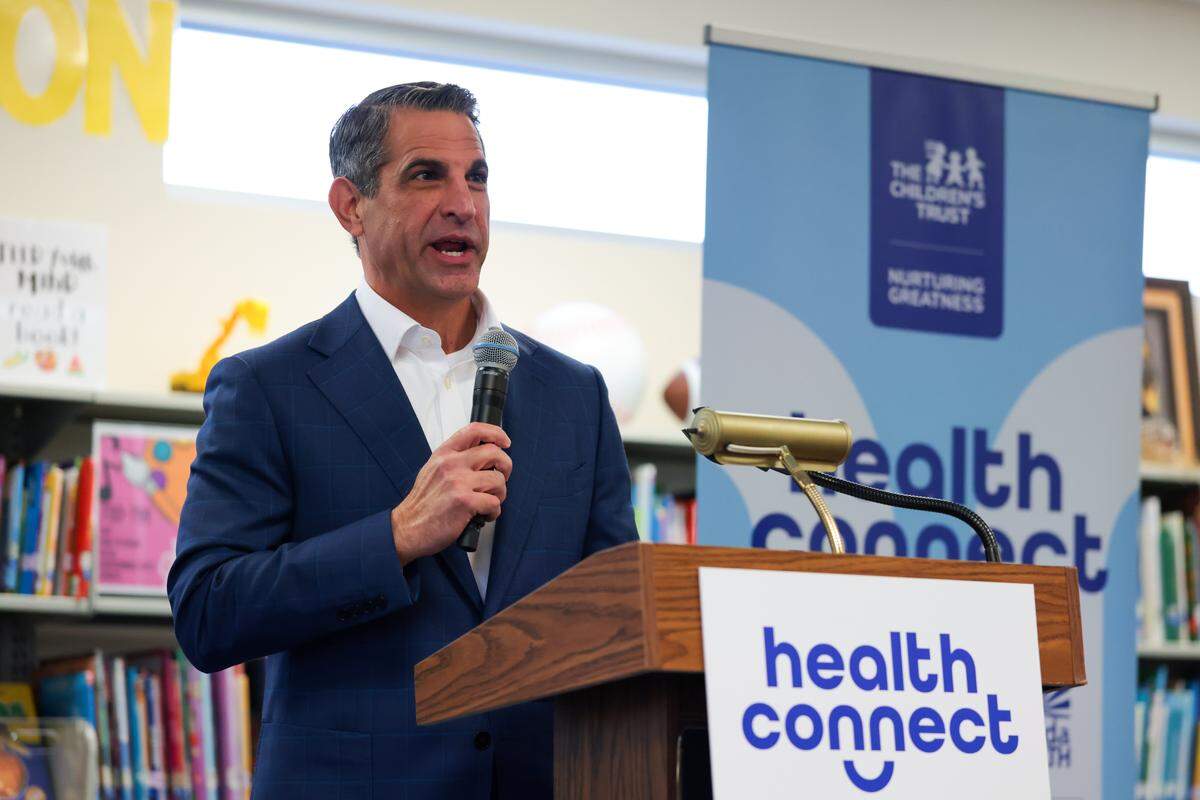
James Haj, president and CEO of The Children’s Trust, funded by property taxes, said he witnessed the difference school-based clinics can make when he was a high school principal at Southwest Miami High. He was there before and after a clinic opened on campus.
“How did schools survive before there were clinics for kids to be able to go in and access care,” Haj said to a crowd gathered in the Spanish Lake Elementary library.
The program serves both public and charter schools through a mix of on-site clinics, mobile health units and virtual care.
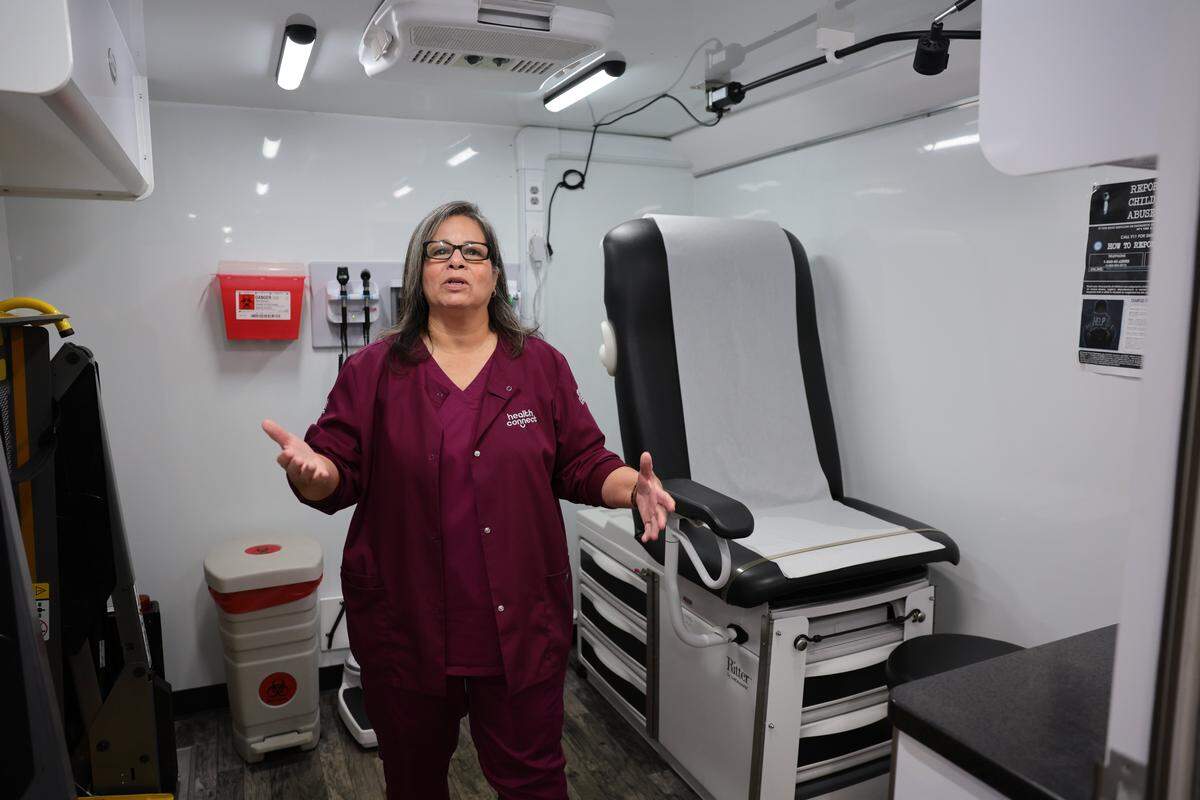
Parked outside the elementary school Tuesday was one of three mobile health clinics the Trust will deploy to schools. Inside, the unit is equipped with rooms for nurses to conduct evaluations, medical checkups and private meetings with social workers. Haj said the clinics will rotate among schools.
Citrus Health Network, Community Health of South Florida, Jessie Trice Community Health System, Nicklaus Children’s Hospital School Health Program, the University of Miami Health System and Hazel Health are providing the medical teams.
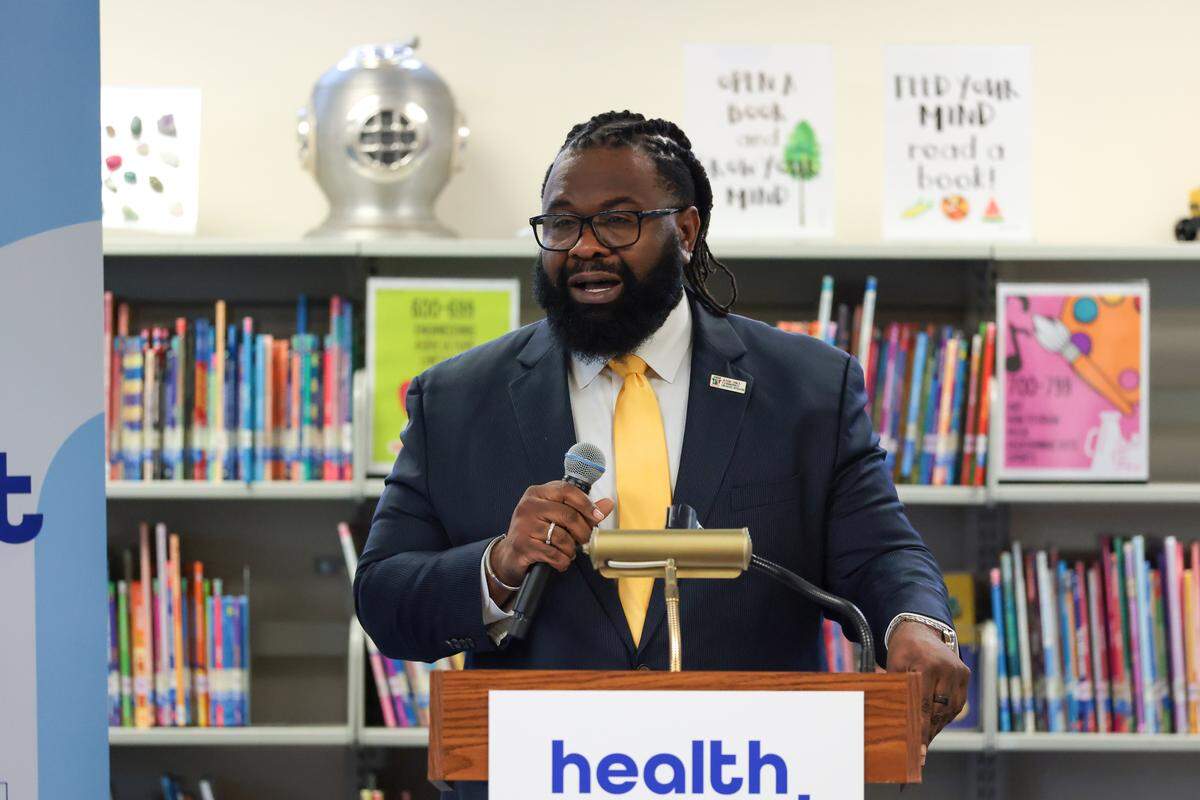
“When healthcare is available at schools, kids get help earlier, before small issues become big ones. Students miss fewer days and stay engaged in their studies, and parents don’t have to choose between the paycheck and an appointment,” said Ryan Hawkins, CEO of Jessie Trice Community Health System.
After her vision exam Tuesday with her new glasses, Evangelina met with a doctor through a telehealth visit.
Parents and students will also be able to access certain services outside of school hours—an expansion Haj said became a priority, particularly through telemedicine.
“If there is a kid or a family who is struggling, and they have access to us, not only in the school day, but now it’s beyond the bell.”
“We’re meeting kids where they’re at,” Haj said.