Miami school board considers proposal to open a private school on district property
Miami-Dade County Public Schools, the largest landowner in the county and the third-largest school district in the nation, may soon find itself in the private school business.
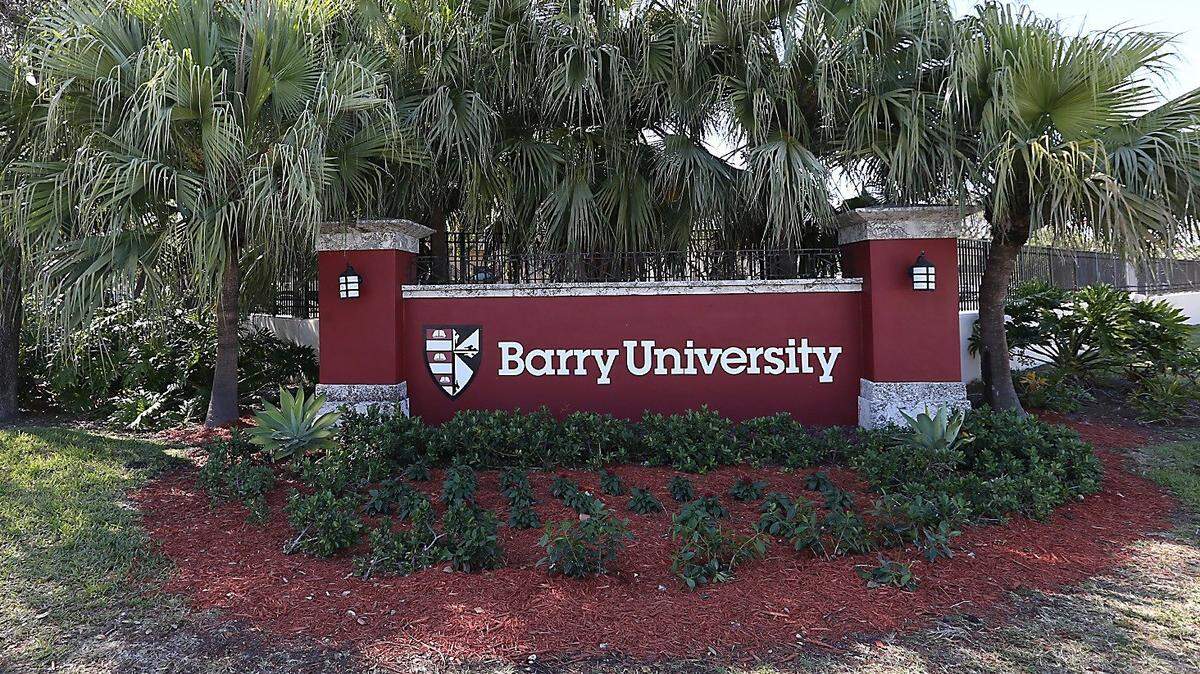
On Wednesday, the school board voted to explore a partnership with Barry University in which the district could lease land to the private university to create a kindergarten through 12th-grade private tuition-based school.
The item passed by the board had few details, and members approved it with caution, emphasizing that this is only a first step that allows the superintendent to begin formal discussions with the university to negotiate the role the school district would play in the agreement.
The proposal contained language that implied the agreement could potentially go beyond just access to district properties, stating “the partnership can facilitate the development of joint programs, internships, and research opportunities that benefit both high school and university students.”
“The partnership between M-DCPS and Barry University offers a unique opportunity to enhance educational offerings, address the challenges of school choice, and set a precedent for innovative public-private collaborations. The partnership can reflect the innovative nature of M-DCPS’s commitment to providing high-quality educational opportunities while adapting to the evolving educational landscape,” the proposal reads.
The proposed school would serve K-12 students, with a focus on underserved areas of the community, according to the item.
During a workshop meeting last week, several board members expressed concerns about how the public might perceive the agreement.
Board member Steve Gallon, for example, said some of his constituents may be highly critical of such a partnership.
“Education is big business. How do we anticipate that from a practical and political perspective?” Gallon asked.
Board member Dorothy Bendross-Mindingall also warned that the proposal could become a political liability, especially during re-election campaigns.
The superintendent, Jose Dotres, acknowledged the complexity and “potential for lack of correct perception” of the partnership.
“We don’t want to be in a contrary position,” said Dotres.
Ron Steiger, the chief financial officer of the school district, said during last week’s meeting that the state has changed the definition of what public education is, since both private and charter schools are receiving increasingly more public dollars.
“MDCPS needs to have a place in this,” he said.
The superintendent noted that there could be other universities eventually interested in leasing Miami-Dade school district land for a similar purpose, although this was an unsolicited proposal and did not undergo a bidding process, allowing other schools to apply.
‘The landscape is changing’
At Wednesday’s school board meeting, Antonio White, the president of the United Teachers of Dade, the union for teachers, said the proposal was “anything but transparent” and had “key details missing.”
The proposal did not specify whether the school district will be leasing land and/or buildings, and it also did not state a clear reason for how the school district and taxpayers will benefit from the agreement.
School board member Danny Espino voted against the proposal, noting that instead of approving a single proposal, the board should agree upon a procedure for entering these kinds of partnerships with private schools.
“How can it be used to leverage our assets?” asked Espino during the meeting.
He noted that in the ever-changing landscape of what education is, the definition has to be broad, but he said he “would not have included the development of private schools” in that definition.
Espino said he is Catholic and attended private school, yet he was not clear on what it means for the district to be a strategic partner in a relationship with a private or religious school.
“It gives me qualms from a legal perspective,” added Espino, who is an attorney.
School board member Roberto Alonso said he would rather the district leverage its assets to its own benefit, even if it meant leasing space to private schools. He also defended the unsolicited proposal stating that it allows things to move forward quickly instead of getting stuck in the bureaucracy of putting out a bid.
Luisa Santos, a vocal advocate for traditional public schools, supported the proposal as long as the roles and objectives were clearly defined. “If those guardrails are there, I am all for innovating,” she said.
Dotres said that if the district does not innovate regarding its facilities, it will be left behind. This year the Florida legislature already expanded the Schools of Hope program, allowing charter schools that move into low-performing school districts the right to use vacant school facilities or share space with other schools where necessary.
Florida law also requires that school facilities are utilized according to certain parameters, and the law itself encourages innovative uses of facilities.
“As I sit in this chair, I have to acknowledge and realize the floor is changing, the landscape is changing,” Dotres said.
Board member Monica Colluci agreed with the superintendent. She said what is happening in Tallahassee is changing the landscape, “so we have to be proactive, we have to think outside the box,” she said.