Miami-Dade schools superintendent presses lawmakers for $35M in frozen funds
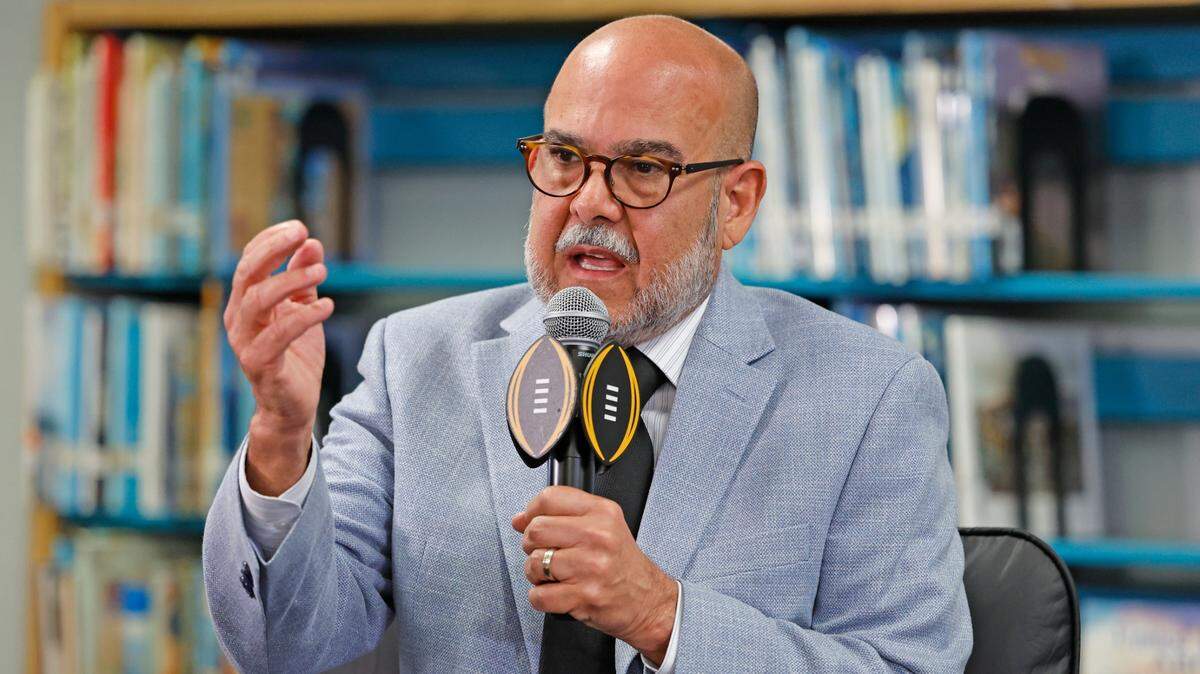
The superintendent of Miami-Dade County Public Schools has four weeks to figure out what to do about a $35 million shortfall in the district’s budget due to federal grants that are frozen by the Trump administration.
Superintendent Jose Dotres told board members at a school board committee meeting Wednesday that he plans to increase his visibility and advocacy — both in Tallahassee and Washington, D.C. — to ensure Miami-Dade gets what it’s due. He also noted that he has cut some expenses going into the school year in response to the funding freeze.
“We are headed into a different footprint of advocacy,” Dotres told board members during the meeting.
“I see myself now more involved as it relates to federal funding, being able to educate, articulate and inform senators at the federal level in terms of how these funds are used and what the implications are if they were to be reduced,” said Dotres.
Dotres just returned from a trip to D.C., where he met with Sen. Ashley Moody (R-FL) to discuss funding for his district. He told the Miami Herald in an interview that he tried to convey to the senator how the funds are used to create innovative magnet programs and other specialized programs in the district, which make public schools “competitive” in a landscape of “school choice.”
Wednesday’s school board committee meeting was an urgent conversation about how the district will prepare for the possibility the federal government may not release the frozen funds which include grants for migrant education, teacher training, help for English language learners, and academic supports for science, technology and more.
“Those dollars, we use them to innovate, provide robotics programs, advanced career technical education courses, and cybersecurity [academies],” said Dotres in an interview with the Miami Herald.
Specific programs funded by the grants currently frozen include after-school tutoring by certified teachers, bilingual instruction, technology access, swim safety lessons, and training for new teachers. More than 70 percent of new teachers who are career changers require additional education in methods and theories of teaching, according to the superintendent.
Pray for the best, but be ready for the worst
School board member Luisa Santos said that the federal funding cuts will reverberate throughout the district.
“Just between Title III and Title IV, a large portion would feel the effect of these dollars not being there,” she said. There are over 83,000 students learning English in the district.
Read more: Miami-Dade schools to lose millions after federal grant cancellations
During Wednesday’s committee meeting, board members pressed Dotres for details on planning for the worst-case scenario.
“We pray for the best, but we have to be mindful of what potential Armageddon could come,” said board member Steve Gallon.
The state of Florida has advised the school district to proceed as normal, and the chief financial officer said he is operating under the assumption that the funds will be released.
Santos asked how the district is preparing if the money remains frozen or is redirected to states as block grants, which would give Florida discretion over how (or whether) to target the same areas the grants were meant to fund.
Ahead of the start of school on August 14, the superintendent said he has already gone through the budget line by line to find expenditures he can reduce, such as holding off on purchasing textbooks and other school supplies, pausing travel funds for teachers to attend conferences and pausing spending on anything not related to a “direct service,” like teacher salaries.
“We have been doing a reduction,” said Dotres, noting that open positions are currently not being filled.
Teacher training programs will also be delayed until the funding is sorted.
“We are holding some professional development at the earliest stages and holding it for later on in the school year,” said Dotres.
Dotres said he would find alternative sources to fund salaries of the migrant education program, but that other spending like supplies for the program are paused for the time being.
Santos asked if the district has looked at how other large school systems are preparing and whether additional legal or policy steps could help Miami-Dade.
Walter Harvey, the general counsel for the district, noted that 24 states and Washington, D.C., have filed a federal lawsuit demanding the release of these funds. Florida is not a party to the suit, and thus may not receive payouts if the lawsuit is settled.
School board member Roberto Alonso and Dotres said that instead of legal battles, it is a better strategy to continue advocating for the district with lawmakers.
“I advocate for our school district at the source,” Dotres told the Herald when asked about the lawsuit.
Gallon noted that many of the federal grants that are currently frozen were established on the heels of important lawsuits.
The Title III program, for example, which allows students learning English to get extra help, was built upon a 1974 civil rights case that declared that schools have a legal duty to provide instruction and help to non-English learners.
But Florida has chosen not to be a part of that legal precedent when it comes to the release of federal funds to the states. Instead, the district is talking to elected officials, trimming the budget where they can and hoping for the best.
“We are awaiting the review, and we are hopeful that the funds will be there,” said Dotres.
Federal grants to Miami-Dade currently on hold
Title I, Part C – Migrant Education: $1,376,878
Title II, Part A –Teacher training: $14,141,336
Title III, Part A – Help for English language learners: $10,622,058
Title IV, Part A – Academic supports (Robotics, STEAM, Technology): $9,820,392
Total: $35,960,664
Funding for 21st Century Community Learning Centers, programs for at-risk students and their families, has now been released.
This story was originally published July 17, 2025 at 4:30 AM.