
Rejecting Ono hurt University of Florida’s national standing, say trustees
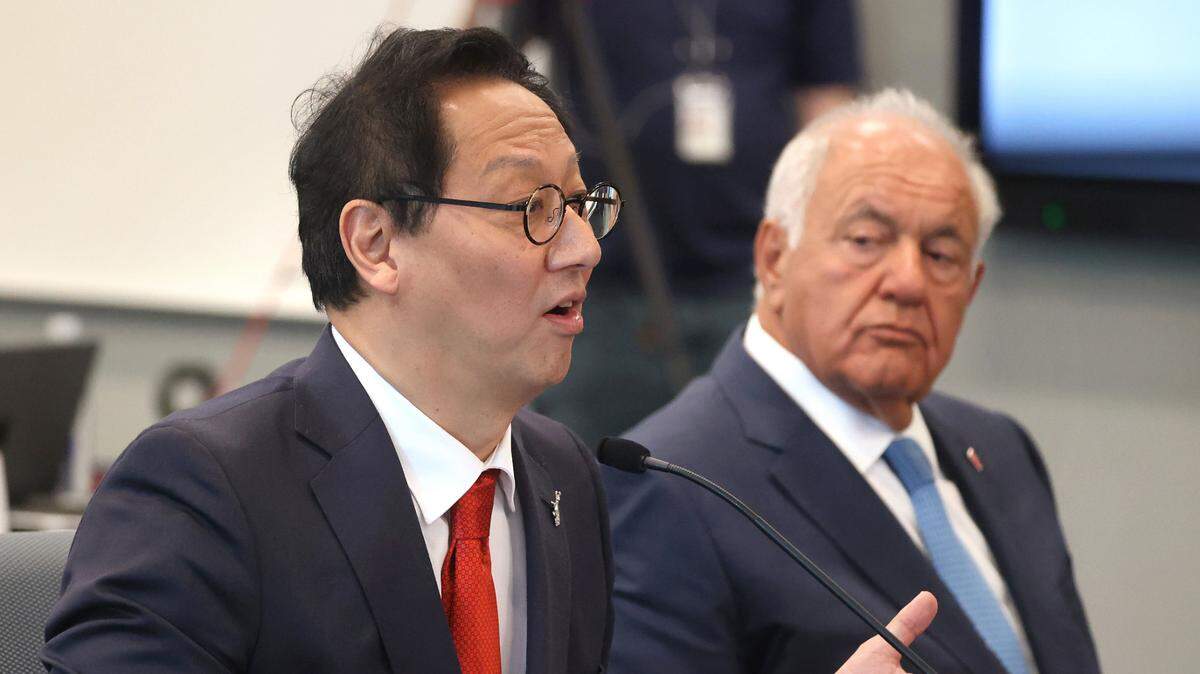
The University of Florida’s Board of Trustees wants Republican lawmakers to know they still believe in Santa.
In a letter sent last week, UF trustees warned top GOP officials that the rejection of Santa J. Ono as the president of Florida’s flagship university squandered the opportunity to prove that the state’s higher education reforms are not only working, but are compelling enough to win over respected academic leaders seeking to distance themselves from progressive orthodoxies.
The board is now forcefully defending their failed bid to name Ono, a respected immunologist and former University of Michigan president, as UF’s next leader. The letter, sent July 3 to U.S. Sen. Rick Scott and U.S. Reps. Byron Donalds and Greg Steube, disputed key objections raised in a June 18 statement issued by the three legislators, which accused Ono of failing to support Jewish students at Michigan and of supporting diversity, equity and inclusion initiatives.
The trustees’ seven-page response, signed by all 13 members, called the lawmakers’ concerns “not grounded in the facts” and warned that political pressure was undermining the university’s ability to attract top leadership talent.
Ono’s appointment “should have been seen as a powerful endorsement of the bold path our state has chosen — a moment of national validation that Florida’s approach isn’t just different, but better,” the letter read. “That is not just a missed opportunity — it is a rejection of the very validation our reforms have earned and a moment when we could have led by example.”
‘Actors with their own agendas’
The trustees’ missive comes a month after the State University System’s Board of Governors blocked the UF board’s unanimous nomination of Ono — a first-of-its-kind move that derailed what would have been UF’s second presidential transition in less than three years. It was the culmination of a fiery opposition campaign focused on Ono’s past affections for progressive ideas.
“We are concerned that much of the current discourse has relied on selectively edited materials promoted by actors with their own agendas,” the trustees wrote.
UF has yet to announce a succession plan for interim President Kent Fuchs whose contract ends July 31. Trustees are scheduled to convene on July 23 to discuss raising out-of-state tuition, but the meeting agenda has not been made available to the public yet. By defying the demands of prominent GOP figures, UF trustees are potentially subjecting the upcoming presidential selection process to heightened political scrutiny.’
“Obviously this letter is deeply concerning and leads to even more questions about how this taxpayer funded process will move forward to ensure we have a qualified president to lead our flagship university and stand up for our Jewish students,” Scott said in a statement. (Neither Steube nor Donalds — the Trump-backed frontrunner in next year’s governor’s race — responded to the Miami Herald.)
A central concern for Scott and his colleagues was Ono’s handling of pro-Palestinian encampments at the University of Michigan earlier this year. The lawmakers accused him of endangering Jewish students by allowing the encampments to persist — a failure that made Ono unfit to lead UF, home to the largest population of undergraduate Jewish students in the country.
“Ono allowing an illegal, pro-terrorist encampment to take over the University of Michigan campus…was a complete disqualifier,” they wrote.
But UF’s trustees called that characterization “unfair” and pointed to actions Ono took to ensure campus safety while avoiding violence. Trustees appended letters of support from notable Jewish leaders, including Michigan Hillel’s top rabbi and the Anti-Defamation League CEO Jonathan Greenblatt.
Ono’s defenders at UF also highlighted the university’s own record on fighting antisemitism, including waiving admission deadlines for Jewish students seeking to transfer after the Oct. 7, 2023 Hamas attacks, expanding security and fostering partnerships with national Jewish organizations.
The lawmakers also accused Ono of having a “long history” of promoting DEI policies, which Florida’s Republican leadership has aggressively sought to eliminate from state-funded institutions. But UF trustees argued that Ono had made a clear ideological shift. During the selection process, they said, he pledged not to bring DEI back to UF and emphasized merit and institutional neutrality.
The trustees countered that under Ono’s leadership, Michigan dismantled its once-sprawling DEI office and that he had demonstrated “a willingness to lead hard reforms.” They criticized what they called a “double standard,” where others have been praised for changing their views while Ono was penalized, noting that Florida’s university system had its own DEI program less than five years ago.
‘Inconsistent with the realities’
Scott, Donalds and Steube, all outspoken critics of Ono, also contended in their June letter that UF’s search process lacked transparency and that only one finalist being publicly named violated the spirit of Florida’s closed search law, which encourages state universities to name multiple candidates. The lawmakers urged UF to commit to interviewing multiple candidates and making those interviews and application materials public ahead of time.
“It seems that [the law] is being abused by creating an unfair system that allows much of the selection process to be shielded from the public,” they wrote.
In response, UF’s trustees said they held 10 listening sessions with university stakeholders and opted for a sole finalist approach because many top-tier candidates, including sitting presidents at prestigious universities, would only participate if they were named sole finalists.Trustees noted that since 2022, 30 of 33 presidential hires at major research institutions have involved either sole finalists or internal promotions.
“Expecting the University of Florida to conduct a search with multiple public finalists and still attract the most qualified candidates is inconsistent with the realities of today’s leadership market,” the letter read.
The trustees also expressed frustration that neither the three lawmakers nor most of the Board of Governors members who voted against Ono had ever spoken with him. The letter states: “Dr. Ono was available and willing to engage in good faith.”
Only two members of the Board of Governors, both of whom served on the UF’s search committee, had met with Ono, according to the letter. Trustees suggested that if others had done the same, concerns might have been resolved.
Though the trustees’ letter did not provide specifics about the next steps in UF’s presidential search, it firmly defended the integrity of the previous process and suggested that a sole finalist approach remains the best method for securing top-tier candidates.
“While we welcome continued dialogue, we reiterate that we do not believe that going forward it is in the best interest of the University to commit to multiple finalists,” the trustees wrote.
This story was originally published July 10, 2025 at 2:25 PM.