FIU police chief defends decision to enroll in immigration enforcement program
How will you ensure students can trust their school police? How are non-citizens supposed to feel safe on campus? Can a parking ticket cause a visa to be revoked? Is student data being shared with Immigration?
These were some of the questions being asked of Florida International University police chief Alexander Casas at an emotional emergency meeting of the university’s faculty senate.
For over two hours on Friday, FIU faculty and students pressed the police chief to explain his decision to enter FIU’s police force into a collaborative agreement with Immigration and Customs Enforcement.
The Miami Herald reported last Friday that FIU has signed on to help Immigration and Customs Enforcement under the 287(g) program, which will train some of FIU’s police officers to assist in the Trump administration’s crackdown on undocumented immigrants. At the meeting, it was clear that students and faculty strongly opposed the move.
FIU serves a largely Hispanic student body — about 68 percent, according to the U.S. News and World Report. Many students are permanent residents and some are part of the Deferred Action for Childhood Arrivals program, which provides temporary protection from deportation for some immigrants who came to the U.S. as children.
Prior to the emergency meeting, there were two different protests this week on FIU campuses to speak out against the agreement, as well as the recent revocation of 18 international students’ visas.
In the meeting, interim president Jeanette Nuñez addressed the recent visa revocations, saying that FIU has around 3,400 students on F1 visas, and that the 18 visas represent “less than half of 1 percent” of FIU’s international students.
“If there are students who have engaged in criminal activity, it is our responsibility to remove them,” she said. “We have a responsibility to follow the law.” It is unclear what laws the students whose visas were revoked had broken.
Casas stated several times that he suggested the school enter this agreement with Immigration and Customs Enforcement because he wants his officers to be the ones interacting with students in the case of immigration enforcement. Legally, FIU does not have an obligation to sign on to the program. Only sheriff’s offices are required to do so, and the chief confirmed this, saying that this was something he wanted to do in order to protect students.
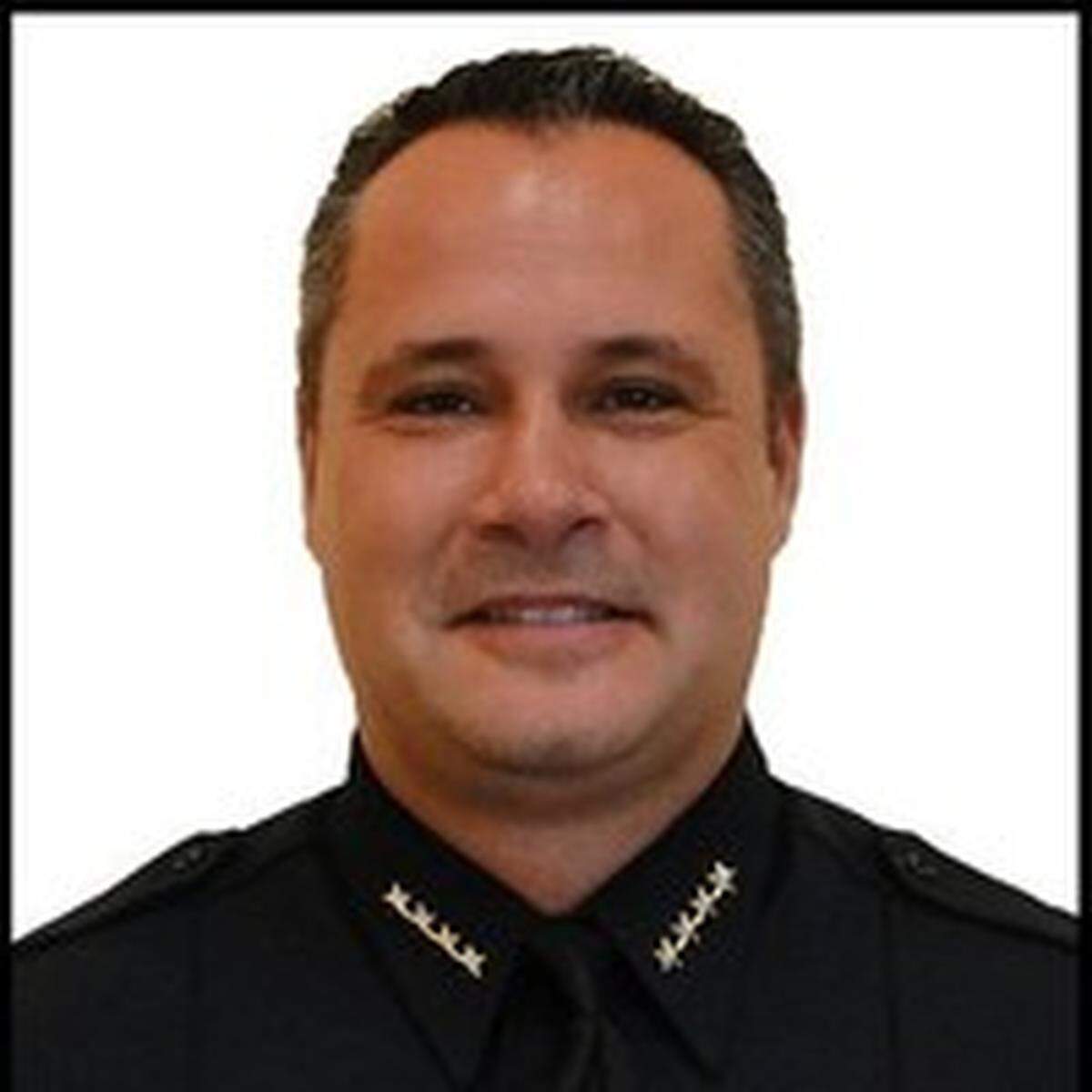
“I want to be the head of the agency that addresses this issue,” he said.
“I can’t control what ICE does. But if I don’t enter the agreement, I don’t have the opportunity to say, ‘call us first, let us deal with our community,’” he said.
Casas said the FIU Police Department will be funding most of the initiative itself and has control over how many officers it will train.
“I am going to choose my best,” said Casas, who has been with the department for over a decade and is an FIU graduate.
Nuñez stated that when the chief came to her with the proposal to sign on to the agreement, she agreed with his rationale and supported his move.
Casas and Nuñez both confirmed that faculty or students were not consulted before signing the agreement on March 4.
Noel Barengo, the chair of the faculty senate and member of the university’s board of trustees, said he wishes that faculty and the larger university community was counseled before the agreement was signed by FIU Police.
Students and faculty concerned
Many of the students and faculty who spoke during the meeting were unable to control their emotions as they described the climate of fear the program will create on campus, and they expressed concern over students losing their visas, or being detained or deported by ICE.
Faculty members brought up recent examples of ICE officials detaining people unlawfully, such as Juan Carlos Lopez Gomez, a citizen who was detained this week in Florida by immigration officials.
One professor mentioned the Tufts University student Rümeysa Öztürk, who was grabbed off the street by ICE and is now detained in Louisiana without bond.
Read more: He was arrested under a suspended Florida immigration law. Turns out he’s a U.S. citizen
Alana Greer, an immigration attorney and co-founder of the Community Justice Project, who spoke on behalf of the faculty senate, became teary-eyed as she spoke about pleading with officials to release Gomez.
During the meeting, she raised concerns that this agreement will allow officers at FIU who are trained by the program to act on administrative warrants that are often not reviewed by a judge.
She said the “agenda behind relaunching 287(g) is designed to break trust and to see neighbors and peers as ‘other.’” She also cited a study where researchers found the program failed to reduce crime.
Erik Camayd-Freixas, a modern language professor at the university, called the agreement an “attempt to systematize immigration enforcement on a level never seen in democracy.”
During the meeting, one student said that the Dream.US scholarship program, which supports young undocumented immigrants who came to the U.S. as children, was being terminated at eight Florida universities. Through tears she said several FIU students would lose their scholarships and no longer be able to attend because they can no longer get in-state tuition waivers.
A professor from Spain spoke during the meeting about how he was scared to leave the country for a business trip to the Netherlands, and was in conversation with experts to understand his risks before finally deciding to take the trip. He says he jokes with his students, “I don’t know if I will see you next semester.”
Juan Carlos Gómez, a law professor and director of the Carlos A. Costa Immigration and Human Rights Clinic at the law school, said he now has students afraid to publish work that may be viewed as against the foreign policy interest of the United States.
Following the two-hour discussion, the faculty senate voted in favor of a motion calling on university leadership to withdraw from the agreement immediately.