With enrollment surging and cuts made, Florida Memorial likely to return to good standing
After representatives of Florida Memorial University’s accreditation body visited its Miami Gardens campus last week, the only historically Black university or college in South Florida will likely be upgraded from probation to good standing come June, a major step that helps ensure the school’s future.
“It was a very intense process, but when they walked out, after seeing the transformation of our university and the growth that has taken place ... they were highly impressed,” said FMU President Jaffus Hardrick about the committee visit.
“It’s exciting to be at our university right now,” he added.
Michael Hoefer, the accreditation body’s vice president who visited last week with four committee members and who has worked with FMU since 2018, was equally upbeat.
“We were very pleasantly surprised at how well the new president and his new staff have turned the institution over,” Hoefer said.
FMU’s issues began in June 2019 when its accreditation agency, the Southern Association of Colleges and Schools Commission on Colleges (SACSCOC), placed it on “monitoring” for failing to comply with all of its mandatory standards.
That meant FMU could eventually lose its accreditation, which serves as national recognition that a university is on solid footing. Accreditation also gives universities access to all-important government funds.
In 2020, the accreditation body extended FMU’s monitoring status for another year.
After the maximum period allowed to stay under the “monitoring” designation expired last summer, SACSCOC lowered FMU’s ranking to “probation for good cause,” and arranged for a committee to visit the campus and reassess the situation.
In March, ahead of the visit that took place last week, the university submitted a 263-page report about its progress on addressing the four key issues it hadn’t followed: core requirement 4.1b (governing board characteristics), standard 13.3 (financial responsibility), standard 13.4 (control of finances), and standard 13.6 (federal and state responsibilities).
The root of the issue was that FMU experienced a dramatic drop in enrollment. In 2012, student enrollment peaked at 1,878 and had declined every year since to a low of 915 in 2021. In the 2022 school year, enrollment rose slightly to 963 students.
As a result of the revenue loss from its declining enrollment, FMU’s Board of Trustees borrowed funds from its endowment to continue operating, a decision SACSCOC condemned. FMU has since increased enrollment and added new revenue streams to improve its financial health.
For the upcoming fall semester, FMU received 10,431 applications, compared to 3,279 this time last year — a 218 percent year-to-year increase. Of the 10,431 applications, FMU had accepted 7,618 students as of Friday, but not all will enroll.
To turn things around, FMU reduced by 10% the salaries of more than 80 employees who make $60,000 or above, discontinued 18 undergraduate degree programs, and eliminated 15 faculty positions.
The university also opened a healthcare program and a Social Justice Institute, and launched a Department of Innovation, Technology and Entertainment, which houses an e-sports program and a Climate Resiliency Center. It will soon open a cybersecurity tech hub, a center for entrepreneurship, a sports management degree, computer and electrical engineering degree, a master of arts in teaching and a doctorate in educational leadership.
The four-person committee from SACSCOC arrived last Tuesday on campus. It interviewed administrators, particularly in finance and admissions, toured the facilities and reviewed additional documents, Hardrick said.
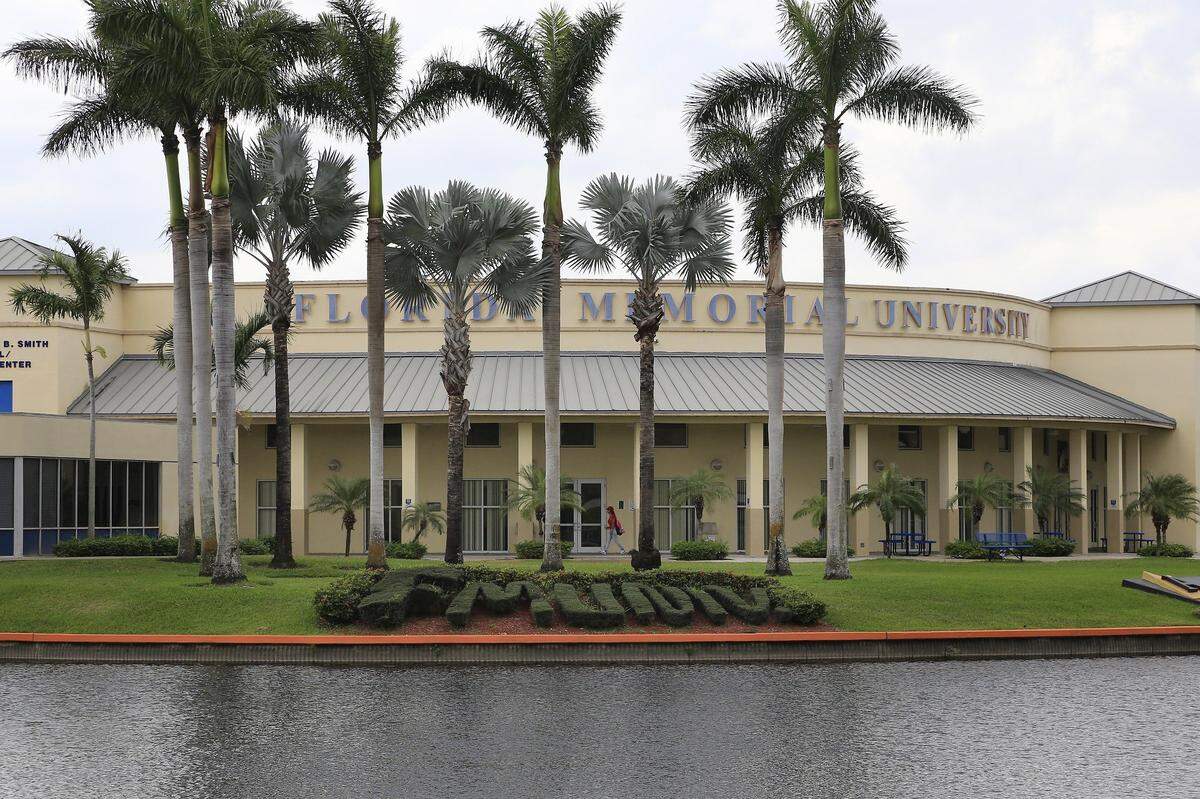
On Thursday morning during its exit interview with Hardrick, the SACSCOC committee notified Hardrick they would note to the SACSCOC Board of Trustees that FMU had addressed the prior problems, which would probably encourage the board to remove its probation.
In June, the SACSCOC Board of Trustees, made up of 77 administrators and academics from other colleges and universities in Southern states, will meet and decide whether FMU will remain on “probation for good cause” for a second year, go into just “probation” for a year, get its accreditation fully revoked, or be cleared and go back to operating normally under full compliance.
Hoefer, the accreditation body’s vice president, said the site committees usually write a report at the end of their visit, sharing as much information as possible with the board of trustees.
“The board is the group that makes the decision, but usually they rely very heavily on the committee’s report,” he said.
This story was originally published April 20, 2022 at 6:00 AM.