FIU to build facility to simulate 200 mph hurricanes, 10-20 foot storm surge
With climate change making hurricanes more powerful, Florida International University has received a major federal grant to design and build a facility to simulate a hurricane with winds as ferocious as 200 mph — and a 10- to 20-foot storm surge.
“This would be a state-of-the-art facility. It would be the first of its type; currently no other facility like this exists anywhere in the world,” said Arindam Gan Chowdhury, the principal investigator of the project and an engineering professor at Florida International University.
The project’s research could help develop stronger structures in the face of stronger storms stemming from warmer seas.
After an application process that initially attracted about 150 and lasted roughly a year and a half, the Extreme Events Institute at FIU landed a $12.8 million collaborative grant from the National Science Foundation (NSF) for the project, which will launch Tuesday.
The Miami public university will partner with eight other universities, including the University of Florida, Stanford University and the University of Notre Dame, as well as with a private company, Aerolab, that specializes in wind tunnels to design and construct a prototype of the building.
The 1971 Saffir-Simpson Scale, used by the National Hurricane Center, maxes out at Category 5, labeling any storm with sustained winds above 157 mph as such. But because the scale progresses in intervals of about 20 mph from Category 1 to Category 5, some scientists argue a new tier, Category 6, should start at 182 mph.
Stronger hurricanes
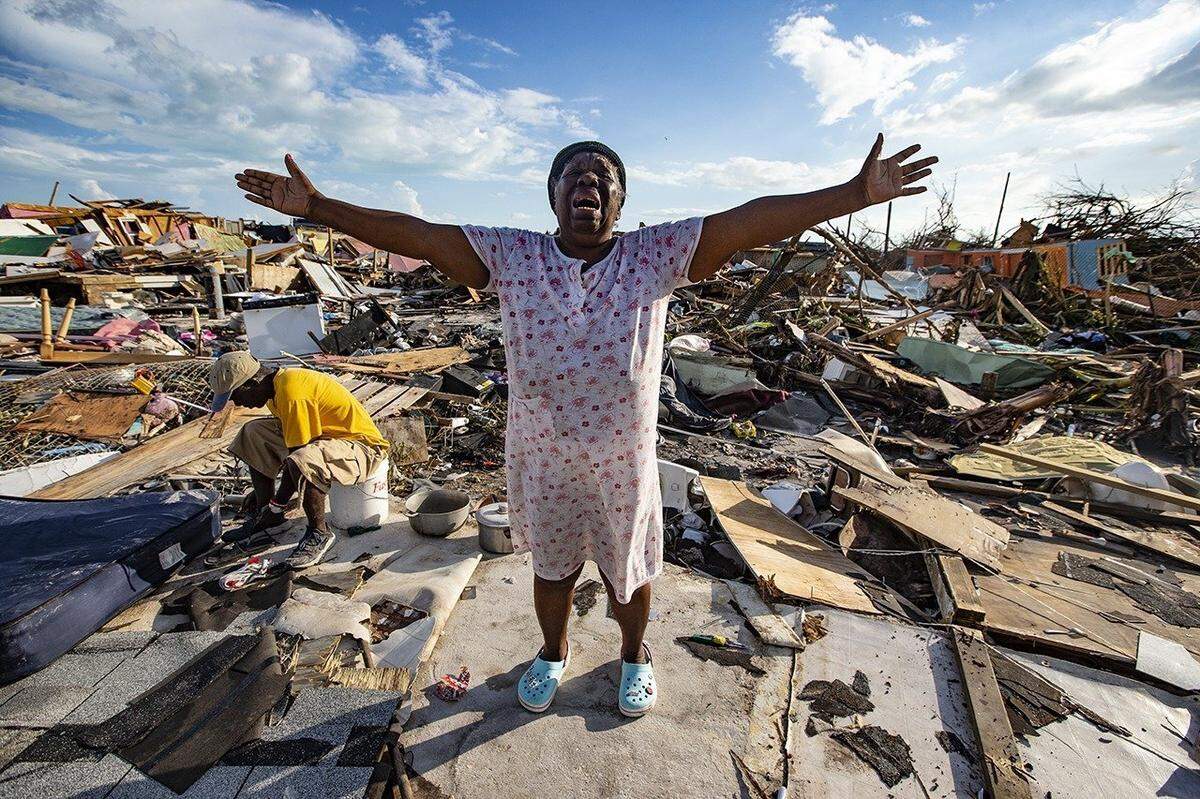
In the past few years, more and more hurricanes of that caliber have developed. Most notably, Hurricane Dorian, which wrecked havoc in the Bahamas in 2019 and tied with a handful of other hurricanes for the second-strongest storm in the Atlantic since 1950, registered sustained wind speeds of 185 mph.
Richard Olson, Ph.D., director of the Extreme Events Institute and a politics professor at FIU, said because of climate change, he expects hurricanes to keep getting more dangerous. Olson spent decades in devastated areas doing field research.
“Nature is throwing tougher things at us, and if we don’t get ahead of that curve, we’re going to get shocks and surprises,” he said. “You don’t want to play catch-up with nature.”
The team, now consisting of at least 12 scientists but which could expand to hundreds with students and other collaborators, will use the funds to investigate other similar facilities, create the ideal blueprint and then build a large-scale model.
After they complete the initial phase of design and prototype, the researchers will seek more funding from the NSF, and elsewhere if needed, to build the actual full-scale facility. The building would become a part of the Natural Hazards Engineering Research Infrastructure (NHERI), a national network available to researchers and scientists.
The Extreme Events Institute already houses the Wall of Wind (WOW), an $8 million towering double-decked stack of large electric fans unveiled in 2012 as the nation’s most powerful hurricane simulator. The WOW joined the NHERI network in 2015.
Similarly, the technological impact of the new facility could save lives and lead to stronger structures that could withstand hurricanes and other phenomena involving extreme wind and water, not only in the U.S. but across the world.
Lead investigator Chowdhury said that he understood that overarching potential, so he never doubted that they would get the money: “I was not surprised. I was overjoyed, but I was expecting it because it’s so important.”
A previous version of this story indicated that the Saffir-Simpson Scale considers storms with sustained winds above 155 mph as Category 5 and calculated the average progression between categories at about 30. It’s above 157 mph and intervals of about 20.
This story was originally published February 1, 2022 at 6:00 AM.