‘Very emotional moment.’ Carvalho on leaving Miami and challenges ahead for school district
Standing outside iPrep Academy Friday afternoon, students rushed to say hello to Alberto Carvalho. It was the last day before winter break and they had just been dismissed from class.
Carvalho was in his element. Miami Dolphins football player Brennan Scarlett stood by his side as he wished parents in the pickup line a safe and happy holiday season. At one point, he and a group of students broke out in song, belting out the lyrics to ‘We are the Champions’ while recording a video Carvalho later posted to Twitter. He captioned it: “Every child is a champion in my eyes.”
It was a scenario that unfolded countless times before. Carvalho often crossed the street from the school district offices during dismissal to send students off for the day at iPrep Academy, a school he founded in 2010 to incorporate laptops and other tech into the school day. He named himself principal.
But Friday was different. He was no longer the school’s principal and soon, he would no longer be the district’s superintendent, a position he’s held since 2008, the second longest-serving superintendent in the district’s history. (C.M. Fisher was the district’s longest superintendent, from 1921 to 1937.)
‘Very emotional moment’
Earlier this month, Carvalho announced he’d be leaving to helm the Los Angeles Unified School District, the second-largest school district in the country with about 450,000 students. Miami-Dade, the fourth largest, has about 335,000 students enrolled, with almost 75,000 students in charter schools. His final day in Miami remains unknown.
“It’s a very emotional moment for me,” Carvalho told the Herald. “I’m very connected with my students, from the county line all the way down to Homestead and Florida City, from Miami Beach to Doral, Havana and Little Haiti, to everywhere in between. So it’s difficult to navigate this time.”
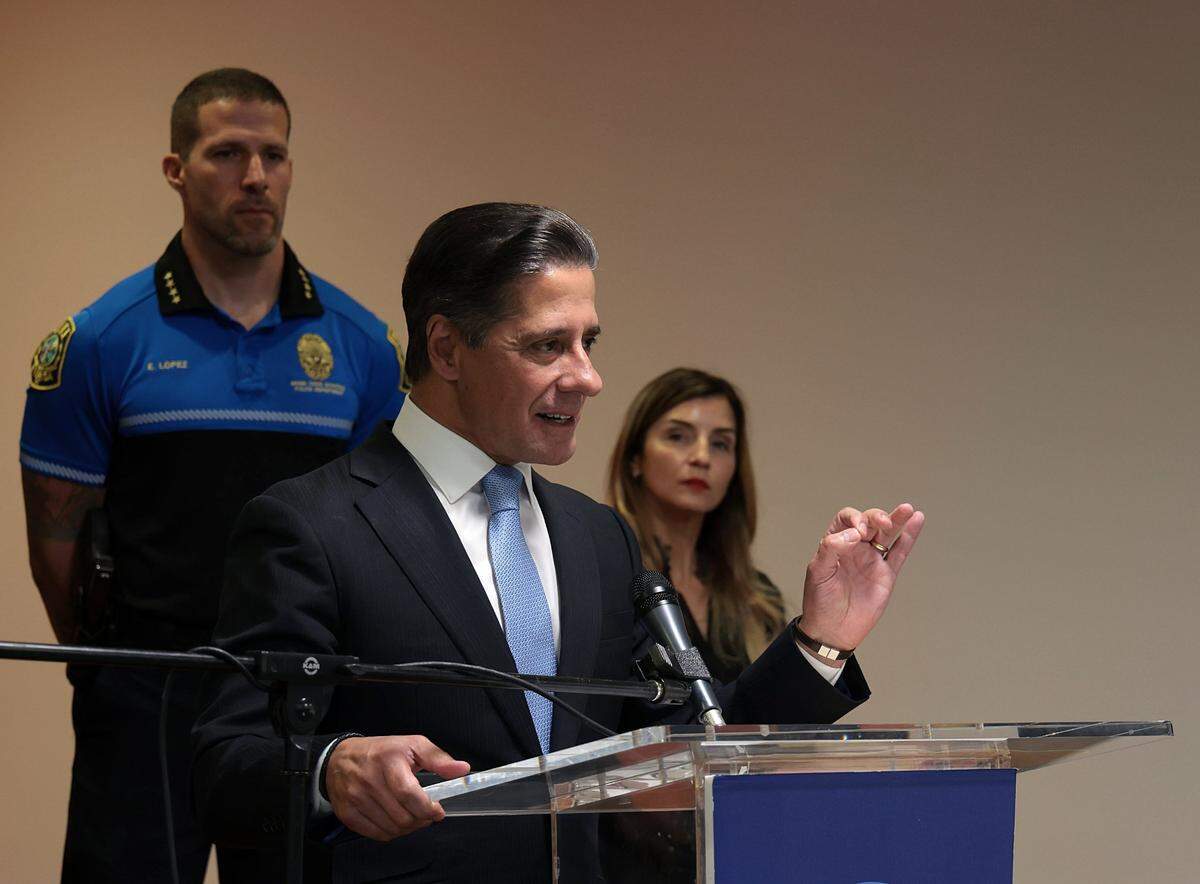
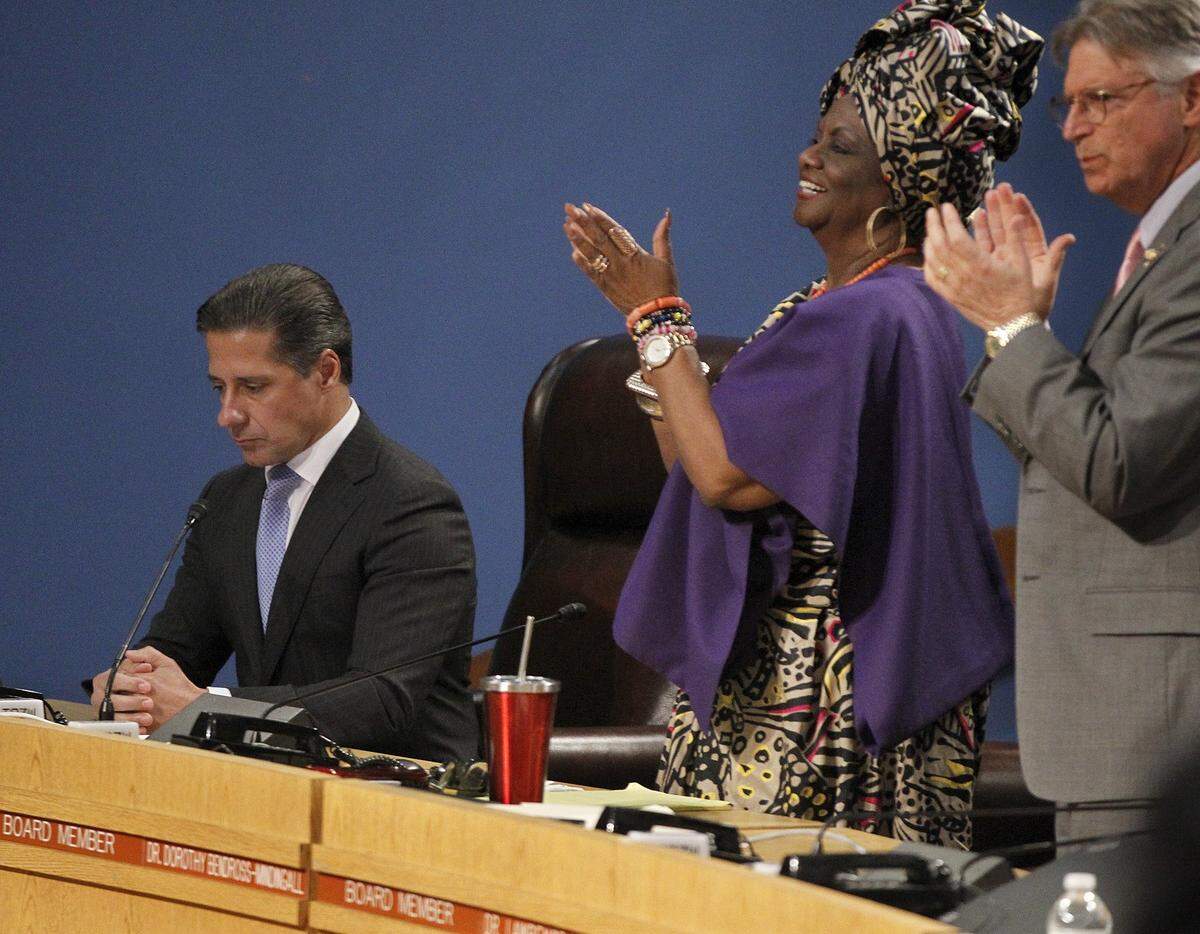
Carvalho’s departure — seen as a shock to many — places renewed attention on the progress the district has made under his administration but also raises questions about the challenges it faces as it seeks to find new leadership and as the long-term effects of the COVID-19 pandemic become clear.
When Carvalho took over in 2008, there were nine schools included on the state’s shutdown list and the district’s graduation rate was below 60%.
High grad rates, no more F schools
Fast forward to 2021 and the outlook is drastically different: Today, 98% of schools have earned an A, B or C rating, according to the district. For two consecutive years, the district has earned an A-rating. And the graduation rate? It’s more than 93% when accounting only for traditional public schools.
For Carvalho, the district’s success isn’t attributed to a highly secretive system or implementation of ideas unknown to others. Instead, he said, its success lies in a series of best practices that could work in any school system when administered effectively and in good faith.
“A lot of what we’ve done in Miami … were not necessarily Miami’s best practices,” he said. “It’s effective leadership, effective teaching (and) support networks for teachers, leaders, students and families.”
It requires providing parents specific and effective supports to ensure learning can continue at home and an expansion of publicly funded choice programs within the school system, such as magnet programs that promote an “individualized (and) personalized education that excites students in their own learning without sacrificing the rigor or what education must be,” he said.
By 2014, the district was offering more than 500 choice programs, up from less than 300 in 2007, the year before he took over. Today, more than 73% of students are enrolled in the district’s more than 1,000 choice programs, according to the district.
Acknowledging failures, challenges ahead
There were efforts that fell short, however.
Among the biggest recent failures: A software glitch brought the school system to a halt on the first day of school in the 2020-21 school year, a day when all students were at home and learning remotely due to the coronavirus pandemic. It incensed parents, exasperated teachers and disabled access to the district’s portals, including online classes, grade books and attendance trackers.
At the time, Carvalho called it “one of the greatest disappointments.” The issue was related to a switch that failed in the Cisco Systems network.
A few days later, a 16-year-old student at South Miami High was arrested and accused of some of the cyberattacks plaguing the district in that pivotal first week of school. The teen later accepted probation, and was not charged as an adult.
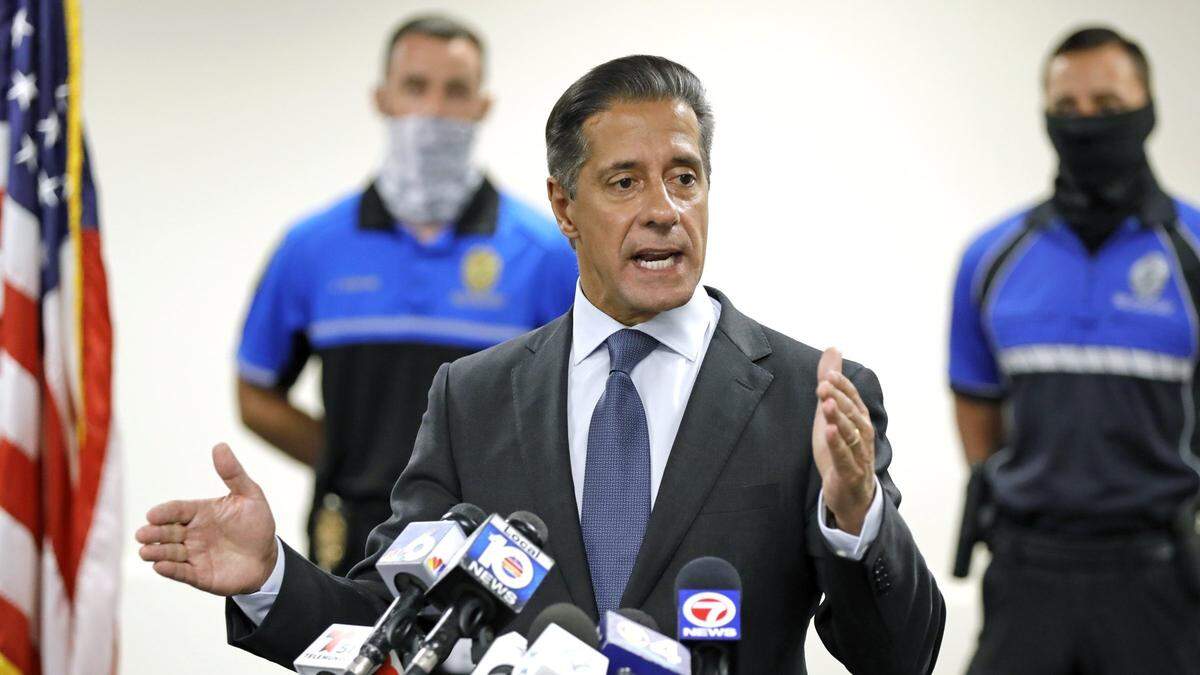
Cybersecurity experts said at the time the district’s firewalls on its computer networks should have been able to detect and handle the attack. Carvalho said the cyberattacks did not penetrate the district’s servers or cause a data breach.
“Sometimes there’s a great vision accompanied by a great mission, implementation and a great deal of professional support. But then (there’s) the honesty of recognizing whether it worked or not and having the courage to admit that was a failure, that needs improvement or that we need to discard it, or that worked really well and how do we scale up,” he said.
“And I think that’s what we’ve gotten right here.”
When it comes to challenges the district still faces, Carvalho doesn’t shy away.
Before the pandemic, achievement among Black students lagged. From 2014-15 school year to 2018-19, the majority of Black students failed state tests in English Language Arts, math and science, state-mandated standardized test data show.
In the 2018-2019 school year, the final year tests were administered before the pandemic, only 40% of Black students grades three through 10 passed the FSA English language arts exams compared to 61% of Hispanic students and 77 % of white students, data show. Math scores that same year revealed a similar pattern: 44% of Black students grades three through eight passed the exam compared to 63% of Hispanic students and 78% of white students.
The pandemic — which forced remote learning — further exacerbated existing learning challenges and brought new concerns over students’ mental health and well-being.
Carvalho acknowledges the setbacks propelled by the pandemic, which disproportionately affected minority students, English-language learners, students living in poverty and those with disability. And although he recognizes there’s still more work to be done, Carvalho applauded how far the district has come in closing the achievement gap.
Mitigation efforts and additional support systems have already been implemented. Some include:
▪ Before- and after-school support programs to offer more instructional time for students
▪ Year-round schooling opportunities
▪ Social emotional support to offset “educational fatigue”
▪ Extracurricular activities, including art, music and athletic programs
▪ Maximizing the importance of digital resources, ensuring all students have access to a computer
“Miami Dade has established a track record of actually reducing those gaps in a better, more sustainable way than most of America,” he said. “Are we where we should be? Absolutely not. Have we cracked the code in ways that other districts haven’t? Absolutely.”
What his successor will need to succeed
Carvalho declined to comment on who or when his successor could take over, but did say there were those in his cabinet and administration, and those who have left and are working in other districts, that are well-equipped for the job.
Anyone stepping into the role, he said, should be an instructional leader — someone who understands the community, is courageous, and can stand up to political influences. During the pandemic, Carvalho gained national recognition because of his ongoing and vocal battles with Gov. Ron DeSantis regarding mask mandates in schools.
That ability to stand up to politicians is something many in the community, including Jackie Kellogg, a parent of three and Parent Teacher Student Association officer, appreciate in a leader.
“I was impressed that he was steady and civil when it came to the heavy hand pressing down from Tallahassee,” she said.
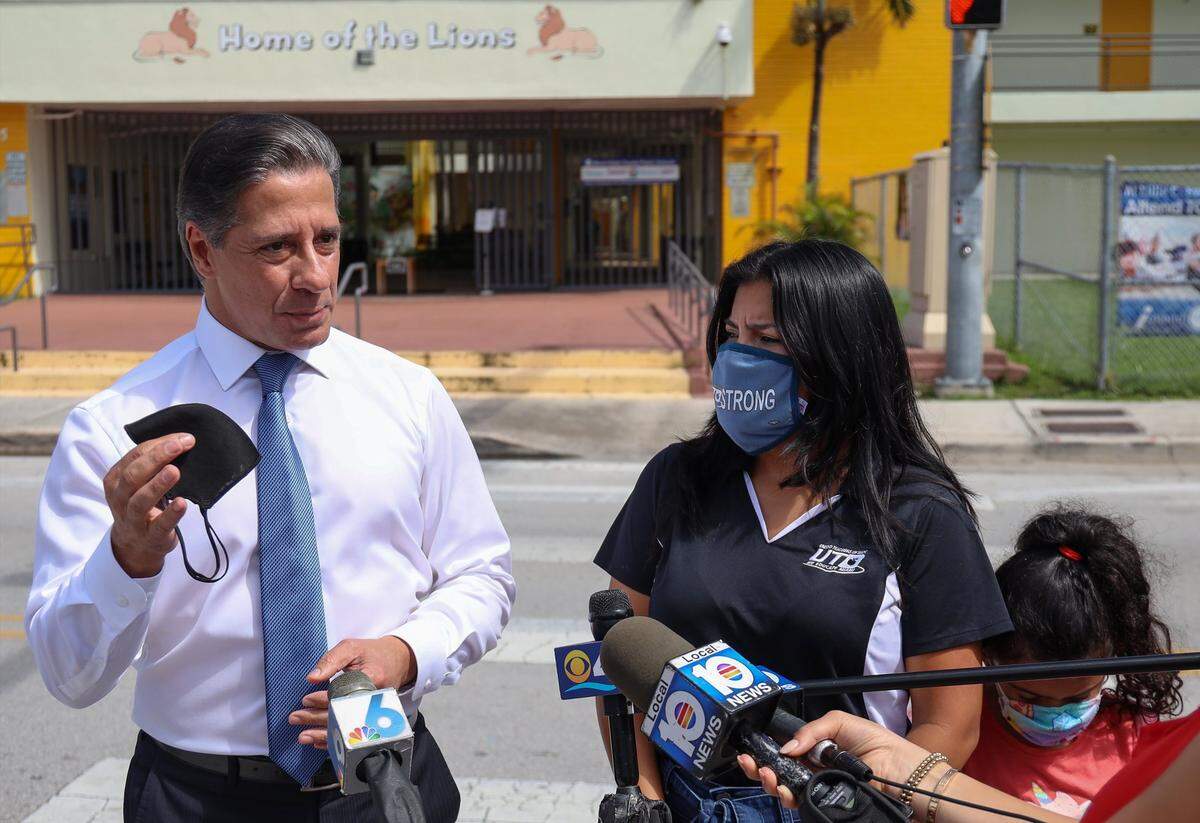
As for the School Board, which is expected to meet in January to begin the process of searching for his successor, Carvalho said the upcoming search is “probably the most important responsibility.”
Los Angeles, Miami are similar but different
During his first weeks in Los Angeles, Carvalho expects to visit the district’s most challenging schools and meet those inside and out of the district.
He wants to understand the landscape and get to know the community, the political entities and supporters of the school system. He wants to understand the challenges. And perhaps more importantly, he wants to take stock of the “good work that has been done in Los Angeles” and “capitalize on the talent that’s already there.”
That’s why he has no plans of implementing the best practices in Miami immediately upon his arrival on the west coast.
“A mistake that leadership transplants often make is that they believe the transportability of a skill set, leadership style and practice can be absolutely replicated elsewhere in America without necessary adjustments to the culture, to the community (and) to traditions out of respect for the people who’ve been doing the work there to begin with,” he said.
Instead, he’ll balance what’s already been successful in L.A. with his experience, he said.
Like Miami, the Los Angeles district is a diverse community with a large student population living in poverty and without a home, Carvalho said. There’s also a high percentage of immigrant families and English-language learners.
As an immigrant who experienced homelessness, he often says he sees himself in district students. He expects the same to be true in Los Angeles. Carvalho immigrated to the U.S. at 17 from Portugal with no papers. He was an English language learner. And with a financial loan from a nun, he graduated from Barry University.
He acknowledged the potential challenges he’ll face as an outsider coming in, but doesn’t see it as a disadvantage.
(By the time Carvalho was tapped to lead the Miami-Dade school district, he’d already spent time in the various offices and positions that make the system run. In the schoolhouse, he’d been a teacher and an assistant principal; in the district offices, he worked on grants and for two years, and was the chief communications officer.)
Instead, he said, it’s an opportunity to “go in with a blank slate.”
Misconduct allegations
In his 14-year tenure as superintendent, Carvalho has been named the nation’s superintendent of the year and the district has been given more awards than can fit on a long cabinet behind his desk, including the College Board Advanced Placement Equity and Excellence District of the Year and the Harold W. McGraw Jr. Prize in Education, to name a few.
But he’s also dealt with his fair share of scandal.
In 2008, just before he was set to be picked as superintendent, emails were released suggesting he had an affair with a former Miami Herald education reporter. (Carvalho has been married to his wife Maria Borgia Carvalho for more than two decades and has an adult daughter from a previous marriage.)
In 2018, he accepted, then rejected, an offer to become New York City’s superintendent.
Two years later, in 2020, he and his foundation were investigated for soliciting a donation from a company that created the failed online learning platform the district hoped to use when classes were remote. While the 82-page report from the Office of the Inspector General of Miami-Dade County Public Schools found “no actual violations,” the investigators said his solicitation created “an appearance of impropriety.”
And then, in 2021, an Instagram account named “I have a lover” with the handle @superintendentofmiami surfaced featuring intimate selfies of Carvalho. At the time, Carvalho called it a “fake social media account, portraying illegitimately obtained images of me.”
‘Love affair’ with Miami
For his part, Carvalho said none of those events contributed to his decision to leave. Instead, he noted the “significant political alignment” in terms of public health practices and policies he’ll find in California and the opportunity to promote change and success in a larger district.
“Miami is in a secure position, financially speaking (and) academically,” he said. “At every level of organization, there’s clarity and purpose. I look at L.A. as an opportunity in a much larger school system, where a lot of people believe it’s nearly impossible to replicate the success (of Miami). I think we can for the benefit of kids.”
It was not an opportunity he sought out, but one that came to him — and it was a difficult decision to make.
“The hard part is not the distance; it’s not that it’s a different city or a different coast,” he said. “The difficult part was honestly this love affair I’ll have with Miami for a long time.”
Miami Herald Staff Writer Linda Robertson and Miami Herald Research Director Monika Leal contributed to this report.
This story was updated to reflect that the 16-year-old South Miami High student who was arrested and accused of cyberattacks against the Miami-Dade school district accepted probation and was not charged as an adult.
This story was originally published December 22, 2021 at 6:00 AM.