Three professors join suit against UF, saying they were barred in cases against state
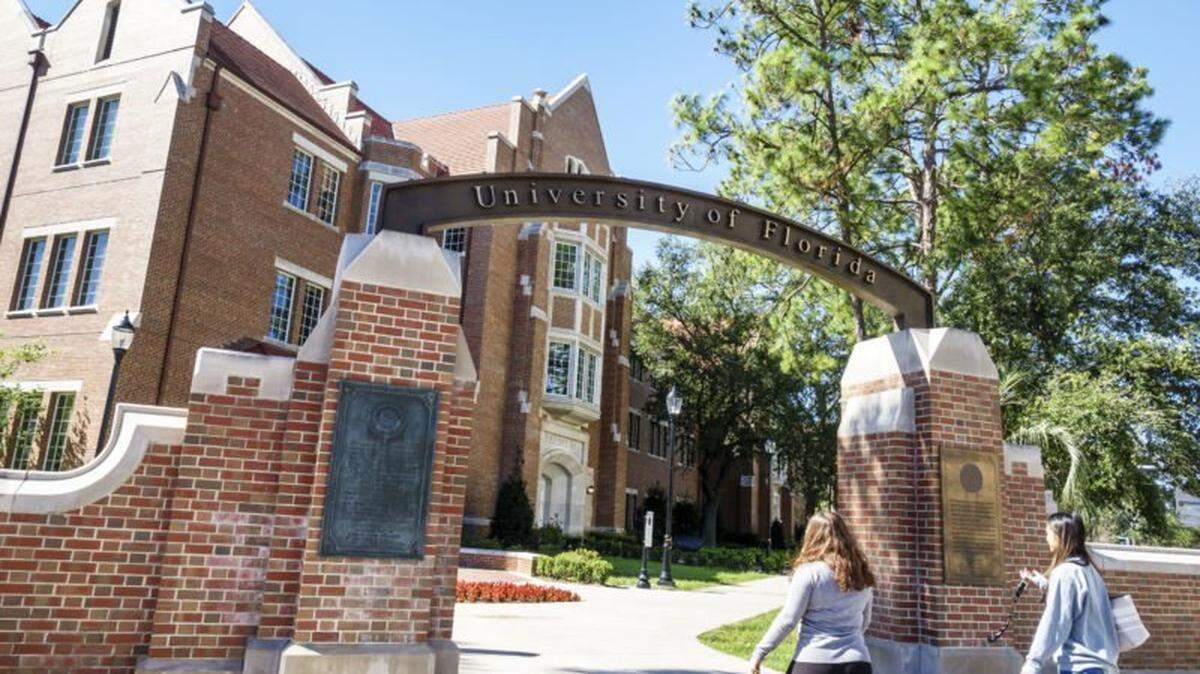
Three UF professors added their names Monday to the lawsuit against the University of Florida, alleging the public university violated their First Amendment rights when it prevented them from testifying in two lawsuits against the state — one relating to a felons voting case and another relating to COVID-19 mask mandates.
A pediatrics professor, Jeffrey Goldhagen, and two law professors, Teresa Jean Reid and Kenneth Nunn, joined the three previous plaintiffs, political science professors Sharon Austin, Michael McDonald and Daniel Smith in the suit, filed Nov. 5 in federal court in Gainesville.
Austin, McDonald and Smith sued because UF initially prohibited them from serving as paid expert witnesses in a lawsuit challenging a new state law that restricts voting. The university argued their testimony could pose a “conflict of interest to the executive branch of the State of Florida and create a conflict for the University of Florida.”
After a public outcry about UF barring the professors from testifying in the voters’ rights case against the DeSantis administration, UF said the three professors could serve as paid expert witnesses as long as it was on their own time and they did not use UF resources.
The updated complaint also includes Laura Rosenbury, the dean of the UF Levin College of Law, as one of the defendants, in addition to UF President Kent Fuchs, Provost Joe Glover and the university’s Board of Trustees.
The six professors want a judge to strike down UF’s current conflict-of-interest policy and declare unlawful any practice that would prevent faculty from participating in outside activities, paid or unpaid, “on the ground that the proposed activity is not aligned with the ‘interests’ of the State of Florida or any of its entities or instrumentalities.”
UF spokesman Steve Orlando declined to comment because UF doesn’t comment on pending litigation, he said.
UF experts wanted to weigh in on voting rights, public health
In August, UF refused to allow Goldhagen, chief of the Division of Community and Societal Pediatrics at the UF College of Medicine in Jacksonville, to provide witness testimony pro bono as a pediatric public health expert in a lawsuit challenging an executive order from Gov. Ron DeSantis that banned school mask mandates.
UF cited the same reason it gave to the professors in the voting access case: “Outside activities that may pose a conflict of interest to the executive branch of the State of Florida create a conflict for the University of Florida,” the lawsuit reads.
In July 2020, UF barred Reid and Nunn from signing a “friend of the court” brief in a lawsuit challenging Senate Bill 7066, which requires felons to pay court-ordered costs before voting.
UF told them they couldn’t identify themselves as university faculty members in the filing because it involved “an action against the state,” the Miami Herald previously reported.
Austin, McDonald and Smith wanted to testify against Senate Bill 90, which Florida’s GOP-controlled Legislature passed after the 2020 election. The law restricts people from possessing more than two vote-by-mail ballots and requires ballot drop boxes to be used only during early voting hours, among other limitations.
After the outcry, Fuchs, UF’s president, appointed a task force to examine the university’s conflict-of-interest policies. On Tuesday, the task force unanimously approved a set of recommendations for what they believe the policy should be.
The group will recommend a policy that “establishes a strong presumption that the university will approve faculty or staff requests to testify as expert witnesses, in their capacities as private citizens, in all litigation in which the state of Florida is a party, regardless of the viewpoint of the faculty or staff member’s testimony and regardless of whether the faculty or staff member is compensated for such testimony.”
UF could knock down this type of request only “when clear and convincing evidence establishes that such testimony would conflict with an important and particularized interest of the university,” according to the recommendations approved by the task force.
To reject a request, UF would have to provide further explanation in writing than simply “a general assertion” that it’s a conflict of interest or a citation of “an undifferentiated fear or apprehension of harm” related to the conflict, the recommendations indicate.
Additionally, the task force plans to approve a second set of recommendations on Wednesday that would ask UF to create a Provost’s Advisory Committee in charge of reviewing any requests that the UF Conflicts of Interest Program plans to deny, as well as create an appeals committee. Both panels would be comprised of both faculty and administrators.
This story was originally published November 16, 2021 at 6:52 PM.