Frenk appoints acting UM law dean, as faculty demands investigation into Varona’s firing
More than a month after abruptly firing Anthony Varona as dean of the law school, sparking outrage in the Miami and national legal communities, University of Miami President Julio Frenk on Wednesday appointed law professor Stephen J. Schnably as acting dean effective Thursday, while the search for an interim dean continues and the calls for a thorough investigation into Varona’s termination persist.
“I am delighted to announce that Professor Stephen J. Schnably has agreed to serve as acting dean of the School of Law beginning tomorrow through the summer as we prepare to welcome our new class of students,” Frenk wrote in an email to the UM community Wednesday.
“Professor Schnably brings a wealth of experience, the respect of his colleagues and students, as well as deep institutional knowledge and community relationships to the role,” he added.
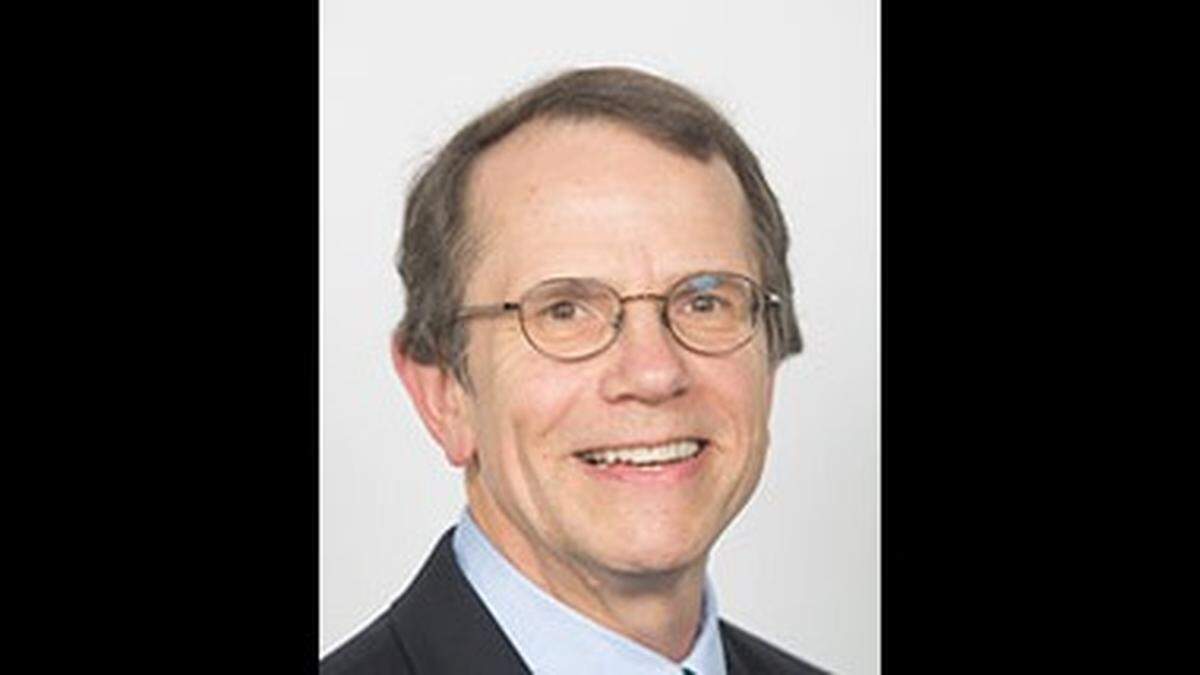
Schnably, 66, has been a law professor at UM since 1988 and a tenured faculty member since 1994. He served as associate dean of the UM School of Law from 2000 to 2005.
Schnably will remain as acting dean until the start of the fall semester in August, said Jackie Menendez, UM’s vice president of communication. By then, the law school plans to have an interim dean in place, likely for a term of one to two years.
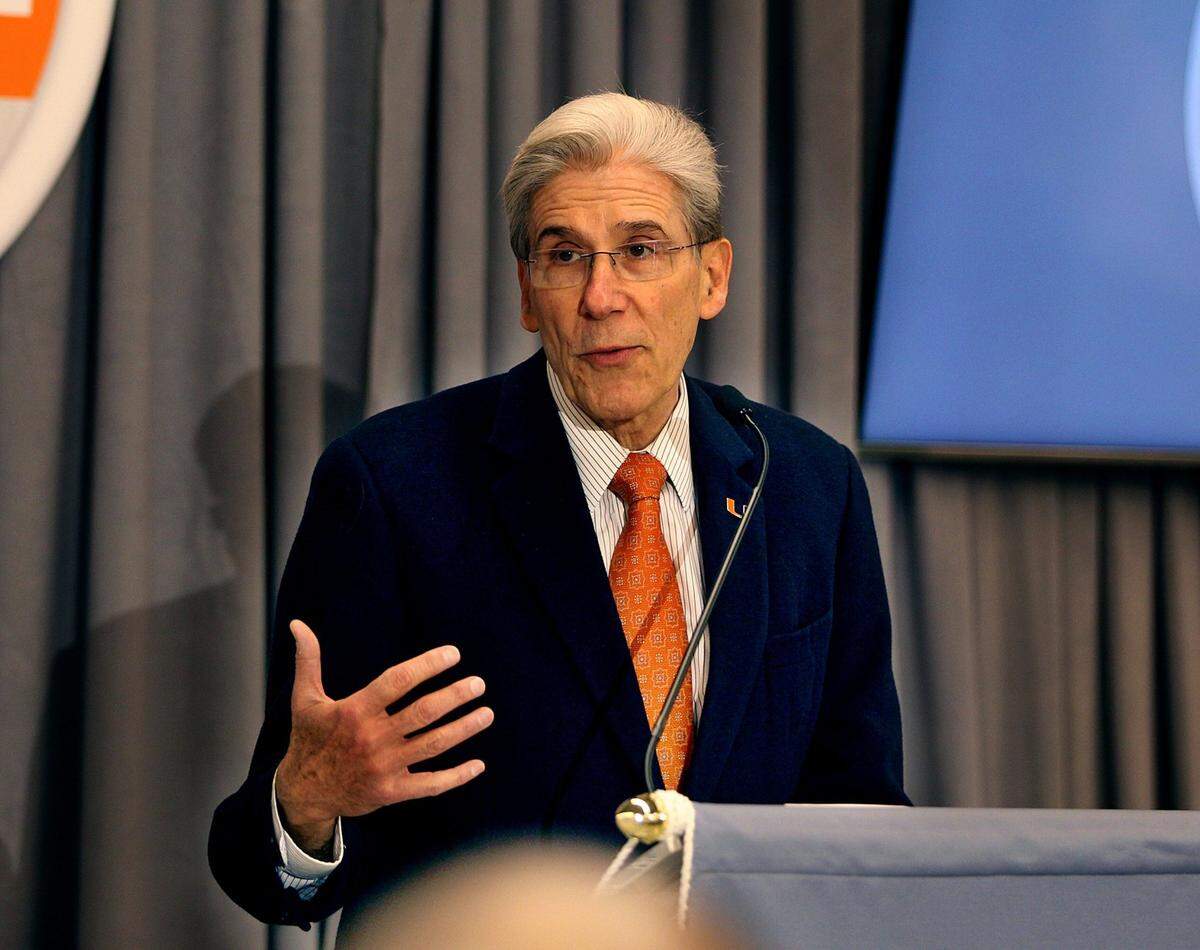
Schnably, well-liked among his colleagues, told the Herald he’s already familiar with the job duties, and looking forward to working with the staff.
“I’m happy to be of service. It’s a chance to give back to an institution that I love and respect,” he said Wednesday. “I’m deeply honored by the confidence that the president, the provost and the rest of the administration have placed on me.”
Varona’s last day as dean was Wednesday. In his May 25 email announcing that he had asked Varona, a popular dean who was named UM’s 12th law school dean in August 2019, to step down, Frenk said the move would be effective July 1. At the time, Frenk said Varona would remain as the M. Minnette Massey Professor of Law.
Varona, 54, agreed to continue teaching at UM but announced late Tuesday he would relinquish the Massey chair, which is connected to the dean of the law school. He and his attorney, Debra Katz, declined to comment Wednesday.
Menendez confirmed Varona will keep the Massey title until UM hires a new dean.
UM law professors support Schnably, remember Varona
Stephen Urice, a law professor at UM since 2006, said he and his colleagues support Schnably’s temporary promotion, but haven’t forgotten about Varona’s ousting.
“Professor Schnably is highly respected, and I expect the faculty will fully support him,” he said. “I expect the faculty also will continue to demand a forthright and complete explanation for President Frenk’s termination of Dean Varona’s decanal appointment.”
The Wednesday announcement followed a series of meetings, some contentious, that Frenk, Provost Jeffrey Duerk, and key members of the UM Board of Trustees, including newly installed board chairwoman Laurie Silvers, held with faculty and alumni over the past few weeks.
Some of those conversations partly led to Schnably’s appointment, sources told the Herald.
Sources also said the faculty delegation of tenured professors repeatedly asked the administration to tap a respected academic in the legal community to be the next interim dean. They vetoed, among other potential candidates, Duerk, who’s an accomplished engineer and scientist but not a law school academic, and members of the Board of Trustees, who the faculty contends do not meet the requirements set forth by the Association for American Law Schools. As part of the AALS bylaws, “The faculty shall have meaningful involvement in the selection of the dean or interim dean.”
Last week, UM law professor Mary Anne Franks resigned from the faculty delegation.
“I agreed to serve on the delegation in order to push for Dean Varona’s reinstatement and to obtain assurances that the administration respects the values fundamental to an institution of higher learning: courage, integrity, and accountability. When those assurances were not forthcoming, I decided to resign from the delegation,” Franks wrote in an email Wednesday to the Herald.
She added: “I have great respect and admiration for Steve Schnably and am grateful that he has agreed to step into this role. I have no doubt that he will be an excellent Acting Dean.”
Charlton Copeland, another faculty member, also resigned after recent meetings with the administration and trustees. Copeland did not respond to a request for comment Wednesday from the Herald, but sources said he stepped down because of scheduling conflicts.
Menendez, the UM spokeswoman, said she “was not aware” of Copeland’s or Franks’ resignations from the faculty delegation.
Faculty demanding answers to Varona’s termination
Frenk fired Varona 23 months into his five-year contract — most of those months during a global pandemic that roiled schools.
He dismissed Varona without consulting faculty, the standard procedure in law schools across the U.S. That, combined with his refusal to delineate the reasons behind Varona’s termination, prompted a backlash from UM faculty, UM alumni and legal groups across the country. The UM Law Alumni Association, the Association for American Law Schools’ Section on Minority Groups and student groups penned letters denouncing the move.
UM law school Vice Dean Lili Levi resigned her administrative post in protest. She has stayed on as professor.
In his letter announcing Varona’s termination as dean, Frenk implied the law school ran into financial issues while Varona was at the helm, citing the importance of fundraising for the capital campaign. Since, a score of students, graduates, professors and other law professionals have jumped to his defense, noting he raised $8 million, including $100,000 he personally pledged to the school.
After the storm of condemnation, Frenk vowed to include faculty and others in the hiring process moving forward.
“The ongoing consultations with faculty, alumni, trustees, and other key stakeholders will continue as we navigate the transition of leadership at Miami Law,” Frenk wrote in his most recent email.
Donna Kay Coker, who has been professor at the UM law school for more than 25 years, said Schnably “is an excellent choice for an acting dean.”
“I have nothing but great things to say about that choice,” she said.
But, she noted, the faculty still hasn’t received a “satisfactory explanation” for Varona’s removal.
“We still don’t have answers to fundamental questions that we’ve raised with the administration,” she said, “and those questions are how did this decision come about, were members of the Board of Trustees involved, did the president receive pressure from a member or multiple members of the Board of Trustees to make this decision, and why did the president link the decision in his letter to the capital campaign when Dean Varona had done a quite remarkable job of fundraising during a time of a pandemic.”
Menendez, the UM spokeswoman, said: “I think the president’s initial message explains that and what we’re doing now is moving forward.”
Varona to stay on as UM professor, relinquish Massey chair
In an email Tuesday that he later shared on his Twitter account, Varona announced he would give up the Massey chair.
M. Minnette Massey, a Connecticut native, graduated from UM’s law school in 1951 and joined the faculty in 1958, becoming one of 14 women nationwide to crack the male-dominated world of law school professors. In 1962, she became the first woman to serve as the UM law school’s acting dean.
“At my Massey Chair investiture, I had the honor of spending time and speaking with Dean Massey’s family. They were rightly delighted that Dean Massey’s name and ceiling-shattering legacy — forever symbolizing the importance of diversity and inclusion in legal education administration — had been memorialized with a chair that would always be held by each sitting Dean of Miami Law,” he wrote. “I would want us to honor that commitment, and so will relinquish the Massey Chair to my successor once he or she is named, and will do everything in my power to help them succeed.”
In his farewell message Tuesday to the faculty, Varona thanked his colleagues, as well as Frenk and Duerk. Regarding his short-lived deanship, he wrote: ”I gave it my all.”
Elizabeth Schwartz, a well-known Miami attorney, member of the LGBTQ community and UM law alumna, praised Varona for his final correspondence as dean.
“As if we needed any proof about the kind of stellar, stalwart leader that Tony Varona is, here is a reminder,” she said. “Through his statement and all of his messaging, he still roots for the university and its most precious assets — the students and the faculty. I can tell you if it were me who received this kind of treatment, I don’t think I would be as graceful.”
She said she worries Varona got pushed out because he embraced his gayness and Hispanic background. Varona was born in Cuba.
Frenk has dismissed rumors that Varona’s sexual orientation or Hispanic background had anything to do with his decision to fire Varona as dean, noting that UM has three openly gay deans and that he himself is Mexican.
Schwartz didn’t buy that.
“For President Frenk to say, ‘This can’t be homophobic because we have other gay deans, and it can’t be anti-Hispanic because I’m Mexican’ is so patently offensive,” she said. “The message seems to be, ‘It’s OK to be gay, and it’s OK to be Hispanic at UM as long as you’re not too out and proud about it.’”
Who is Steve Schnably, the new acting dean?
Before joining UM, Schnably worked as an attorney for Wilmer, Cutler and Pickering — now Wilmer Cutler Pickering Hale and Dorr — an international law firm based in Washington, D.C.
When he was associate dean at the UM law school, Schnably oversaw the law school’s academic functions, including curriculum and course schedules, as well as faculty teaching and research, Frenk said Wednesday.
Stephen Halpert, who has been a UM law faculty member for nearly 40 years, said Schnably “is widely regarded as extremely diligent, moderate and competent.”
Schnably has also been an instrumental player in Pottinger v. City of Miami, a landmark federal consent decree that provided protections to the homeless against undue police harassment for 20 years until a federal judge dissolved the agreement in February 2019.
Schnably earned his undergraduate and law degrees from Harvard University, clerked with Judge Leonard I. Garth of the U.S. Court of Appeals for the Third Circuit and studied at Oxford on a Knox Fellowship.
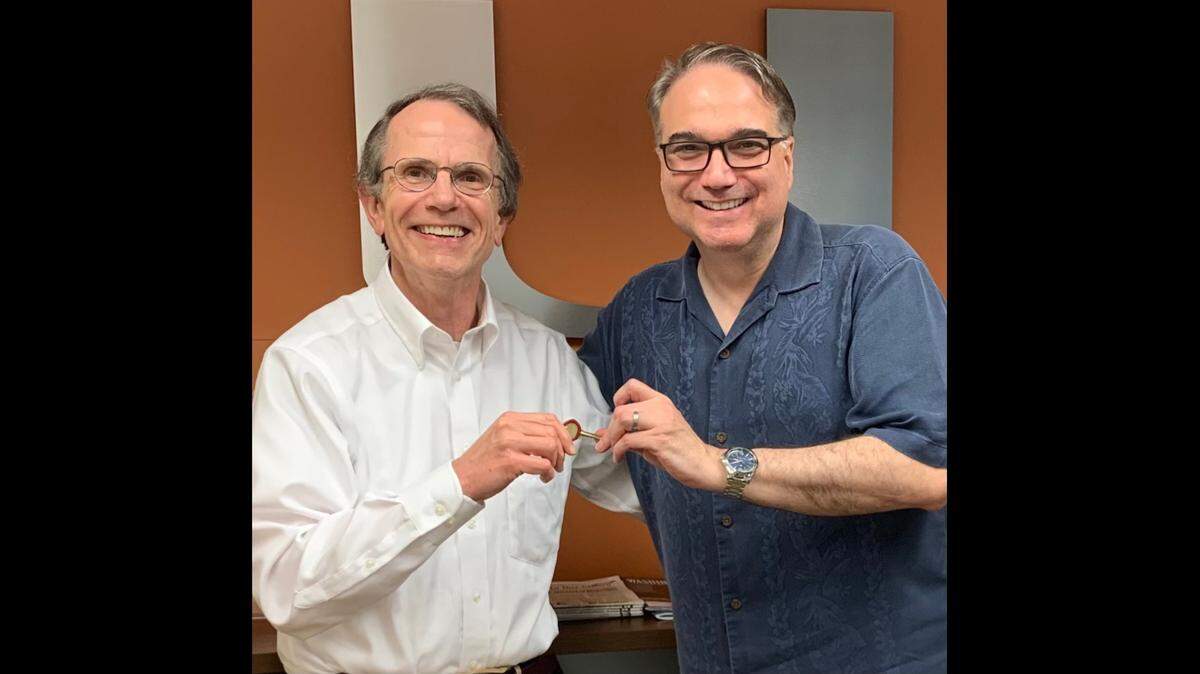
On Wednesday, Varona tweeted a photo of him handing Schnably a key and said he had the first transition meeting with Schnably, whom he described as “a brilliant colleague and experienced administrator.”
He added: “Miami Law is in very good hands with Steve at the helm!”
This story was originally published July 1, 2021 at 6:00 AM.