The firing of UM’s popular law dean baffled the legal community. There could be backlash
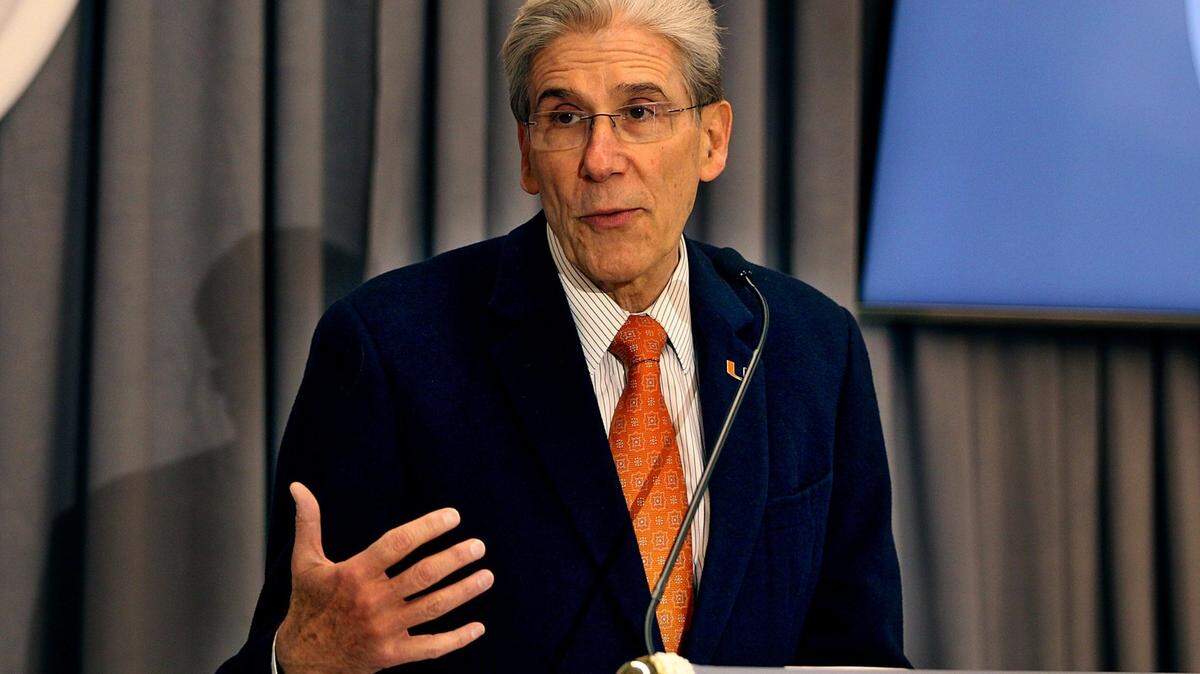
The controversial firing of popular University of Miami School of Law Dean Anthony Varona could backfire on UM President Julio Frenk in his efforts to attract a top-notch dean and meet ambitious fundraising goals, say outraged alumni and faculty.
Frenk’s abrupt decision to remove Varona from the deanship on May 25 has alienated the very people he needs in the academic and legal communities to lead the law school and donate all-important funds to the school. Varona’s termination is effective July 1.
They remain mystified as to exactly why Frenk asked Varona to step down just 22 months into Varona’s five-year contract —14 of those months during a global pandemic that roiled schools — and say the move runs counter to Frenk’s stated goals of elevating the school’s stature and raising millions in less than four years for a capital campaign.
“This was such an out-of-order action, so odd and so sad that many qualified people will not apply for that job,” said Marc-Tizoc González, University of New Mexico law professor and chair of the Association for American Law Schools’ Section on Minority Groups, which wrote a scathing letter calling for an investigation of Varona’s termination.
“The applicant pool could be very small, which makes you wonder if there’s already someone lined up,’’ he added. “How will a new dean interact with professors and students when you’ve had an awkward removal of a stellar, well-liked dean, and the faculty members who would typically drive such a decision were not even consulted? How can a new dean successfully fund-raise given the time that will be lost and the anger of potential donors?”
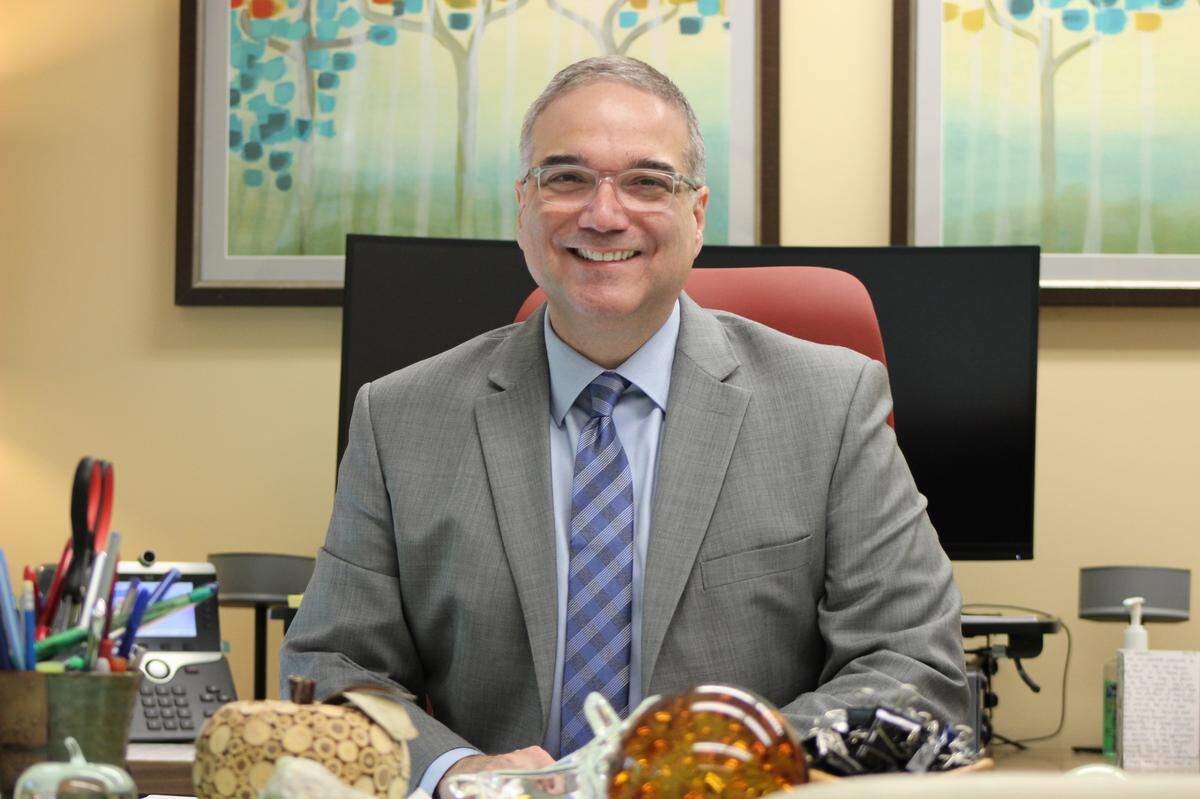
Varona, 53, was hired by Frenk in August 2019, from American University’s law school, where he was vice dean, as the UM law school’s first Hispanic and openly gay dean, describing it as his dream job. Varona was born in Cuba and raised in Newark, N.J., where he worked in the family’s corner bodega and accompanied relatives and neighbors to immigration offices to translate and help them navigate legal obstacles.
‘Miscalculated the backlash’
Prominent Miami lawyer and Class of 1973 UM law school graduate Joe Klock, who wrote a critical email to Frenk, said this week that Frenk, 67, miscalculated the backlash his decision would cause. As a measure of his disappointment, Klock said he would not advise three of his children who earned their law degrees at UM to enroll there today.
“Who in their right mind would accept a deanship when at the whim of the president or Board of Trustees you could be forced out with the flick of a pen?” Klock said. “Tony Varona was loved and respected by faculty, students, alumni. To trash his esteemed career makes UM look stupid and is a step backward for the law school. Then you’re asking alumni for $15 million? Who’s going to give?”
The UM School of Law Academic Review Committee warned in a June 1 letter to Frenk that a new dean would be doomed in achieving Frenk’s own goal “to make Miami Law as strong and successful as it can be.” The independent panel of deans from three U.S. law schools — University of Houston, American University and Boston University — was selected by Provost Jeffrey Duerk to monitor the performance of Varona.
“But long term, our fear is that if you decide to continue down this route, it will be next to impossible to find a high quality replacement for Dean Varona and that replacement’s principle mission would be to heal the wounds from Dean Varona’s termination,” they wrote in the letter. “Given this scenario, we believe that it would be highly unlikely for him/her to lead a successful capital campaign, raise US News rankings, or improve the bar passage rate.”
The UM Faculty Senate, which passed a unanimous resolution “strongly urging” Frenk to reinstate Varona, said in the resolution that Frenk’s failure to follow proper academic, administrative and ethical procedures that require shared governance with faculty has “severely tarnished the university’s local, national and international reputation” and threatens to “negatively impact hiring, recruitment and accreditation.”
Varona’s lawyer Debra Katz denounced the termination as “an egregious violation” of Varona’s legal rights, and even labeled “defamatory” Frenk’s allusion to “the need for a dean with the required vision and effectiveness to bring the school to new levels of excellence.”
The storm of condemnation has been relentless, with the law school’s Vice Dean Lili Levi resigning to protest Varona’s short-circuited term and what she called a “deeply unfair, unjust and factually misguided” action; the UM Law Alumni Association expressing that its members are “surprised and saddened”; UM law tenured faculty saying “haste and lack of consultation” will “harm” the school and university; UM law students and alumni questioning whether “the decision was reached in good faith or if it was the result of private interests or bias”; and the school’s First Generation Law Association regretting a “major setback in the progress UM has made promoting diversity and inclusion in positions of leadership.”
González, who termed Frenk’s move “foolhardy” in the association of law schools’ letter, said Frenk may have underestimated lawyers’ skill in deconstructing weak arguments — something they’re taught in law school.
“President Frenk’s purported reasons don’t make sense, which leads us to conclude something more was at play here,” he said in a telephone interview. “We can only speculate. What vested interests thought this was a good time to kick out the dean? Was a deep-pocket donor pressuring Frenk? We don’t know why but we can ask whether the president was trying to best serve students, faculty, alumni and the thousands of people UM lawyers represent. The response from Frenk indicates contempt for faculty governance and a doubling down on a power move, like ‘Y que? And what are you going to do about it?’ ”
Varona himself said he was blindsided and “stunned by my baseless termination, disturbed by how I have been mistreated and concerned by how all of this will affect our great law school and university.” He hoped Frenk’s decision would be “rescinded.”
But in a recent Zoom meeting with faculty and a later one with the alumni association, Frenk said reinstatement of Varona is not being considered. He also dismissed rumors that Varona’s sexual orientation or Hispanic background had anything to do with his termination as dean, reminding the group that UM has three openly gay deans and that he himself is Mexican.
He indicated a rift in vision was why he decided to part ways with Varona so early in Varona’s contract, and that the Board of Trustees supported his decision.
“We are still hazy on the real reasons but we gathered that there was a series of issues between the president and the dean, including the philosophy of where the law school is headed,” said outgoing president of the UM Law Alumni Association, Miami attorney Tim Kolaya. “Dean Varona wanted to reduce the percentage of money the law school is required to give to the university general budget and keep more of it for improving the law school’s facilities, salaries and scholarships.”
Frenk was conciliatory during the meeting, said incoming president Julie Braman Kane, and promised that alumni would be involved in selecting an interim and new dean.
“There’s an accumulation of issues, but he did not share those or his motivation, and I understand his reasons for not sharing,” said Braman Kane, who earned her undergraduate degree from UM in 1990 and won a Dean’s Scholarship as a law student, graduating in 1993. “I also think we can turn this into a tremendous opportunity to find the right dean for our incredible faculty and students and continue Miami Law’s history of developing strong leaders.”
Fundraising is a key concern of alumni. Kolaya said “we’ve already heard from estate planners about knee-jerk reactions of people” taking the law school out of their wills, and “we want to tell them to take a deep breath and remember that students and deans come and go but your alma mater always needs you.”
Falling behind in Florida Bar passage rates
Ten years ago, UM’s law school ranked near the top in Florida Bar passage rates compared to other Florida law schools, with a nearly 87% percent Florida Bar passing rate. Since, UM’s bar passage rate for the February test has ranged from a high of 86.4% in 2013 to a low of 53.1% in 2016.
For the February 2021 Florida Bar exam, the most recent, UM’s bar passage rate was 62.1 percent, according to the Florida Board of Bar Examiners, significantly lower than FIU’s 75 percent rate, UF’s 71.4 percent rate or FSU’s 77.8 percent rate.
Varona had recently hired Steven Maxwell, a popular Bar instructor, from the University of Florida to work with students in preparing for the Bar exam.
The Bar exam passage rates factor into the annual national rankings of law schools, as ranked by U.S. News &World Report magazine.
UM’s rankings have fluctuated over the past 10 years, hovering between its best ranking of 60 in 2017 to its worst of 77 in 2018 and in 2012. The rankings, a key metric widely viewed as a measurement for law schools’ success, are based on a formula that considers various factors including job placement and Bar passage rates. The lower the ranking, the better, as the highest honor is No. 1.
A significant portion of the formula includes surveys to law school deans, associate deans, committees chairs and recently tenured faculty, as well as hiring partners at law firms, practicing attorneys and judges. During his tenure, Varona created an intellectual life program, which included conferences and other public academic events aimed at boosting the law school’s reputation and ranking.
Varona also launched an environmental law program, which bumped the law school rankings in environmental law to the 48th spot, up from 55 (the lower, the better). He inaugurated an international and graduate studies program, which helped the school land at No. 29 in the international law ranking, a lift from a prior rank of 36. Under his tenure, the school earned a new top 25 ranking for the clinical law programs and a new top 50 rank for the litigation skills program.
He also planned to institute next fall a human rights program, a law and technology program, a criminal justice reform initiative and a Caribbean and Latin American law program.
Law school vs. medical school
Varona also inherited an outdated, cramped law school in need of renovation. One of his tasks was to raise funds for a capital campaign “which will culminate in four short years [and] presents a rapidly narrowing window of opportunity to mobilize significant resources on behalf of Miami Law,” Frenk said in his email announcing Varona’s firing.
Varona raised $8 million during his 22 months as dean in cash and other commitments. He and his husband contributed $100,000 of their own money. He also raised $1 million for the new Miami Law Student Emergency Fund during the pandemic. Varona also said he had a preliminary commitment of $5 million for a new Center on Law and International Development.
Additionally, the law school expects to register a $4 million surplus this year in its budget.
“The University of Miami really has become a medical school with sidelines in other fields,” Klock said. “The law facility is old and tired. It’s a stepchild.”
Said Kolaya: “The law alumni have felt for a long time that the university dedicates a lot more resources and time to the medical school.”
Frenk as a public health expert
Frenk, one of the world’s foremost public health experts, has been on the front lines of four previous pandemics during a career in medicine as a physician, Mexico’s secretary of health, an executive at the World Health Organization, senior fellow for global health at the Bill and Melinda Gates Foundation and dean of Harvard’s T.H. Chan School of Public Health, where he secured the $350 million naming gift, the largest in Harvard’s history.
He was hired at UM in 2015 as the university’s sixth president, succeeding Donna Shalala, in part to stabilize UM’s medical school finances.
He recently turned his attention to the law school, raising concerns about its declining national rank and Bar passage rates.
Yet Varona’s first class of students in fall 2021 had the best LSAT and undergraduate grade point average numbers in 30 years. And his firing as dean comes eight months after a laudatory UM article praising his accomplishments. (Frenk offered to let Varona stay on as a tenured faculty member and to keep his title as the M. Minnette Massey Professor of Law.)
An Oct. 1, 2020, article in a Miami School of Law publication headlined, “A look back one year after becoming dean,” noted Varona’s accomplishments, such as creation of a Dean’s Executive Cabinet; formation of an architectural committee to study the school’s space needs and whether to renovate or build a new facility; the school’s top rankings in music law, health law, human rights law, family law, sports law, media and entertainment law, trial advocacy and international law; an award won by the Student Services team; and the pivot of 300 classes to virtual instruction during the pandemic.
The new UM Board of Trustees Chair Laurie Silvers, a UM undergraduate and law school alum, praised Varona in the article for his high energy, for elevating the school’s visibility, for his “compassionate sense of justice,” and for his “enthusiasm and scholarship as well as his commitment to creating a more diverse and inclusive society and preserving the Rule of Law.”
But that wasn’t enough to save his job.
Frenk’s decision appears to be final.
“The University decided that a change in leadership of the law school was the best path forward to continue building towards a strong and sustainable future for our faculty and students,” UM Vice President for University Communications Jacqueline R. Menendez said in a statement on Friday. “As President Frenk has shared with our faculty and alumni, the impressive accomplishments of the law school community over its history give us every confidence that we will be able to attract an outstanding new dean. We look forward to working in close coordination with our faculty, alumni, and the Board of Trustees as we begin this transition to make Miami Law the strongest institution it can be.”
Florida Bar exam | # taking | # passing | UM Law % passing rate |
38 | 33 | 86.8 | |
41 | 32 | 78 | |
66 | 57 | 86.4 | |
57 | 46 | 80.7 | |
45 | 29 | 64.4 | |
32 | 17 | 53.1 | |
36 | 29 | 80.6 | |
25 | 14 | 56 | |
24 | 16 | 66.7 | |
20 | 11 | 55 | |
29 | 18 | 62.1 Source: Florida Bar |
Year | UM Law ranking, U.S. News & World Report; #1 is highest |
2012 | 77 |
2013 | 69 |
2014 | 76 |
2015 | 61 |
2016 | 63 |
2017 | 60 |
2018 | 77 |
2019 | 65 |
2020 | 67 |
2021 | 67 |
2022 | 72 |
This story was originally published June 12, 2021 at 4:30 PM.