State GOP warns districts they could lose millions next year if students don’t show up
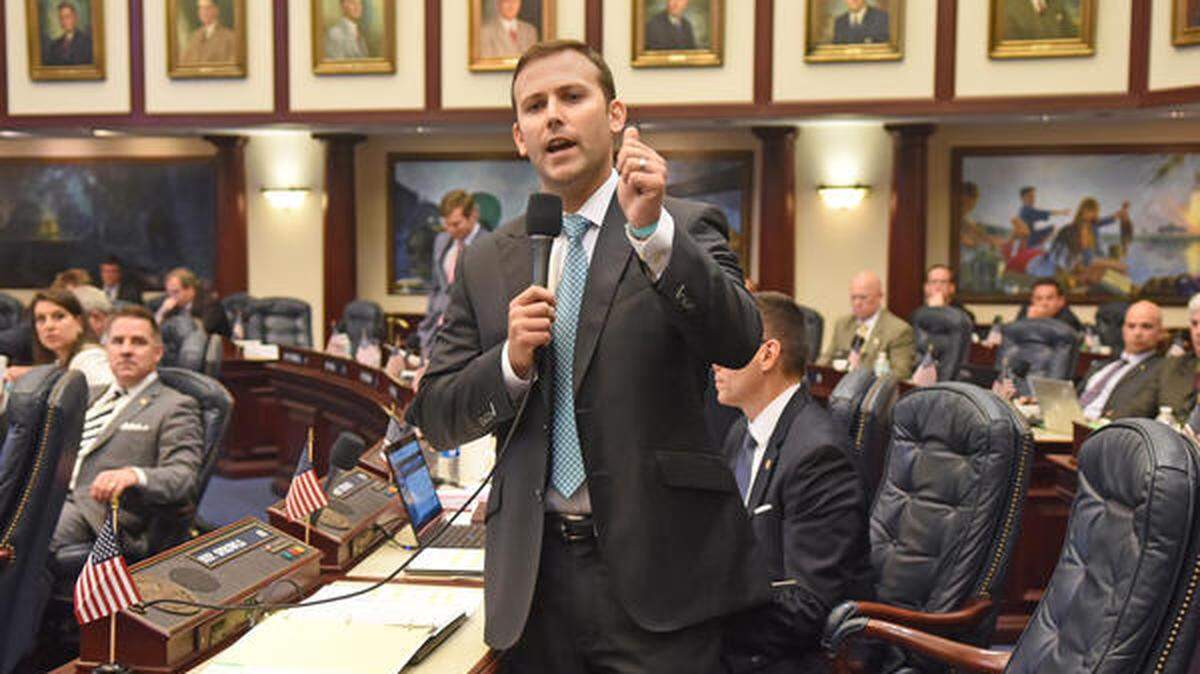
A top Republican leader in the Florida Legislature warned school districts across the state Thursday that hundreds of millions of taxpayer dollars they received this academic year because of the COVID-19 pandemic will likely be gone next year and they should budget accordingly.
Because of the pandemic, Florida Education Commissioner Richard Corcoran signed an executive order last year allowing all 75 school districts to keep about $700 million in state funds “over and above what would otherwise be permitted under law,” state Rep. Chris Sprowls, speaker of the Florida House of Representatives, wrote in a letter to all the districts’ superintendents Thursday.
The money was allocated based on the number of students local school officials estimated would be enrolled during the 2020-2021 school year. However, because of the pandemic, thousands of students have not returned to either in-person or online learning.
87,000 students in Florida public schools have disappeared during pandemic
Specifically, Sprowls, a Clearwater Republican, said 87,811 full-time students enrolled in public schools across the state have not shown up to school this year, either in person or virtually. That’s about 3% of the roughly 2.9 million public school students in Florida.
The Florida Education Finance Program allocates funds to districts based on the expectation these students would be in class for the fall and spring semesters, Sprowls said. This would not be the case if the Republicans in the Legislature are successful in changing the way schools are funded next academic year, according to the letter.
“For the 2021-2022 State Budget, the Florida House intends to align the per-pupil funding for our K-12 schools to the actual enrollment in those schools,” Sprowls wrote.
He also warned the superintendents not to factor in federal COVID-19 relief money when budgeting for recurring expenses and instead spend the money on projects to bolster schools against health and environmental risks, including the novel coronavirus.
“School districts should allocate their federal dollars to items that are non-recurring in nature, such as deferred maintenance projects that improve the health and safety of our students and teachers,” he wrote. “With these resources, school districts have the opportunity to replace aging HVAC systems, retrofit older windows and doors, install air purification and cleaning systems, and complete other renovations that improve air quality and reduce the risk of viral and environmental hazards.”
While Sprowls, who did not immediately respond to questions regarding the letter, is telling districts to prepare for their next school year by accounting for the students who did not show this year, Gov. Ron DeSantis is basing his recommended per-student spending in his proposed 2021-2022 budget based on the assumption that almost half will return.
According to a recommended calculation fact sheet from the governor’s office, he plans to spend $8,019.30 per student next school year, compared to $7,786.61 this year.
If Sprowl and his colleagues are successful in changing the way schools receive state dollars in the fall, the degree of the impact will vary in South Florida, depending on the district.
Students in Miami-Dade, Broward and Monroe schools have not shown up
Superintendent Alberto Carvalho, told ABC Local 10 in December that about 1,000 students have not shown up to class either at brick-and-mortar schools or for remote learning.
In a statement to the Miami Herald Thursday night, the Miami-Dade district said it is trying to find all the students who have not returned to school and encourage them to come back.
“Missing students remain our priority, and we continue to mount all efforts to locate them,” Daisy Gonzalez-Diego, chief communications and community engagement officer, said.
In Broward, that number was almost 800 students, Superintendent Robert Runcie told the news station.
Becky Herrin, spokeswoman for the Monroe County School District in the Florida Keys said enrollment in February of this year was 8,722 compared to 8,979 the same time in 2020, a loss of 257 students.
The pandemic is presenting many challenges for the students who have returned to in-person and remote learning.
In Broward, for example, Runcie has estimated around 30% of the district’s 204,000 students are “struggling academically, socially and emotionally,” he said at a school board meeting last month.
“This is also a significant equity issue, as 84 percent of students who are struggling and not making adequate progress are Black and Hispanic, 24 percent are students with disabilities, 34 percent are English-language learners, and, 69 percent are low-income on our free and reduced lunch program,” Runcie told board members.
Habitual truancy, he said, rose from about 1,700 students last year to more than 8,000 in the first semester. More than 70% of Broward’s public school students remain learning from home, rather than returning to the classroom, which Runcie said is a major contributing factor to lack of academic achievement.
In Miami-Dade, where 55% of the around 260,000 students remain in online learning, estimate about 10,000 pupils of those 143,000 are struggling to make the grade.
Miami Herald state government reporter Ana Ceballos contributed to this report.
This story was originally published February 11, 2021 at 8:08 PM.