‘Mini engineering project’ and ‘sewing movement’ — colleges make PPE during crisis
Sixty-seven-year-old Hugh Murphy, who learned how to sew to make ends meet as a 17-year-old freshman at Florida State University and then picked it up as a hobby decades later, started sewing cloth masks in February, shortly after he realized he needed to do something — anything — to support his community facing the COVID-19 public health crisis.
He’s a theater professor at Barry University, so he’s been working on the masks in between teaching his courses remotely from his home in Hollywood and donating them to whomever is in need. He shared pictures of them on his Facebook page recently, and a surgeon at Memorial Regional reached out.
“I thought that she was going to ask me to make some cloth masks for her,” he said. “But she was asking me to design a new mask, so it turned into a mini engineering project.”
It’s not only Murphy at Barry, but also community members at Miami Dade College, Florida Atlantic University, Broward College and other South Florida higher education institutions who have gotten creative and resourceful at building personal protective equipment, PPE, to help others during the pandemic.
That’s because South Florida, like the rest of the U.S., is facing a critical shortage of the clothing, gloves, face shields, goggles, face masks and other equipment that healthcare workers need to protect themselves from the spread of the novel coronavirus as they care for patients.
Some school officials have set up organized efforts within their colleges; they order pieces online and use complex machines to put together the supplies. Other colleges have individuals doing what they can with what they have at home.
In Murphy’s case, he stepped up to the challenge of creating a mask out of surgical wrap, which baffled him when he first looked at the textile.
“I have seen surgeries in movies so I thought I knew what that blue stuff would be like, and I said, ‘Oh yeah, no problem. I can whip those up.’ But then she showed up, popped her trunk and it was not what I was imagining; it’s not like cloth. It’s actually like the tarp you use for camping under a tent,” he said.
It took him nine prototypes to really nail what health professionals sought: a reusable, medical-grade mask. Broward County’s Memorial Healthcare System, which provided the materials, wanted a mask that would prevent workers from getting infected with COVID-19 and that could be dry sterilized after being used with ultraviolet light and heat.
Trial and error
For about two weeks, the surgeon visited Murphy’s condo every other night to examine whatever mask he had sewn that day and provide feedback. If she thought it looked hardy, she would bring it into the hospital the next day, where they sprayed it with gas. If the person wearing it could smell or taste the gas, then the mask failed.
She dropped off some of the futile masks, and he determined the cause of failure to amend the mistakes for the next one. In between each of Murphy’s models, he tried new materials and learned new lessons, as he sewed while listening to Billy Joel tunes.
He tested different materials for the nose abutment, including jewelry wire and chenille pipe cleaners, until he eventually used a special six-inch aluminum insert the hospitals bought. He also learned he would need 100% cotton thread and elastic, because polyester melts when heated.
Finally, he produced a mask that worked perfectly, so the surgeon asked him to teach nonessential hospital workers how to put it together. With Barry’s help, he filmed a six-minute tutorial.
Memorial plans to manufacture as many as possible this way for as long as needed.
“I’m really, really happy I was able to help,” he said. “These are our health soldiers, and unless we give them the armor and ammunition they need it’s simply not fair to them.”
Miami Dade College joins ‘sewing movement’
Olivia McAteer found a silver lining within the pandemic: She can spend time with her family, all safe and healthy at home, helping those who aren’t as fortunate.
She decided to use what she’s learned in the six years since she started sewing and in the year since she became a fashion student at Miami Dade College, to help those who need to protect themselves from COVID-19 but don’t have masks.
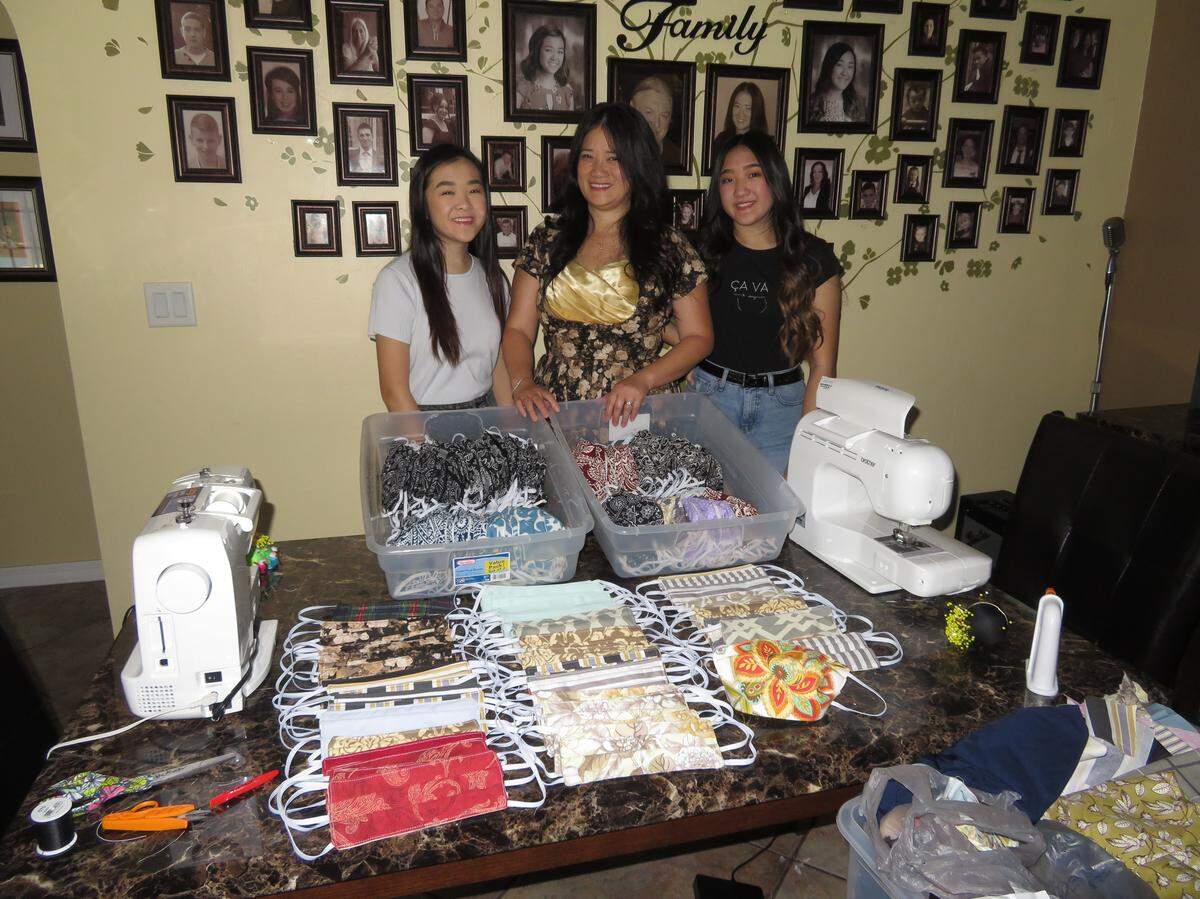
Using remnants of fabric from past projects, McAteer enlisted her mother and her sister, and the three of them have sewn nearly 300 homemade masks in the past two weeks or so.
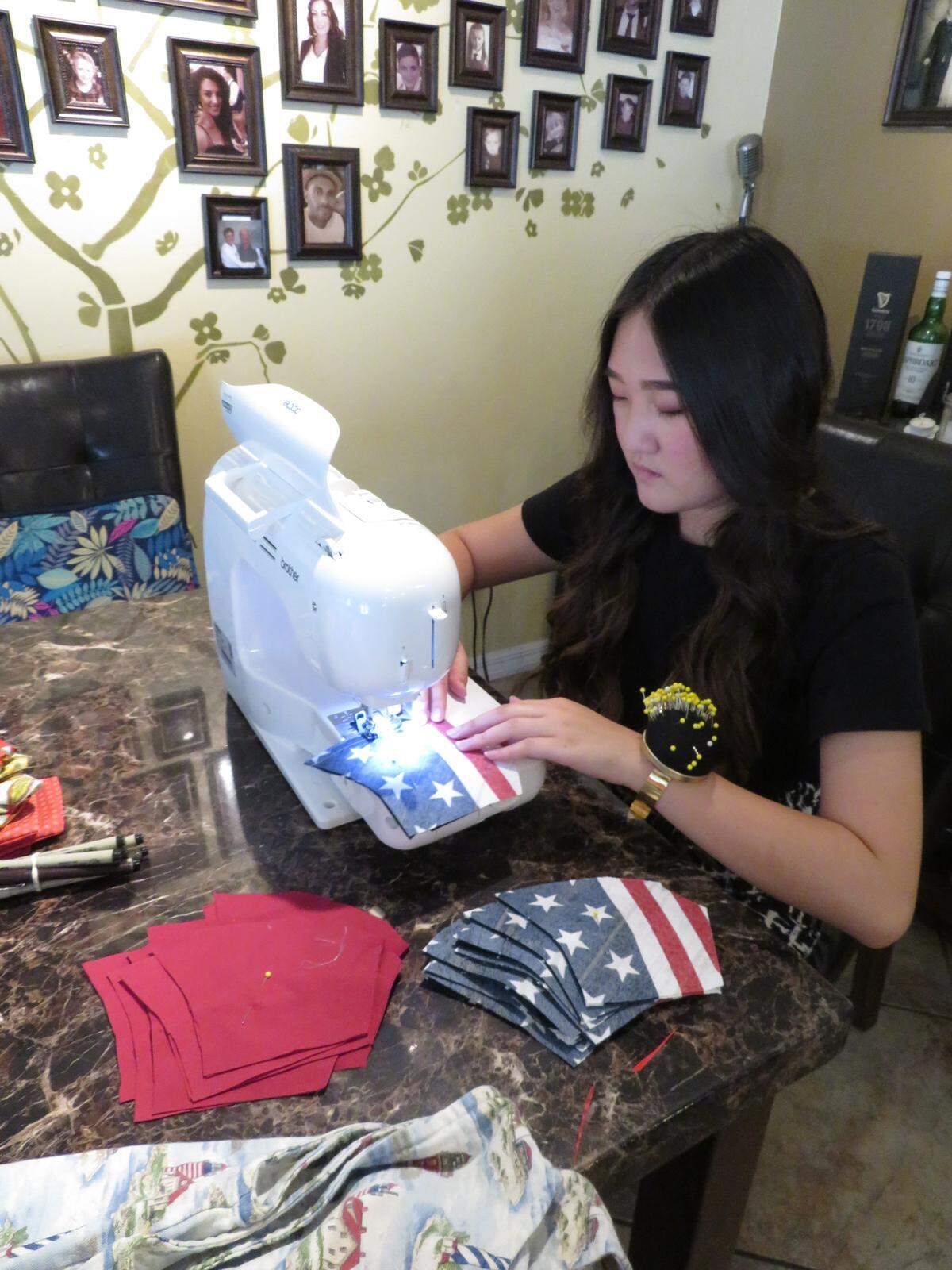
“I was going to be sewing anyway for class,” McAteer, 18, said. “So I figured I might as well put my final assignments on hold and sew masks.”
Together, they have donated 170 masks to SalusCare workers in Fort Myers, where the McAteers live. They’ve also given them to family and friends, and dropped some at their post office after the workers there wondered if they could have some. The workers complimented the bright patterned masks the women wore when they walked in.
A few days ago, they ran out of leftover material, so now they’re selling the masks to cover the production expenses. They have three sizes — small, medium and large — and they have 12 different styles, two that sell for $15 each and 10 that go for $8 each.
The lack of elastic, thread and cloth is a challenge that Jeanie Canavan, a secretary for the School of Global Business, Engineering and Technology at MDC’s Homestead campus, is also facing.
Canavan said she started sewing masks at home to protect her stepdaughter, who started chemotherapy for breast cancer in early April, and her mother-in-law, who has respiratory problems.
“Then I just decided I needed to help as many people as I could,” she said. “I put it out on Facebook and got requests.”
She’s completed about 50, dedicating about 15 minutes on each.
She’s happy to donate her time, but the cost of the supplies is high, she said. She doesn’t want to sell them but she started worrying a few days ago that she couldn’t keep up with the mission she started in late March.
Then she got an unexpected gift on her doorstep: An acquaintance who heard about her efforts dropped off some fabric.
“It’s great,” she said. “We’re all caring for each other. And I’m not the only one sewing; there’s a whole movement in the sewing community.”
FIU, Broward College use 3D printers
In March, Florida International University announced it would work with Baptist Health South Florida to 3D print at least 1,000 reusable face shields that healthcare workers can wear on top of face masks, as an extra layer of protection from the droplets patients can expel during coughing and sneezing.
Broward College, about 50 miles north, decided to reach out to FIU shortly after that and ask for help to produce the same face shields, said Annie Myers, the associate dean of information technology at Broward College.
“They were very helpful and gracious,” she said.
FIU sent over the program needed for each of the four Ultimaker 3D printers at the college.
It takes about 17 hours to print each mask. “It’s a very technical process, and sometimes it starts and there will be an error and you have to start over,” Myers said.
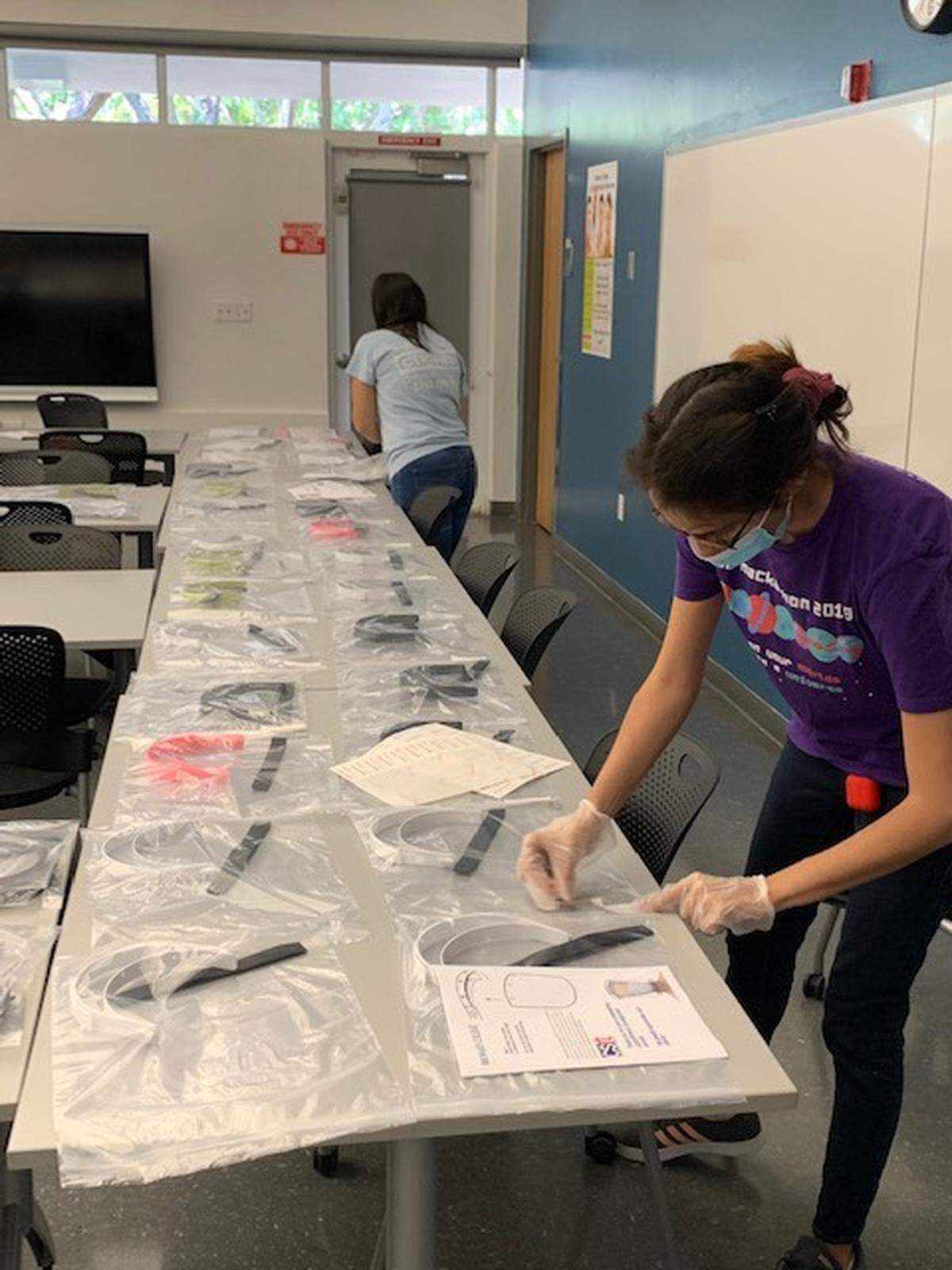
But computer science students and part-time lab instructors volunteered to help, and some have even taken the printers home to track the entire process.
When the plastic is printed, they cut Velcro and put all of the parts, with a pamphlet with instructions, into a bag for healthcare workers to quickly assemble and wear later. They stamp the production date on each bag so workers wait at least three days before using them for sanitation purposes.
The college ordered materials for 1,000 masks to donate to Memorial Healthcare System and Broward Health.
“We’re all thrilled to do this,” said Myers.
An affordable way to build face shields at FAU
Instead of using a 3D printer, Florida Atlantic University developed a quicker process to manufacture protective equipment.
Starting this week, student volunteers will be assembling disposable face shields using a simple recipe with three ingredients: polyester plastic, foam and elastic fabric bands, said Stella Batalama, the dean of FAU’s College of Engineering and Computer Science.
The process requires workers to cut the plastic using a laser cutter. Then cut the foam and paste it to the plastic, and finish by attaching the elastic band.
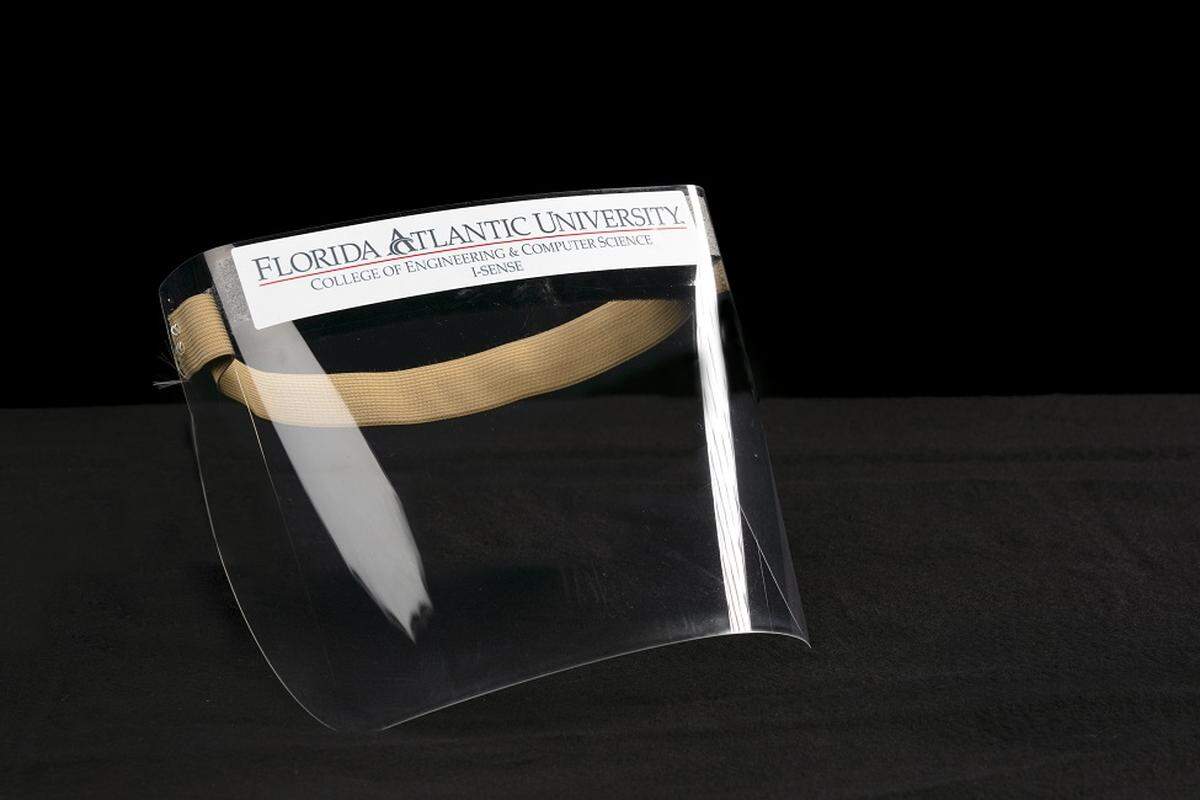
“It is very easy to make; it takes less than a minute,” Batalama said. “And they are very economical. They cost $1.50 each.”
The public university in Boca Raton got involved because Baptist Health South Florida asked for help.
The hospital requested 4,000 face shields, which will take about a week to complete. Batalama said Baptist officials said they will order another 4,000 after that.
Batalama said since the college announced its plans, she has received emails from parents and students showing their gratitude and expressing that they’re proud to be connected to FAU.
“That for me was very uplifting,” she said. “I feel like we’re contributing something that makes a difference.”
This story was originally published April 15, 2020 at 12:44 PM.