
Florida gives Common Core a failing grade, announces new state school standards
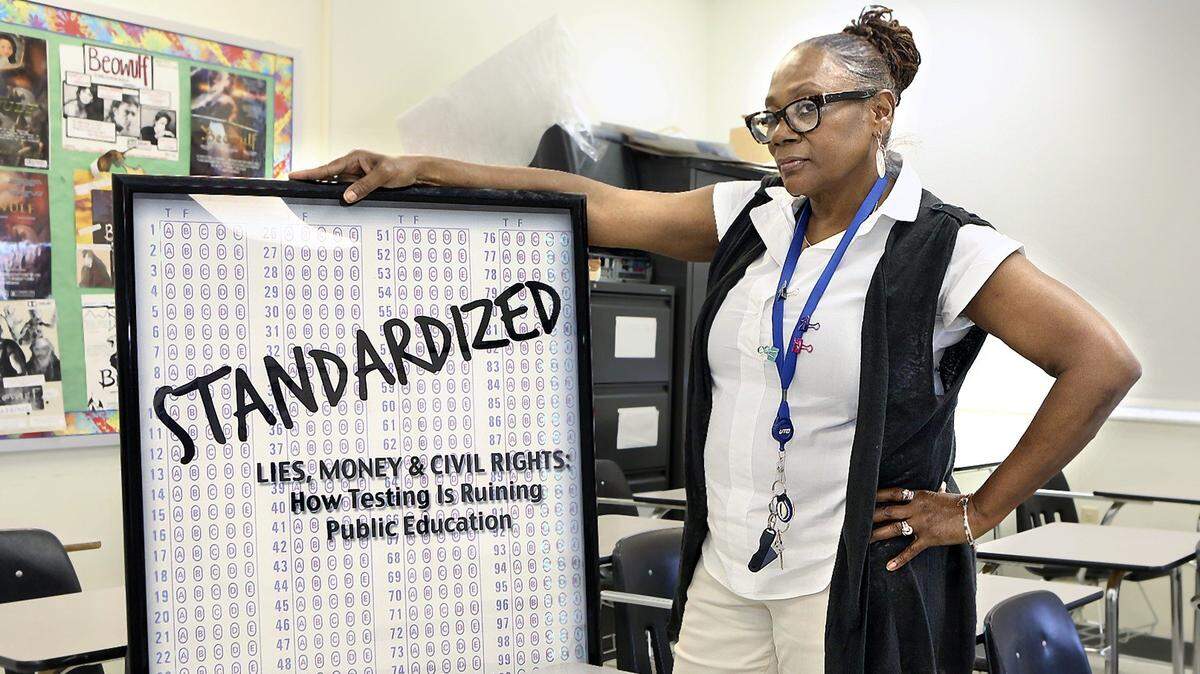
Gov. Ron DeSantis announced the creation of new academic standards on Friday, a year after he directed the state to root out all “vestiges of Common Core” and change the way Florida’s students learn.
“Today we’re announcing that mission has been accomplished,” he said at a news conference in Naples. “It goes beyond Common Core to embrace common sense.”
State standards are benchmarks that dictate what students must know by the end of each grade level, and how courses are taught is shaped around those goals.
Common Core refers to a set of standards first proposed by the National Governors Association that became the foundation for Florida’s existing standards. Former Florida Gov. Jeb Bush was a champion of the idea and was a driving force in the state’s early embrace of the standards.
But since its initial adoption by 45 states in 2010 (the number is now lower), Common Core has come under fire from conservatives who claimed it was a federal mandate driving what to teach and test in schools.
The new measure will be called the BEST Standards, which stands for the Benchmarks for Excellent Student Thinking. Although the standards themselves were not made publicly available on Friday — DeSantis promised they would be online in a week — the Florida Department of Education released summary documents that outline some of the major changes ahead.
One of the documents was the final recommendation by Commissioner of Education Richard Corcoran to DeSantis, something the department had previously declined to make public.
Corcoran said the goal of the standards is to produce “excellent thinkers” and to reduce the differences between how courses are taught across the state.
One of the biggest changes could be the way students learn math. The previous, Common Core-based standards, emphasized understanding the logic behind math equations. Corcoran on Friday said math should go back to the basics of arriving at the answer to form a stronger foundation.
“When you’re trying to remember what’s four times four, and you have to think about it and it’s not automatic, you’re never going to be able to conquer algebra and all those other courses,” he said.
Additionally, American history and civics materials will be “embedded” into all grade levels in their English language arts lessons, rather than more isolated lessons on civics typically in seventh grade, American history in 11th grade, and U.S. government in students’ senior year. Financial literacy, which refers to teaching students skills like balancing a checkbook or applying for a loan, will also be taught to all high-schoolers.
Under a state law passed last year, schools were only required to offer a financial literacy course as an optional elective.
Overall, the new standards include less testing, DeSantis said. The ninth-grade English exam is eliminated and a geometry end-of-course test is phased out, for example.
However, the standards also require all students to take either the SAT or ACT, but not that they achieve a particular score. The tests would be offered for free to all 11th-graders. Those scores would also be incorporated into the way schools are graded.
The proposal also would require all high school students to sit for the Florida Civic Literacy Test, a 100-question exam to encompass the U.S. citizenship exam plus questions about landmark U.S. Supreme Court cases.
The test would be offered to seniors, unless students want to take it earlier. Passing would not be a graduation requirement.
“We need to measure results … but you need to do that in a way that makes sense,” DeSantis said.
Hillsborough County literacy teacher Seth Federman participated in the standards revision process. At first, he said, he was nervous about where the initiative might land.
But after seeing the recommendations emerge Friday, Federman said he was pleased.
The proposal creates clear, concise standards that remove ambiguity about what teachers are supposed to do, he said.
“We pushed that,” Federman said.
It also moves away from the “chunk” approach to reading — which uses excerpts — and calls for students to read more full books, an important step toward engaging children who struggle with the skill, he added.
“He is using our input to create change in the education system for Florida,” Federman said. “We were listened to.”
Most testing changes would require legislative approval. The standards proposal as a whole is expected to go before the state Board of Education for approval. But the board is likely to vote in favor — several of its members flanked DeSantis at the Naples announcement.
But even once that happens, the change in standards will need to trickle down to changes in teachers’ lesson plans, possibly requiring new tests and textbooks that will require funding, noted Miami-Dade Superintendent Alberto Carvalho.
But he said there’s a lot to like in the proposal, including changes to the “convoluted way” math is taught. A boogeyman in the education vernacular, “Common Core math” was one of the most common complaints he said he heard from teachers and educators over the past five years.
“Teachers never really embraced it, parents never really understood it,” said Carvalho, whose career began as a science teacher. The revision, he explained, could restore the public’s faith in Florida’s standards.
Carvalho’s experience fielding those complaints conflicts with a survey on the standards published last May by the Florida Department of Education. The overwhelming response was “no change needed.”
United Teachers of Dade President Karla Hernandez-Mats cited that survey, adding that the funding for new standards, textbooks and tests doesn’t justify a need and could be better spent directly into the classroom.
“Things that just pop and are very obvious to me is that this plan aims to invest millions of dollars into educational materials,” she said. “Publishing companies [are] making millions and millions of dollars. I think that’s where a lot of educators became concerned. This emphasis helped to create this system where we are now, which is really to dismantle public education and privatize public schools.”
Hernandez-Mats found irony in the standards’ emphasis on civics given the state’s threats toward masses of teachers rallying in the state capital last week, saying a stoppage of work could constitute an illegal strike.
“If they really cared so much about civic literacy and civic engagement, they wouldn’t have made a big deal about education activists out in Tallahassee lobbying for students that you serve,” she said.
Broward Teachers Union president Anna Fusco said the governor’s plans are a reaction to two decades of stripping and neglecting public education.
“They have slashed budgets, given away public funds intended for public schools to for-profit charter and private schools, and have stifled student success by mandating increased state standardized testing and creating a bogus school grading system,” Fusco wrote in an email. “The Governor well knows these results and now MUST ACT to make reforms that actually increase student success.”
But like Carvalho, Broward Schools Superintendent Robert Runcie said he looked forward to the complete details of the new standards.
And Andrew Spar, vice president of the statewide teachers’ union, the Florida Education Association, said he still has questions about how this proposal will be implemented and what the standards will look like beyond the summary documents. The union is also focused on other aspects of the governor’s education agenda, including how teachers may get salary raises.
“We need to empower and trust teachers to do the things they are hired to do,” Spar said. “It’s not just standards that are going to solve all our problems in public education.”
This story was originally published January 24, 2020 at 12:40 PM.