How would a later school start time affect you? Here’s what you told us
Do students hate waking up early?
The Miami-Dade County school district is exploring options to have school start later in the day for the upcoming 2020-2021 school year.
Superintendent Alberto Carvalho said the goal is to have all schools start no earlier than 8 a.m.
Two proposed models suggest middle and high school students possibly starting as late as 9:30 a.m., with a 4:10 p.m. dismissal at the latest.
But not everyone is thrilled by the idea.
MiamiHerald.com posted a questionnaire asking readers to chime in on the proposal. We got more than 140 responses from Miami-Dade County residents, parents, teachers and students, as of Thursday morning.
The majority of respondents, including students, are against later school start and end times.
Here’s a breakdown of the pros and cons Miami Herald readers pointed out:
Rush hour traffic?

South Florida traffic is bad. Now imagine what it would be like with teachers, parents and high schoolers driving during the height of morning and afternoon rush hour.
Some residents think the time change would make traffic a countywide “nightmare.”
“That time is very close to rush hour. It would be catastrophic for traffic.”
- Raul, West Hialeah
“The evening commute is already worse than the morning one. This would make the morning commute better and evening commute even worse.”
- Alejandro, West Kendall
But others say the extra traffic headaches are worth it.
“It would help my kids get better sleep. I currently wake my kids in the dark which confuses them and is exhausting. If we could change that it would be better for their bioclocks.”
- Jennifer, Doral
One teacher, who owns his home and lives more than 25 miles away from his work, said he supports the change because it would benefit students. But it would also force him to make a difficult decision.
“I will face an immediate choice: sell, rent, or quit. I will have to move closer to school if I choose to stay in the same one ... But, I cannot face a commute that will now overlap rush hour. That would easily increase my total daily travel to three or maybe even four hours. Changing the time is a good idea, but it will not be without casualty.”
- Dan, Cutler Bay
Pick-up and drop-off?

The school district has more than 300,000 students and 880 bus routes.
Carvalho said that shortening the pick-up and drop-off times could free up 40 bus routes. The district could also use them to pick up and drop off students in choice programs, he said.
Later start times would also lessen the risk of drunk drivers on the road and increase safety for bus drivers and students who are currently walking, biking or taking the bus to school in the dark.
How early do the buses run?
The first school bus goes out at 4:50 a.m., but some transportation workers clock in as early as 4:15 a.m.
Yet, a later dismissal could also mean that some children would be dropped off in the dark after school.
Several parents are also concerned with how the later school times would conflict with their work schedules. Students are concerned, too.
Here’s what people think:
“This change in time would affect me and my family because I would not have rides before and after school. I cannot afford to pay for bus, my after school activities would be affected, and I would barely have time to complete homework.”
- Sofia, West Kendall
“Driving in the dark while students are wearing a black uniform has always been another concern of mine. Sleep deprivation is another issue that might get better with this decision. As a mother, I might run into some problems with my work schedule but the safety of my kid is a priority. “
- Lucy, West Kendall
“I believe high school students should start 9 a.m. to 2:30 p.m. I believe this way it won’t affect traffic as much, since elementary or middle won’t get out till after 3, and students would still have enough time for extracurricular activities and have enough time to do homework and socialize with parents.”
- Emmanuel, Miami Lakes
More sleep?
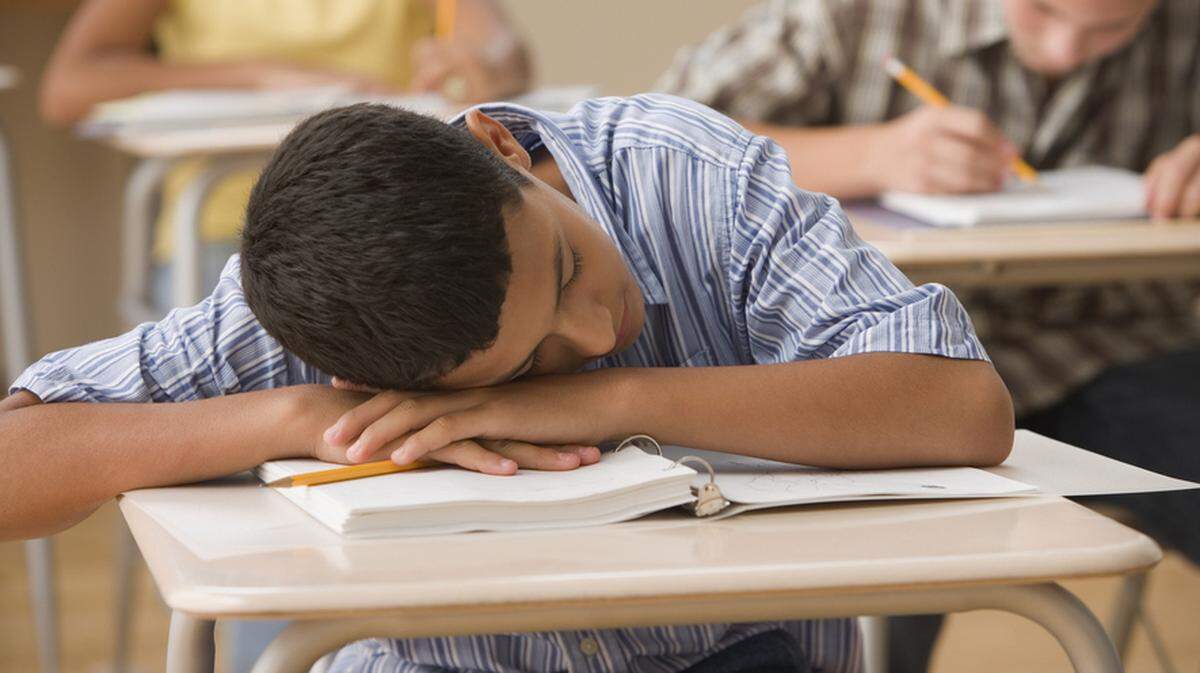
Most of the respondents who support the change said it’s because the extra sleep would benefit students.
“I’m graduating this year, but my brother would be able to get more sleep. This essentially would help him get better grades because most students in school are just tired and are not able to complete their schoolwork efficiently.”
- David, Hialeah Gardens
One high school biology teacher said she loves her current schedule and that a later start and end time would affect her traffic. But, she’ll trade the extra commute time if it means her students won’t be sleep deprived.
“ As it is, us teachers have enough to battle: cellphones, entitlement etc. A brain that learns 40% more because of an extra hour of sleep makes for a healthier happier student. So sign me up for more traffic and a later start time!”
- Maria, Kendall
Science backs this up.
Sleep deprived students are at a higher risk for various physical and mental health problems, according to the Centers for Disease Control and Prevention.
Those who don’t get the recommended amount of sleep also tend to do worse academically, according to a 2015 study conducted by the center.
But, for adolescents, it’s not that easy to fall asleep earlier.
Researchers say adolescents are actually wired to sleep and wake up late.
“To ask a teen to be up and alert at 7:30 a.m. is like asking an adult to be active and alert at 5:30 a.m.,” said Horacio de la Iglesia, a biology professor at the University of Washington in Seattle.
The professor is one of the authors of a study published last December in the journal Science Advances which examined students at two high schools in Seattle to see how the city’s public school start time changes affected students.
The study found that teenagers who had a later school start time saw an increase in grades and attendance.
The recent study is in line with various medical associations — like the American Academy of Pediatrics — who have been calling on school districts for several years to have schools start at 8:30 a.m. or later so students can get at least 8 1/2 hours of sleep at night.
But others think students wouldn’t actually get any extra sleep with the changes.
“This makes no sense. Students would not be able to “sleep in” because they would have to leave their homes early due to traffic. They would get home even later from after school activities and be up even later doing homework.”
- Mia, Sunset
After school activities?

Speaking of activities, almost all of the respondents are worried that a later start and end time wouldn’t give students the chance to have a life outside of school. Most of the students who answered the questionnaire are also against the changes because they’re concerned with how it will affect sports, part-time jobs and homework.
Here’s what people think.
“AP and IB students like myself are assigned approximately three to four hours of homework per night, meaning that if we got home at 4 p.m., and not 2 p.m., we would finish our work much later, not allowing us to perform the extracurricular activities or community service we are expected/want to accomplish.”
- Maria, Miami Beach
“I would still be getting the same amount of sleep as I have high school cheer after school and All Star after with a few hours in between to do homework. With this change my practices would be back to back and I would need to stay up later to get homework done.”
- Alice , Coral Gables
“As a teacher in Miami-Dade County, I work two jobs after school to help make ends meet: scoring exams online and tutoring. Starting school later would mean leaving work later, which would mean less time I can dedicate to these part-time jobs ... Many other teachers work other jobs after school, so this would impact them as well.”
- Ana, Miami
When will a decision be made?
The district’s task force, composed of students, parents, teachers, labor groups, athletic coaches and representatives from the county’s transportation department, is expected to present a recommendation to the School Board by April.
Additional reporting by Miami Herald staff writer Colleen Wright.
This story was originally published December 5, 2019 at 10:31 AM.