
Another casualty of the FIU bridge collapse: a plan to turn Sweetwater into Berkeley
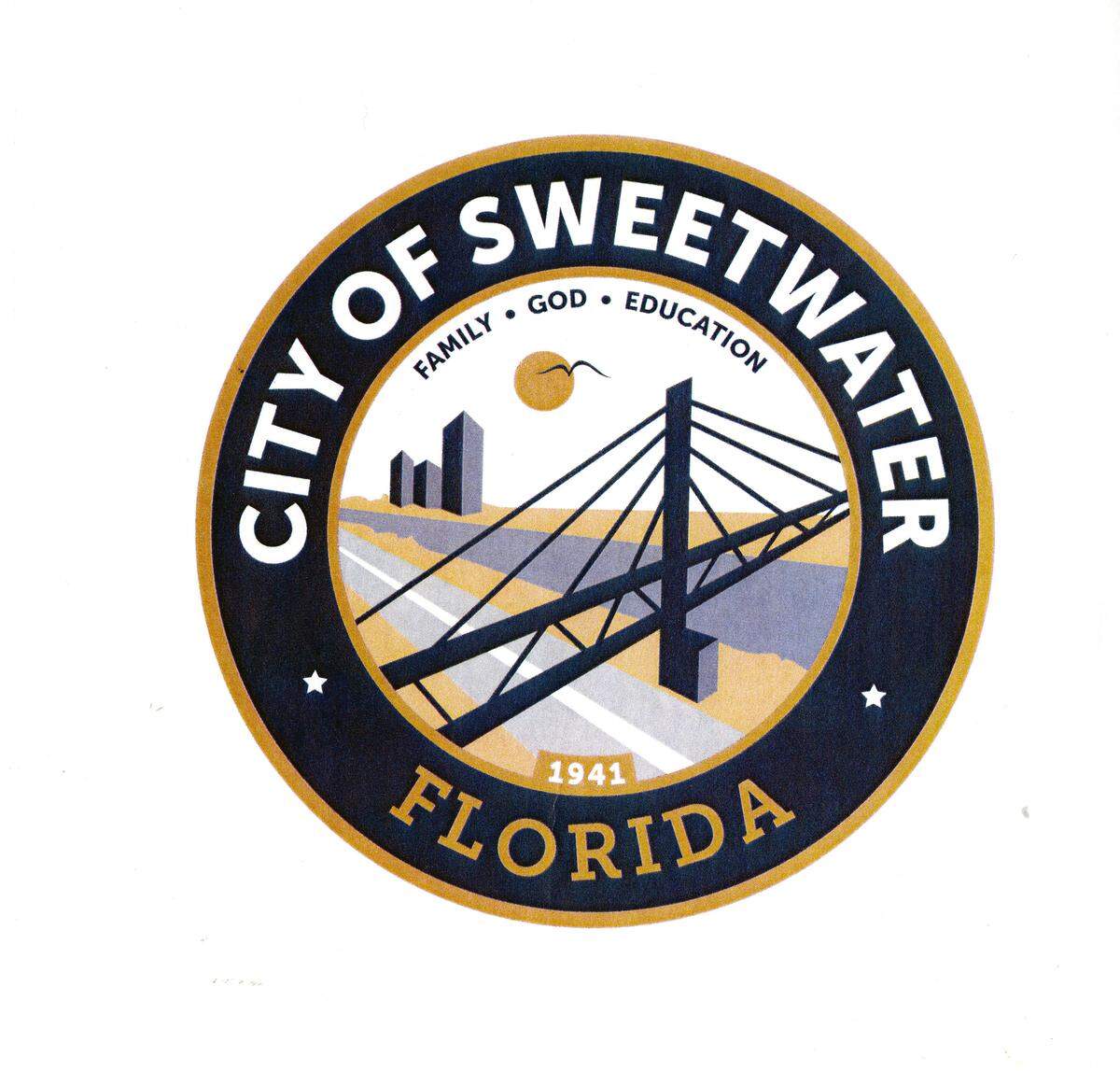
Hanging on the wall of Sweetwater Mayor Orlando Lopez is a medallion-shaped illustration of what was to be the official city seal: the motto Family-God-Education hovering over a landscape. In the background is a cluster of high-rise buildings. And in the foreground, a bridge that appears to be suspended by cables over a highway.
Yes, that bridge, the one that collapsed on March 15, spilling 950 tons of concrete onto Southwest Eighth Street, killing six people and hospitalizing nine. Part of the collateral damage was this methodical little design, which was intended to be Sweetwater’s new city seal.
“I guess you could say it’s on hold,” says Lopez. “Obviously it’s not going to become the seal, at least not any time soon. But I keep it up there to remind me of what we’re working for.”
The bridge collapsed before it ever opened for business. But it was intended to link Sweetwater with its next-door neighbor FIU, giving students an easy and safe way to travel from their campus in unincorporated Miami-Dade County over the dodgy and high-speed traffic on Eighth Street that effectively divides the two.
Whether FIU will try to rebuild the bridge or implement some sort of traffic calming measures to make it safer to cross from Point A to Point B, or simply forget about the whole thing has not been made clear. Also unannounced at this time: whether anyone is on the hook for the millions in federal grant money spent on the bungled span.
The bridge’s calamitous failure was the latest setback for a mutual dream of officials at FIU and Sweetwater: the integration of their institutions into a college town, a culturally and economically cross-stitched community in which FIU would be the Harvard to Sweetwater’s Cambridge, or the University of California’s Berkeley. A place where students don’t just go to school but live and work, dance and party, eat funky ethnic food and sip espresso at coffee shops.
“It has always made a good deal of sense,” former FIU president Mitch Maidique says of the idea. “FIU needs to expand. And Sweetwater needs more money from its tax rolls. But it’s been difficult to get it underway.”
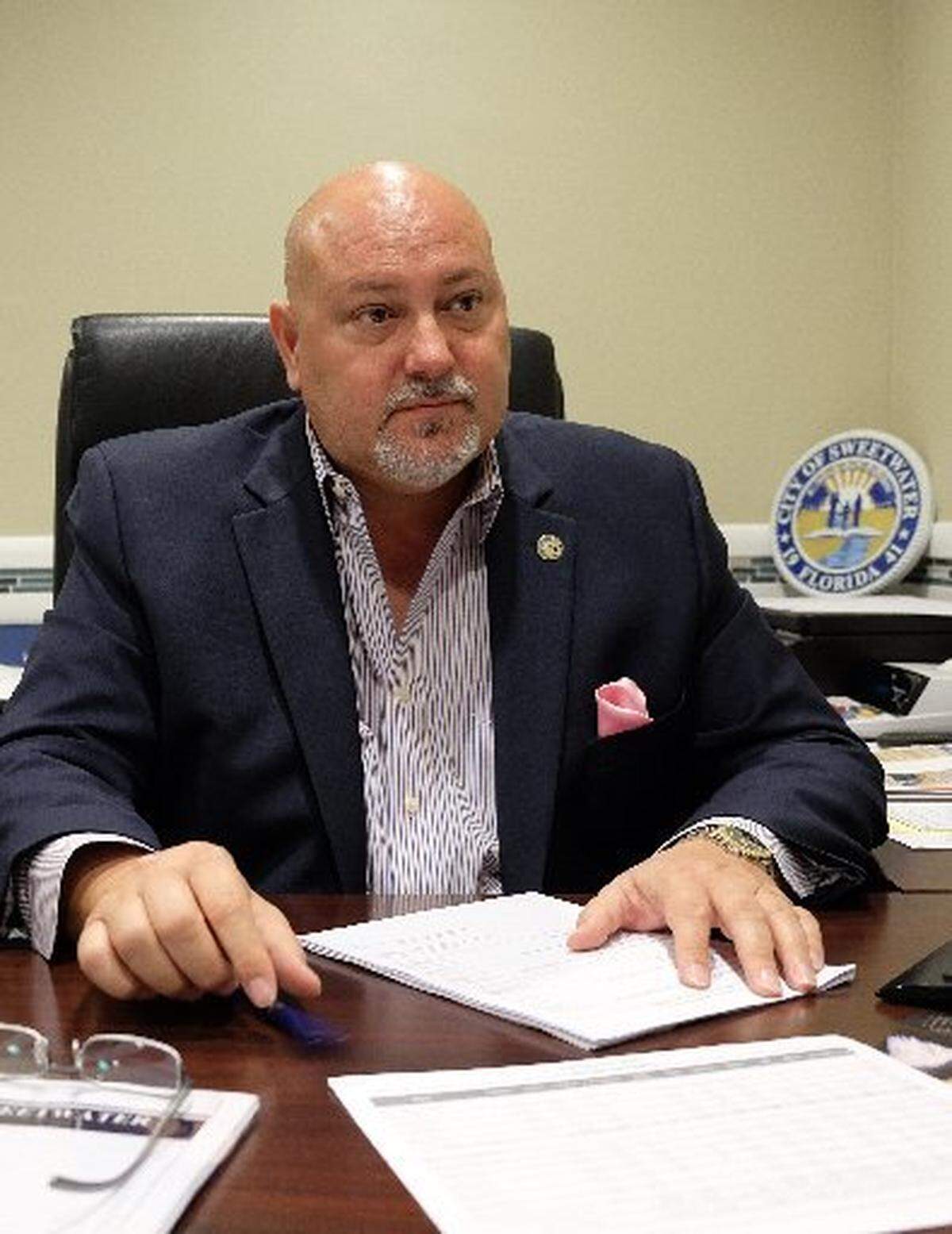
And the bridge catastrophe has pushed it much further into the future. FIU President Mark Rosenberg, a strong proponent of the concept and possibly the person who gave it the now-ubiquitous name University City, wouldn’t return phone calls from the Herald.
But Lopez wistfully acknowledged the difficulties in getting very far with the University City plans in the near future. Not only is the much-anticipated bridge access from FIU to Sweetwater gone, but the National Transportation Safety Board’s investigation into what happened — which will probably take at least a year, possibly longer — has left everything swathed in uncertainty.
“The idea is not dead, by any means,” he said. “Nothing that we were already doing is stalled. And the fact that we were going to incorporate that bridge into the city seal should tell you how seriously we take it.
“But it’s going to be nearly impossible to get anything new started until the NTSB finishes. Without their findings, we don’t know what anything will look like, whether there will be a new bridge or where it will be located or if they’ll try something else altogether.”
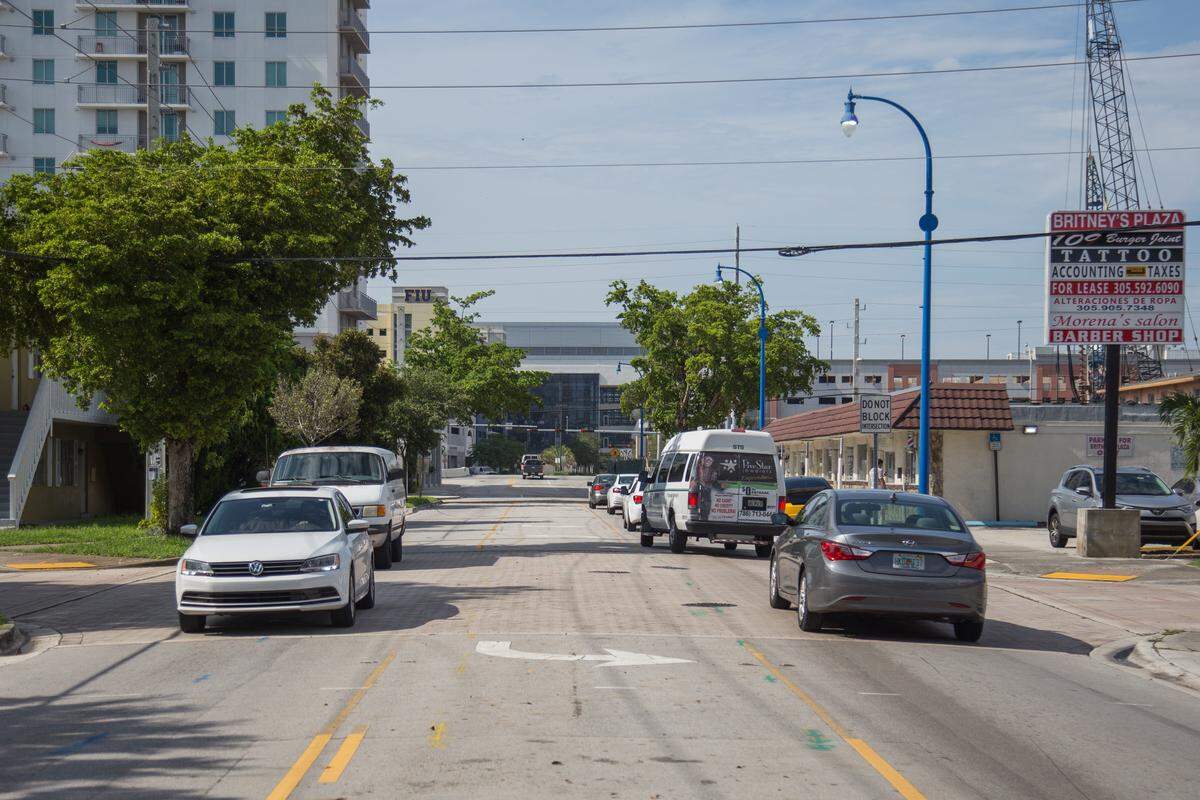
Overcoming the pedestrian barrier posed by Eighth Street traffic — where an FIU student was killed last year when hit by a motorcycle — is the key to the University City idea. FIU, which saw the construction of a residential tower just a short hop across Eighth Street and canal in Sweetwater, would like to see more of the same, as well as new businesses catering to the students.
But until students feel safe getting across Eighth Street, the necessary back-and-forth flow is impossible. “This can be done,” says Maidique. “It just requires some imagination.
“Stanford University [in California] used to be kind of separated from the nearby town, Palo Alto, by a busy highway. They built a tunnel, it made it easier to get across the street, and now Palo Alto and Stanford have exactly the kind of relationship we would like FIU to have with Sweetwater. I’m not saying a tunnel is the answer, exactly, just that some thought has to be put into it.”
The talks about some form of a University City go back to the early 1970s, less than a decade after FIU was founded in a remote, empty quarter of what was then western Dade County. Thomas Breslin, who in 42 years at FIU has been everything from an associate professor to a trustee, was in on some of the earliest discussions.
“Sweetwater actually offered us a chunk of the city, roughly from Fourth to Eighth Streets between 107th and 109th Avenues,” he said. “They said, take it, develop it. They thought we could put in some student housing and shops and things. But I recommended against it. We didn’t have any money for development, and there were people living there — poor people in trailers, mostly.
“Moving them out was a bad idea from a social-justice perspective, and a terrible idea from a public relations standpoint. And where would we have put them?”
The idea, in different shapes, continued to come up from time to time. But Breslin and other FIU administrators had other, more private, reservations.
“To me, Sweetwater was a really shaky governmental partner,” says Breslin. “How do you do some major project like this in concert with a city government that’s historically, and perennially, been poorly led?”
Sweetwater has been a peculiar little place literally since it was founded in 1939 by Russian circus midgets whose vehicle broke down there. In the 1980s, the city sent illegal weapons confiscated by its police to the Nicaraguan contras, a U.S.-backed guerrilla group battling the country’s Marxist government.
One cop fired by Sweetwater turned into a serial killer shortly afterward, murdering nine people before he was arrested and, eventually, executed. (He confessed to killing the six male victims but not the three females, gallantly insisting he would never hurt a woman.) Other policemen looted their own evidence room of cash, drugs, liquor and bicycles.

Sweetwater mayors and city councilmen got arrested with disconcerting frequency. As recently as 2016, the financial legacy of corruption and just-plain-dumb overspending (Sweetwater’s accounts were in such a hopeless mess that it had to borrow three bookkeepers from the city of Miami to find out how much money it had — or didn’t have) had turned the city into a fiscal basket case. It staved off bankruptcy only by cutting off payments to city pension funds, defaulting on a $2 million bank loan, and finally asking city employees to postpone their next two paychecks.
“We’ve had our share of issues, OK, more than our share,” says Lopez equably. “That’s under control, I think. For now.” Since Lopez’s election in 2015, the rate of arrest of Sweetwater officials has dropped precipitously and the city has a cash reserve of $3 million.
Even with a more reliable government in place, though, some FIU officials are dubious that the right conditions exist to create a Cambridge or a Berkeley out on the edge of the Everglades.
“You have to distinguish between a suburban public university with a lot of local students, and a place like Cambridge, where private universities are taking in students from afar for a life-changing experience,” argues Breslin. “For a student at Harvard, it’s a time to be on your own. That’s very different from driving back and forth from your home, or, more likely, your parents’ home.”
A good many FIU students agree with him. “I think of FIU as its own little city,” says Joi Wanza, a 24-year-old senior majoring in biology, who commutes to school from her family’s home in Miami Gardens. “I take my classes here, I eat lunch here, and then I go home. ... I just don’t leave campus. And before I started school here, I’d never been to Sweetwater.”
Nick Bamonte, a 22-year-old psychology major who lives Coral Gables, knew even less of Sweetwater. “To be honest, until you just said that, I didn’t even know the area around here was called Sweetwater,” he told a reporter visiting campus last week. “You know, it’s not Cambridge. There’s nothing unique about it. It’s just sort of part of Miami, it seems to me.”
The bottom line, said 24-year-old psychology major Katherine Mehic, is that “FIU is a commuter school. People don’t come here because they want to live in Sweetwater. What you’ve got around here, mostly, are just neighborhoods. It might be different if it was like Wynwood, where there are things to do.”
Yet Maidique thinks that FIU — which has more students than Harvard and Stanford combined — could turn Sweetwater into a college town even if most of them reject the idea. “There are more than 30,000 students on that campus,” he said. “Even if a lot of them live with their parents, the sheer bulk of the numbers ought to be enough.”
And Lopez agrees with him. Cross-checking census lists with FIU records, he believes that about 5,000 students and faculty members live in Sweetwater. “That’s 25 percent of the city’s population,” he says. “That’s a huge start.”
This story was originally published October 19, 2018 at 7:58 AM.