Teammate will be retried for UM football star Bryan Pata’s murder. Here’s when
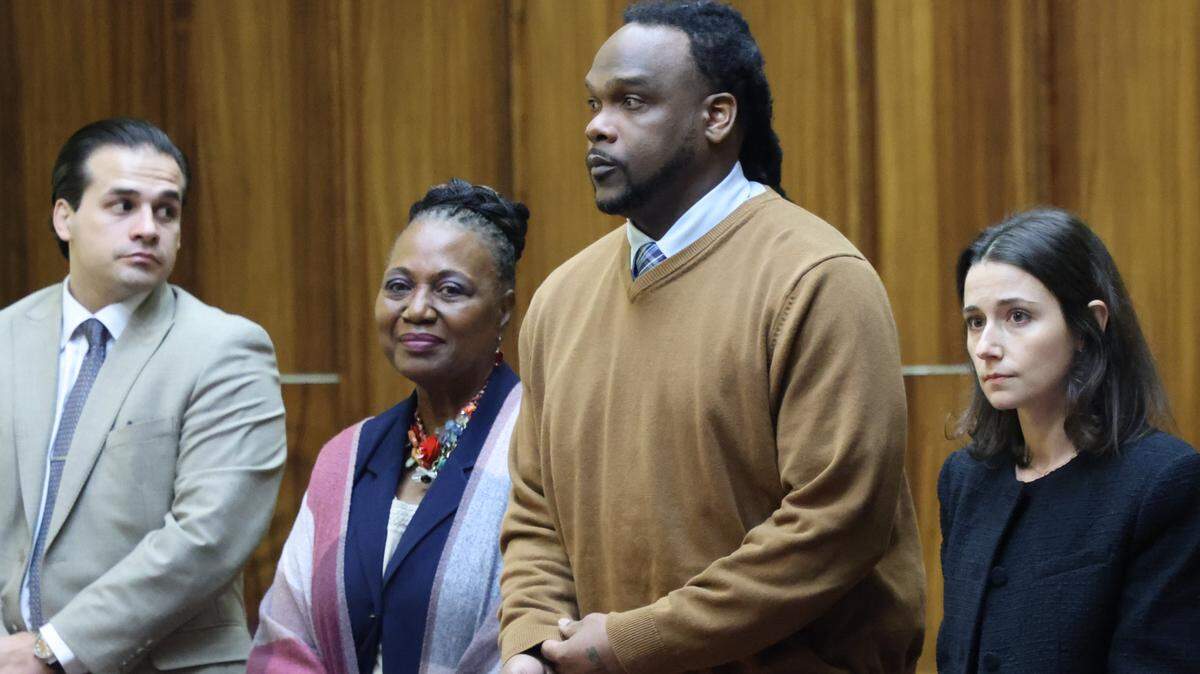
Two days after the Bryan Pata murder case ended in a mistrial, prosecutors said they plan on retrying the teammate accused of gunning down the football star in 2006.
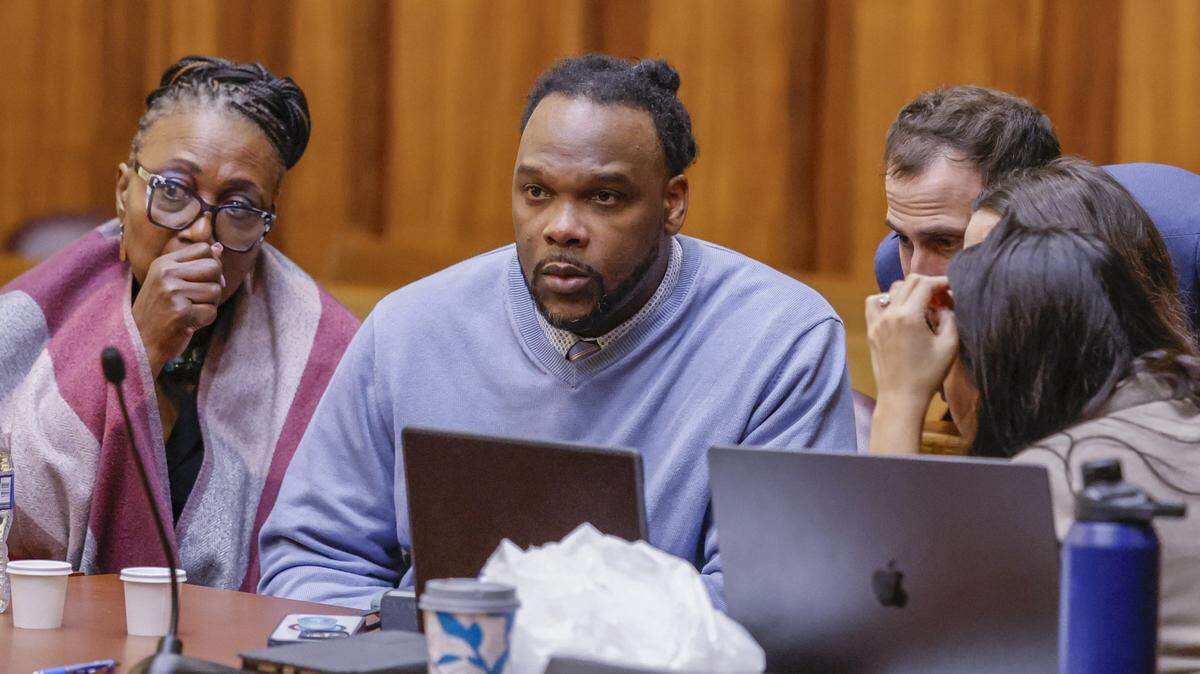
Miami-Dade Circuit Court Judge Cristina Miranda on Wednesday set jury selection for Rashaun Jones’ trial for May 18. The judge declared a mistrial on Monday, after the six-person jury said it was deadlocked.
Miranda said she wanted to set the trial date sooner — despite scheduling conflicts between prosecutors and defense attorneys — because Jones has had to “sit and wait” in jail.
READ MORE: Mistrial in UM football star Bryan Pata’s murder after jury deadlocked
Jurors, who deliberated for six hours, were weighing whether Jones, 40, is guilty of the murder of Pata, his University of Miami teammate. A juror told ESPN that only one member of the jury wanted to convict Jones.
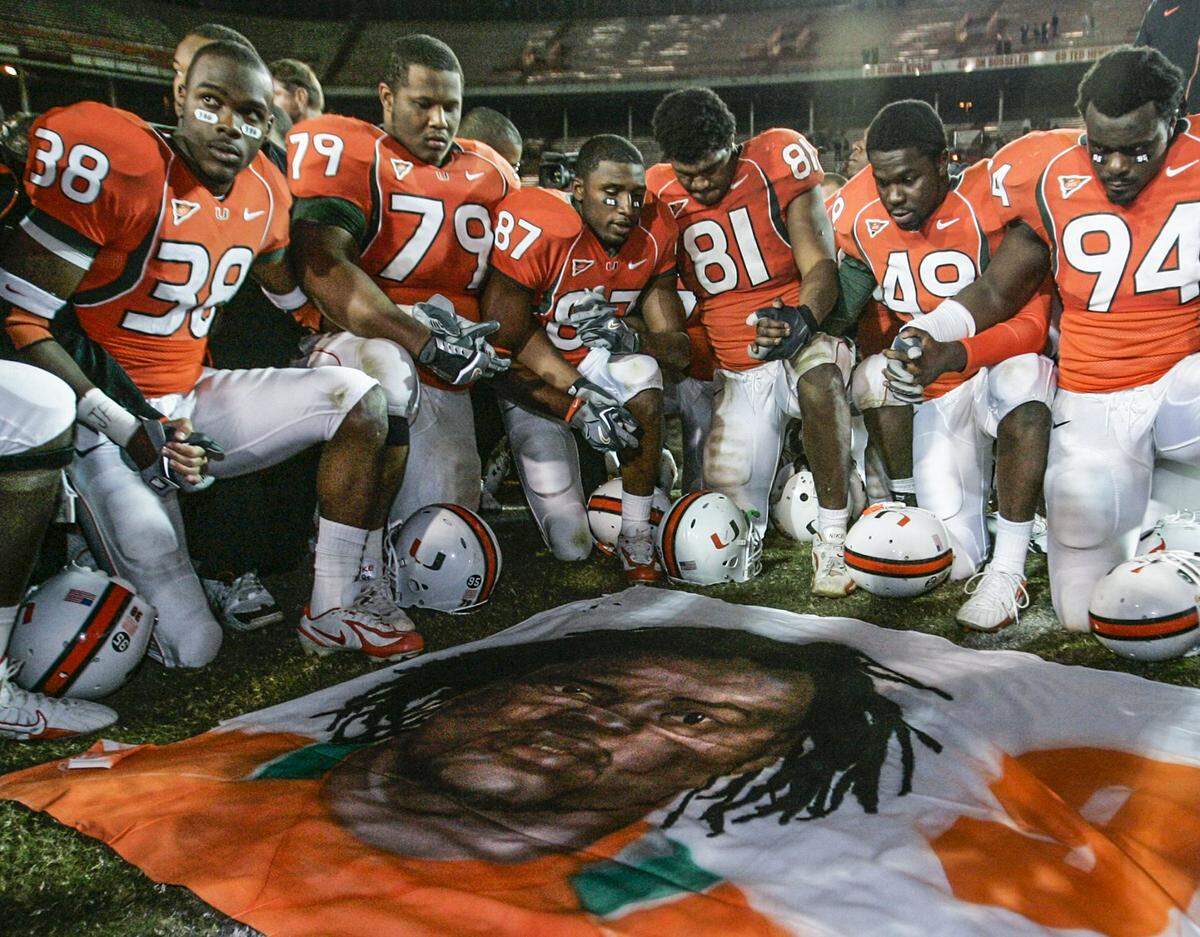
Pata, a 22-year-old Hurricanes star defensive lineman expected to be a top NFL draft pick, was shot and killed on Nov. 7, 2006, outside his home at the Colony Apartments in Kendall. He had just returned from football practice.
PHOTO GALLERY: Family of Bryan Pata tearful after mistrial declared in murder case
Jones was arrested on a second-degree murder charge in 2021, 15 years after Pata’s death.
Jones’ bond reduced
Also on Wednesday, attorney Sara Alvarez, who is representing Jones, argued that his $850,000 bond be reduced to $50,000 so Jones could be released awaiting his retrial.
“$50,000 on a homicide is … unheard of,” Miranda said.
The judge, however, reduced Jones’ bond to $500,000.
Jones has been behind bars since his arrest in 2021. Second-degree murder is usually a non-bondable offense, but a judge granted him a bond after a 2022 hearing.
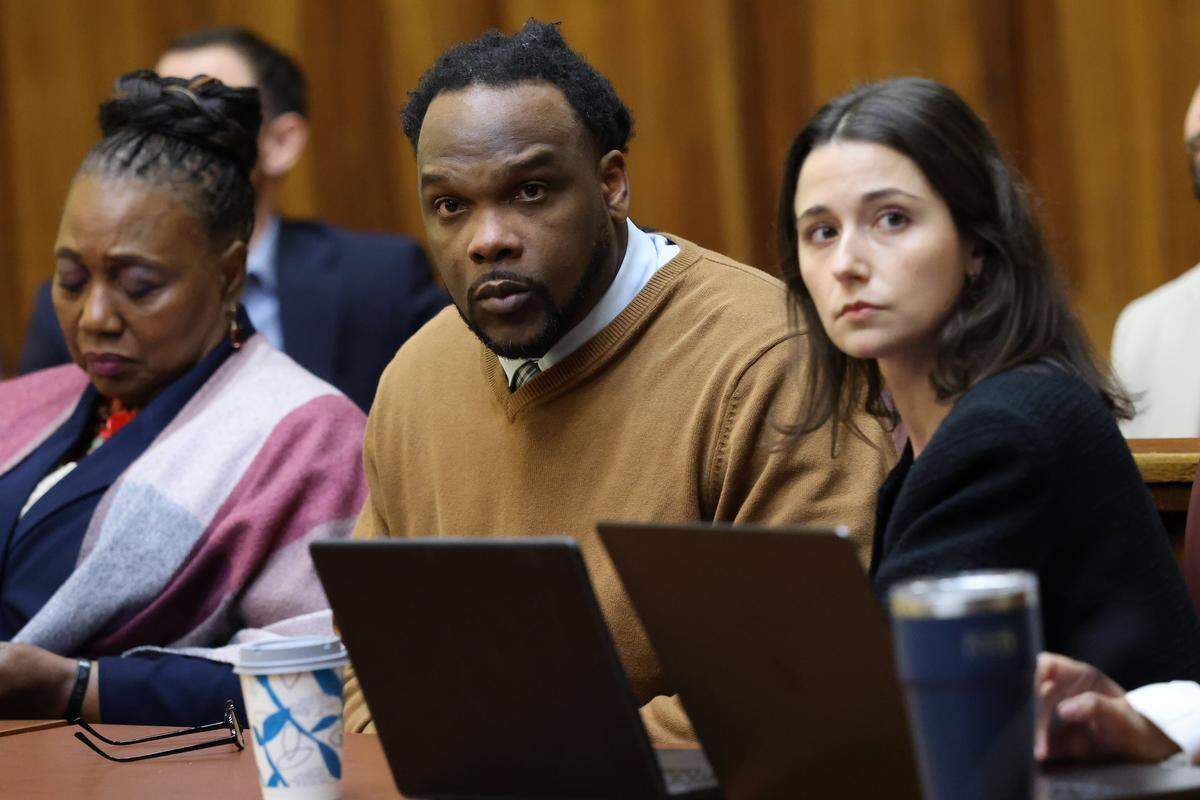
In a so-called Arthur hearing, the state has to establish that “proof is evident and the presumption great” that the accused person is guilty. This is a high burden — often considered even greater than proof beyond a reasonable doubt.
Jones testified during Wednesday’s hearing that he doesn’t have any savings or assets to pay the money necessary for him to bond out. He said his loved ones have tried to help but couldn’t obtain the funds.
In Florida, a defendant usually pays 10% of the total bond amount to a bondsman to bail out of jail. Under the new bond, he’d have to post $50,000.
“He functionally has no bond,” Alvarez said. “He hasn’t been able to afford that and will never be able to afford that.”
Alvarez also argued Jones is not a flight risk because, up to his arrest, he was living near his hometown of Lake City, Florida. He also has “every incentive to come back to court” because “he wants to exercise his right to trial by jury.”
She also cited the hung jury, although prosecutor Cristina Diamond said that was not a “change in circumstances.”
What evidence was presented at trial?
During closing arguments last week, prosecutors acknowledged the evidence presented in the case was circumstantial.
Prosecutor Cristina Diamond pointed to a series of fights and arguments between Pata and Jones while they were both Hurricanes. Jones’ jealousy, she said, was compounded as his football dreams dwindled: Jones was suspended from playing after testing positive for marijuana.
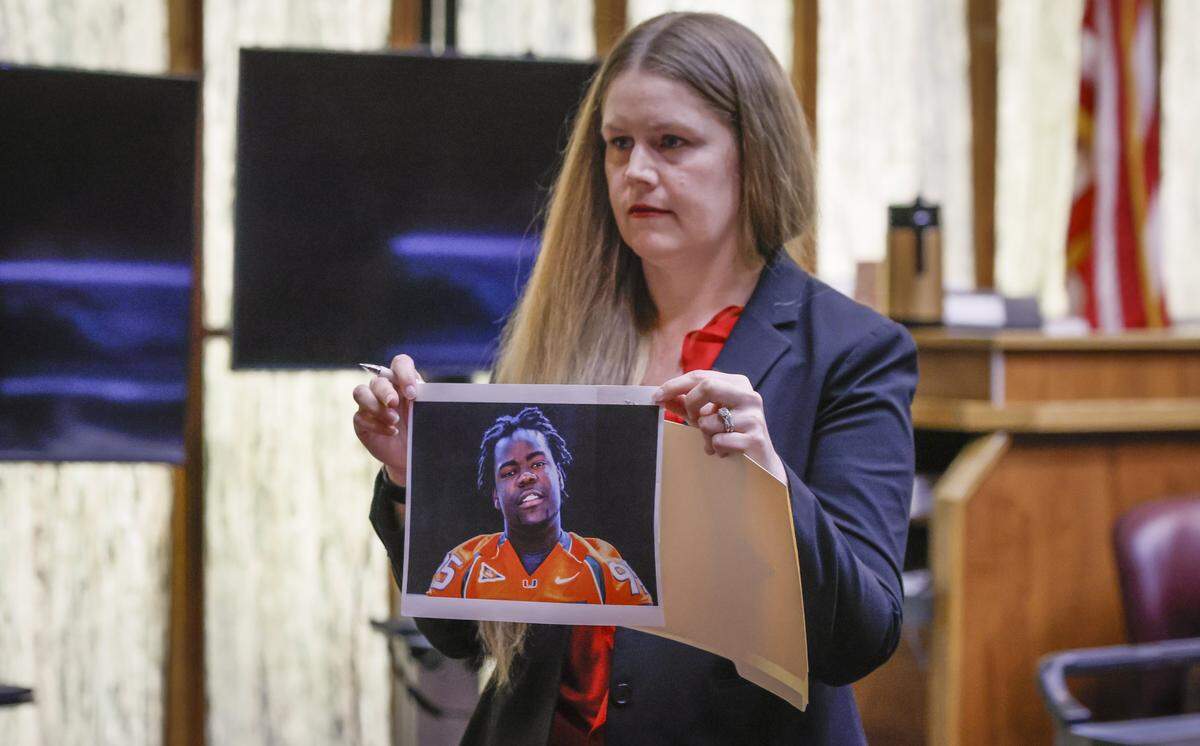
As the investigation continued, the coincidences started to build up, Diamond said: The history of bad blood between Jones and Pata. Jones’ absence from the mandatory team meeting after Pata’s murder. Jones’ locker room references to having “a 38 on me,” which prosecutors said was linked to a .38 caliber revolver and not his jersey number.
A UM professor, who lived in the Colony Apartments, also identified Jones out of police photo lineups on two occasions.
“Everything adds up to one individual, and that is the defendant,” Diamond said. “There is only one verdict that makes sense, and that is that the defendant is guilty of the homicide of Bryan Pata.”
Turning to jurors during closing arguments, defense attorney Christian Maroni proclaimed Jones’ innocence.
Maroni, too, focused on how the case was circumstantial, saying there was no “direct, credible evidence” tying Jones to Pata’s murder. Instead, prosecutors made “several leaps” to try to link the fatal bullet to Jones, Maroni said.
Maroni also highlighted how possible suspects were quickly ruled out, including a man whose fingerprints were found on the hood of Pata’s car.
“Rashaun Jones is not responsible,” the attorney said. “Rashaun Jones had nothing to do with [Pata’s] death.”
This story was originally published March 4, 2026 at 11:42 AM.