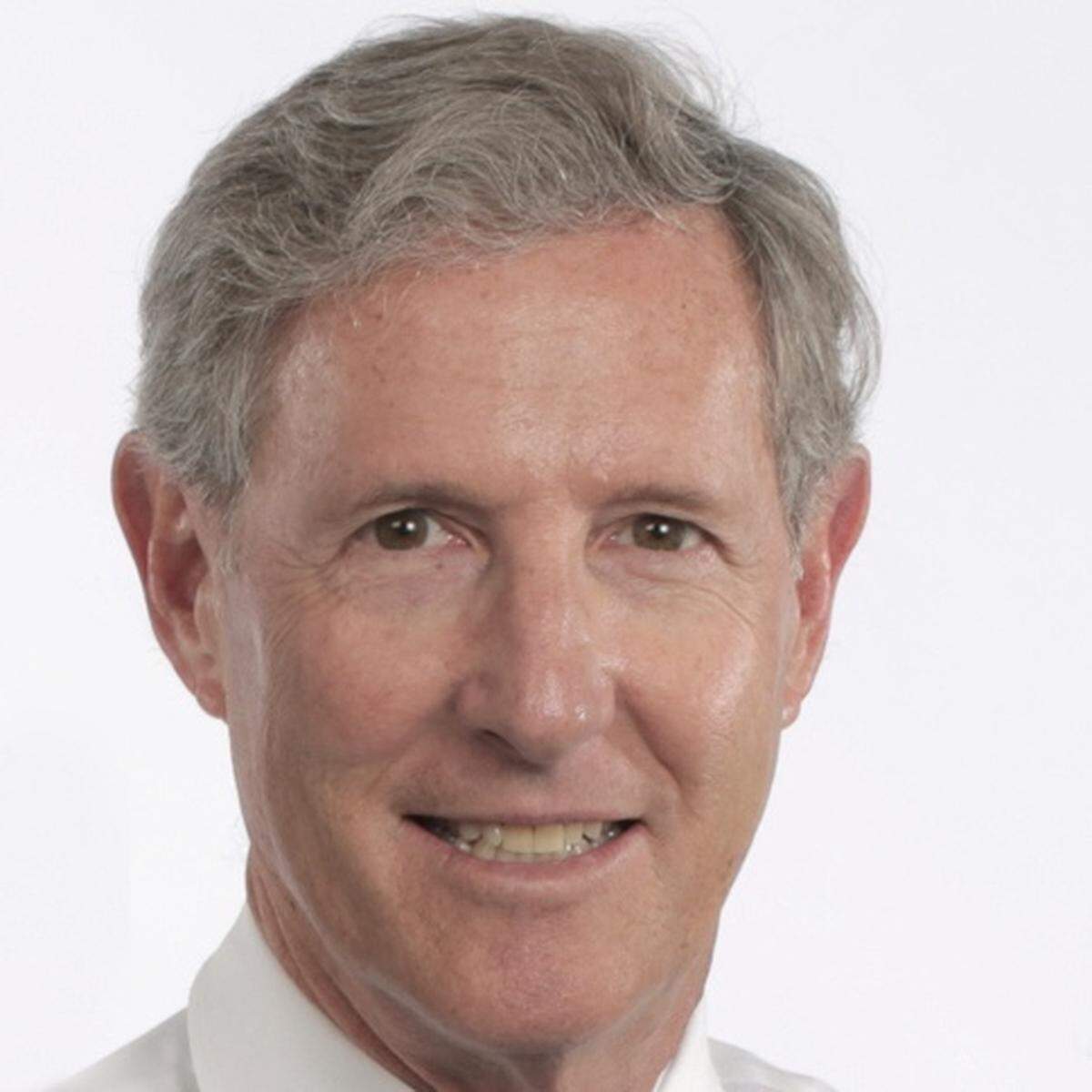
Miami investment advisor sent to prison after stealing $94M from Venezuelans

They had been waiting years for this moment of justice: As he sat in a chair in a Miami federal courtroom on Monday, Andrew Jacobus extended his arms as a deputy U.S. marshal slapped handcuffs around his wrists and escorted him to prison.
About 25 Venezuelans stood up and broke into applause, finally relieved that their former investment advisor who pleaded guilty to stealing $94 million from them and dozens of others would be locked up for a long time.
“He was a monster,” one of Jacobus’ victims said under his breath.
U.S. District Judge Jacqueline Becerra gave Jacobus, who once lived in a luxury high-rise condo in Coconut Grove, a maximum 20-year sentence for his wire-fraud conviction, chastising him for preying on vulnerable Venezuelan investors who turned to him to safeguard their nest eggs while their country collapsed under two socialist presidents.
“You caused an enormous amount of pain,” Becerra told Jacobus, 64. “You caused an enormous amount of loss.”
In November, Jacobus admitted that he directed a Ponzi scheme that swindled tens of millions of dollars from Venezuelan investors and Catholic dioceses in the South American country over the past two decades. Jacobus pleaded guilty to two counts of wire fraud and money laundering. Becerra also gave Jacobus a 15-year sentence for the latter conviction, but it will run concurrently with his 20-year prison term.
The unanswered question is whether Jacobus will be able to pay back any of his investment victims. The judge set a restitution hearing for May 26.
“We believe there’s still money” out there, “and we will continue to look for this money,” prosecutor Robert Moore told the judge, noting that 83 of Jacobus’ victims tuned into his sentencing hearing via Zoom in addition to about 25 in the courtroom.
At Monday’s hearing, Jacobus offered no answers, claiming as he apologized to his victims that he didn’t use their money for his multimillion-dollar Coconut Grove condo or for a $500,000 down payment toward his son’s home. He suggested at one point that a chunk of the investors’ money was lost in a land deal in Chile. He even said some of their money was used to care for his ailing girlfriend.
“They trusted me with their money, and I betrayed them,” said Jacobus, standing next to his defense attorney, Bruce Lehr. “My arrogance, my greed led me down a path I didn’t know how to turn around. I know I deceived my friends. I know I deceived the clergy. ... I am truly and deeply ashamed.”
None of the victims in the courtroom believed him.
A half-dozen investors spoke about how they trusted Jacobus with their retirement, college funds and other savings after he had befriended them and touted safe investments. But when they asked him to return some of their money, he stopped answering their phone calls or responding to their emails.
“When I realized this was fraud, my life completely changed,” said Fermin Suarez, a Venezuelan mechanical engineer and crane business owner. “I lost everything — my whole life’s work.”
Manuel Egea, a plastic surgeon, compared Jacobus to the magician David Copperfield, saying he “created acts of illusion.”
“We all trusted him,” said Egea, who was joined by his wife, Arianna. “He made us believe that he knew how to manage our money.”
Horacio Rodriguez called his experience with Jacobus a “long nightmare” that haunted him as two of his children were heading to college.
“The amount of lies and stories ... were unspeakable,” he said.
Jacobus induced the Venezuelans — including a nonprofit group that supports the retirement and healthcare of Catholic priests — to invest with him by promising high-yield returns on fixed-income funds under his companies’ control, says a factual statement filed with his plea agreement. Jacobus admitted that between 2004 and 2024, he used new investors’ funds to pay off old investors while stealing from them to enrich himself, the definition of a Ponzi scheme.
Jacobus, who operated two Coral Gables-based businesses, Finser International Corp. and Kronus Financial Corp., promised yearly investment returns of 12% to 15% on certificates of deposit and other fixed-income securities as he secretly bilked investors until some learned of his theft in 2022 and complained to federal authorities, leading to an Internal Revenue Service criminal investigation and grand jury indictment filed in Miami last year.
Fictitious account statements
The factual statement, underscoring Jacobus’ guilty pleas to two counts in the indictment, noted that one Venezuelan investor transferred $1 million to a Kronus bank account in July 2020 “based on the defendant’s false representations that the money would be used for investment purposes.” Instead, Jacobus moved $120,000 from that account to another so that he could pay other investors to perpetuate his international Ponzi scheme.
“To conceal his fraud, Jacobus would create and provide to the victims fictitious account statements or balances purporting to show the investment portfolio and related balances, when in fact the victims’ accounts had significantly smaller balances,” Jacobus admitted in the factual statement signed by him, his lawyer and the prosecutor.
In addition to the indictment, the Securities and Exchange Commission also sued Jacobus and his companies, alleging in a civil lawsuit he committed the same fraud scheme.
In recent years, several investors sued Jacobus and his firm, accusing them of fraud and civil theft involving tens of millions of dollars, according to civil court filings. They also notified the SEC, which had sanctioned Jacobus over pocketing exorbitant fees in a cease-and-desist order in 2020 when he and his firm, Finser International Corp., managed about $79 million in investment funds.
Miami attorney Michael Padula, who filed three suits against the former investment advisor, said Jacobus “is finally being held accountable and is paying the price for his financial crimes against people who did nothing more than trust him.”
Padula’s clients, Suarez, the crane business owner, and Tubalcain Morales, who lives in Venezuela and Spain, reached respective settlements with Jacobus totaling about $18.5 million and $650,000, according to court records. Jacobus made a few payments to both men, then defaulted, Padula said.
His third client, Egea, the plastic surgeon residing in Venezuela, also filed suit in Miami, claiming he invested his “life savings” of about $9.5 million with Jacobus. Egea received a final judgment for his loss against Jacobus’ entities for $30 million, Padula said. But recovering funds from Jacobus or his companies has proven difficult, he said.
He praised judge’s sentencing on Monday, saying it’s a measure of solace for Jacobus’ victims.
“The court rightfully showed zero leniency — imposing the maximum sentence requested by the government,” Padula said. “While today’s sentencing cannot rectify the irreparable harm he caused to retirees, business owners, and even clergy, we are grateful that Mr. Jacobus will no longer be able to fleece the public.”
This story was originally published February 2, 2026 at 5:19 PM.