U.S. supplier of police uniforms convicted in Miami of bribing Hondurans for $10M contract
A Georgia supplier of law enforcement uniforms was found guilty Monday in Miami federal court of conspiring with a former South Florida banker in paying hundreds of thousands of dollars in bribes to the ex-head of a Honduran government agency to secure a $10 million contract.
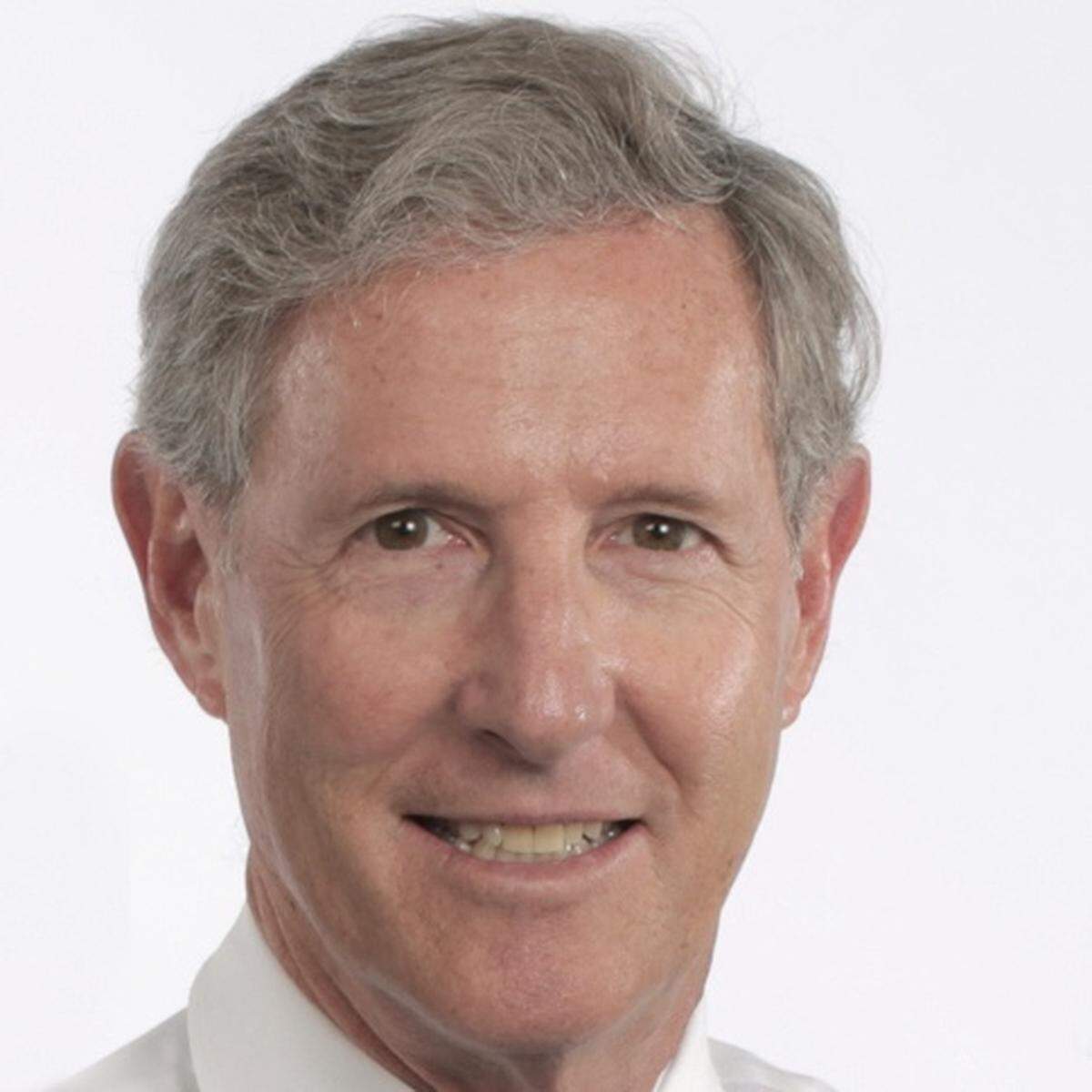
Carl Alan Zaglin, 70, the owner and CEO of Atlanco LLC in the Atlanta area, was convicted of conspiracy, foreign corruption and money laundering charges after a two-week jury trial and faces up to 20 years in prison at his sentencing in December before U.S. District Judge Jacqueline Becerra. Zaglin’s case highlighted the sometimes tainted nexus between U.S. businesses, the South Florida banking system and Latin American countries.
“Instead of playing by the rules, Carl Zaglin unfairly sought to get ahead and enrich himself by paying bribes to Honduran officials,” Acting Assistant Attorney General Matthew Galeotti said in a statement. “Bribing government officials to win business undermines the rule of law and distorts competitive markets.”
Before trial, co-conspirator Aldo Nestor Marchena, a former asset manager with Wells Fargo Bank in Boca Raton, pleaded guilty in June to a conspiracy to commit money laundering and awaits sentencing. Marchena, 52, also has a prior fraud conviction stemming from his work as a banker.
Zaglin and Marchena were accused of conspiring to bribe Honduran government officials, including Francisco Roberto Cosenza Centeno, the former executive director of the Honduran government entity known as TASA. Cosenza, 67, the third defendant in the foreign corruption indictment, pleaded guilty in August to a money-laundering charge.
The trial evidence showed that between March 2015 and November 2019, Zaglin orchestrated payments of hundreds of thousands of dollars in bribes to Honduran officials — including TASA’s Cosenza and former TASA titular director Juan Ramon Molina — to secure uniform contracts worth more than $10 million. The bribes were paid through Marchena, the banker, who in turn received $2.5 million in payments from “sham invoices” authorized by Zaglin.
The conspirators laundered the bribes by moving funds from Atlanco to Marchena’s front company in the United States to accounts held for the benefit of Honduran officials in the United States, Belize and elsewhere, according to the Justice Department.
Molina, 60, pleaded guilty to a conspiracy to commit money laundering last December, as the Homeland Security Investigations probe focused on the other defendants, Zaglin, Marchena and Cosenza.
To conceal the scheme, Zaglin, Marchena, Cosenza and their co-conspirators used coded and oblique language, such as “commissions” and “fees” to refer to bribes and “Miami” to refer to Marchena. They also used “the guys” and “the others” to refer to foreign officials, and sham “Brokerage Agreements” falsely detailing legitimate services, according to the Justice Department.
They communicated using personal email accounts and encrypted messaging applications, according to federal prosecutors Peter Cooch, Clayton Solomon and Eli Rubin.
Connections with Bolivian case
The Honduran corruption scheme was uncovered after Rubin, with the U.S. Attorney’s Office in Miami, had brought previous charges against a South Florida businessman, his father and others who paid bribes to government officials in Bolivia to obtain a tear-gas contract.
Bryan Berkman, former CEO of Bravo Tactical Solutions in Tamarac, his father, Luis Berkman, and another businessman were convicted of paying more than $1 million in kickbacks to high-ranking Bolivian officials to obtain a $5.6 million tear-gas defense contract with the conservative government of former interim Bolivian President Jeanine Áñez, who succeeded socialist leader Evo Morales in 2019.
As part of their plea deals, the Berkmans not only helped make the Bolivian tear-case case, but they later provided additional evidence in the Honduran police-uniform investigation, including trial testimony.
The Berkmans were insiders because they worked for Zaglin’s Atlanta-area law enforcement supply company and were involved in the alleged Honduran bribery scheme, according to the indictment.
The father and son are also related to Marchena. But because of their cooperation with the U.S. Attorney’s Office and Homeland Security Investigations, the father and son were not charged in the second case — though they were named as “co-conspirators,” said Luis Berkman’s defense attorney, Joseph DeMaria, a former federal prosecutor.
In June 2022, Luis Berkman was sentenced to 38 months in the Bolivian tear-gas case, but it was later reduced to 32 months for his cooperation.
Bryan Berkman, represented by Miami attorney Michael Nadler, was initially sentenced to 28 months in the Bolivian case, which was reduced to 21 months for his cooperation.
This story was originally published September 16, 2025 at 1:51 PM.