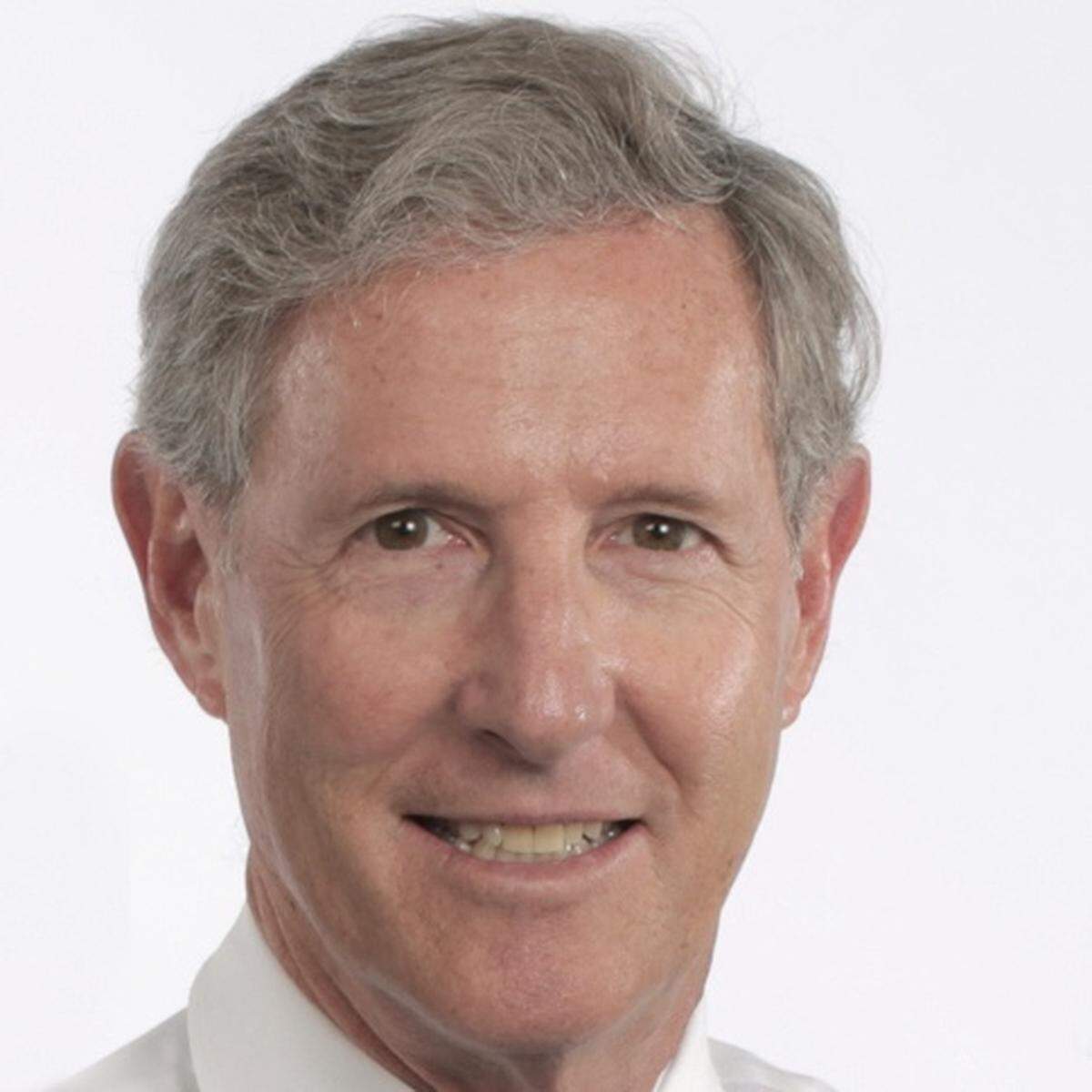
Miami doctor found guilty of prescribing millions of Oxycodone pills sold on streets
Prosecutors accused Dr. Daniel Alberto Carpman of “masquerading in a lab coat as a drug dealer” who made millions off prescribing mind-boggling numbers of Oxycodone pills to patients who sold the painkillers to a ring of hustlers that cashed in on street sales.
The Miami doctor’s defense lawyers countered that he ran a legitimate pain-management clinic but “got played” as an “easy mark” by the ring leaders of the black-market Oxy trade in Hialeah.
After a two-week trial that ended with closing arguments on Tuesday afternoon, it took only four hours during the evening for the 12-member Miami federal jury to conclude that Carpman was guilty of conspiring with the street dealers to distribute more than 2 million Oxycodone pills to thousands of patients who were in on the pill-mill scheme that lasted from 2018 to 2023.
Carpman, 72, was also convicted of four other charges of unlawfully dispensing up to 120 tablets of Oxycodone in maximum dosages of 30 milligrams on a monthly basis to patients.
Carpman, who had been free on bond before trial, was ordered by U.S. District Judge Melissa Damian to be sent to the Federal Detention Center at the request of prosecutors who argued he was a risk of flight because of family ties in Argentina. He faces up to 20 years in prison at his sentencing on June 22.
When Carpman was arrested two years ago, federal authorities accused him of writing thousands of the same Oxycodone prescriptions for elderly patients over and over, even though they didn’t need them to treat their pain. Instead, the patients filled the prescriptions at local pharmacies and sold the powerful painkillers to the Hialeah-based distribution ring protected by a corrupt federal agent — one who happened to practice the Cuban religion of Santeria with the lead Oxycodone dealer.
For his valuable signature, Carpman made $5 million in consulting and other fees by seeing patients recruited by the street dealers over five years, prosecutors said Tuesday during closing arguments.
Partied with dealers: Prosecutors
Prosecutors Christopher Clark and Alexander Pogozelski said Carpman prescribed up to 120 30 mg Oxycodone pills a month for each patient, with a street value of $3,600. More than 2 million of the dangerous pills ended up on Miami-Dade’s streets.
Pogozelski said the doctor “struck a corrupt bargain” with the Hialeah dealers and “sold out his medical license to make $5 million” while “masquerading in a lab coat as a drug dealer” himself.
Clark showed the jurors photos of the doctor posing with two of the Hialeah dealers in his office and also partying with them and some of their recruited patients in a restaurant to dramatize that Carpman knowingly played a central role in the Oxy-distribution scheme.
“It doesn’t take a rocket scientist to see through the whole scheme,” Clark said. “The doctor may have a medical degree, but he’s a criminal.”
Carpman’s defense attorneys told jurors that he did not commit a crime because he was practicing “legitimate medicine,” treating his patients for pain and legally prescribing the pills. They said the prosecutors reverse-engineered the case by starting with the conclusion that Carpman was guilty and then cherry-picking evidence to incriminate him while ignoring proof that would exonerate him.
Lawyer Jude Faccidomo said that the pain-management doctor was duped by “career fraudsters” with government cooperation deals who saw him as an “easy mark.”
“The only way to keep this going was to keep this doctor in the dark,” said Faccidomo, who handled the defense with attorney Mycki Ratzan. “He got played.”
Oxycodone pills at heart of charges
After his arrest in late April 2023, Carpman pleaded not guilty to a conspiracy to distribute and dispense Oxycodone pills to patients along with four related charges.
He was granted a $250,000 bond with strict conditions, including giving up his state license to practice medicine, paying a $37,500 nonrefundable deposit, confinement to his Brickell Avenue high-rise condo, GPS electronic monitoring and turning over his U.S. and Argentine passports.
The previous year, the Miami doctor got off lightly when he reached a settlement agreement with the Florida Board of Medicine for prescribing large doses of Oxycodone to a patient. Carpman paid a fine of $7,500 and administrative costs of about $10,000. A “letter of concern” was also placed in his file at the state Department of Health, but he was still allowed to practice medicine.
Although Carpman was charged alone, his case was linked to a network of about 10 people implicated in a massive painkiller pill-mill racket that unlawfully sold millions of dollars’ worth of Oxycodone, the generic name for the highly addictive opioid, according to court records and prosecutors.
Almost all of those defendants — including a Hialeah doctor who was the ring’s alleged go-to physician before Carpman — already pleaded guilty and were sentenced to various prison terms.
Federal agent convicted
A U.S. Health and Human Services agent faced trial in 2023 on charges of conspiring to distribute Oxycodone, witness tampering and obstruction of justice, while protecting members of the pill-mill racket with tips on enforcement actions. A few cooperating members of that ring testified against the agent, Alberico Ahias Crespo, who was acquitted by a federal jury of the distribution-conspiracy charge but convicted of the corruption charges. Crespo was sentenced to eight years in prison in early 2024.
Crespo was sentenced to more prison time than the distribution ring’s leader, Jorge Diaz Gutierrez, who was like a father figure to Crespo. Diaz received just over six years in prison after pleading guilty to distributing painkillers and obstructing justice in a cooperation deal that also required his testimony at Carpman’s trial.
Crespo and Diaz were so tight that Diaz rented an efficiency apartment behind the agent’s Hialeah home and became his “babalawo,” or high priest, during Santeria religious rituals. But at trial, Diaz incriminated Crespo while testifying about numerous court-approved wiretap recordings of their cellphone conversations in the FBI-led investigation.
Operated Coral Way clinic
The Carpman indictment accused the doctor of operating a pain management clinic, Donate Medical Center, on Coral Way in Miami and illegally distributing and dispensing Oxycodone between September 2018 and March 2023. The indictment accused Carpman of distributing and dispensing “a controlled substance [Oxycodone] through prescriptions that were issued without a legitimate medical purpose by a practitioner acting outside the usual course of professional practice.”
The indictment was built upon a related Oxycodone conspiracy case, which resulted in the conviction of Diaz as well as his partners, Yandre Trujillo Hernandez and Juliedys Mirabal Gutierrez, who regularly interacted with Carpman. Another member of the ring was Diaz’s girlfriend, Anais Lorenzo.
Court records show that Diaz, Trujillo and Lorenzo distributed Oxycodone prescribed by a doctor who ran two pain management clinics, including East and West Medical Office in Hialeah. They collaborated with Dr. Rudolph Gonzalez-Garcia and then when he got in trouble, they joined forces with Mirabal in their drug dealings with Carpman.
Gonzalez-Garcia, who was charged in a separate healthcare fraud conspiracy case, pleaded guilty and was sentenced to eight years in prison. Four other defendants were also charged in his case, including three who pleaded guilty and served short prison terms.
At the same time, another Miami pain clinic, General Care Center, was targeted by the FBI and Health and Human Services. Eventually, about 10 defendants, including doctors, were convicted in that scheme, which involved Trujillo and Mirabal. Mirabal ended up receiving immunity from prosecutors because he agreed to cooperate early on in the investigation.
This story was originally published April 16, 2025 at 10:01 AM.