Political titan Katherine Fernandez Rundle under fire: Wayward prosecutor, botched cases, a fed-up judge
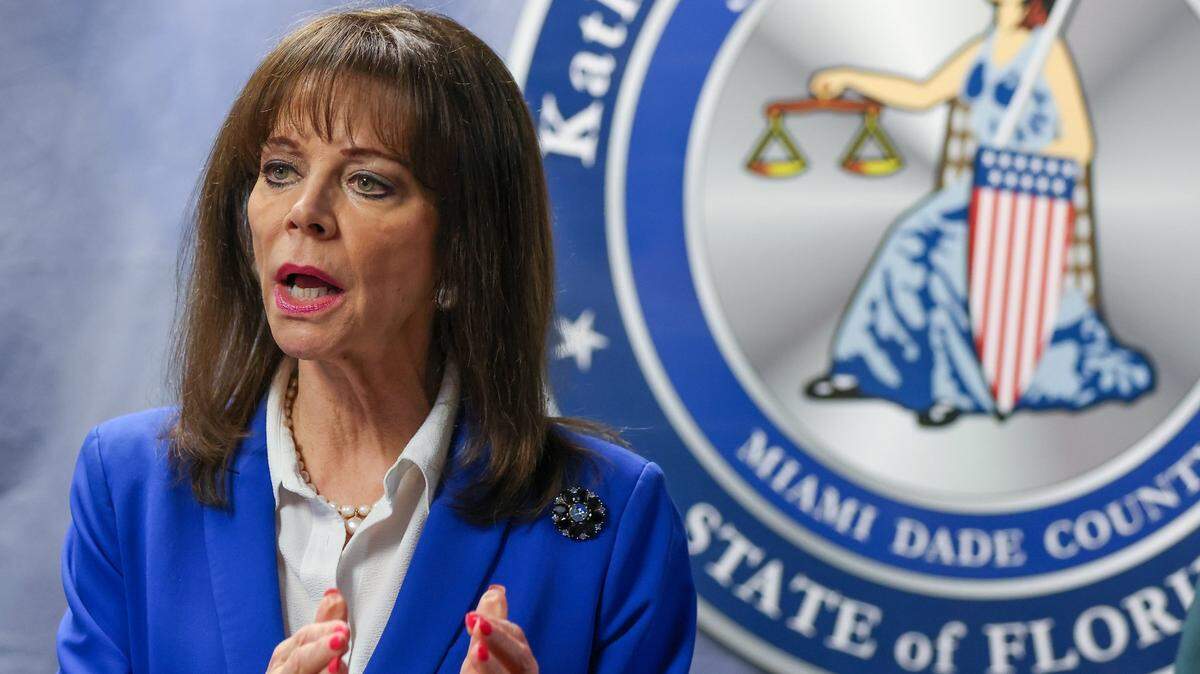
State Attorney Katherine Fernandez Rundle, long a fixture of popularity and political triumph in Miami-Dade County, is ending the year on unfamiliar ground.
For much of 2024, she fielded allegations that her office has strayed from its duty and metes out lopsided justice. A judge blasted her prosecutors for recklessness and potential misconduct. The Florida Bar opened investigations into four of her attorneys. Online and in person, courthouse insiders ridiculed her office.
Following tips from crime victims, their families and sources in the legal community, Miami Herald reporters exposed deception, misconduct and deficient policing in a selection of controversial cases. When these cases landed at the State Attorney’s Office, Herald reporters found that victims were failed.
A sex trafficking victim’s case was dropped when she turned up dead in a canal. A wealthy boater escaped serious consequence for two years in the death of a teenage girl. Complaints about a gymnastics coach’s inappropriate conduct with young girls were initially dismissed without investigation. A grieving mother whose mentally ill son was shot and killed by a police officer was sentenced to a year in jail for violating a restraining order filed by the officer. A murderer confessed and was given immunity from prosecution — but no one told the victims’ parents.
Reporters spent the year fighting for public records, interviewing frustrated families and conducting scores of interviews to tell these stories.
This embarrassing chapter for the Miami-Dade State Attorney’s Office opened with one judge’s attention-grabbing order in March. Circuit Judge Andrea Ricker Wolfson threw two state prosecutors off a death penalty resentencing case for misconduct.
“It was the kind of order that gets everyone’s attention in the criminal justice system,” one of Fernandez Rundle’s top chiefs, Jose Arrojo, told the Herald.
The order was followed by unceasing criticism. Defense attorneys were emboldened.
“Now is the time for the state attorney to acknowledge her office’s failures,” the Miami chapter of the Florida Association of Criminal Defense Lawyers declared in March.
The following month, the statewide organization issued its own statement, declaring that “the Miami-Dade State Attorney’s Office has lost sight of its ethical obligations to the citizens of Miami-Dade County and its duty to the rule of law.”
On a Miami-Dade judicial blog frequented by defense attorneys, judges and prosecutors, hundreds of criticisms were lobbed, mostly anonymously.
“The [State Attorney’s Office] is a joke and their discovery practices are criminal,” one commenter wrote. Another claimed, “The [State Attorney’s Office] is a disgrace and corrupt.”
In court filings, too, attorneys disparaged her office.
“The Miami-Dade State Attorney’s Office has recently come under scrutiny for its toxic culture and the ethically questionable actions of certain senior prosecutors in discharging their duty to the citizens of Miami-Dade County,” one motion in April read.
Fernandez Rundle declined to sit for an interview with Herald reporters to discuss this year’s highs and lows, dispatching Arrojo instead. He said the criticism has been unfair, and noted that judges disagreed with many of the cases Miami defense attorneys pointed to as improper.
“You take a person or two or three, and a case or two or three, and then paint with a very, very broad brush and say this is evidence of an officewide problem that’s been going on for many years,” he said. “I don’t think that’s an accurate representation.”
Nevertheless, Arrojo, an ethics expert tapped by Fernandez Rundle earlier this year, said the state attorney is taking a “fresh look at how we’ve been doing things.”
The main outcome: Prosecutors will be getting some retraining on how to properly follow the laws. The State Attorney’s Office also has expanded a review into past cases prosecuted by Michael Von Zamft, the senior trial attorney Wolfson threw off the case.
Von Zamft, now retired, declined to comment for this report.
Von Zamft remains under investigation by the Florida Bar, as do his co-prosecutors in the death penalty resentencing, Stephen Mitchell and Joshua Hubner. Hubner has since left the office.
Prosecutor Khalil Quinan also is under investigation by the Bar, a spokeswoman confirmed to the Herald, but she could not provide details. Mitchell, Hubner and Quinan declined comment.
In a 14-page response to questions from the Herald, Fernandez Rundle’s office said it had a series of successes this year, and downplayed the controversies. In a county with 2.6 million people and thousands of arrests each year, her office said it had “secured convictions at trial in approximately ten homicide cases, approximately five sexual battery and assault cases, and many other serious felony cases.” The statement also conceded that due to chronic under-staffing, inexperienced prosecutors are handling major cases and heavy caseloads.
A broader look at the office’s performance shows concerning patterns.
Of 638,872 criminal charges in the past 10 years in Miami-Dade County, the overwhelming majority — 71% — were dropped, abandoned or otherwise not prosecuted, according to Florida Department of Law Enforcement criminal history reports. Statewide, that figure was 39%.
According to the same FDLE data analysis, 40 percent of the charges statewide in that time period led to convictions, including plea deal convictions. In Miami-Dade, convictions were just under 16%.
For cases that went to jury trial, Miami-Dade’s conviction rate consistently falls behind Broward and the rest of the state, data shows. In five out of the last 10 state budget years, Miami-Dade had the worst jury trial conviction rate in the state, according to yearly reports from the Office of State Courts Administrator.
In its written statement to the Herald, the State Attorney’s Office pointed out flaws and errors in the FDLE’s data analysis, which offers the public a dashboard view — though quirky and imperfect — of each county’s performance.
The office pointed to statistics for the 2022-2023 budget year from the Florida Office of the State Courts Administrator that showed Miami-Dade tried more than 221 cases - more than any other jurisdiction in Florida. (Miami Dade is the largest.) Of those, 129 resulted in jury convictions.
In response to a request for the most recent annual report showing case outcomes, the office sent data to the Herald but could not vouch for its accuracy, because it came from the county’s outdated computer system.
The office offered myriad reasons why cases in Miami-Dade result in relatively few convictions, including come-and-go tourists, reluctant or fearful victims, no-show witnesses or police officers, and slow lab or police reports.
Fernandez Rundle’s office also said it can be hard to win when lawyers on the other side are really good.
“While we employ some of the most gifted and competent lawyers to be found anywhere in this country, to their credit, we are also engaged in an adversarial process with a highly sophisticated and competent defense bar. All of these factors influence the prosecution of cases in our jurisdiction.”
Miami Herald reporters investigated some of the year’s most troubling cases, following tips from people alleging miscarriages of justice.
Dr. Jeffrey Kamlet
The State Attorney’s Office dropped charges against a prominent doctor accused of sex trafficking, after the victim turned up dead, floating in a canal.
“A mother’s fear for the well-being of her daughter helped expose the alleged illegal activities of an individual who may have felt that his wealth and prominence gave him license to do anything,” Rundle said in announcing the arrest of Dr. Jeffrey Kamlet on March 10, 2023.
But her office closed the case after the victim died, and Dr. Kamlet was free after serving one day of probation.
George Pino
The State Attorney’s Office conducted an inadequate investigation into a teen girl’s death that involved a wealthy boater, and for two years claimed he could only be charged with a misdemeanor.
Miami-Dade prosecutors, who collaborated with the Florida Fish and Wildlife Conservation Commission, vowed to complete an “independent, thorough investigation” into the crash that killed one teenager and permanently injured another.
But it took two years - and a series of Miami Herald articles chronicling investigative failures - for the State Attorney’s Office to charge Pino with a felony in late October. The Herald found three eye-witnesses who neither the police nor the State Attorney’s Office had followed up with after the crash. After the Herald’s stories, a new witness, a Miami-Dade Fire-Rescue medic, came forward, prompting the filing of a felony vessel homicide charge against Pino.
Oscar Olea
The State Attorney’s Office quickly dismissed allegations a popular gymnastics coach had sexually abused his students — only charging him after the Herald investigated and found more victims.
Allegations of sexual abuse followed Oscar Olea, a Key Biscayne gymnastics coach, for over a decade.
Then last fall, the coach was accused by two mothers of inappropriately touching a 4-year-old girl and a 7-year-old girl. The case landed on a state prosecutor’s desk in January and was closed the same day — despite the fact that he’d been mentioned in prior Key Biscayne police reports.
After the Herald reported that former students alleged he sexually abused them, police investigated and Olea was arrested. He is in jail awaiting trial.
Gamaly Hollis
The State Attorney’s Office sent a grieving mother whose son was shot and killed by police to jail herself.
Miami-Dade Police Officer Jaime Pino shot and killed a young man with mental illness in his apartment. The Miami-Dade State Attorney’s Office cleared the officer of any wrongdoing, and went after the grieving mother.
She had called Pino a murderer and posted pictures of the officer and his family to her 39 Facebook followers.
She was sentenced to 364 days in jail for violating a restraining order, and still faces trial for stalking Officer Pino.
William “Little Bill” Brown
The State Attorney’s Office gave full immunity to a confessed murderer who committed one of Miami’s worst shootings. They didn’t tell the public or the victims’ parents.
When senior prosecutor Michael Von Zamft was accused of misconduct and thrown off a major trial in March, the name William “Little Bill” Brown was aired in court. He was one of three inmates Von Zamft had attempted to gather together in the jailhouse ahead of a trial, to iron out testimony, it was alleged.
The Miami Herald followed a tip and investigated Little Bill’s deal with prosecutors, one that had been improperly kept secret. Once exposed, the State Attorney’s Office dealings with Little Bill contributed to the collapse of three murder cases.
Staff writers Grethel Aguila, Julie K. Brown, Clara-Sophia Daly, David Goodhue, Carol Marbin Miller and Linda Robertson contributed to this report.
This story was originally published December 31, 2024 at 8:18 PM.