His Ecuadorian father convicted of money laundering in Miami. Son pleads guilty to same

Like father, like son.
John Christopher Polit, a former banker, pleaded guilty Tuesday to helping his father, a convicted ex-Ecuadorian official, launder millions of dollars in foreign bribes through the Miami-area’s banking system and real estate market.
The son was charged five months after his father, Ecuador’s ex-comptroller Carlos Ramon Polit, was found guilty of the money-laundering conspiracy in April. Polit, 73, was sentenced in October to 10 years in federal prison.
Polit, 43, admitted in a factual statement with his plea agreement that he washed more than $16 million in bribery payments to his father while he was serving as a senior official in Ecuador. Between 2010 and 2018, the son conspired with the father by making the proceeds of Carlos Polit’s bribery schemes “disappear” through investments in a Coral Gables home, a Miami office building, restaurants, a dry cleaner and other businesses.
The son also created shell companies in Florida to hold these assets and “conceal” them for the benefit of the Polits and their relatives, according to the factual statement.
The son surrendered to federal authorities in September, when he was granted a $14 million personal surety bond secured with his family’s assets. Polit, who also had to make a $100,000 deposit as part of the bond, was released.
He now faces up to 10 years in prison after pleading guilty to conspiring to commit money laundering, but he is expected to receive incarceration in the six-year range at a hearing set for Jan. 30 before U.S. District Judge Kathleen Williams.
That sentencing recommendation was included in a plea agreement signed by him, his defense attorney, Reinaldo Dorta, and federal prosecutors Michael Berger and Jill Simon.
Bookend to father’s case
In many ways, the prosecution of the son has been a bookend to the father’s case. In April, a 12-person Miami federal jury unanimously found the former Ecuadorian official guilty of conspiring to commit money laundering and five related counts, carrying up to 20 years in prison. Polit, who immediately surrendered to prison authorities, was sentenced in October to half that time.
The two-week corruption trial not only showcased Polit, but the giant Brazilian engineering firm Odebrecht, which bribed the former Ecuadorian official over several years to make $100 million in government fines on an Ecuadorian hydroelectric power plant project vanish.
In 2016, Odebrecht admitted to paying about $800 million in bribes to public officials in 12 Latin American countries including Ecuador and agreed to pay $2.6 billion in a record corruption settlement with the Justice Department. Polit’s trial was a spinoff of that high-profile scandal, offering for the first time the prosecution of an Odebrecht-linked defendant on conspiracy and money laundering charges in the United States.
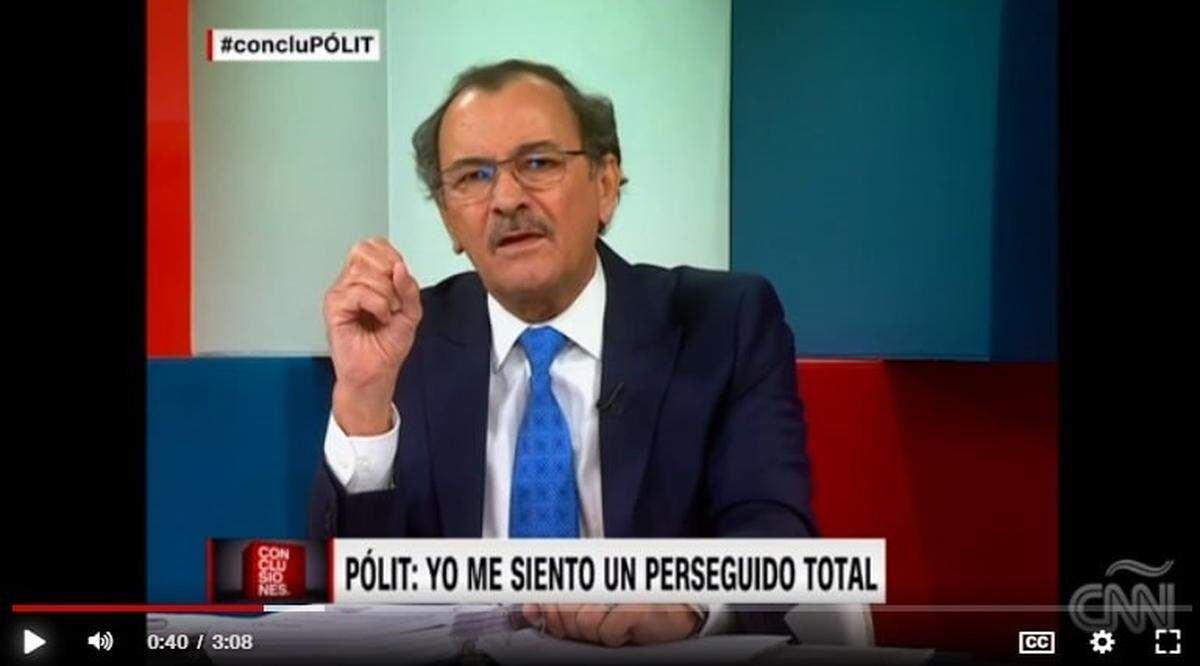
At the father’s trial in Miami, his defense attorneys tried to compartmentalize the roles of the father and son, suggesting that Carlos Polit, who accepted the bribes from the Odebrecht contractors, had nothing do with the corruption proceeds being allegedly laundered by John Polit in Miami. But prosecutors showed through a series of witnesses, wire transfers, bank deposits and investments that their roles were intertwined in a classic conspiracy.
“He used his power to ensure he got his money,” Justice Department prosecutor Alexander Kramer told the jurors in closing arguments, explaining that Carlos Polit didn’t have to launder the money himself to be found guilty: “He was just as responsible as his son. When his son was hiding that money [in Miami] ... that was Carlos Polit breaking the law.”
Bought Cocoplum home
Polit’s son, John, was listed as “co-conspirator 1” in the indictment charging the father. John Polit’s name came up repeatedly in the bribery payment transfers through Panamanian and Miami banking accounts.
The money moved through intermediary companies into nearly a dozen local real estate deals, including the purchase of a Miami office building and a luxury home in exclusive Cocoplum in Coral Gables.
Carlos Polit’s defense attorneys, Howard Srebnick and Jacqueline Perczek, tried to distance their client from the alleged bribery-fueled money laundering scheme, saying the real criminals were the two former Odebrecht executives who cut plea deals in Brazil and non-prosecution agreements with the U.S. government for their testimony against Polit at the Miami trial.
Lived in swanky Miami River condo
Carlos Polit, who after his arrest in March 2022 was released on a $14 million bond and lived in a condo high-rise along the Miami River, wielded tremendous sway over Odebrecht when he became Ecuador’s comptroller in 2010. The Brazilian firm was found to have committed contractual and technical violations on a $320 million power-plant project built near an active volcano in central Ecuador called Minas de San Francisco, according to prosecutors.
Polit’s position, which was created to combat the fraudulent use of government funds, required him to sign off on public budgets that prosecutors say enabled him to demand more than $10 million in bribery payments from Odebrecht. In exchange, prosecutors contend, Polit made the government fines go away and allowed the engineering firm to continue working in Ecuador.
Odebrecht’s off-books accounting
The Miami case, probed by Homeland Security Investigations, was built not only upon an electronic trail of financial records but also Odebrecht witnesses and recordings.
As part of the indictment, prosecutors also accused Carlos Polit of a separate conspiracy involving accepting $510,000 in bribery payments from an insurance executive who lost his Ecuadorian government contracts to a rival businessman. After the payments were made, Polit restored his business dealings with the government, prosecutors said. Some of that money was also transferred to Miami, prosecutors said.
All of these allegations figured significantly in the indictment filed against his son.
In 2019, McClatchy-Miami Herald and other news media collaborated on an investigative project that zeroed in on Odebrecht’s parallel off-books accounting system. Leaked documents showed links between John Polit and a U.S. shell company, Ventures Overseas LLC, which became a pass-through for Odebrecht’s bribery payments to the father.
The McClatchy-Miami Herald investigation showed that the son had taken on mortgages on several pricey properties in the Miami area, including the luxurious home in Cocoplum that had earlier been purchased outright.
This story was originally published November 13, 2024 at 4:18 PM.