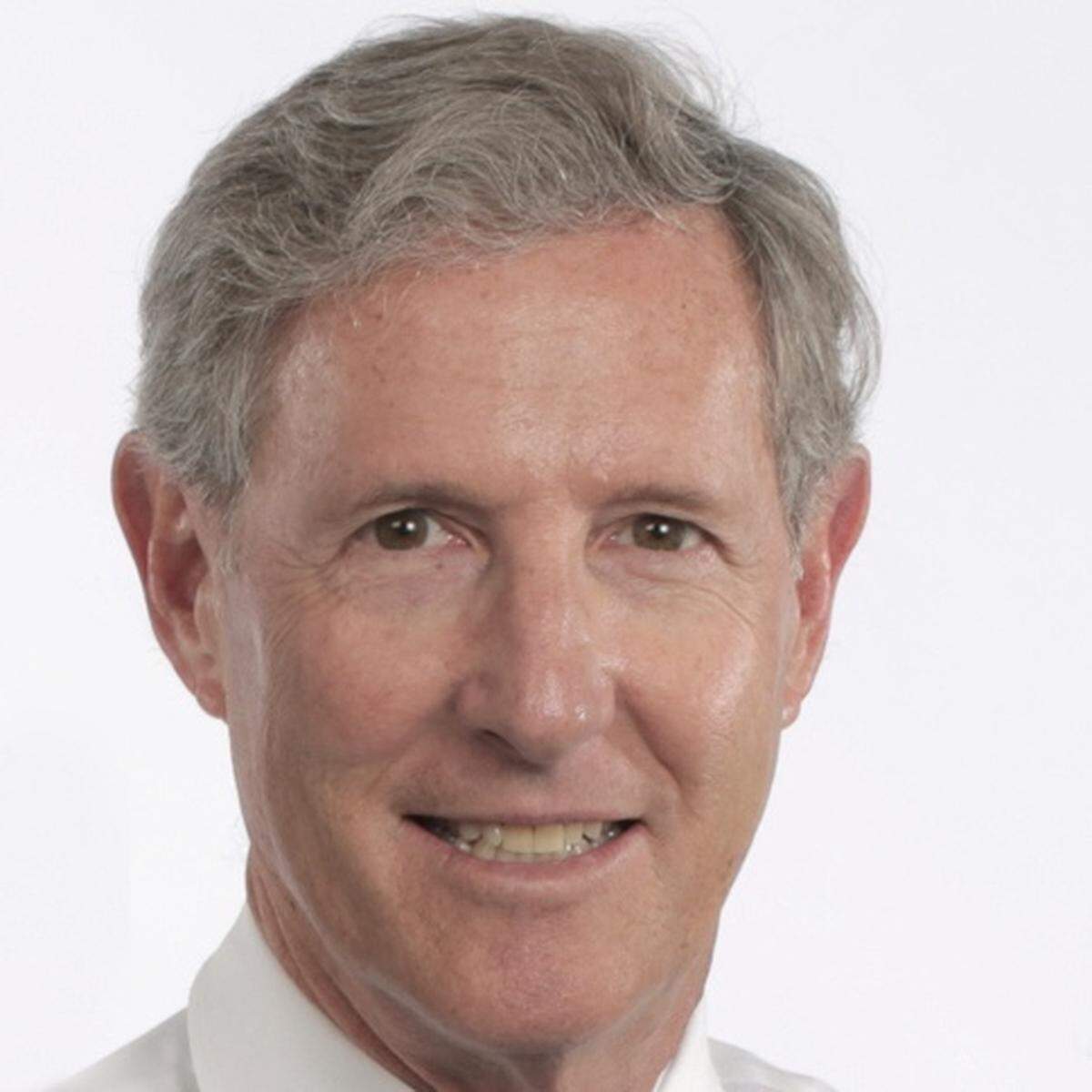
Jurors find Broward exec guilty in $53 million ‘Ponzi scheme’ targeting Haitians

When Sanjay Singh, a former pilot and flight instructor, launched a moving business in South Florida just before the pandemic hit in early 2020, his timing was not only bad — he had lousy credit. No bank would lend him any money.
So Singh and his associates tapped into a private network of mostly working-class investors, borrowing hundreds of millions of dollars with the promise of paying them double-digit returns and ownership of the trucks in his company, Royal Bengal Logistics Inc.
In the end, about 1,500 investors — including nurses, school teachers and military veterans of mostly Haitian descent — fell for Singh’s sales pitch and lost $53 million in what federal prosecutors described as a “Ponzi scheme.” In Fort Lauderdale federal court, a dozen jurors deliberated for just over an hour on Wednesday afternoon and found Singh guilty of conspiracy, wire fraud and money laundering. At his sentencing in February, Singh faces a prison term in the 20-year range.
Prosecutors urged U.S. District Judge David Leibowitz to send Singh, 45, to a federal lock-up immediately, pointing out that he’s a pilot and sent some of his ill-gotten money to India while swindling his company’s investors. But Leibowitz allowed Singh to remain free on a $1 million bond until his sentencing.
During closing arguments on Wednesday, prosecutors Robert Moore and Roger Cruz said Singh, the former president of Royal Bengal in Coral Springs, raised $160 million from investors by exploiting new ones to pay off old ones while defrauding them between 2020 and 2023.
‘This was a sinking ship’
Prosecutors said Singh stole tens of millions from investors and lied to them about how he spent their money; instead, they said, he used the proceeds to buy a Mercedes, renovate his Coral Springs home and play the stock market as a day trader, squandering millions of the victims’ investments.
“He was just lying, lying, lying — gambling in the stock market,” Moore told jurors during closing arguments after a three-week trial. “He knew his company wasn’t making any money, and he knew he was lying. ... This was a Titanic. This was a sinking ship.”
But Singh’s assistant federal public defenders, Abigail Becker and Victor Van Dyke, portrayed him as a hard-working family man who made mistakes in building his business, but he didn’t intentionally mislead anyone, lie to his company’s investors or commit fraud.
Defense: Didn’t lie to investors
“It’s a story of a man who grew his business from zero trucks to 200 trucks with revenue of $18 million in three years,” Van Dyke told jurors, arguing Singh didn’t live lavishly. “This case is about trucks, not Ferraris.”
“He never lied to investors about how the money was spent,” Van Dyke said, zeroing in on the crux of the government’s case.
In a separate Securities and Exchange Commission civil complaint, Singh and his company were accused of fraudulently raising money from investors through unregistered securities and related anti-fraud violations. As a result of the enforcement action, Singh lost control of his company in June 2023.
A federal judge froze Singh’s and the firm’s assets, including bank accounts and real estate, and appointed the Fort Lauderdale law firm Tripp Scott as Royal Bengal’s receiver to work on recovering money for investors. Many of them invested between $25,000 and $250,000 in Singh’s company.
In South Florida, such cases are increasingly common.
For decades, the region has been known as the nation’s con capital for its healthcare, income-tax and credit-card scams — not to mention high-end Ponzi schemes orchestrated by such notorious figures as the late Wall Street financier Bernard Madoff and disbarred Fort Lauderdale lawyer Scott Rothstein.
Preying on Haitian Americans
But South Florida has also become home to “affinity fraud,” authorities say, where investment schemers prey on unsuspecting immigrants and other minorities who tend to trust the perpetrators because they either know them or someone else who vouches for them. The Haitian-American community has been hit particularly hard, but so have immigrants from Cuba, Colombia and Venezuela.
In the Singh case, the former head of Royal Bengal was accused of conspiring with other employees, including Haitian Americans, to offer high-yield investments, promising mostly working-class people in the Haitian diaspora to use their money to expand operations and increase the company’s fleet to 200 semi-trucks and trailers, as well as build a maintenance facility in Lubbock, Texas.
Singh assured investors that his company was generating $650,000 to $1 million a month in revenue between 2019 and 2023 — and that their investments were safe and growing in value, according to court records and the FBI.
During a November 2022 investor Zoom video conference, Singh boasted that Royal Bengal was a better company than Apple and Tesla.
“The fundamentals of this business can be trusted,” Singh said during the presentation. “So let’s move on from the point of view that [Royal] Bengal may last one day, two days — this is not Bitcoin. Our product is better than Apple. Our product is better than Tesla. You buy Apple, you buy Tesla, you start spending money. You buy [a] Royal Bengal [investment] contract, you start making money.”
Not exactly, according to federal authorities.
In the SEC case, Singh and Royal Bengal were accused of fraudulently selling unregistered securities and other violations.
SEC investigators said Royal Bengal used tens of millions of dollars of new investors’ funds to make Ponzi-like payments to old investors — until the purported business model collapsed due to operating losses of $18 million since 2019.
The SEC complaint named Singh and his former company itself as defendants. Also, Singh’s wife, Sheetal, and Constantina Celicourt, the spouse of the firm’s former vice president of business development, were named as relief defendants. (Her husband, Ricardi Celicourt, who public records show is a Royal Bengal executive, is not named in the SEC lawsuit.)
Singh’s wife, Sheetal, and Constantina Celicourt were not charged with any wrongdoing, but the SEC sued them to collect proceeds that authorities say they received from Singh’s alleged Ponzi scheme.
If the SEC and federal prosecutors prevail in their parallel cases, it is likely that Singh, his company, his wife, and Celicourt will be required to pay back the money they’re accused of stealing from the Haitian-American investors and other victims of the alleged investment scam.
This story was originally published November 6, 2024 at 2:00 PM.